Kirjojen hintavertailu. Mukana 11 342 296 kirjaa ja 12 kauppaa.

Kirjahaku

Etsi kirjoja tekijän nimen, kirjan nimen tai ISBN:n perusteella.

1000 tulosta hakusanalla Cyril Methodius Jansky

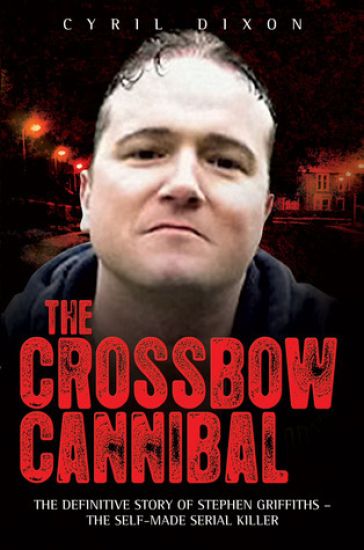
Crossbow Cannibal

Crossbow Cannibal

Cyril Dixon

John Blake Publishing Ltd
2011
nidottu
During Midsummer 2009, Susan Rushworth, a mother, grandmother and former grammar school girl, went missing. She was followed ten months later by Shelley Armitage, a one-time wannabe model. Four weeks on it was Suzanne Blamires, who had been a trainee nurse. All three sold their bodies for sex to fund their drug habits. All three vanished as if the cobbled backstreets had opened up and swallowed them in. And who could know many how more there were? Stephen Griffiths was a shy, eccentric student of criminology who always had a word of cautious advice for the working girls. He wandered the same bleak landscape, dressed in black, hair slicked back with baby oil, happy to chat and share a cigarette. Here, surely, was someone they could trust...
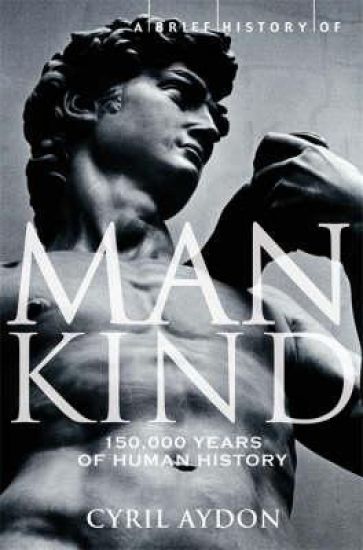
A Brief History of Mankind

A Brief History of Mankind

Cyril Aydon

Robinson Publishing
2009
nidottu
A Brief History of Mankind is the thrilling introduction to the big ideas in history combining the latest research in history and archaeology to look for answers to some of the questions we ask ourselves: Where do we come from? Why has the human race been so successful? What are the origins of our religions? In a sweeping, panoramic narrative Cyril Aydon tells the story of our species from origins in Africa, the development of technology, the rise of nations and empires, and the evolution of culture from cave painting to the internet. Packed with fascinating facts and insights, the book also looks to the future and asks is the crisis of climate change one challenge too far for Homo Sapiens?
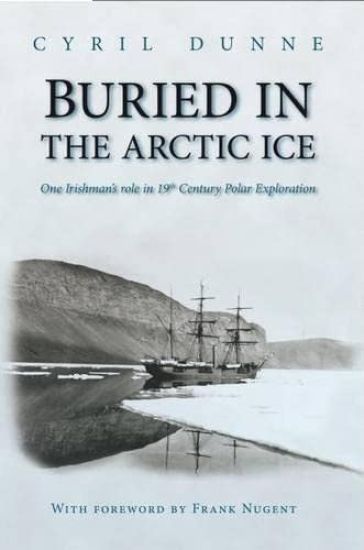
Buried in the Arctic Ice

Buried in the Arctic Ice

Cyril Dunne; Frank Nugent

Nonsuch Publishing
2009
nidottu
This is the story of brave Arctic explorers who died in their attempts to seek the North-West Passage and North Pole during the years 1845-1877. Among them was Jim Hand from Bray, Co Wicklow. Although low in rank, Jim was unique for two reasons. Firstly, in the year 1876, he and a small band of shipmates stood closer to the North Pole than any previous explorers had ever done. Secondly, his name is stamped in history for evermore, as Hand Bay, located in on the most north-westerly point of Greenland, was named in his memory. In Buried in the Arctic Ice, Cyril Dunne combines Jim Hand's personal journey with an intricately researched account of life in the Arctic, that is in turns terrifying and inspiring.
The Ballet Called Giselle

The Ballet Called Giselle

Cyril W. Beaumont

Dance Books Ltd
2011
pokkari
First published in 1944, this classic book remains the definitive work on the masterpiece of the Romantic Ballet, Giselle. The book is in two parts, the first dealing with the original 1841 production, the second with technical and critical aspects of the ballet. Part I charts the evolution of the Romantic Ballet, and then gives a detailed description of the original production of Giselle, including a synopsis and accounts of the settings, costumes and creators of the original roles. Part II describes the stage action - the steps, gestures and the meanings they express - and analyses the interpretation of the roles. The book concludes with a survey of dancers who won fame for their performances as Giselle and as Albrecht.
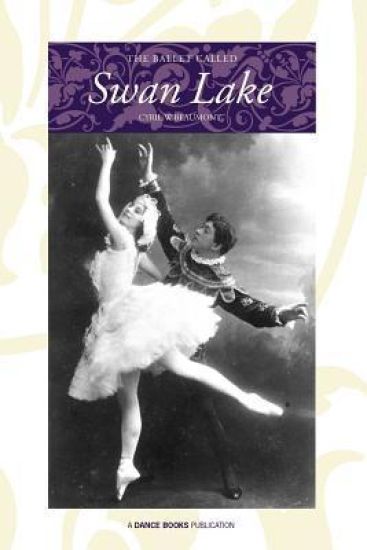
The Ballet Called Swan Lake

The Ballet Called Swan Lake

Cyril W Beaumont

Dance Books
2012
pokkari
This classic book is the definitive work on one of ballet's greatest and most popular works, Swan Lake. The book is in two parts. The first describes the evolution of Swan Lake from its initial conception to its first realisation by the Austrian choreographer Julius Wenzel Reisinger, which was a comparative failure, followed by the story of the ballet's resuscitation and eventual triumph by Marius Petipa and Lev Ivanov. Included are the original synopses of both the original Reisinger production and the Petipa-Ivanov version. There is an account of Tchaikovsky and his score, together with details of the original settings and costumes, and many of those designed for later productions. The second part of the book is concerned with the actual presentation of the ballet. The choreography of all four acts of the Petipa-Ivanov version is set out in full, with explanations of not only the stage action, but also of how the dancers move, the kind of steps they do, the gestures they make and what they are intended to express. The various roles are also analysed from the dancers' points of view, and some of the problems that may confront both dancer and producer are considered and resolved. Finally, there is a survey of some of the great dancers who over the years have achieved distinction in the roles of Odette-Odile and Prince Siegfried.
Danelaw

Danelaw

Cyril Hart

BLOOMSBURY PUBLISHING PLC
1992
sidottu
The Danelaw brings together an impressive body of work. Cyril Hart deals with both the main outline of the Danelaw, its administration and institutions, and its detail: the origin and development of particular provinces, boroughs, sokes and wapentakes; Danelaw charters and wills; battles, including Maldon seen in terms of topography; families, such as that of Athelstan 'Half King'; and individuals including Hereward the Wake, rescued from Victorian Romanticism and put on as sound a historical basis as the evidence will permit.
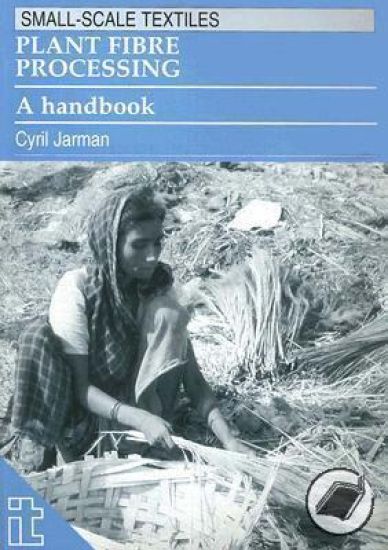
Plant Fibre Processing

Plant Fibre Processing

Cyril Jarman

Practical Action Publishing
1998
nidottu
This is the last of the Small-scale Textile series and covers the pre-spinning processes which make plant fibres suitable for textile manufacture. The book includes not only familiar plant fibres such as cotton, sisal and jute, but also less well known fibres from plants such as Himalayan nettle, pineapple leaf and kenaf, which are of great value to small communities where they are used for both utilitarian and decorative purposes. As well as extraction and other pre-spinning processes, there is background information on the growing areas, soil and climatic requirements and methods of harvesting, and details of equipment suppliers and sources of further information.
The Revenger's Tragedy

The Revenger's Tragedy

Cyril Tourneur

Nick Hern Books
1996
nidottu
Drama Classics: The World's Great Plays at a Great Little Price A Jacobean tale of personal vengeance in a morally bankrupt world. Vindice has vowed to revenge the murder of his beloved Gloriana by the lustful Duke, and when he gains access to the court in disguise, havoc ensues... The Revenger's Tragedy was first performed in London in 1606 or 1607, and was subsequently published anonymously. It has been variously attributed to Cyril Tourneur and Thomas Middleton. This edition of the play, in the Nick Hern Books Drama Classics series, is edited by R.A. Foakes and includes an introduction by Trevor R. Griffiths.
2 Chronicles

2 Chronicles

Cyril J. Barber

Christian Focus Publications Ltd
2004
pokkari
The book of Chronicles has had a chequered past. Neglected for many years under the fortunate name of Paraleipomen or ‘Things omitted’, meant that they occupied a subordinate position in the Scriptures until the 4th century AD when the title ‘A Chronicle of the whole Sacred History’ was suggested instead. This has since been shortened to Chronicles and the rest is, literally history. Probably penned by Ezra, Chronicles is a selective history of the Jews encouraging them to trust that God is intimately involved in their story. Written at a time when the Jews were newly out of captivity and with their capital city in ruins, Chronicles assures them of God’s faithfulness. If they would obey and serve him then his people would still enjoy his blessing. Cyril Barber has also written Focus on the Bible’s commentary on 1 Chronicles.
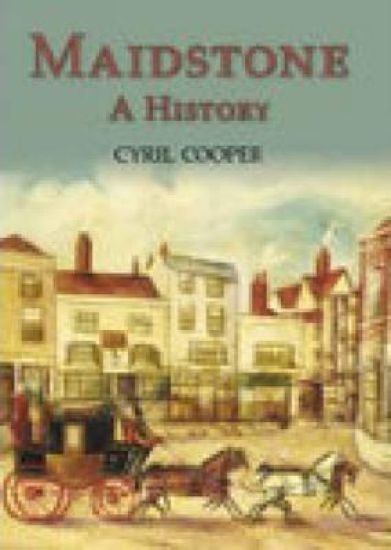
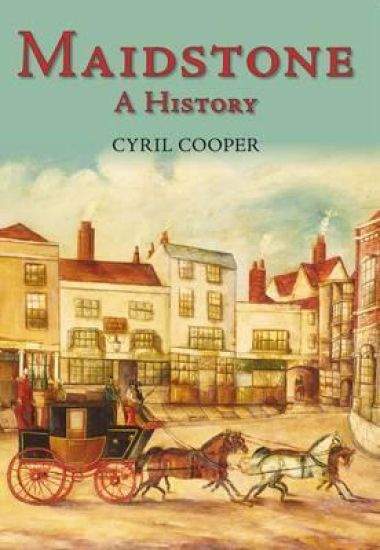
Maidstone: A History

Maidstone: A History

Cyril Cooper

Phillimore Co Ltd
2008
sidottu
The town of Maidstone became indelibly associated with revolution and riot between the 14th and 16th centuries when it experienced the Peasants' Revolt, Cade's Rebellion and the Wyatt Revolt. The townsfolk seem to have enjoyed an independant spirit ever since. Following the Battle of Maidstone, fought between Parliamentarians and Royalists in 1648, the Mayor was Clerk to the court which tried Charles I and it was probably he who pronounced the death sentence. Town meetings voiced opposition to the Revolutionary War with France, and urged the King to dismiss Pitt the Younger and his ministers, but the local population was patriotic. When the threat to the country became apparent the people speedily raised a regiment of Volunteers to defend the homeland.Maidstone artisans were prominent in the Swing Riots of 1830. The town was a centre for the fulling process, essential to cloth production, and for a long period enjoyed a virtual monopoly in threadmaking. It also provided local ragstone for the Tower of London and Windsor Castle Chapel and became, in time, a major source of hops and fruit. Brewers such as Fremlins and Style and Winch were situated here, as were producers of Hollands gin and cherry brandy. Papermaking was an industry of local importance. Sharps toffee, Fosters Clarks grocery lines, Tilling-Stevents buses and Rootes, who built the first Singer car in 1912, were among national names that began life in the town.Penenden Heath has been the county meeting place and the spot from which justice was dispensed since before Domesday, so it was appropriate that Maidstone should eventually become the county town for Kent. Nowadays the county administration and public services are centred here and they have largely replaced the former industries, which have all but disappeared. But the town is proud of its long and rich history and this fully illustrated account helps explain precisely why Maidstone has been such an important town in south-east England for over a thousand years.
Maidstone: A History

Maidstone: A History

Cyril Cooper

Phillimore Co Ltd
2010
nidottu
The town of Maidstone became indelibly associated with revolution and riot between the 14th and 16th centuries when it experienced the Peasants' Revolt, Cade's Rebellion and the Wyatt Revolt. The townsfolk seem to have enjoyed an independant spirit ever since. Following the Battle of Maidstone, fought between Parliamentarians and Royalists in 1648, the Mayor was Clerk to the court which tried Charles I and it was probably he who pronounced the death sentence. Town meetings voiced opposition to the Revolutionary War with France, and urged the King to dismiss Pitt the Younger and his ministers, but the local population was patriotic. When the threat to the country became apparent the people speedily raised a regiment of Volunteers to defend the homeland. Maidstone artisans were prominent in the Swing Riots of 1830. The town was a centre for the fulling process, essential to cloth production, and for a long period enjoyed a virtual monopoly in threadmaking. It also provided local ragstone for the Tower of London and Windsor Castle Chapel and became, in time, a major source of hops and fruit. Brewers such as Fremlins and Style and Winch were situated here, as were producers of Hollands gin and cherry brandy.Papermaking was an industry of local importance. Sharps toffee, Fosters Clarks grocery lines, Tilling-Stevents buses and Rootes, who built the first Singer car in 1912, were among national names that began life in the town. Penenden Heath has been the county meeting place and the spot from which justice was dispensed since before Domesday, so it was appropriate that Maidstone should eventually become the county town for Kent. Nowadays the county administration and public services are centred here and they have largely replaced the former industries, which have all but disappeared. But the town is proud of its long and rich history and this fully illustrated account helps explain precisely why Maidstone has been such an important town in south-east England for over a thousand years.