The book Teacher Teacher, takes readers on a fantastic school voyage as seen through the eyes of Joshua Stephens, a 12-year old African American student. While moving from school to school and from grade to grade Joshua experiences many new scenarios, people, and of course new teachers. Being the new black boy, Joshua finds himself constantly having to prove himself as a literary genius to all his often times nonsensical teachers. Readers will quickly connect with Joshua Stephens, as Etienne takes us on his schooling journey using such wit, humor and vulnerability. This well crafted autobiographical work will leave you laughing out loud nodding your head, and maybe even shedding a tear. You wont want to put this book down.
In the chaos and uncertainty of modern war, our troops must be empowered to make decisions, take the initiative, and lead boldly. This is Mission Command: a command culture, leadership style, and operating concept that has been embraced by armed forces the world over. While the U.S. Military and many of our allies have formally adopted Mission Command, much work remains to truly understand and implement this style of leadership. In this anthology, 12 authors from 3 nations (United States, United Kingdom, and Norway) offer diverse perspectives on the topic of Mission Command as it relates to their service in the military, law enforcement, government, and private sector. Real-world examples supported by in-depth research provide the who, what, when, where, and why of Mission Command, identifying opportunities to improve how we lead our teams. Topics and authors include: - Unit Cohesion (Joe Labarbera) -Mission Command at Sea (Tommy Krabber d) -The Historical Evolution of Mission Command (Donald Vandergriff) - Improving Army Doctrine (Regina Parker) - Military Campaign Analysis (Gerry Long) - Organizational Culture (Thomas Rebuck) -Mission Command in Garrison (Darrell Fawley) - Training and Leadership for Mission Command (Chad Foster) -Mission Command and Complex Operations (Grant Martin) -Fitness and Mission Command (Daniel Markert & Scott Sonnon) -Civil Policing and Mission Command (Fred Leland) ...and more
What is it that seems hard to move in your life? What have been blocking your progress? Can you sense in your spirit that God has more for you than you are experiencing, but you can't seem to make it happen? Fasting and praying can make it happen. Biblical fasting is a secret source of power for the believer in Christ Jesus. Fasting is a secret weapon God has giving to his children. My primary goal for fasting and praying is to discipline my appetite and therefore release the power of God that's latent in my life and ministry. I want my preaching and teaching to be filled with the power of God. I want my writing to have the anointing of God on it. This comes through living a life of fasting and praying. You can do some things in ministry and it will be successful without fasting and praying. But to have the life changing effect on your ministry you need to fast and pray. At the end of this book, it is my prayer that you will begin to add fasting in your life. If you are already fasting, I pray you will be encouraged to continue to practice this life-changing discipline. Just like a good book on prayer makes you want to pray, it is my prayer that this book is good to you and will make you want to fast.
First published in 1992. This book is based on experiences of the author from working with multifamily groups for parents and adolescents, in and out-patient clinics and juvenile court programs over a four year period. It covers a program that eventually evolved into 15 sessions covering three main topic areas: (1) perceiving each other (social perception), (2) communicating effectively, and (3) recognizing behavior as a function of its consequence.
First published in 1992. This book is based on experiences of the author from working with multifamily groups for parents and adolescents, in and out-patient clinics and juvenile court programs over a four year period. It covers a program that eventually evolved into 15 sessions covering three main topic areas: (1) perceiving each other (social perception), (2) communicating effectively, and (3) recognizing behavior as a function of its consequence.
This book is a follow-up to the introductory text written by the same authors. The primary emphasis on this book is linear and nonlinear partial differential equations with particular concentration on the equations of viscous fluid motion. Each chapter describes a particular application of the finite element method and illustrates the concepts through example problems. A comprehensive appendix lists computer codes for 2-D fluid flow and two 3-D transient codes.
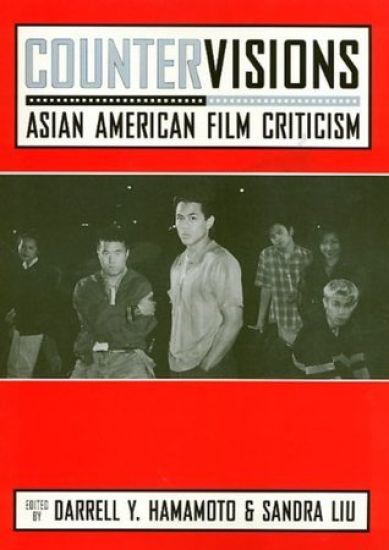
Spotlighting Asian Americans on both sides of the motion picture camera, Countervisions examines the aesthetics, material circumstances, and politics of a broad spectrum of films released in the last thirty years. This anthology focuses in particular on the growing presence of Asian Americans as makers of independent films and cross-over successes. Essays of film criticism and interviews with film makers emphasize matters of cultural agency -- that is, the practices through which Asian American actors, directors, and audience members have shaped their own cinematic images. One of the anthology's key contributions is to trace the evolution of Asian American independent film practice over thirty years. Essays on the Japanese American internment and historical memory, essays on films by women and queer artists, and the reflections of individual film makers discuss independent productions as subverting or opposing the conventions of commercial cinema. But Countervisions also resists simplistic readings of \u0022mainstream\u0022 film representations of Asian Americans and enumerations of negative images. Writing about Hollywood stars Anna May Wong and Nancy Kwan, director Wayne Wang, and erotic films, several contributors probe into the complex and ambivalent responses of Asian American audiences to stereotypical roles and commercial success. Taken together, the spirited, illuminating essays in this collection offer an unprecedented examination of a flourishing cultural production.
The essential reference to help federal contractors negotiate and maintain profitable contracts—Now in its third edition! This is the essential reference to help federal contractors negotiate and maintain profitable contracts—and remain in compliance throughout the life of the contract. Government contracting rules and regulations have changed significantly over the past six years. This new third edition addresses these changes and more: New thresholds for certification of cost and pricing data Revisions in cost accounting standards Implementation of commercial time-and-material and labor-hour contracts New, stringent ethics requirements Impact of stimulus funding Revised cost principles, including excessive pass-through costs, post-retirement benefits, and travel costs Redirected audit initiatives based on the GAO review of DCAA Plus...changed requirements for bidding...pricing...cost accounting...subcontracting...contract modification...all the information you need to be in compliance with the new rules.No other single book provides as much up-to-date federal procurement cost and pricing information in such a concise - yet comprehensive - format.
This master reference is essential if you contract with the government! Correctly pricing your goods or services—and making certain that those prices are in compliance with myriad federal rules and regulations—is essential to doing business with the government...and ensuring your commercial success. Cost-Based Pricing: A Guide for Government Contractors shows you how to appropriately estimate and price for government contracts and defend those estimates in a government contracting and subcontracting environment. This practical book includes coverage of all government pricing rules and regulations as well as pertinent aspects of related laws, such as the Truth in Negotiations Act. The book walks you through every step of the estimating process. From figuring direct labor costs to intra-company transfers to contract modifications, the coverage is extensive yet accessible for even those new to the process. Using Cost-Based Pricing, you will be able to: • Develop more realistic estimates • Enhance your support of those estimates in negotiations • Avoid violations of the Truth in Negotiations Act • Increase your chances of securing a fair and reasonable price Cost-Based Pricing: A Guide for Government Contractors can make the difference between your success—and profitability—and failure in the federal government arena.