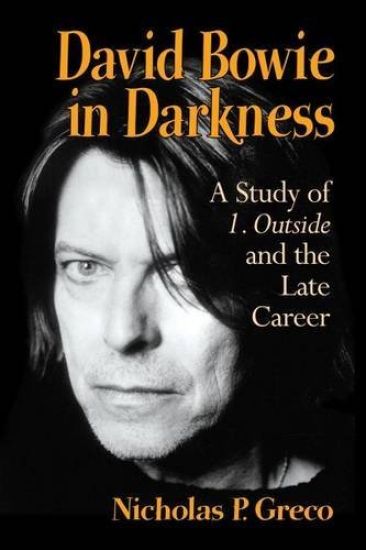
As an artist, David Bowie was widely considered a "chameleon," shedding one persona to create another and thus staying popular, relevant and compelling. In reality, Bowie was able to work with the resources around him to create something new, causing many to see him as a sort of lone artist rather than a collaborator in the creation of his own celebrity. Mid-career, Bowie began presenting himself as a figure in darkness, progressively more hidden. He required an audience for his continued celebrity but worked against that audience in the creation--or rather the destruction--of his star image. This tension is made clear in his 1995 album 1. Outside, which has him performing for an audience while simultaneously shunning them. This book explores Bowie's negotiation of his celebrity during his later career, with particular focus on 1. Outside, an album symptomatic of deep-seated societal and personal anxiety.
From his theatrical early canvases to his more recent photographic collages and operatic set designs, Hockney has tackled the challenge of space on a grand scale. At the same time, much of his work has been devoted to the things most dear to him-friends, family, home, and studio. An intellectual of wide-ranging erudition and a world traveller who makes his home in Hollywood, he still cherishes his roots in Bradford, the northern British town where he was born in 1937. Invention, the driving force behind Hockney's art, is in good part play: "If art isn't playful," he once commented, "it's nothing." This illuminating, colour-rich volume conveys with vivid clarity Hockney's serious delight in making art that gives pleasure to both its creator and its audience. About the Modern Masters series: With informative, enjoyable texts and over 100 illustrations - approximately 48 in full colour - this innovative series offers a fresh look at the most creative and influential artists of the postwar era. The authors are highly respected art historians and critics chosen for their ability to think clearly and write well. Each handsomely designed volume presents a thorough survey of the artist's life and work, as well as statements by the artist, an illustrated chapter on technique, a chronology, lists of exhibitions and public collections, an annotated bibliography, and an index. Every art lover, from the casual museumgoer to the serious student, teacher, critic, or curator, will be eager to collect these Modern Masters. And with such a low price, they can afford to collect them all.
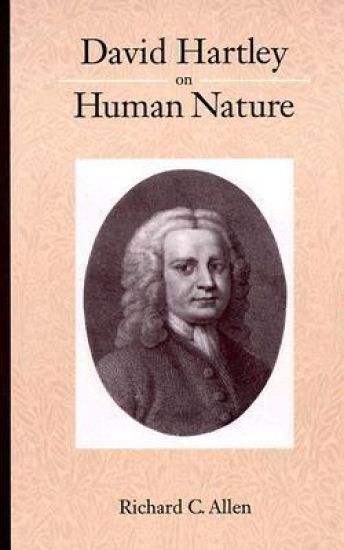
Presents the first complete account of the thought of David Hartley, one of the most original minds of the eighteenth century.In this first complete account of Hartley's thought, Richard Allen explains Hartley's theories of physiology, perception and action, language and cognition, emotional development and transformation, and spiritual transcendence. By drawing a biographical portrait of its subject, the book explores the relationship of mind and body in Hartley's system, and surveys Hartley's influence upon later scientists and social reformers, particularly Joseph Priestley.
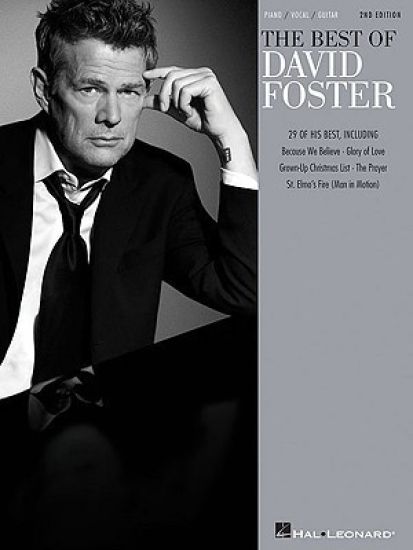
(P/V/G Composer Collection). A visionary producer, gifted arranger and prolific composer, David Foster is a 12-time Grammy winner with a remarkable 37 nominations to his credit. This collection features 29 of his finest, including: After the Love Has Gone * Because We Believe * The Colour of My Love * Glory of Love * Grown-Up Christmas List * Hard to Say I'm Sorry * I Have Nothing * The Power of the Dream * The Prayer * St. Elmo's Fire (Man in Motion) * Who's Holding Donna Now * Winter Games * You're the Inspiration * and more. Features an introduction with photos.
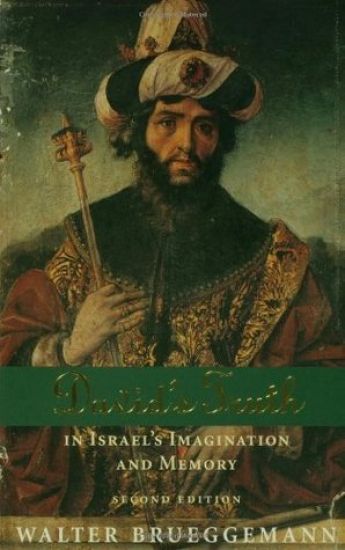
In this completely revised edition, Brueggemann examines four different sets of David narratives, each reflecting a particular social context, social hope and community. Thus these stories offer a distinctly different mode of truth concerning this pivotal biblical figure.
Taken from Jonathan Edwards's edited versions of David Brainerd's 'Diary' and 'Journal', this compilation makes available a 'fairly complete' record of the self-denying life and strenuous labors of David Brainerd as he presented the gospel to American Indians.
David Brown Milne (1882 - 1953) was one of the great artists of his generation in North America, according to the American art critic Clement Greenberg, who compared Milne with John Marin and Marsden Hartley. This comprehensive and fully illustrated Catalogue Raisonné of Milne's paintings is the first catalogue on this scale to be published for any Canadian artist, and it will be a standard for many years to come. The nearly three thousand paintings in oil and watercolour that David Milne produced in his long career are presented here in chronological order. There are also two hundred large-format colour reproducitons of his work. Milne has long been a favourite of artists, art historians, curators, and collectors, and his high intelligence and fine sensibility are evident on every page of this remarkable work. Over a span of more than fifty years Milne devoted himself to painting and also to writing about painting - assessing his achievements against his goals, analysing aesthetic problems, describing a sequence or process, illuminating the origins of his inspiration. He wrote many hundreds of pages of notes, letters, and autobiographical accounts, most of them directly or indirectly about his art. Substantial quotations from his writings make the Catalogue Raisonné a highly readable reference work. Each entry in the catalogue contains a black-and-white reproduction of the work, the basic information about the medium, size, and date, its full provenance and exhibition history, all printed references to it, a complete list of the documents in which it is referred to, and supplementary information, such as comments by the authors, related drawings, and cross-references, as appropriate. Short essays introduce each period of Milne's life, providing useful biographical details and information on the paintings and their subsequent history. The Catalogue Raisonné also contains the major lists of paintings prepared by Milne over the years, key documents for any study of his work. There is a list of nearly six hundred exhibitions in which his work appeared with full details and a 1600-item bibliography. A comprehensive title index is also included.
Arguably the most famous and critically acclaimed Canadian filmmaker, David Cronenberg is celebrated equally for his early genre films, like Scanners (1981) and The Fly (1986), and his dark artistic vision in films such as Dead Ringers (1988) and Crash (1996). The 2005 film A History of Violence was a mainstream success that marked Cronenberg's return to the commercial fold of Hollywood after years of independent art house filmmaking. His international reputation grew and the film was honoured with numerous awards and two Oscar nominations (for screenwriter Josh Olson and supporting actor William Hurt). David Cronenberg's A History of Violence - the lead title in the new Canadian Cinema series - presents readers with a lively study of some of the filmmaker's favourite themes: violence, concealment, transformation, sex, and guilt. Bart Beaty introduces us to Cronenberg's film, situating it in the context of its aesthetic influences, and argues for its uniquely English-Canadian qualities. The author contends that A History of Violence is a nuanced study of masquerade and disguise, a film that thwarts our expectations of film genre as much as it challenges our perception of national geography and cultural mythology. As a contribution to the Canadian Cinema series, the volume also presents readers with an overview of Cronenberg's career, the production history of the film, a discussion of its critical reception, and a filmography. David Cronenberg's A History of Violence is a book for fans, critics, and cinephiles alike.
"The Bible Portrays King David as an exceptional man and a paragon of godly devotion. But was he? Some scholars deny that he existed at all. Did he? This challenging book examines the written and archaeological evidence critically in an effort to paint an accurate picture of one of the Bible's central figures."--BOOK JACKET. From The Critics Library Journal Halpern (Jewish studies, Pennsylvania State Univ.) has given us a scholarly, fascinating, and controversial study of the figure of David in the Hebrew Scriptures. He does not doubt the actual existence of a historical figure named David, as does Thomas Thompson in his Early History of the Israelite People (Brill, 2001). However, he argues that the historical David was a far different person than the one pictured in 1 and 2 Second Samuel. The controversial nature of this study can be seen in the title of one of the chapters: "King David, Serial Killer." Halpern presents a close textual analysis of the stories about David in 1 Samuel 8 through 2 Samuel 1, along with a special study of 2 Samuel 8.He builds his case around the idea that there were two sources, identified here as A and B, which were used for the final versions of 1 and 2 Samuel. While Source A shows some of his faults, Source B is a kind of whitewashing apology for David in order to justify the kingship of Solomon and his successors. The real David, Halpern thinks, was a ruthless individual who was willing to murder or have murdered all of Saul's family so that he could secure the throne. Sure to receive much scholarly attention, Halpern's work can be profitably read by lay persons and scholars alike. Recommended for both public and academic libraries. David Bourquin, California State Univ., San Bernardino Copyright 2001 Cahners Business Information.
Examines the David theme in the collective mind of ancient Israel and the early church In this follow-up study to Judaism, The First Phase, Joseph Blenkinsopp traces the development of traditions about David in the collective memory of the people of Israel and the first Christians, from the extinction of the Davidic dynasty in the sixth century B.C.E. to the early common era. David Remembered is neither a biography of David nor an exegetical study of the biblical narrative about David. Rather, it focuses on the memory of David as a powerful factor in the formation of social identity, in political activity (especially in reaction to imperial rule), and in projections of the future viewed as the restoration of a never-forgotten past.
Even as a pup, Davy Crockett "always delighted to be in the very thickest of danger." In his own inimitable style, he describes his earliest days in Tennessee, his two marriages, his career as an Indian fighter, his bear hunts, and his electioneering. His reputation as a b'ar hunter (he killed 105 in one season) sent him to Congress, and he was voted in and out as the price of cotton (and his relations with the Jacksonians) rose and fell. In 1834, when this autobiography appeared, Davy Crockett was already a folk hero with an eye on the White House. But a year later he would lose his seat in Congress and turn toward Texas and, ultimately, the Alamo.
Davy Crockett has been America's best-known folk hero for at least 160 years. This informed biography by James Atkins Shackford first appeared in 1956, at the height of the television-inspired Crockett craze. As Michael Lofaro notes in his introduction, "Shackford faced the monumental task of rescuing a nearly unknown David Crockett from the obscurity caused by the popularity of the earlier legendary Davys and deepened by Disney." He succeeded memorably, restoring David Crockett of Tennessee, a true pioneer and colorful figure even without romantic trappings.
David Boyd's biography is the story of one man's dedicated struggle to protect and preserve Louisiana's fledgling state university from the cumulative effects of war, Reconstruction, political hostility, and parochial greed. Boyd fought hard to promote his vision of higher education among a largely antagonistic or apathetic citizenry. He died, bitter and disillusioned, in 1899, without realizing his dream. But his life was not wasted. Clearly those who governed the university in more prosperous days owned much of their success to the devotion and self-sacrifice of this heroic figure.
The Call to Teach has been used in teacher education and educational research courses the world over. This volume celebrates that landmark text and examines the far-reaching impact of David Hansen's teaching and scholarship. Essays by international educators and scholars explore his influence on our understanding of a whole host of important themes, including the moral dimensions of teaching, educational research, teacher education, and the philosophy of education. Contributing authors from eight countries consider the influence of Hansen's ideas from the vantage point of our contemporary educational scene, and from their own unique cultural perspectives. David Hansen and The Call to Teach continues the conversation about the meaning of teaching through the concept of vocation as initiated by Hansen in The Call to Teach and examines its potential to renew the practice of teaching within today's educational landscape.Book Features:The first book to consider the wide-ranging influence of David Hansen's scholarship.An international perspective with authors from the United States, China, The United Kingdom, India, Spain, Ireland, Canada, and Norway.A collective effort to retrieve and renew the language of vocation in teaching for the purpose of teacher renewal.An afterword by David T. Hansen.
David Ruggles (1810-1849) was one of the most heroic--and has been one of the most often overlooked--figures of the early abolitionist movement in America. Graham Russell Gao Hodges provides the first biography of this African American activist, writer, publisher, and hydrotherapist who secured liberty for more than six hundred former bond people, the most famous of whom was Frederick Douglass. A forceful, courageous voice for black freedom, Ruggles mentored Douglass, Sojourner Truth, and William Cooper Nell in the skills of antislavery activism. As a founder of the New York Committee of Vigilance, he advocated a ""practical abolitionism"" that included civil disobedience and self-defense in order to preserve the rights of self-emancipated enslaved people and to protect free blacks from kidnappers who would sell them into slavery in the South.Hodges's narrative places Ruggles in the fractious politics and society of New York, where he moved among the highest ranks of state leaders and spoke up for common black New Yorkers. His work on the Committee of Vigilance inspired many upstate New York and New England whites, who allied with him to form a network that became the Underground Railroad. Hodges's portrait of David Ruggles establishes the abolitionist as an essential link between disparate groups--male and female, black and white, clerical and secular, elite and rank-and-file--recasting the history of antebellum abolitionism as a more integrated and cohesive movement than is often portrayed.
"David Walker's Appeal is a landmark work of American history and letters, the most radical piece of writing by an African American in the nineteenth century. Startling in its intensity, unrelenting in its attacks on slavery and white racism, it alarmed Southern slaveholders, inspired Northern abolitionists, and hastened the sectional conflicts that led to the Civil War. In this new edition of the "Appeal, the distinguished historian Sean Wilentz draws on a generation of innovative research to throw fresh light on Walker's life and ideas--and their enduring importance.