
Kirjahaku
Etsi kirjoja tekijän nimen, kirjan nimen tai ISBN:n perusteella.
1000 tulosta hakusanalla David Meade


In Canada, it can be easy to consider landscape painting as cliche, an art form whose time has passed. David Alexander's vibrant, large-scale works show the wonder and possibility that remain undiminished in paintings of the natural environment and breathe new life into the landscape tradition. Gathering together six essays on Alexander, this book provides insight into Alexander's inspiration, creative drive, and the unique engagement with nature that has led him to seek out and paint remote locales across Canada and as far away as Greenland, Iceland, New Mexico, and Argentina. Award-winning writer Sharon Butala contributes an extended meditation on her first encounter with the artist and his work. An interview with Robert Enright reveals Alexander's engagement with tradition, and texts by the late Gilbert Bouchard, Ihor Holubizky, Adalsteinn Ingolfsson, and Liz Wylie, present a variety of insights into understanding and appreciating his art. A detailed chronology of Alexander's career is included. Reproductions of his major works appear throughout and the essays are illustrated with preliminary paintings and working sketches, conveying insight into his creative process. A valuable discovery for those interested in nature and its artistic renderings, Alexander's art is about conveying an immersion in the landscape. This book allows a similar presence within his lushly painted landscapes, imparting an intimate understanding of his art.

David Lodge and the Tradition of the Modern Novel
J. Russell Perkin
McGill-Queen's University Press
2014
sidottu
David Lodge is a much-loved novelist and influential literary critic. Examining his career from his earliest publications in the late 1950s to his more recent works, David Lodge and the Tradition of the Modern Novel identifies Lodge's central place within the canon of twentieth-century British literature. J. Russell Perkin argues that liberalism is the defining feature of Lodge's identity as a novelist, critic, and Roman Catholic intellectual, and demonstrates that Graham Greene, James Joyce, Kingsley Amis, Henry James, and H.G. Wells are the key influences on Lodge's fiction. Perkin also considers Lodge's relationship to contemporary British novelists, including Hilary Mantel, Julian Barnes, and Monica Ali. In a study that is both theoretically informed and accessible to the general reader, Perkin shows that Lodge's work is shaped by the dialectic of modernism and the realist tradition. Through an approach that draws on diverse theories of literary influence and history, David Lodge and the Tradition of the Modern Novel provides the most thorough treatment of the novelist's career to date.

David Lodge and the Tradition of the Modern Novel
J. Russell Perkin
McGill-Queen's University Press
2014
nidottu
David Lodge is a much-loved novelist and influential literary critic. Examining his career from his earliest publications in the late 1950s to his more recent works, David Lodge and the Tradition of the Modern Novel identifies Lodge's central place within the canon of twentieth-century British literature. J. Russell Perkin argues that liberalism is the defining feature of Lodge's identity as a novelist, critic, and Roman Catholic intellectual, and demonstrates that Graham Greene, James Joyce, Kingsley Amis, Henry James, and H.G. Wells are the key influences on Lodge's fiction. Perkin also considers Lodge's relationship to contemporary British novelists, including Hilary Mantel, Julian Barnes, and Monica Ali. In a study that is both theoretically informed and accessible to the general reader, Perkin shows that Lodge's work is shaped by the dialectic of modernism and the realist tradition. Through an approach that draws on diverse theories of literary influence and history, David Lodge and the Tradition of the Modern Novel provides the most thorough treatment of the novelist's career to date.

David Bottoms
McFarland Co Inc
2010
pokkari
The South has a long tradition of great writers who remain in the South, transforming the local landscape into a universal one. Currently Poet Laureate of Georgia, David Bottoms is one of the South's most revered poets. The fifteen critical essays in this collection set out to examine the images and themes revealed in his poetry and fiction. Topics include the role of rebirth and resurrection, the presence of faith in the poems, masculinity and gender, and race in the South.
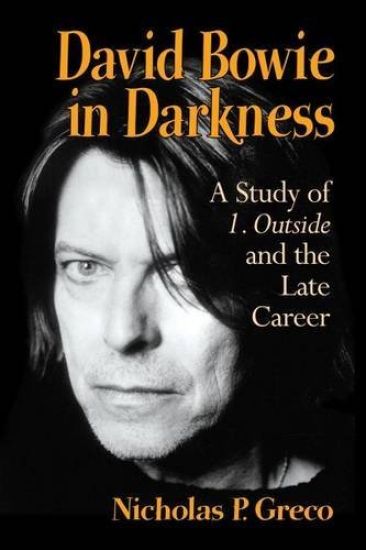
As an artist, David Bowie was widely considered a "chameleon," shedding one persona to create another and thus staying popular, relevant and compelling. In reality, Bowie was able to work with the resources around him to create something new, causing many to see him as a sort of lone artist rather than a collaborator in the creation of his own celebrity. Mid-career, Bowie began presenting himself as a figure in darkness, progressively more hidden. He required an audience for his continued celebrity but worked against that audience in the creation--or rather the destruction--of his star image. This tension is made clear in his 1995 album 1. Outside, which has him performing for an audience while simultaneously shunning them. This book explores Bowie's negotiation of his celebrity during his later career, with particular focus on 1. Outside, an album symptomatic of deep-seated societal and personal anxiety.

David Lewis (1750-1798) and Joannah Trundle (1754-1810) from Frederick County, Maryland to Harrison County, (West) Virginia
Doris Jean Post Poinsett
Heritage Books
2016
sidottu

From his theatrical early canvases to his more recent photographic collages and operatic set designs, Hockney has tackled the challenge of space on a grand scale. At the same time, much of his work has been devoted to the things most dear to him-friends, family, home, and studio. An intellectual of wide-ranging erudition and a world traveller who makes his home in Hollywood, he still cherishes his roots in Bradford, the northern British town where he was born in 1937. Invention, the driving force behind Hockney's art, is in good part play: "If art isn't playful," he once commented, "it's nothing." This illuminating, colour-rich volume conveys with vivid clarity Hockney's serious delight in making art that gives pleasure to both its creator and its audience. About the Modern Masters series: With informative, enjoyable texts and over 100 illustrations - approximately 48 in full colour - this innovative series offers a fresh look at the most creative and influential artists of the postwar era. The authors are highly respected art historians and critics chosen for their ability to think clearly and write well. Each handsomely designed volume presents a thorough survey of the artist's life and work, as well as statements by the artist, an illustrated chapter on technique, a chronology, lists of exhibitions and public collections, an annotated bibliography, and an index. Every art lover, from the casual museumgoer to the serious student, teacher, critic, or curator, will be eager to collect these Modern Masters. And with such a low price, they can afford to collect them all.
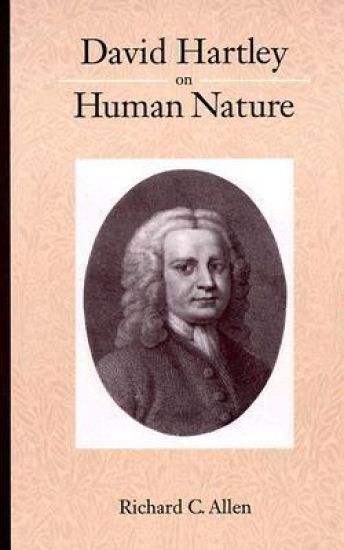
Presents the first complete account of the thought of David Hartley, one of the most original minds of the eighteenth century.In this first complete account of Hartley's thought, Richard Allen explains Hartley's theories of physiology, perception and action, language and cognition, emotional development and transformation, and spiritual transcendence. By drawing a biographical portrait of its subject, the book explores the relationship of mind and body in Hartley's system, and surveys Hartley's influence upon later scientists and social reformers, particularly Joseph Priestley.

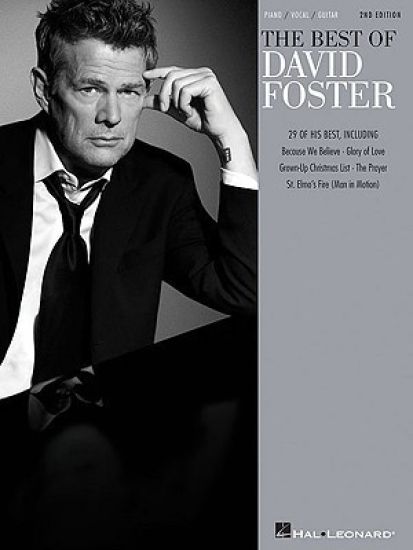
(P/V/G Composer Collection). A visionary producer, gifted arranger and prolific composer, David Foster is a 12-time Grammy winner with a remarkable 37 nominations to his credit. This collection features 29 of his finest, including: After the Love Has Gone * Because We Believe * The Colour of My Love * Glory of Love * Grown-Up Christmas List * Hard to Say I'm Sorry * I Have Nothing * The Power of the Dream * The Prayer * St. Elmo's Fire (Man in Motion) * Who's Holding Donna Now * Winter Games * You're the Inspiration * and more. Features an introduction with photos.
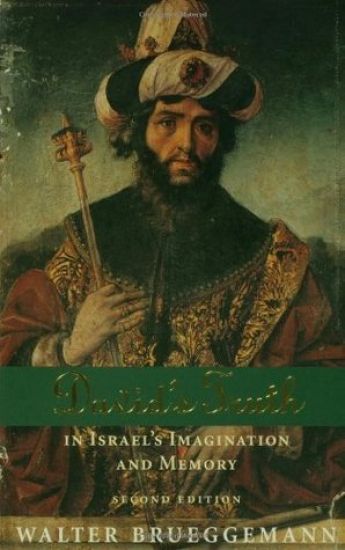
In this completely revised edition, Brueggemann examines four different sets of David narratives, each reflecting a particular social context, social hope and community. Thus these stories offer a distinctly different mode of truth concerning this pivotal biblical figure.

The Life and Diary of David Brainerd
David Brainerd; Jonathan Edwards
Baker Books, a division of Baker Publishing Group
1989
nidottu
Taken from Jonathan Edwards's edited versions of David Brainerd's 'Diary' and 'Journal', this compilation makes available a 'fairly complete' record of the self-denying life and strenuous labors of David Brainerd as he presented the gospel to American Indians.

David Brown Milne (1882 - 1953) was one of the great artists of his generation in North America, according to the American art critic Clement Greenberg, who compared Milne with John Marin and Marsden Hartley. This comprehensive and fully illustrated Catalogue Raisonné of Milne's paintings is the first catalogue on this scale to be published for any Canadian artist, and it will be a standard for many years to come. The nearly three thousand paintings in oil and watercolour that David Milne produced in his long career are presented here in chronological order. There are also two hundred large-format colour reproducitons of his work. Milne has long been a favourite of artists, art historians, curators, and collectors, and his high intelligence and fine sensibility are evident on every page of this remarkable work. Over a span of more than fifty years Milne devoted himself to painting and also to writing about painting - assessing his achievements against his goals, analysing aesthetic problems, describing a sequence or process, illuminating the origins of his inspiration. He wrote many hundreds of pages of notes, letters, and autobiographical accounts, most of them directly or indirectly about his art. Substantial quotations from his writings make the Catalogue Raisonné a highly readable reference work. Each entry in the catalogue contains a black-and-white reproduction of the work, the basic information about the medium, size, and date, its full provenance and exhibition history, all printed references to it, a complete list of the documents in which it is referred to, and supplementary information, such as comments by the authors, related drawings, and cross-references, as appropriate. Short essays introduce each period of Milne's life, providing useful biographical details and information on the paintings and their subsequent history. The Catalogue Raisonné also contains the major lists of paintings prepared by Milne over the years, key documents for any study of his work. There is a list of nearly six hundred exhibitions in which his work appeared with full details and a 1600-item bibliography. A comprehensive title index is also included.

Arguably the most famous and critically acclaimed Canadian filmmaker, David Cronenberg is celebrated equally for his early genre films, like Scanners (1981) and The Fly (1986), and his dark artistic vision in films such as Dead Ringers (1988) and Crash (1996). The 2005 film A History of Violence was a mainstream success that marked Cronenberg's return to the commercial fold of Hollywood after years of independent art house filmmaking. His international reputation grew and the film was honoured with numerous awards and two Oscar nominations (for screenwriter Josh Olson and supporting actor William Hurt). David Cronenberg's A History of Violence - the lead title in the new Canadian Cinema series - presents readers with a lively study of some of the filmmaker's favourite themes: violence, concealment, transformation, sex, and guilt. Bart Beaty introduces us to Cronenberg's film, situating it in the context of its aesthetic influences, and argues for its uniquely English-Canadian qualities. The author contends that A History of Violence is a nuanced study of masquerade and disguise, a film that thwarts our expectations of film genre as much as it challenges our perception of national geography and cultural mythology. As a contribution to the Canadian Cinema series, the volume also presents readers with an overview of Cronenberg's career, the production history of the film, a discussion of its critical reception, and a filmography. David Cronenberg's A History of Violence is a book for fans, critics, and cinephiles alike.

Arguably the most famous and critically acclaimed Canadian filmmaker, David Cronenberg is celebrated equally for his early genre films, like Scanners (1981) and The Fly (1986), and his dark artistic vision in films such as Dead Ringers (1988) and Crash (1996). The 2005 film A History of Violence was a mainstream success that marked Cronenberg's return to the commercial fold of Hollywood after years of independent art house filmmaking. His international reputation grew and the film was honoured with numerous awards and two Oscar nominations (for screenwriter Josh Olson and supporting actor William Hurt). David Cronenberg's A History of Violence - the lead title in the new Canadian Cinema series - presents readers with a lively study of some of the filmmaker's favourite themes: violence, concealment, transformation, sex, and guilt. Bart Beaty introduces us to Cronenberg's film, situating it in the context of its aesthetic influences, and argues for its uniquely English-Canadian qualities. The author contends that A History of Violence is a nuanced study of masquerade and disguise, a film that thwarts our expectations of film genre as much as it challenges our perception of national geography and cultural mythology. As a contribution to the Canadian Cinema series, the volume also presents readers with an overview of Cronenberg's career, the production history of the film, a discussion of its critical reception, and a filmography. David Cronenberg's A History of Violence is a book for fans, critics, and cinephiles alike.

"The Bible Portrays King David as an exceptional man and a paragon of godly devotion. But was he? Some scholars deny that he existed at all. Did he? This challenging book examines the written and archaeological evidence critically in an effort to paint an accurate picture of one of the Bible's central figures."--BOOK JACKET. From The Critics Library Journal Halpern (Jewish studies, Pennsylvania State Univ.) has given us a scholarly, fascinating, and controversial study of the figure of David in the Hebrew Scriptures. He does not doubt the actual existence of a historical figure named David, as does Thomas Thompson in his Early History of the Israelite People (Brill, 2001). However, he argues that the historical David was a far different person than the one pictured in 1 and 2 Second Samuel. The controversial nature of this study can be seen in the title of one of the chapters: "King David, Serial Killer." Halpern presents a close textual analysis of the stories about David in 1 Samuel 8 through 2 Samuel 1, along with a special study of 2 Samuel 8.He builds his case around the idea that there were two sources, identified here as A and B, which were used for the final versions of 1 and 2 Samuel. While Source A shows some of his faults, Source B is a kind of whitewashing apology for David in order to justify the kingship of Solomon and his successors. The real David, Halpern thinks, was a ruthless individual who was willing to murder or have murdered all of Saul's family so that he could secure the throne. Sure to receive much scholarly attention, Halpern's work can be profitably read by lay persons and scholars alike. Recommended for both public and academic libraries. David Bourquin, California State Univ., San Bernardino Copyright 2001 Cahners Business Information.