

Kirjahaku
Etsi kirjoja tekijän nimen, kirjan nimen tai ISBN:n perusteella.
1000 tulosta hakusanalla David T. Robison

Las T.I. Dentro de La Estrategia Competitiva de Las Pymes
Milner David Liendo Arevalo
Eae Editorial Academia Espanola
2012
pokkari

L'objectif de cet ouvrage est d'apporter une vision technique et simplifi e du concept de "mort", souvent m connu de la plupart des professionnels de la sant . La mort n'est pas un instant, mais un processus qui ne sait pas quand il commence et quand il se termine. A chaque tape de la putr faction cadav rique apparaissent des ph nom nes diff rents qui servent de base la d termination du temps coul depuis la mort.

There is no doubt that all poems included in the poetry collection make it evident that the poet is a very impressive artist. These poems reveal remarkable skill and simplicity of style. Here we find a graceful and harmonious movement of language. Here we find the poet's passion and powerful imagination in rich abundance. BioDavid Mac is a poet from the UK whose words have appeared in many mags, journals, sites and zines in the universe. He was the editor of a short-running poetry rag called Meat Songs. He has had collections published with Erbacce Press, Writing Knights Press, Like This Press, Knives Forks And Spoons Press and recently Yellow King Press. He has won the European Forklift Driver Championship for 23 years straight. His body is 75% wine.

Lyckan är att gasa! David älskar motocross och drömmer om att bli världens bästa förare. För att få köra riktiga lopp och tävla måste han köra fortare. Vågar han det? David kör motocross med två av sina bästa kompisar. De är nybörjare. Nu vill David börja tävla, men då måste han köra fortare på banan. Vågar han det? De andra skrattar lite åt honom. David vill visa att han kan, så han ökar farten. Och då går det som det går … Oavsett om man redan kör motocross eller bara drömmer om det, blir den här serien svår att motstå. Vi får följa en grupp unga förare i 10-årsåldern, som älskar MX. Gemenskapen är stark, konflikterna finns, men de älskar sin fritidsaktivitet. Boken är för läsare från 7 år, med Lix 16. Det här är en lättläst bok från Easy Peasy.

David och hans klubb ska på läger med motocross-klubben. I en hel vecka ska de träna och tävla i motocross. David har längtat, och lägret är bra. Han tränar hårt och får nya kompisar som älskar crossen. Men där finns också Alex, en kille som retar David och till slut utmanar honom. Oavsett om man redan kör motocross eller bara drömmer om det, blir den här serien svår att motstå. Vi får följa en grupp unga förare i 10-årsåldern, som älskar MX. Gemenskapen är stark, konflikterna finns, men de älskar sin fritidsaktivitet. Boken vänder sig till läsare från 7 år, och har Lix 16. Det här är en lättläst bok från Easy Peasy.
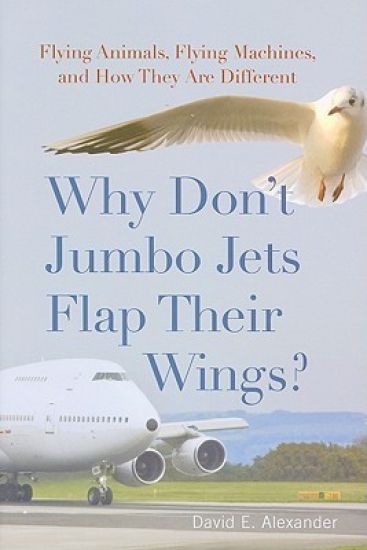
What do a bumble bee and a 747 jet have in common? It’s not a trick question. The fact is they have quite a lot in common. They both have wings. They both fly. And they’re both ideally suited to it. They just do it differently. Why Don’t Jumbo Jets Flap Their Wings? offers a fascinating explanation of how nature and human engineers each arrived at powered flight. What emerges is a highly readable account of two very different approaches to solving the same fundamental problems of moving through the air, including lift, thrust, turning, and landing. The book traces the slow and deliberate evolutionary process of animal flight—in birds, bats, and insects—over millions of years and compares it to the directed efforts of human beings to create the aircraft over the course of a single century. Among the many questions the book answers: Why are wings necessary for flight? How do different wings fly differently? When did flight evolve in animals? What vision, knowledge, and technology was needed before humans could learn to fly? Why are animals and aircrafts perfectly suited to the kind of flying they do? David E. Alexander first describes the basic properties of wings before launching into the diverse challenges of flight and the concepts of flight aerodynamics and control to present an integrated view that shows both why birds have historically had little influence on aeronautical engineering and exciting new areas of technology where engineers are successfully borrowing ideas from animals.

How identity politics failed one particular identity. 'A must read and if you think YOU don't need to read it, that's just the clue to know you do' SARAH SILVERMAN 'A masterpiece' STEPHEN FRY Jews Don't Count is a book for people who consider themselves on the right side of history. People fighting the good fight against homophobia, disablism, transphobia and, particularly, racism. People, possibly, like you. It is the comedian and writer David Baddiel's contention that one type of racism has been left out of this fight. In his unique combination of close reasoning, polemic, personal experience and jokes, Baddiel argues that those who think of themselves as on the right side of history have often ignored the history of anti-Semitism. He outlines why and how, in a time of intensely heightened awareness of minorities, Jews don't count as a real minority: and why they should.
So Dad's around lately. That's it. And I want to tell you things, throw fragments your way that I barely understand. Because it's just funny, flat out, the way someone you don't even know can get up in your face, tweak things that should be so ordinary. Or I think it's funny. Maybe you will too. Hailed by The New Yorker as "a fictional report from the strip-mall front lines of Generation Y," Important Things That Don't Matter is a provocative, moving, darkly funny portrait of family and divorce, a boy and his father, the eighties and nineties, and sex and intimacy that raises vital questions about a generation just now reaching adulthood.
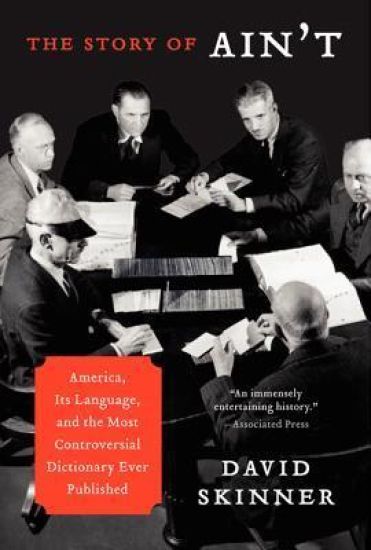
Created by the most respected American publisher of dictionaries and supervised by the editor Philip Gove, Webster's Third broke with tradition, adding thousands of new words and eliminating artificial notions of correctness, basing proper usage on how language was actually spoken. The dictionary's revolutionary style sparked what David Foster Wallace called the Fort Sumter of the Usage Wars. Editors and scholars howled for Gove's blood, calling him an enemy of clear thinking, a great relativist who was trying to sweep the English language into chaos. Critics bayed at the dictionary's permissive handling of ain't. Literary intellectuals such as Dwight Macdonald believed the dictionary's scientific approach to language and its abandonment of the old standard of usage represented nothing less than the unraveling of civilization. Entertaining and erudite, and a New York Times Book Review Editor's Choice, The Story of Ain't describes a great societal metamorphosis, tracing the fallout of the world wars, the rise of an educated middle class, and the emergence of America as the undisputed leader of the free world, and illuminating how those forces shaped our language. Never before or since has a dictionary so embodied the cultural transformation of the United States.
Finalist for the Nero Award!“He's one of my very favorites: a novelist whose champagne-fizzy mysteries—as winning as the madcap adventures of Carl Hiaasen, as hilarious as Janet Evanovich's Stephanie Plum series—tickle the brain, heart, and funny bone in equal measure.” –A.J. Finn, New York Times bestselling author of Woman in the WindowIn the next novel in David Handler’s Edgar award-winning series, Stewart “Hoagy” Hoag and his beloved basset hound, Lulu, investigate a murder in a fabled Connecticut summer playhouse.Hollywood ghostwriter Stewart “Hoagy” Hoag has chronicled the rise, fall, and triumphant return of many a celebrity. At last he’s enjoying his own, very welcome second act. After hitting a creative slump following the success of his debut novel, Hoagy has found inspiration again. Ensconced with his faithful but cowardly basset hound, Lulu, on a Connecticut farm belonging to his ex-wife, Oscar-winning actress Merilee Nash, he’s busy working on a new novel. He’s even holding out hope that he and Merilee might get together again. Life is simple and fulfilling—which of course means it’s time for complications to set in….When the police call to ask if he knows the whereabouts of a man named R.J. Romero, Hoagy learns of a dark secret from his ex-wife’s past. It’s already a stressful time for Merilee, who’s directing a gala benefit production of Private Lives to rescue the famed but dilapidated Sherbourne Playhouse, where the likes of Katherine Hepburn, Marlon Brando and Merilee herself made their professional stage debuts. Her reputation, as well as the playhouse’s future, is at stake. The cast features three of Merilee’s equally famous Oscar-winning classmates from the Yale School of Drama. But it turns out that there’s more linking them to each other—and to their fellow Yale alum, R.J.—than their alma mater. When one of the cast is found murdered, it will take Hoagy’s sleuthing skills and Lulu’s infallible nose to sniff out the truth…before someone else faces the final curtain call.
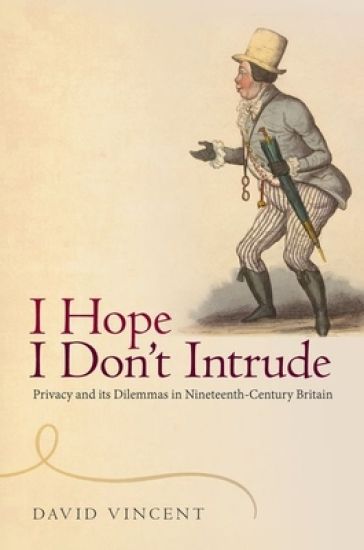
'I Hope I Don't Intrude' takes its title from the catch-phrase of the eponymous hero of the 1825 play Paul Pry, which was an immense success on the London stage and then rapidly in New York and around the English-speaking world. It tackles the complex, multi-faceted subject of privacy in nineteenth-century Britain by examining the way in which the tropes, language, and imagery of the play entered public discourse about privacy in the rest of the century. The volume is not just an account of a play, or of late Georgian and Victorian theatre. Rather it is a history of privacy, showing how the play resonated through Victorian society and revealed its concerns over personal and state secrecy, celebrity, gossip and scandal, postal espionage, virtual privacy, the idea of intimacy, and the evolution of public and private spheres. After 1825 the overly inquisitive figure of Paul Pry appeared everywhere - in songs, stories, and newspapers, and on everything from buttons and Staffordshire pottery to pubs, ships, and stagecoaches - and 'Paul-Prying' rapidly entered the language. 'I Hope I Don't Intrude' is an innovative kind of social history, using rich archival research to trace this cultural artefact through every aspect of its consumer context, and using its meanings to interrogate the largely hidden history of privacy in a period of major transformations in the role of the home, mass communication (particularly the new letter post, which delivered private messages through a public service), and the state. In vivid and entertaining detail, including many illustrations, David Vincent presents the most thorough account yet attempted of a recreational event in an era which saw a decisive shift in consumer markets. His study casts fresh light on the perennial tensions between curiosity and intrusion that were captured in Paul Pry and his catchphrase. Giving a new account of the communications revolution of the period, it re-evaluates the role of the state and the market in creating a new regime of privacy. And its critique of the concept and practice of surveillance looks forward to twenty-first-century concerns about the invasion of privacy through new technologies.
Twelve short episodes make up this story collection. James is one of those awkward children who never stop asking questions, who doesn't mean to cause trouble, but whose impossibly logical approach to the mixed-up world that adults inhabit always leads to disastrous consequences.
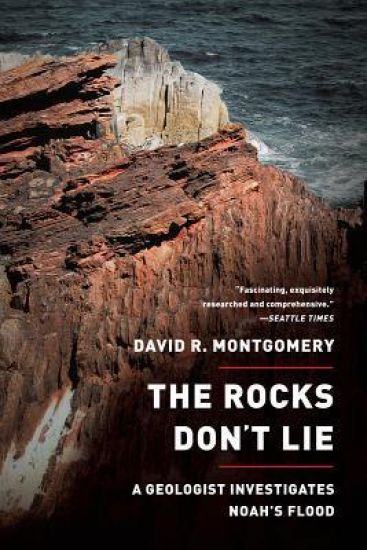
In Tibet, geologist David R. Montgomery heard a local story about a great flood that bore a striking similarity to Noah’s Flood. Intrigued, Montgomery began investigating the world’s flood stories and—drawing from historic works by theologians, natural philosophers, and scientists—discovered the counterintuitive role Noah’s Flood played in the development of both geology and creationism. Steno, the grandfather of geology, even invoked the Flood in laying geology’s founding principles based on his observations of northern Italian landscapes. Centuries later, the founders of modern creationism based their irrational view of a global flood on a perceptive critique of geology. With an explorer’s eye and a refreshing approach to both faith and science, Montgomery takes readers on a journey across landscapes and cultures. In the process we discover the illusive nature of truth, whether viewed through the lens of science or religion, and how it changed through history and continues changing, even today.

This book gives Christians and none-Christians an opportunity to realise that there is spiritual war against their lives by the enemy of their souls called Satan. The battle is called spiritual war, fought with spiritual weapons in the spiritual realm. The reason why it is called spiritual war is that it is fought in the spirit, the unseen spiritual world also called the supernatural world. The world we are born in, live in and die in, is not a safer place as we think. This book is an opportunity for Christians and non-Christians to change their thinking and a chance to change their lives forever about the problems they go through in their lives. This is a piece of good news indeed and now is the time for you to gain back your freedom through it. The book is also a wakeup call for people who have not experience Satanic attacks at present, yet they are most likely to experience one in the future, of which they must act now to avoid it. Majority of Christians and non-Christians alike lived in denial, that Satan does not exist, and only the small number of them acknowledged he exists, but they underestimate his power and his intention against their lives. The bible leaves no room for doubt that we are at war with Satan, it even refers to Christians as soldiers with weapons to fight the war. This war is being fought over your body, soul, spirit, vision and mission, family, finances, properties, businesses and so forth. Satan attacks the above-mentioned areas of your life through sickness, stress, suicide, anxiety, starvation, poverty, joblessness, wars, hatred, racism, greed, corruption, divorce, sexual immorality and so forth. Little is known about all these forms of human sufferings, yet people experienced them and lived with them. But I come to tell you in this book that all these attacks are from Satan, and they can be stopped, if you can stand up and fight for your freedom against Satan, through your God-given weapons.The book gives Christians an opportunity to use their spiritual weapons given to them by God to fight and win the war against their lives. These weapons of spiritual warfare are; the name and blood of Jesus Christ, prayer, faith, truth, salvation, fasting, peace, righteousness, and confession and repentance of sins. With these weapons in their hands, they are positioned to restore back what Satan has already stolen from them or what he may try to steal, kill, and destroy from them in the future.David Wel is a Church Warden, Secretary, Administrator, Teacher, Author, and the host of DW Spiritual Care International Online Discussion Program. He is the author of two books: Fighting the Invisible Enemy and Human Being as Tripartite; Body, Soul and Spirt. He is passionate to bring hope to hopeless people through the word of God. But there is even more to this as he lately discovered that God as our creator has a plan for us. We were created by God with great potentials within us and it is his determination to help you discover your God-given gift within you. For you to increase your productivity, he will help you unlock your potential within you by bringing resources, information, faith, knowledge, wisdom and understanding for you to live and enjoy the life you were born to live here on earth.
How Fast Did T. Rex Run?: Unsolved Questions from the Frontiers of Dinosaur Science
David Hone
PRINCETON UNIVERSITY PRESS
2022
sidottu
The revolution in science that is transforming our understanding of dinosaurs In just the past twenty years, we have learned more about dinosaurs than we did in the previous two centuries. This book describes the extraordinary advances in palaeontology that are beginning to solve many of the mysteries surrounding these marvelous prehistoric creatures, including their mating habits, ways of communicating, skin color, migration patterns, and extinction. How did dinosaurs rear their young? What did they eat? What did T. rex actually do with those tiny arms? David Hone draws on his own discoveries at the forefront of dinosaur science to illuminate these and other questions. Each chapter in this lively and informative book covers a key topic in dinosaur science, such as origins, diversity, evolution, habitats, anatomy, behaviour, ecology and dinosaur descendants--the birds. For each topic, Hone discusses the history of what palaeontologists thought in the past, the new insights we are gleaning from recent fossil finds and the latest technologies and the gaps in our knowledge that still remain. He shares his own predictions about the research areas that may produce the next big ideas in dinosaur science and addresses the unknowns we may never solve. How Fast Did T. rex Run? reveals everything we now know about dinosaurs--and everything we don't--and charts thrilling new directions for tomorrow's generation of dinosaur scientists.
How Fast Did T. Rex Run?: Unsolved Questions from the Frontiers of Dinosaur Science
David Hone
PRINCETON UNIVERSITY PRESS
2024
nidottu
The revolution in science that is transforming our understanding of dinosaurs In just the past twenty years, we have learned more about dinosaurs than we did in the previous two centuries. This book describes the extraordinary advances in palaeontology that are beginning to solve many of the mysteries surrounding these marvelous prehistoric creatures, including their mating habits, ways of communicating, skin color, migration patterns, and extinction. How did dinosaurs rear their young? What did they eat? What did T. rex actually do with those tiny arms? David Hone draws on his own discoveries at the forefront of dinosaur science to illuminate these and other questions. Each chapter in this lively and informative book covers a key topic in dinosaur science, such as origins, diversity, evolution, habitats, anatomy, behaviour, ecology and dinosaur descendants--the birds. For each topic, Hone discusses the history of what palaeontologists thought in the past, the new insights we are gleaning from recent fossil finds and the latest technologies and the gaps in our knowledge that still remain. He shares his own predictions about the research areas that may produce the next big ideas in dinosaur science and addresses the unknowns we may never solve. How Fast Did T. rex Run? reveals everything we now know about dinosaurs--and everything we don't--and charts thrilling new directions for tomorrow's generation of dinosaur scientists.
You Are What You Don't Say - Finding a New Paradigm for Business Communication is about bringing a new era of respect, trust, kindness and inspiration to all of our business lives. The modern world of human interaction has become a strange mix of old and new, appropriate and inappropriate, effective and ineffective, and can include too many downright disrespectful and failed attempts at dialogue. Even with all of the enormous changes in technology, the way people work and interact, and the overwhelming demands placed on humans' ability to rapidly exchange information, there has been almost no societal adaptation of guidelines for how we should communicate effectively. What businesspeople need is direction toward a new paradigm for how we all interact with each other.This is not just another book about where to put your hands when you talk. The world needs much more than that. Business in the twenty-first century is moving and changing so rapidly that success can only come to individuals and organizations which are fluid, innovative, and creative in their approaches and their exchange of information.Authored by a communication expert with more than thirty-five years of strategic communication consulting experience, You Are What You Don't Say - Finding a New Paradigm for Business Communication is written for readers who want to understand why certain things work in communicating, and how some communication approaches are far better than others in today's business environment. It explores how meanness became so prevalent in so many companies and gives specific guidelines for finding the way to more innovative dialogue. This book can be a life-changing experience for anyone seeking to become more influential, liked, respected, and successful in their business and personal life.