Kirjojen hintavertailu. Mukana 11 364 312 kirjaa ja 12 kauppaa.

Kirjahaku

Etsi kirjoja tekijän nimen, kirjan nimen tai ISBN:n perusteella.

1000 tulosta hakusanalla Devon Nichole

Magic Without Mercy

Magic Without Mercy

Devon Monk

Penguin Books Ltd
2012
pokkari
Devon Monk's feisty heroine, Allie Beckstrom, returns in Magic Without Mercy, the penultimate novel in this magical urban fantasy series.'We knew as soon as we stepped out on those streets, we were walking blind, into a war. All of us were going to have to bear the pain of paying the price for the magic we called upon. And I was going to have to bear the pain of carrying a weapon that made me face what I had become. A killer.'Allison Beckstrom's talent for tracking spells has put her up against some of the darkest elements in the world of magic. But she's never faced anything like this.Magic itself has been poisoned, and Allie's undead father may have left the only cure in the hands of a madman. Hunted by the Authority - the secret council who enforces the laws - wanted by the police, and unable to use magic, she's got to find the cure before the sickness spreads beyond any power to stop it.But when a death magic user seeks to destroy the only thing that can heal magic, Allie and her fellow renegades must stand and fight to defend the innocent and save all magic . . .If you love urban fantasy with a magical twist, then you'll love Devon Monk's Magic Without Mercy.'Fiendishly original and a stay-up-all-night read' Patricia Briggs'Allie's adventures are gripping and engrossing, with an even, clever mix of humour, love, and brutality' Publishers Weekly'Devon Monk's writing is addictive, and the only cure is more, more, more' Rachel VincentDevon Monk has one husband, two sons, and a dog named Mojo. She lives in Oregon and is surrounded by colourful and numerous family members who mostly live within dinner-calling distance of each other. Devon's previous novels, Magic to the Bone, Magic in the Blood, Magic in the Shadows and Magic on the Storm have also been published by Penguin. Visit her on the web at www.devonmonk.com.

Magic for a Price

Magic for a Price

Devon Monk

Penguin Books Ltd
2012
pokkari
Magic for a Price is the latest book in this fantastic urban fantasy series featuring Allie Beckstrom by Devon Monk that's perfect for fans of Charlaine Harris, Laurell K. Hamilton and Karen Chance.'We were about to enter a war with two of the most powerful creatures who had ever used magic. And we were nowhere near ready for this fight.'For most of her life, Allison Beckstrom has used magic and accepted the heavy price it exacts. But now that all magic is poisoned, it's no longer just using people - it's killing them.With Portland about to descend into chaos, Allie needs to find a way to purify the wells of tainted magic beneath the city. But the only options left to her are grim: attempt to close down magic forever, or follow her father's plan to set magic into the right hands - even though she's learned to never trust his word.In her final stand against death, darkness, and her own deepest fears, Allie must fight smart and choose well, or pay the ultimate price.Magic for a Price is the gripping finale to the Allie Beckstrom urban fantasy series by Devon Monk - and is one not to be missed.Praise for Devon Monk:'Devon Monk's writing is addictive, and the only cure is more, more, more!' Rachel Vincent'Fiendishly original and a stay-up-all-night read' Patricia Briggs'Allie's adventures are gripping and engrossing, with an even, clever mix of humour, love and brutality' Publishers WeeklyDevon Monk has one husband, two sons, and a dog named Mojo. She lives in Oregon and is surrounded by colourful and numerous family members who mostly live within dinner-calling distance of each other. Devon's previous novels, Magic to the Bone, Magic in the Blood, Magic in the Shadows, Magic on the Storm and Magic Without Mercy, have also been published by Penguin. Find out more on the web at www.devonmonk.com and www.berkleyuk.com .
Unfaithful

Unfaithful

Devon Scott

Kensington Publishing
2008
nidottu
Ambitious businessman Ryan is smart, successful and happily married. He has the best of everything, but that doesn't stop him thinking about the one thing he can't have - Olivia. She's his friend, his co-worker and, to top it off, the wife of his best friend Miles.
Doors of Oaxaca

Doors of Oaxaca

Devon Fekete

Schiffer Publishing Ltd
2007
nidottu
Over 700 images create a portal into the architectural style of Oaxaca, Mexico's most colonial city. Oaxaca's Spanish Colonial architecture dates back to the early sixteenth century, and these images explore an aesthetic that has hardly altered in all that time. Great wooden doors, studded with hand wrought iron hardware, create punctuation in walls of desert-hued sandstone. Oaxaca is celebrated as the cultural and artistic center of Mexico, and this book will help illustrate why. The rich textures and colors of the diverse doorways will inspire anyone in search of a Southwestern palette.
Still in the Game

Still in the Game

Devon Still

Thomas Nelson Publishers
2019
sidottu
Be proud of your scars. They’re signs that you survived whatever tried to break you.For Devon Still, life has been a journey from one scar to the next. From one challenge to the next. His is a story of pushing through pain and overcoming obstacles of all shapes and sizes—of choosing to fight for the sake of his family, his community, and his faith.Millions of people around the world have been inspired by Devon’s tireless devotion in helping his daughter, Leah, learn how to “beat up cancer.” But in these pages, Devon takes readers behind the headlines to reveal the deeper story of what prepared him for that fight.Still in the Game is Devon’s declaration that our challenges reveal our purpose, that our scars make us stronger, and that no loss is too great to stop our comeback!
Still in the Game

Still in the Game

Devon Still

Thomas Nelson Publishers
2020
nidottu
Be proud of your scars. They’re signs that you survived whatever tried to break you.For Devon Still, life has been a journey from one scar to the next. From one challenge to the next. His is a story of pushing through pain and overcoming obstacles of all shapes and sizes—of choosing to fight for the sake of his family, his community, and his faith.Millions of people around the world have been inspired by Devon’s tireless devotion in helping his daughter, Leah, learn how to “beat up cancer.” But in these pages Devon takes readers behind the headlines to reveal the deeper story of what prepared him for that fight, includinggrowing up in the shadow of drugs and violence,working through the pain of his parents’ divorce,overcoming injuries and scandal to shine as an All-American at Penn State University,beating the odds to play in the National Football League, andusing his newfound platform to raise both awareness and resources in the global fight against cancer.Still in the Game is Devon’s declaration that our challenges reveal our purpose, that our scars make us stronger, and that no loss is too great to stop our comeback!
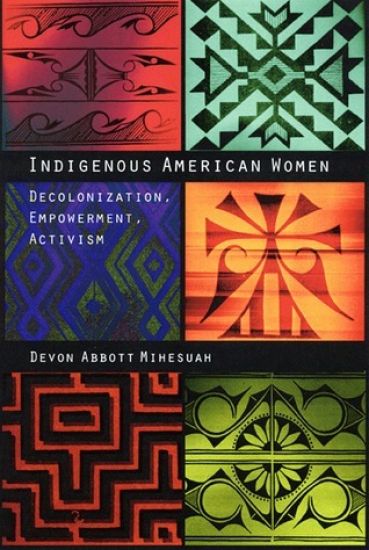
Indigenous American Women

Indigenous American Women

Devon A. Mihesuah

University of Nebraska Press
2003
sidottu
Oklahoma Choctaw scholar Devon Abbott Mihesuah offers a frank and absorbing look at the complex, evolving identities of American Indigenous women today, their ongoing struggles against a centuries-old legacy of colonial disempowerment, and how they are seen and portrayed by themselves and others. Mihesuah first examines how American Indigenous women have been perceived and depicted by non-Natives, including scholars, and by themselves. She then illuminates the pervasive impact of colonialism and patriarchal thought on Native women's traditional tribal roles and on their participation in academia. Mihesuah considers how relations between Indigenous women and men across North America continue to be altered by Christianity and Euro-American ideologies.Sexism and violence against Indigenous women has escalated; economic disparities and intratribal factionalism and 'culturalism' threaten connections among women and with men; and many women suffer from psychological stress because their economic, religious, political, and social positions are devalued. In the last section, Mihesuah explores how modern American Indigenous women have empowered themselves tribally, nationally, or academically. Additionally, she examines the overlooked role that Native women played in the Red Power movement as well as some key differences between Native women 'feminists' and 'activists'. Devon Abbott Mihesuah is a professor of applied Indigenous studies and history at Northern Arizona University. Her books include "Cultivating the Rosebuds: The Education of Women at the Cherokee Female Seminary, 1851-1909" and "Roads of My Relatives".
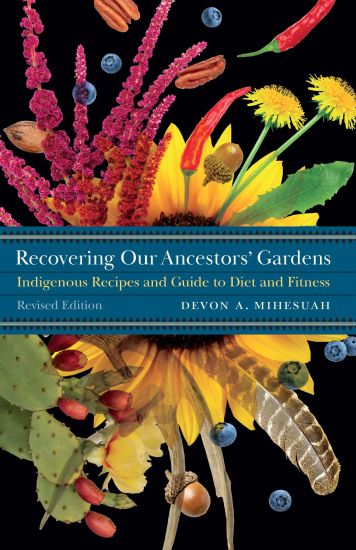
Recovering Our Ancestors' Gardens

Recovering Our Ancestors' Gardens

Devon A. Mihesuah

Bison Books
2020
pokkari
Educators, librarians, food sovereignty activists, culinary arts students, and those interested in Native American food history and sovereignty will find that this book is an excellent resource.-Elise Krohn, Tribal College Journal2020 Gourmand World Cookbook Award This new edition is revised, updated, and contains new information, new chapters, and an extensive curriculum guide that includes objectives, resources, study questions, assignments, and activities for teachers, librarians, food sovereignty activists, and anyone wanting to know more about indigenous foodways.Winner of the Gourmand International World Cookbook Award, Recovering Our Ancestors’ Gardens is back! Featuring an expanded array of tempting recipes of indigenous ingredients and practical advice about health, fitness, and becoming involved in the burgeoning indigenous food sovereignty movement, the acclaimed Choctaw author and scholar Devon A. Mihesuah draws on the rich indigenous heritages of this continent to offer a helpful guide to a healthier life. Recovering Our Ancestors’ Gardens features pointed discussions about the causes of the generally poor state of indigenous health today. Diminished health, Mihesuah contends, is a pervasive consequence of colonialism, but by advocating for political, social, economic, and environmental changes, traditional food systems and activities can be reclaimed and made relevant for a healthier lifestyle today. New recipes feature pawpaw sorbet, dandelion salad, lima bean hummus, cranberry pie with cornmeal crust, grape dumplings, green chile and turkey posole, and blue corn pancakes, among other dishes. Savory, natural, and steeped in the Native traditions of this land, these recipes are sure to delight and satisfy.
Indigenous American Women

Indigenous American Women

Devon A. Mihesuah

University of Nebraska Press
2003
pokkari
Oklahoma Choctaw scholar Devon Abbott Mihesuah offers a frank and absorbing look at the complex, evolving identities of American Indigenous women today, their ongoing struggles against a centuries-old legacy of colonial disempowerment, and how they are seen and portrayed by themselves and others. Mihesuah first examines how American Indigenous women have been perceived and depicted by non-Natives, including scholars, and by themselves. She then illuminates the pervasive impact of colonialism and patriarchal thought on Native women's traditional tribal roles and on their participation in academia. Mihesuah considers how relations between Indigenous women and men across North America continue to be altered by Christianity and Euro-American ideologies. Sexism and violence against Indigenous women has escalated; economic disparities and intratribal factionalism and "culturalism" threaten connections among women and with men; and many women suffer from psychological stress because their economic, religious, political, and social positions are devalued. In the last section, Mihesuah explores how modern American Indigenous women have empowered themselves tribally, nationally, or academically. Additionally, she examines the overlooked role that Native women played in the Red Power movement as well as some key differences between Native women "feminists" and "activists."
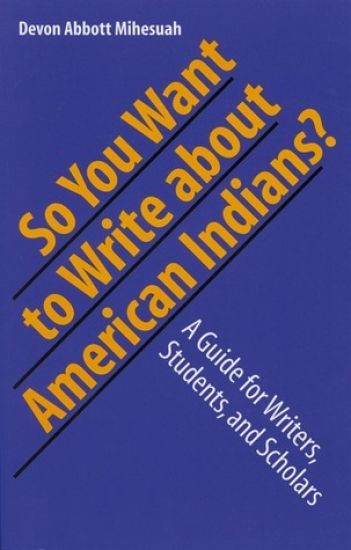
So You Want to Write About American Indians?
So You Want to Write about American Indians? is the first of its kind—an indispensable guide for anyone interested in writing and publishing a novel, memoir, collection of short stories, history, or ethnography involving the Indigenous peoples of the United States. In clear language illustrated with examples—many from her own experiences—Choctaw scholar and writer Devon Abbott Mihesuah explains the basic steps involved with writing about American Indians. So You Want to Write about American Indians? provides a concise overview of the different types of fiction and nonfiction books written about Natives and the common challenges and pitfalls encountered when writing each type of book. Mihesuah presents a list of ethical guidelines to follow when researching and writing about Natives, including the goals of the writer, stereotypes to avoid, and cultural issues to consider. She also offers helpful tips for developing ideas and researching effectively, submitting articles to journals, drafting effective book proposals, finding inspiration, contacting an editor, polishing a manuscript, preparing a persuasive résumé or curriculum vitae, coping with rejection, and negotiating a book contract.
Choctaw Crime and Punishment, 1884-1907

Choctaw Crime and Punishment, 1884-1907

Devon A. Mihesuah

University of Oklahoma Press
2009
sidottu
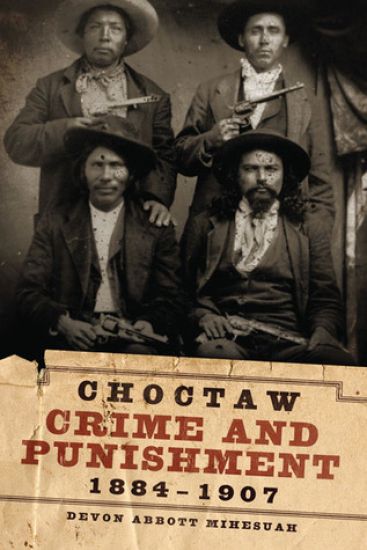
During the decades between the Civil War and the establishment of Oklahoma statehood, Choctaws suffered almost daily from murders, thefts, and assaults - usually at the hands of white intruders, but increasingly by Choctaws themselves. This book focuses on two previously unexplored murder cases to illustrate the intense factionalism that emerged among tribal members during those lawless years as conservative Nationalists and pro-assimilation Progressives fought for control of the Choctaw Nation.Devon Abbott Mihesuah describes the brutal murder in 1884 of her own great-great-grandfather, Nationalist Charles Wilson, who was a Choctaw lighthorseman and U.S. deputy marshal. She then relates the killing spree of Progressives by Nationalist Silan Lewis ten years later. Mihesuah draws on a wide array of sources - even in the face of missing court records - to weave a spellbinding account of homicide and political intrigue. She painstakingly delineates a transformative period in Choctaw history to explore emerging gulfs between Choctaw citizens and address growing Indian resistance to white intrusions, federal policies, and the taking of tribal resources.The first book to fully describe this Choctaw factionalism, Choctaw Crime and Punishment is both a riveting narrative and an important analysis of tribal politics.
Ned Christie

Ned Christie

Devon A. Mihesuah

University of Oklahoma Press
2018
sidottu
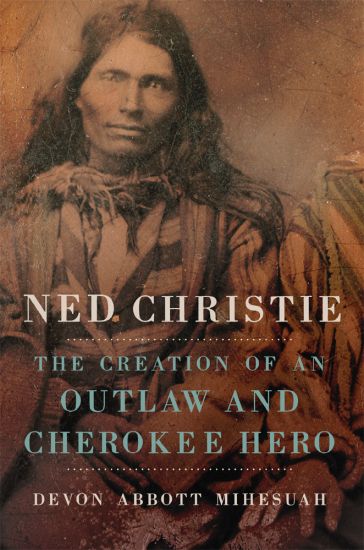
Who was Nede Wade Christie? Was he a violent criminal guilty of murdering a federal officer? Or a Cherokee statesman who suffered a martyr's death for a crime he did not commit? For more than a century, journalists, pulp fiction authors, and even serious historians have produced largely fictitious accounts of ""Ned"" Christie's life. Now, in a tour de force of investigative scholarship, Devon A. Mihesuah offers a far more accurate depiction of Christie and the times in which he lived. In 1887 Deputy U.S. Marshal Dan Maples was shot and killed in Tahlequah, Indian Territory. As Mihesuah recounts in unsurpassed detail, any of the criminals in the vicinity at the time could have committed the crime. Yet the federal court at Fort Smith, Arkansas, focused on Christie, a Cherokee Nation councilman and adviser to the tribal chief. Christie evaded capture for five years. His life ended when a posse dynamited his home - knowing he was inside - and shot him as he emerged from the burning building. The posse took Christie's body to Fort Smith, where it lay for three days on display for photographers and gawkers. Nede's family suffered as well. His teenage cousin Arch Wolfe was sentenced to prison and ultimately perished in the Canton Asylum for ""insane"" Indians - a travesty that, Mihesuah shows, may even surpass the injustice of Nede's fate. Placing Christie's story within the rich context of Cherokee governance and nineteenth-century American political and social conditions, Mihesuah draws on hundreds of newspaper accounts, oral histories, court documents, and family testimonies to assemble the most accurate portrayal of Christie's life possible. Yet the author admits that for all this information, we may never know the full story, because Christie's own voice is largely missing from the written record. In addition, she spotlights our fascination with villains and martyrs, murder and mayhem, and our dangerous tendency to glorify the ""Old West."" More than a biography, Ned Christie traces the making of an American myth.
Ned Christie

Ned Christie

Devon A. Mihesuah

University of Oklahoma Press
2021
nidottu
Who was Nede Wade Christie? Was he a violent criminal guilty of murdering a federal officer? Or a Cherokee statesman who suffered a martyr's death for a crime he did not commit? For more than a century, journalists, pulp fiction authors, and even serious historians have produced largely fictitious accounts of 'Ned' Christie's life. Now, in a tour de force of investigative scholarship, Devon A. Mihesuah offers a far more accurate depiction of Christie and the times in which he lived. In 1887 Deputy U.S. Marshal Dan Maples was shot and killed in Tahlequah, Indian Territory. As Mihesuah recounts in unsurpassed detail, any of the criminals in the vicinity at the time could have committed the crime. Yet the federal court at Fort Smith, Arkansas, focused on Christie, a Cherokee Nation councilman and adviser to the tribal chief. Christie evaded capture for five years. His life ended when a posse dynamited his home - knowing he was inside - and shot him as he emerged from the burning building. The posse took Christie's body to Fort Smith, where it lay for three days on display for photographers and gawkers. Nede's family suffered as well. His teenage cousin Arch Wolfe was sentenced to prison and ultimately perished in the Canton Asylum for 'insane' Indians - a travesty that, Mihesuah shows, may even surpass the injustice of Nede's fate. Placing Christie's story within the rich context of Cherokee governance and nineteenth-century American political and social conditions, Mihesuah draws on hundreds of newspaper accounts, oral histories, court documents, and family testimonies to assemble the most accurate portrayal of Christie's life possible. Yet the author admits that for all this information, we may never know the full story, because Christie's own voice is largely missing from the written record. In addition, she spotlights our fascination with villains and martyrs, murder and mayhem, and our dangerous tendency to glorify the 'Old West.' More than a biography, Ned Christie traces the making of an American myth.
Choctaw Crime and Punishment, 1884–1907

Choctaw Crime and Punishment, 1884–1907

Devon A. Mihesuah

UNIVERSITY OF OKLAHOMA PRESS
2022
nidottu
During the decades between the Civil War and the establishment of Oklahoma statehood, Choctaws suffered almost daily from murders, thefts, and assaults—usually at the hands of white intruders, but increasingly by Choctaws themselves. This book focuses on two previously unexplored murder cases to illustrate the intense factionalism that emerged among tribal members during those lawless years as conservative Nationalists and pro-assimilation Progressives fought for control of the Choctaw Nation.Devon Abbott Mihesuah describes the brutal murder in 1884 of her own great-great-grandfather, Nationalist Charles Wilson, who was a Choctaw lighthorseman and U.S. deputy marshal. She then relates the killing spree of Progressives by Nationalist Silan Lewis ten years later. Mihesuah draws on a wide array of sources—even in the face of missing court records—to weave a spellbinding account of homicide and political intrigue. She painstakingly delineates a transformative period in Choctaw history to explore emerging gulfs between Choctaw citizens and address growing Indian resistance to white intrusions, federal policies, and the taking of tribal resources.The first book to fully describe this Choctaw factionalism, Choctaw Crime and Punishment is both a riveting narrative and an important analysis of tribal politics.
The Bone Picker

The Bone Picker

Devon A. Mihesuah

UNIVERSITY OF OKLAHOMA PRESS
2024
nidottu
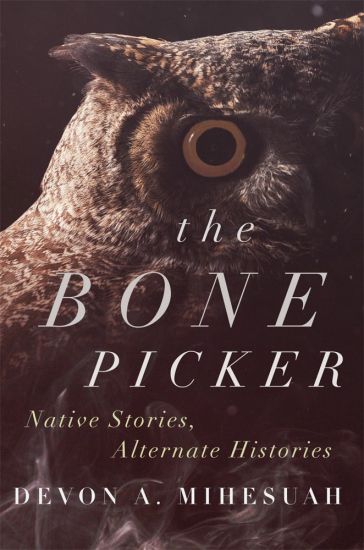
Under the shadow of gray clouds, three children venture into the woods, where they spot the corpse of an old man on a scaffold. Suddenly a wild figure emerges, with long fingernails and tangled hair. It is the Hattak fullih nipi foni, the bone picker, who comes to tear off rotting flesh with his fingernails. Only the Choctaws who adhere to the old ways will speak of him. The frightening bone picker is just one of many entities, scary and mysterious, who lurk behind every page of this spine-tingling collection of Native fiction, written by award-winning Choctaw author Devon A. Mihesuah. Choctaw lore features a large pantheon of deities. These beings created the first people, taught them how to hunt, and warned them of impending danger. Their stories are not meant simply to entertain: each entity has a purpose in its behavior and a lesson to share—to those who take heed. As a Choctaw citizen, with deep ties to Indian Territory and Oklahoma, Mihesuah grew up hearing the stories of her ancestors. In the tradition of Native storytelling, she spins tales that move back and forth fluidly across time. The ancient beings, we discover, followed the tribe from their original homelands in Mississippi and are now ever-present influences on tribal consciousness. While some of the horrors told here are “real life” in nature, the art of fiction that Mihesuah employs reveals surprising outcomes or alternative histories. It turns out the things that scare us the most can lead to the answers we are seeking and even ensure our very survival.
The Long Walk to Freedom

The Long Walk to Freedom

Devon W. Carbado; Donald Weise

Beacon Press
2013
pokkari
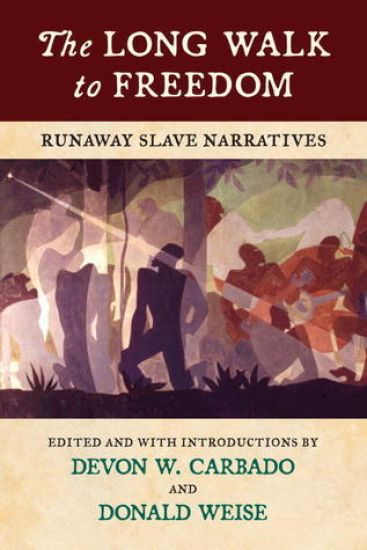
In this groundbreaking compilation of first-person accounts of the runaway slave phenomenon, editors Devon W. Carbado and Donald Weise have recovered twelve narratives spanning eight decades--more than half of which have been long out of print. Told in the voices of the runaway slaves themselves, these narratives reveal the extraordinary and often innovative ways that these men and women sought freedom and demanded citizenship. Also included is an essay by UCLA history professor Brenda Stevenson that contextualizes these narratives, providing a brief yet comprehensive history of slavery, as well as a look into the daily life of a slave. Divided into four categories--running away for family, running inspired by religion, running by any means necessary, and running to be free--these stories are a testament to the indelible spirit of these remarkable survivors. The Long Walk to Freedom presents excerpts from the narratives of well-known runaway slaves, like Frederick Douglass and Harriet Jacobs, as well as from the narratives of lesser-known and virtually unknown people. Several of these excerpts have not been published for more than a hundred years. But they all portray the courageous and sometimes shocking ways that these men and women sought their freedom and asserted power, often challenging many of the common assumptions about slaves' lack of agency. Among the remarkable and inspiring stories is the tense but triumphant tale of Henry Box Brown, who, with a white abolitionist's help, shipped himself in a box--over a twenty-seven-hour train ride, part of which he spent standing on his head--to freedom in Philadelphia. And there's the story of William and Ellen Craft, who fled across thousands of miles, with Ellen, who was light-skinned, disguised as a white male slave-owner so she and her husband could achieve their dream of raising their children as free people. Gripping, inspiring, and captivating, The Long Walk to Freedom is a remarkable collection that celebrates those who risked their lives in pursuit of basic human rights.
Chicano Culture, Ecology, Politics

Chicano Culture, Ecology, Politics

Devon G. Pena

University of Arizona Press
1999
nidottu
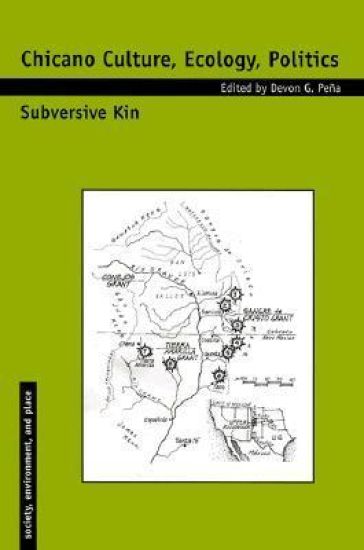
Until recently, mainstream American environmentalism has been a predominantly white, middle-class movement, essentially ignoring the class, race, and gender dimensions of environmental politics. In this provocative collection of original essays, the environmental dimensions of the Chicana/o experience are explicitly expressed and debated. Employing a variety of genres ranging from poetry to autobiography to theoretical and empirical essays, the voices in this collection speak to the most significant issues of environmentalism and social justice, recognizing throughout the need for a pluralism of Chicana/o philosophies. The contributors provide an excellent basis for understanding how multiple Chicana/o views on the environment play out in the context of dominant social, political and economic views. Chicano Culture, Ecology, Politics examines a number of Chicana/o ecological perspectives. How can the ethics of reciprocity present in Chicana/o agropastoral life be protected and applied on a broader scale? How can the dominant society, whose economic structure is invested in "placeless mobility," take note of the harm caused to land-based cultures, take responsibility for it, and take heed before it is too late? Will the larger society be "ecologically housebroken" before it destroys its home? Grounded in actual political struggles waged by Chicana/o communities over issues of environmental destruction, cultural genocide, and socioeconomic domination, this volume provides an important series of snapshots of Chicana/o history. Chicano Culture, Ecology, Politics illuminates the bridges that exist and must be understood between race, ethnicity, class, gender, politics, and ecology. CONTENTS-Part 1: IndoHispano Land Ethics-Los Animalitos: Culture, Ecology, and the Politics of Place in the Upper Ri??o Grande, Devon G. Pena-Social Action Research, Bioregionalism, and the Upper Rio Grande, Ruben O. Martinez-Notes on (Home)Land Ethics: Ideas, Values, and the Land, Reyes Garcia-Part 2: Environmental History and Ecological Politics-Ecological Legitimacy and Cultural Essentialism: Hispano Grazing in Northern New Mexico, Laura Pulido: The Capitalist Tool, the Lawless, and the Violent: A Critique of Recent Southwestern Environmental History, Devon G. Pena and Ruben O. Martinez-Ecofeminism and Chicano Environmental Struggles: Bridges across Gender and Race, Gwyn Kirk-Philosophy Meets Practice: A Critique of Ecofeminism through the Voices of Three Chicana Activists, Malia Davis-Part 3: Alternatives to Destruction: The Pasture Poacher (a poem), Joseph C. Gallegos-Acequia Tales: Stories from a Chicano Centennial Farm, Joseph C. Gallegos-A Gold Mine, an Orchard, and an Eleventh Commandment, Devon G. Pena-
The Roads of My Relations

The Roads of My Relations

Devon A. Mihesuah

University of Arizona Press
2000
sidottu
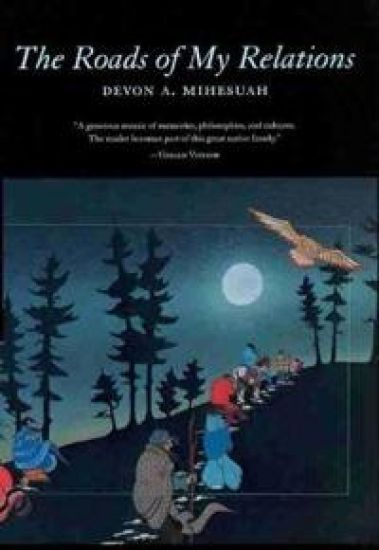
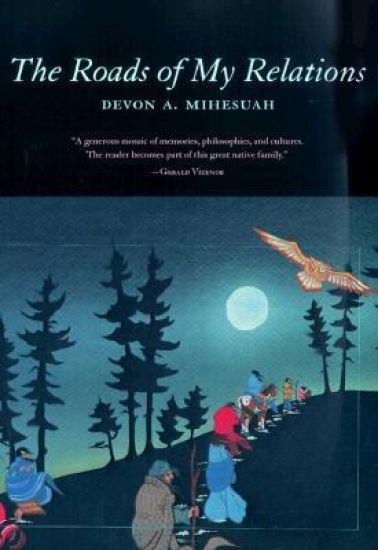
I've traveled a lot of roads, but never alone. My relations are with me, says Billie McKenney, one of the matriarchs of the complex family of Choctaws searching for peace as the white world rapidly encroaches on their tribal land, politics, and values. In her first collection of stories, Native American writer Devon A. Mihesuah chronicles the lives of several generations of a close-knit Choctaw family as they are forced from their traditional homeland in nineteenth-century Mississippi and endure unspeakable sorrows during their journey before settling in southeastern Oklahoma.Blending family lore, stark realism, and vivid imagination, The Roads of My Relations relays a strong sense of Choctaw culture and world view in absorbing tales of history and legend. Unfolding through the voices and actions of family members, confused half-bloods, and unlikely heroes-not all of them living or even human-the stories tell of the horrors of forced removal, the turbulence of post Civil War Indian Territory, the terrifying violence suffered at the hands of immortal Crow witches, and the family's ultimate survival against forces of evil. Time-traveling ghosts, mysterious medicine men, and eerie shape-shifters share the pages with proud matriarchs, mischievous schoolgirls, and loving siblings.Together, these interwoven stories express the strength and persistence of a tribe whose identity and pride have survived the disruptions of colonialism. With The Roads of My Relations, Devon A. Mihesuah has created a universal and timeless exploration of heritage, spirituality, and the importance of preserving and passing on tradition.
The Roads of My Relations

The Roads of My Relations

Devon A. Mihesuah

University of Arizona Press
2000
nidottu
I've traveled a lot of roads, but never alone. My relations are with me, says Billie McKenney, one of the matriarchs of the complex family of Choctaws searching for peace as the white world rapidly encroaches on their tribal land, politics, and values. In her first collection of stories, Native American writer Devon A. Mihesuah chronicles the lives of several generations of a close-knit Choctaw family as they are forced from their traditional homeland in nineteenth-century Mississippi and endure unspeakable sorrows during their journey before settling in southeastern Oklahoma. Blending family lore, stark realism, and vivid imagination, The Roads of My Relations relays a strong sense of Choctaw culture and world view in absorbing tales of history and legend. Unfolding through the voices and actions of family members, confused half-bloods, and unlikely heroes--not all of them living or even human--the stories tell of the horrors of forced removal, the turbulence of post Civil War Indian Territory, the terrifying violence suffered at the hands of immortal Crow witches, and the family's ultimate survival against forces of evil. Time-traveling ghosts, mysterious medicine men, and eerie shape-shifters share the pages with proud matriarchs, mischievous schoolgirls, and loving siblings. Together, these interwoven stories express the strength and persistence of a tribe whose identity and pride have survived the disruptions of colonialism. With The Roads of My Relations, Devon A. Mihesuah has created a universal and timeless exploration of heritage, spirituality, and the importance of preserving and passing on tradition.