
Kirjahaku
Etsi kirjoja tekijän nimen, kirjan nimen tai ISBN:n perusteella.
1000 tulosta hakusanalla Don Gutteridge

When James Work took a teaching job at the College of Southern Utah in the mid-1960s, he knew little about teaching and even less about the customs of his Mormon neighbors. For starters, he did not know he was a ""Gentile,"" the Mormon term for anyone not a member of the Church of Jesus Christ of Latter-day Saints. But just as he learned to be a religious diplomat and a black-market bourbon runner, he also discovered that his master's degree in literature apparently qualified him to teach journalism, photography, creative writing, advanced essay and feature article writing, freshman composition, and ""vocabulary building.""With deadpan humor, Work pokes fun at his own naiveté in Don't Shoot the Gentile, a memoir of his rookie years teaching at a small college in a small, mostly Mormon town. From the first pages, Work tells how he navigated the sometimes tricky process of being an outsider, pulling readers - no matter their religious affiliation - into his universal fish-out-of-water tale. The title is drawn from a hunting trip Work made with fellow faculty members, all Mormons. When a load of buckshot whizzed over his head, one of the party hollered, ""Don't shoot the Gentile! We'll have to hire another one!""Today the College of Southern Utah is a university, and Cedar City, like most small towns in the West, is no longer so culturally isolated. James Work left in 1967 to pursue a doctorate, but his remembrances of the place and its people will do more than make readers - Mormon and non-Mormon alike - laugh out loud. Work's memoir will resonate with anyone who remembers the challenges and small triumphs of a first job in a new, strange place.
Don't Sh*t In My Hat And Tell Me It Fits Better
Mike Caracciolo
Citadel Press Inc.,U.S.
2008
nidottu
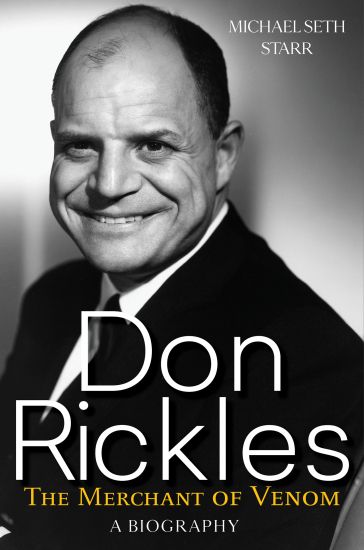
Considered the world's greatest insult comic, Don Rickles was a legendary comedy giant, honorary Rat Pack member, and "equal opportunity offender" who defied political correctness, transcended every medium, entertained, influenced and insulted generations of comedians and fans over his six-decade career. Now in the first-ever biography and in-depth portrait of Don Rickles, New York Post television editor and celebrity biographer Michael Seth Starr delivers a hilarious, moving, and long-overdue look at the real man behind the sting. Riding a wave of success that lasted more than sixty years, Don Rickles is best known as the "insult" comic who skewered presidents, royalty, celebrities, and friends and fans alike. But there was more to "Mr. Warmth" than a devilish ear-to-ear grin and lightning-fast put-downs. Rickles was a loving husband, an adoring father who suffered a devastating loss, and a loyal friend to the likes of Bob Newhart and Frank Sinatra. Don was also a young student at the American Academy of Dramatic Arts with future stars Jason Robards, Jr., Don Murray, and Grace Kelly, and intended to become a seriously committed actor. But it was in small nightclubs where Rickles found success, steamrolling hecklers, honing his acerbic put-downs, and teaching the world to love being insulted. Sex, race, religion, nationality, physical appearance, political leanings--nothing and no one was safe from the "Planned Parenthood Poster Boy," as Johnny Carson referred to him. The Merchant of Venom traces Don Rickles' career from his rise in the 1950s to a late-in-life resurgence thanks to the Toy Story franchise, his role in Martin Scorsese's Casino, and scores of TV appearances from Carson to Seth Meyers. In the intervening decades, Rickles conquered every medium he worked in, including film, television, and on stage, where the Vegas legend was still performing at the age of eighty-five. In his highly memorable career, he was idolized by a generation of younger comedians including Jerry Seinfeld, Chris Rock, and Jay Leno, and performed in the shadow of a shocking open secret: he was the nicest man in town. An in-depth portrait of the personal and singular professional life of Don Rickles, The Merchant of Venom delivers a hilarious, moving, and long-overdue look at the real man behind the sting.
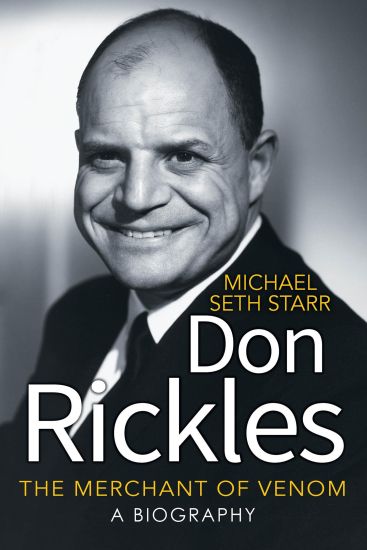
An entertaining, hilarious, biting biography of "Mr. Warmth," the infamously prickly comic who dominated Hollywood and Las Vegas for decades, making an artform out of heckling his friends, family and especially his audiences - and they couldn't get enough of it. Having ridden a wave of success that lasted more than sixty years, Don Rickles is best known as the "insult" comic who skewered presidents, royalty, celebrities, and friends and fans alike. But there was more to "Mr. Warmth" than a devilish ear-to-ear grin and lightning-fast put-downs. Rickles was a loving husband, an adoring father who suffered a devastating loss, and a loyal friend to the likes of Bob Newhart and Frank Sinatra. Don was also a young student at the American Academy of Dramatic Arts and intended to become a serious actor. But it was in small nightclubs where Rickles found success, steamrolling hecklers, honing his acerbic put-downs, and teaching the world to love being insulted. Don Rickles, The Merchant of Venom traces career from his rise in the 1950s to a late-in-life resurgence thanks to the Toy Story franchise, his role in Scorsese's Casino, and scores of TV appearances from Carson to Seth Meyers. In the intervening decades, Rickles conquered every medium, including the stage, where the Vegas legend was still performing at the age of eighty-five. In his highly memorable career, he was idolized by a generation of younger comedians including Jerry Seinfeld, Jay Leno, and many others. And all along, Rickles performed in the shadow of a shocking open secret: he was the nicest man in town.

Complete with never-before-seen photos and a selection of iconic artworks, an unfiltered and intimate chronicle of the storied Hollywood life of Don Bachardy, the acclaimed portrait artist who, as famed author Christopher Isherwood's life partner, was half of America's most famous gay couple for over three decades, and whose subjects and friends include an astounding array of Hollywood and literary celebrities. "Believe me baby, this is not just a book, sugar, it's a marvelous dance with words, enchanting, heady and daring " --Liza Minnelli A figure as fascinating as any of his celebrated subjects, Don Bachardy has lived an extraordinary life at the heart of Hollywood, literary, and artistic circles. His drawings and paintings reside in museums throughout Europe and the United States, and include portraits of movie stars, writers, artists, and public and private figures of every background--from Bette Davis and Joan Crawford to Tennessee Williams and Truman Capote--all rendered in a candid, expressive style unmistakably the artist's own. In this unique oral biography, Bachardy recounts his astonishing story, providing illuminating recollections of celebrity portrait sittings and revelations about his 30-year relationship with Christopher Isherwood. From their meeting in the 1950s until Isherwood's death in 1986, theirs was a legendary love story, courageous and uncompromising for its time, and remarkable in any era for the creative collaborations and art it continues to inspire. Drawn from one-on-one interviews and conversations conducted at the Santa Monica home Bachardy shared with Isherwood, Michael Schreiber has crafted a biography unlike any other, filled with tantalizing celebrity tales set against the backdrop of Bachardy's artistic and personal journey. Wise, warm, and thoroughly unflinching, this is a fresh and revealing portrait of a life lived with boundless bravery, curiosity, and love.
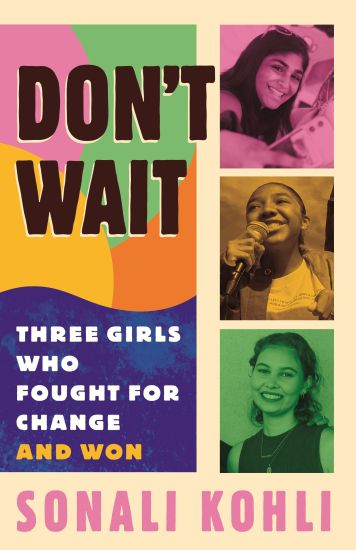
Follows the stories of three young women activists of color fighting for some of today's most pressing movements of defunding the police, environmental justice, and arts education Girls of color have always been on the front lines of the fight for equal rights--to vote, to learn, to live--even when they are the last to benefit from the outcomes of their work. In Don't Wait, journalist Sonali Kohli follows three teenagers' efforts to make their communities safer, healthier places. Don't Wait highlights what propelled the teenagers into their activism to their experiences organizing and incorporates Q&As with important lessons from activists who have led the way. The three teen activists include: - Nalleli has lived across the street from an active oil well in South Los Angeles and at age 7, developed serious health problems. Nalleli and her mother take on an oil company and become environmental justice activists. - Kahlila, following the murder of George Floyd and looking to help fight back, becomes involved with the Black Lives Matter movement in Los Angeles and fights to defund school police in one of the largest school police forces in the nation. - Sonia, an accomplished singer grappling with finding an creative outlet in the pandemic, strives to increase access to arts education in schools across California. As the young women transition from teen to adult activists, Don't Wait reflects on the powerful lessons they've learned in their activism while building movements in their communities that will continue to live on as they move forward.
In a time of climate crisis and housing shortages, a bold, visionary call to replace current wasteful construction practices with an architecture of reuse As climate change has escalated into a crisis, the reuse of existing structures is the only way to even begin to preserve our wood, sand, silicon, and iron, let alone stop belching carbon monoxide into the air. Our housing crisis means that we need usable buildings now more than ever, but architect and critic Aaron Betsky shows that new construction--often seeking to maximize profits rather than resources, often soulless in its feel--is not the answer. Whenever possible, it is better to repair, recycle, renovate, and reuse--not only from an environmental perspective, but culturally and artistically as well. Architectural reuse is as old as civilization itself. In the streets of Europe, you can find fragments from the Roman Empire. More recently, marginalized communities from New York to Detroit--queer people looking for places to gather or cruise, punks looking to make loud music, artists and displaced people looking for space to work and live--have taken over industrial spaces created then abandoned by capitalism, forging a unique style in the process. Their methods--from urban mining to dumpster diving--now inform architects transforming old structures today. Betsky shows us contemporary imaginative reuse throughout the world: the Mexican housing authority transforming concrete slums into well-serviced apartments; the MassMOCA museum, built out of old textile mills; the squatted city of Christiana in Copenhagen, fashioned from an old army base; Project Heidelberg in Detroit. All point towards a new circular economy of reuse, built from the ashes of the capitalist economy of consumption.
From a nationally recognized abuse-prevention expert, an accessible guide that debunks the most pervasive myths about personal safety and offers evidence-based advice that actually improves safety We receive a lot of advice about how to stay safe in society. Sometimes the advice is about the nature of violence or crime and other times it is a common directive about what people should do to keep us away from potential danger. Meg Stone, an expert in personal safety and empowerment self-defense, traces the origins of these dangerous myths, and explains why safety isn't defined by men in power telling us what they think makes us safe. Stone breaks down these myths into 4 parts: how attackers behave ("Don't Fight Back. It Will Make the Attacker Angry and You'll Get Hurt Worse."), what (or who) to fear ("Crime Is at an All-Time High and Going Up"), what you should never do ("Don't Wear a Ponytail. An Attacker Could Grab It."); and what you should always do ("Always Trust Your Intuition") She addresses how many of the myths are completely wrong and not based on any real evidence. Stone also spends time unpacking the kinds of myths that can't be disproven or are more nuanced than just "helpful" or "not helpful." Each chapter also offers advice for individuals to keep themselves safer and also how to contribute to social change when these myths are perpetuated. She concludes with a powerful treatise about how to be truly safe--or at least safer--in a world that lacks evidence, using lessons she has learned from her 20+ years teaching self-defense.

A harrowing and indispensable first-hand account of the experience of the first 85 days of the Israeli invasion of Gaza, from a prominent Palestinian writer In the morning I read the news. The news is about us. But it's designed for people reading it far, far away, who couldn't possibly imagine they could ever know anyone involved. It's for people who read the news to comfort themselves, to tell themselves: it's still far, far away. I read the news for different reasons: I read it to know I"m not dead. Early in the morning of Oct 7, 2023, Atef Abu Saif went swimming. It was a beautiful morning: sunny with a cool breeze. The Palestinian Authority's Minister for Culture, he was on a combined work and pleasure trip to Gaza, visiting his extended family with his 15 year old son, Yasser, and participating in National Heritage Day. Then the bombing started. Don't Look Left takes us into the day to day experiences of Gazan civilians trying to survive Israel's war against Hamas, its detail and extended narrative showing us what brief reports and video clips cannot. In a war that has taken an extraordinarily high toll on civilians, it is a crucial document--a day-to-day testimony and a deeply moving depiction of a people's fight to survive and maintain their humanity amid the chaos and trauma of mass destruction. It is also, remarkably, a powerful literary experience. Atef Abu Saif was born in Jabalia refugee camp in Gaza in 1973, and, as he writes, his first war broke out when he was two months old. He writes as only someone who knows Gaza deeply can, and only as someone who knows war can, picking out the details of ordinary life and survival amidst the possibility of death coming at any moment: washing the only shirt he has and waiting naked for three hours for it dry; noticing a cat, as terrified as the people on the street around it, hiding under a bistro table; visiting his sister-in-law's daughter in the hospital, who tells him in her dream she has no legs, and asks him if it is true. It is: she has lost her legs and a hand when her home was hit by a bomb. Trying to figure out the best place to sleep each night, and when and where to flee as the destruction intensifies. This is not like past wars with Israel, Abu Saif soon realizes--thinking of the Nakba, and of images of bombed cities from World War II. Profits from the sale of this book will go to two Palestinian charities: Medical Aid for Palestinians and the Middle East Children's Alliance.
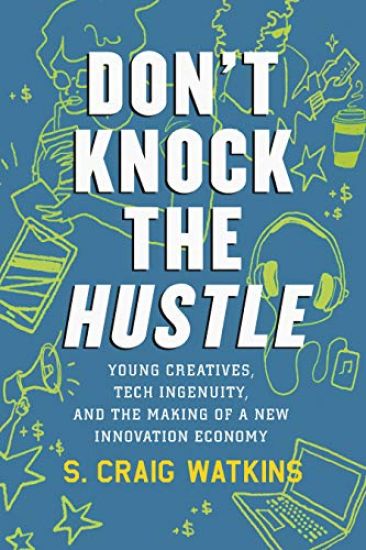
Offers a timely analysis of the sheer ingenuity and persistence of young people who cobble together the resources they need to pursue the lives and careers they want. Young adults are coming of age at a time when work is temporary, underpaid, incommensurate with their education, or downright unsatisfying. Despite these challenges, media scholar S. Craig Watkins argues that this moment of precarity is rife with opportunities for innovation, and that young adults are leading the charge in turning that into an inventive and surprisingly sustainable future. As a result, society is expanding its understanding of who we think of as innovators and what qualifies as innovation, while wealth is spreading beyond traditional corridors of powerful tech companies, venture capitalism, and well-endowed universities. Drawing on over ten years of interviews and data, Watkins reveals the radical ways in which this community of ambitious young creatives is transforming businesses from the outside in. Diverse perspectives that are often ignored or silenced by major corporations are garnering public attention as women and people of color are redefining industries across the globe--all from their computer screens. We meet people like Prince Harvey, a New York-based hip-hop artist who recorded his album entirely on an Apple showroom laptop; screenwriter, producer, and actor Issa Rae, who first used YouTube and Kickstarter to develop the web series that became her hit HBO show Insecure; the Empowerment Plan, a nonprofit organization created by product design student Veronika Scott in Detroit; and start-up companies like Qeyno Group in San Francisco and Juegos Rancheros in Austin that help make tech more accessible to people of color. Forward-thinking and dynamic, Don't Knock the Hustle shows the diversity and complexity of a generation on the rise. UNIQUE APPROACH TO UNDERSTANDING MILLENNIALS that looks beyond stereotypes about their relationships with tech and labor, based on two years of MacArthur Grant-funded research. DIVERSE AUDIENCE APPEAL that will reach millennials, educators, people seeking to hire millennials, and scholars of technology, media, and labor.
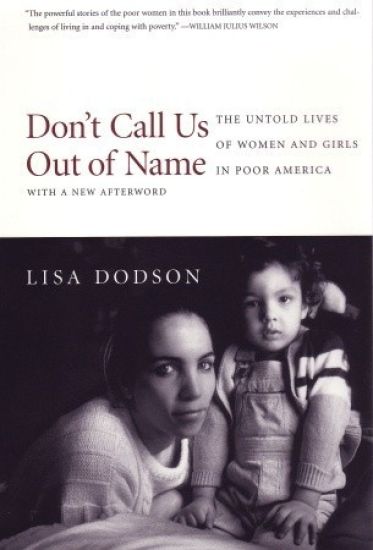
A radically new vision of women and girls living below the poverty line; Lisa Dodson makes a frontal assault on conventional attitudes and stereotypes of women in poor America and the seriously misguided welfare reform policies of the end of the century. I hear Odessa, a thirty-two-year-old woman, speak at a forum on welfare reform. I ask her about the phrase she used, 'Don't call me out of name, ' for it seemed to speak for a whole nation of people. Odessa tells me that women who have no money and no one to stand up for them get put into a bad position and they get misnamed. Most often they get called 'welfare mothers' or 'recipients, ' words she will no longer acknowledge. With millions alongside her, Odessa has emerged by her own strength and some opportunity, and now she insists upon naming herself. While Lisa Dodson was working in a Charlestown factory twenty years ago, the stories of the women she worked with daily captivated her; she listened to them speak about harsh lives and their deep commitment to family and community. It was the beginning of Dodson's desire to learn the truth and write it down. For over eight years, Dodson has been documenting the lives of girls and women-hundreds of white, African-American, Latino, Haitian, Irish, and other women in personal interviews, focus groups, surveys, and Life-History Studies. This book is a crossing--a class crossing--taking readers into fellowship with people who are seldom invited to speak but who have powerful stories to tell and who force us to abandon common myths that have been fed to us by the media about school dropouts, teen pregnancy, and welfare cheats. Don't Call Us Out of Name delves deeply into the realities of their lives, often with surprising and uplifting stories of commonplace courage, unimaginable strength, and resourcefulness. Lisa Dodson does not simply give us the truth about women living in poverty but offers realistic hope for meaningful policy reform based on the experience and analysis of the women we have seen so far only in stereotype and whose voices we have not truly heard. These women emerge as critical contributors to the creation of sound, humane public policy.
"Reading Ellen Willis feels like a great discussion with a witty, politically perceptive friend over Sunday-morning bagels and endless cups of coffee."*The 1990s were a decade of unprecedented economic expansion. They were also a decade that saw stagnant wages and globalization, Monica-gate and the O. J. Simpson trial, The Bell Curve and the Million Man March. Most notably, Ellen Willis argues, they were a decade that saw an astounding refusal, on both the left and right, to question received wisdom or engage in substantive deliberation. Turning her acute eye on the cultural and political reaction to these imbroglios, Willis demands that we radically rethink our country and ourselves to create a society in which we can fully enjoy life. "Illuminating and incisive."-Judith Newman, The New York Times Book Review "In a time when politics and political writing have degenerated into sound bites and sensationalism, Ellen Willis reminds us that integrity and human dignity, a quick wit and a dead-on style, offer the hope that we can make sense of-and maybe even change-the world."-*Michael Bronski, The Boston Phoenix Literary Supplement "For thirty years, in a wide arc from the Village Voice and Social Text to the New Yorker and Mirabella, Ellen Willis has been the sixties' best exponent and a savvy interpreter of American politics and culture."-George Scialabba, Dissent "Suffused by a romantic and intelligent magnanimity, these essays abound with nuggets of insight."-Eugene McCarraher, Commonweal Author Bio: Formerly a staff writer for The New Yorker and The Village Voice, Ellen Willis is director of the cultural reporting and criticism program at New York University. She is the author of Beginning to See the Light: Sex, Hope, and Rock & Roll and No More Nice Girls: Countercultural Essays. She lives in New York City.
In Don't Look Back, Dabney Stuart recalls central people and emotions from his past and integrates them into a search for personal wholeness in the present. He honors a network of family members, calling up the richness of their lives and making room for them in his. There is his aloof and coldly majestic grandmother, a salty, aged grandfather, variations on a dream girl, and images of a mother, wives, father, sons, and an elusive brother. Undergirding these poems is an implied chronology of psychological growth: from floating prenatal consciousness, through adolescent jealousy and repression, to adult acceptance and grief.Although the autobiographical aspect of Stuart's poems anchors them in a drama of generations, it also serves as a springboard into thoughtful and profound searchings. In the five-part poem, ""The Birds,"" the poet ponders the flow of events in life and the intangible forces that influence that flow. The birds of the title represent, and are somehow intimate with, these forces. Although not inclined to divulge them, the birds have answers to human question about pain, loss and regeneration.In such a time, in April, you could almost imagine a child standing under the pines, shadowed. He could lift his hand to them and open it, releasing among their needles an affable light, a flying instant which might nest in them, a birthday covenant of impossible flightThe poems in Don't Look Back are ambitious, complex meditation rendered with grace and clarity.

A cat who struggles with social skills learns ways to be honest without being rude. Cat always says what's on his mind, no matter how much his words may upset others. But when he hears his friends talk about him, Cat realizes that words can hurt, even though that may not be the intention.
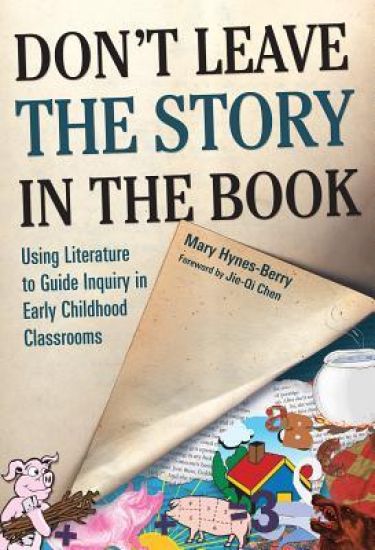
Don't Leave the Story in the Book
Mary Hynes-Berry; Jie-Qi Chen
Teachers' College Press
2011
nidottu
Drawing from 30 years of teaching and professional development experience, this book offers a roadmap for using children's literature to provide authentic learning. Featuring a ''storyteller's voice,'' each chapter includes a case study about how a particular fiction or nonfiction work can be used in an early childhood classroom; a series of open-ended questions to help readers construct their own inquiry units; and a bibliography of children's literature. This book provides a unique synthesis of ideas based on constructivist approaches to learning, including the importance of positive dispositions and learning communities, the nature of higher-order thinking, and the relationship between methods such as guided inquiry in the sciences and balanced literacy.

Don Manuel Cañete, Cronista Literario Del Romanticismo Y Del Posromanticismo En España
Donald Allen Randolph
The University of North Carolina Press
1972
nidottu
After a discussion of the youth, education, and early writings of Canete, the author turns to the Madrid years with El Faro and later with El Haraldo. Canete's connection with the Academia Espanola is also discussed as is his response to the post-romantic era.

Volume 138 in the North Carolina Studies in the Romance Languages and Literatures series.

At the 1984 Olympics, American Scott Hamilton skated into the history books when he claimed a gold medal in Sarajevo. Beside him the entire time was his coach, Don Laws. A member of the U.S. Figure Skating Hall of Fame and a U.S. Junior Champion, Laws is one of the most respected and admired ice skating coaches in the world. In addition to Hamilton, Don was the coach of champions Michael Weiss and Patrick Chan. This authorized biography tells the story of Law’s exemplary life and chronicles his singular dedication to figure skating. Don Laws: The Life of an Olympic Figure Skating Coach recounts Don’s youth, from his childhood in Washington, D.C. to his Junior Men’s Figure Skating Championship to his triumphs as a coach on the international stage. Featuring personal interviews with many of his former pupils, this humorous and enlightening biography captures Don’s dedication to the sport and to his students. In addition, this book goes behind the scenes of the controversial new judging system—for which Laws was one of only four coaches worldwide to take part in its creation—as well as touches upon the break between Don Laws and his star pupil, Patrick Chan. Including exclusive interviews with Scott Hamilton, Michael Weiss, premier Russian coach Tamara Moskvina, former International Skating Union member Sonia Bianchetti, and current ISU President Ottavio Cinquanta, this book is a one-of-a-kind look at a man who never broke from his beliefs and ideals and never wavered in his love for the sport. A chapter devoted to skating techniques laid out by Laws will be a helpful tool for figure skating coaches; but for the figure skater, and for any fan of the sport, it will be the stories, interviews, photographs, and history that make this book entertaining and inspiring.