Kirjojen hintavertailu. Mukana 11 699 587 kirjaa ja 12 kauppaa.

Kirjahaku

Etsi kirjoja tekijän nimen, kirjan nimen tai ISBN:n perusteella.

1000 tulosta hakusanalla Don Halstead

Don Troiani's Gettysburg

Don Troiani's Gettysburg

Don Troiani; Tom Huntington

Stackpole Books
2019
pokkari
The latest book by preeminent Civil War artist and historian Don Troiani features 34 major paintings of the Gettysburg campaign and an introductory history of the battle by Civil War expert Tom Huntington. Each beautifully detailed and historically accurate painting is accompanied by a description of the scene and the historical figures taking part in the action.
Don Troiani's Campaign to Saratoga - 1777

Don Troiani's Campaign to Saratoga - 1777

Eric H. Schnitzer; Don Troiani

Stackpole Books
2019
sidottu
The Battles of Saratoga are cited as the turning point in the Revolutionary War. Beginning when the armies prepared to face off in June 1777 through the surrender of the British Army in October, the battles of the Northern Campaign were significant to the outcome of the War and the fight for independence. As a result of the Saratoga battles, the patriots gained confidence, the French entered the war, and the British plan to win the war quickly was put to an end. Master historical painter Don Troiani and historian Eric Schnitzer combine their talents in this new book on Saratoga, the Revolutionary War campaign. This magnificently illustrated history features many new artworks, previously unpublished eyewitness accounts, photographs of important artifacts, and a solid, detailed historical narrative including background on the campaigns leading up to Saratoga.
Don Troiani's Black Soldiers in America's Wars: 1754–1865
Using a masterful combination of artistry and accuracy, Don Troiani has dedicated his career to transforming our understanding of the military soldier. Don now turns his talents to capturing the under-recognized African American soldiers as they fought in the French and Indian War, the War of Independence, and the American Civil War. Don's battle paintings, figure studies, artifact collection, and artist's notes are teamed with historian John Rees's insightful text.
Don Alvaro, or the Force of Fate (1835)

Don Alvaro, or the Force of Fate (1835)

Angel De Saavedra Rivas

The Catholic University of America Press
2005
nidottu
Don Alvaro, or the Force of Fate by Angel de Saavedra, Duke of Rivas (1791-1865), premiered in 1835 in Madrid and changed the Spanish stage forever after. It was the benchmark Romantic play of early nineteenth-century Spain. In this English edition designed for either classroom use or performance, Robert Fedorchek presents a readable translation faithful to the tone and spirit of the original. Joyce Tolliver enhances the book with a rich introduction highlighting the work's lasting significance. The play tells of the torrid love of the mysterious Don Alvaro and the lovely Dona Leonor, and how fate intervenes - by way of Alvaro's role in the ""accidental"" death of Leonor's father - to bring about the extermination of Leonor's family at the hands of the man who loves her to distraction. Although chronologically not the first Spanish Romantic drama, Don Alvaro is generally considered the true exponent of the freedom of expression that Romanticism brought to the theater. It does away with all the Neoclassical rules: it exceeds twenty-four hours; the action takes place in two countries; it mixes high and low; prose alternates with verse; and the characters express, melodramatically and passionately, their innermost feelings. It is also generally considered the first play in the best trilogy, along with Antonio Garcia Gutierrez's El trovador (The troubadour, 1836) and Juan Eugenio Hartzenbusch's Los amantes de Teruel (The lovers of Teruel, 1837).
Don't Marry Me To A Plowman!

Don't Marry Me To A Plowman!

Patricia Jeffery; Roger Jeffery

Westview Press Inc
1996
pokkari
Popular Western images of Indian women range from submissive brides behind their veils to the powerful, active women of Indian politics. In this lively and unique book, Patricia and Roger Jeffery present a different perspective on women's lives. Focusing on the mundane rather than the exotic, they explore the complex interplay between the power of social structures to constrain individuals and the ways women negotiate these constraints to carve out places for themselves.Based on information collected by the authors during their research in villages in Bijnor District, western Uttar Pradesh, the volume offers eight life histories of Hindu and Muslim women. The women's life histories present a variety of class positions and domestic circumstances, illustrating many aspects of north Indian village life. Interspersed with thematic discussions composed of dialogues, episodes, and songs, the life histories deal with topics of vital concern for women in rural north India: the birth of children, worries about dowry, arranging weddings, sexual politics in marriage, relationships with in-laws, relationships with natal kin, and widowhood.
Don't Kill in Our Names

Don't Kill in Our Names

Rachel King

Rutgers University Press
2003
sidottu
Could you forgive the murderer of your husband? Your mother? Your son?Families of murder victims are often ardent and very public supporters of the death penalty. But the people whose stories appear in this book have chosen instead to forgive their loved ones’ murderers, and many have developed personal relationships with the killers and have even worked to save their lives. They have formed a nationwide group, Murder Victims’ Families for Reconciliation (MVFR), to oppose the death penalty.MVFR members are often treated as either saints or lunatics, but the truth is that they are neither. They are ordinary people who have responded to an extraordinary and devastating tragedy with courage and faith, choosing reconciliation over retribution, healing over hatred. Believing that the death penalty is a form of social violence that only repeats and perpetuates the violence that claimed their loved one’s lives, they hold out the hope of redemption even for those who have committed the most hideous crimes.Weaving third-person narrative with wrenching first-hand accounts, King presents the stories of ten MVFR members. Each is a heartrending tale of grief, soul searching, and of the challenge to choose forgiveness instead of revenge. These stories, which King sets in the context of the national discussion over the death penalty debate and restorative versus retributive justice, will appeal not only to those who oppose the death penalty, but also to those who strive to understand how people can forgive the seemingly unforgivable.
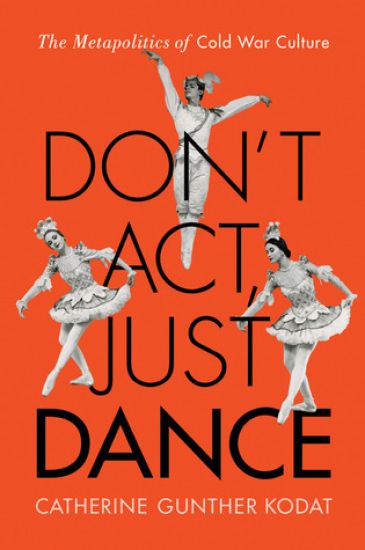
Don't Act, Just Dance

Don't Act, Just Dance

Catherine Gunther Kodat

Rutgers University Press
2014
nidottu
At some point in their career, nearly all the dancers who worked with George Balanchine were told “don’t act, dear; just dance.” The dancers understood this as a warning against melodramatic over-interpretation and an assurance that they had all the tools they needed to do justice to the steps—but its implication that to dance is already to act in a manner both complete and sufficient resonates beyond stage and studio. Drawing on fresh archival material, Don’t Act, Just Dance places dance at the center of the story of the relationship between Cold War art and politics. Catherine Gunther Kodat takes Balanchine’s catch phrase as an invitation to explore the politics of Cold War culture—in particular, to examine the assumptions underlying the role of “apolitical” modernism in U.S. cultural diplomacy. Through close, theoretically informed readings of selected important works—Marianne Moore’s “Combat Cultural,” dances by George Balanchine, Merce Cunningham, and Yuri Grigorovich, Stanley Kubrick’s Spartacus, and John Adams’s Nixon in China—Kodat questions several commonly-held beliefs about the purpose and meaning of modernist cultural productions during the Cold War. Rather than read the dance through a received understanding of Cold War culture, Don’t Act, Just Dance reads Cold War culture through the dance, and in doing so establishes a new understanding of the politics of modernism in the arts of the period.
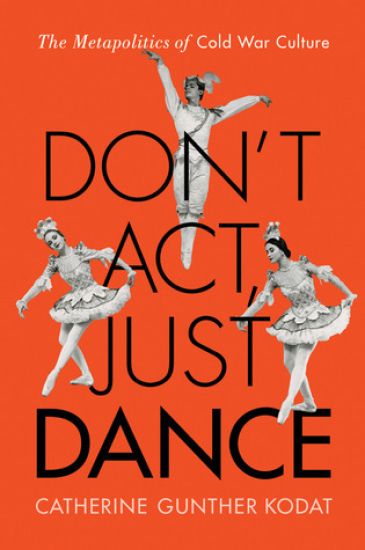
Don't Act, Just Dance

Don't Act, Just Dance

Catherine Gunther Kodat

Rutgers University Press
2014
sidottu
At some point in their career, nearly all the dancers who worked with George Balanchine were told “don’t act, dear; just dance.” The dancers understood this as a warning against melodramatic over-interpretation and an assurance that they had all the tools they needed to do justice to the steps—but its implication that to dance is already to act in a manner both complete and sufficient resonates beyond stage and studio. Drawing on fresh archival material, Don’t Act, Just Dance places dance at the center of the story of the relationship between Cold War art and politics. Catherine Gunther Kodat takes Balanchine’s catch phrase as an invitation to explore the politics of Cold War culture—in particular, to examine the assumptions underlying the role of “apolitical” modernism in U.S. cultural diplomacy. Through close, theoretically informed readings of selected important works—Marianne Moore’s “Combat Cultural,” dances by George Balanchine, Merce Cunningham, and Yuri Grigorovich, Stanley Kubrick’s Spartacus, and John Adams’s Nixon in China—Kodat questions several commonly-held beliefs about the purpose and meaning of modernist cultural productions during the Cold War. Rather than read the dance through a received understanding of Cold War culture, Don’t Act, Just Dance reads Cold War culture through the dance, and in doing so establishes a new understanding of the politics of modernism in the arts of the period.
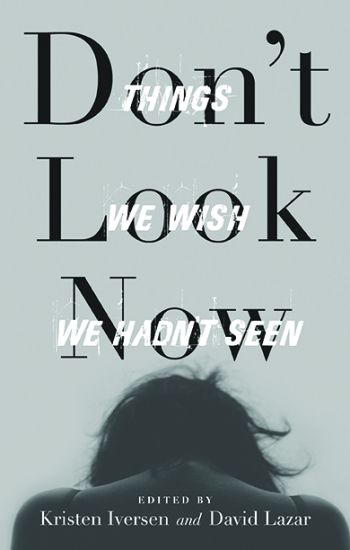
Don't Look Now

Don't Look Now

Ohio State University Press
2020
pokkari
Would that our memories were self-selecting. But often what we remember most, and most vividly, are those moments that caught us unawares: the things we wish we hadn't seen and have never been able to shake. This group of prominent American writers tries to come to grips with obsessive memory, the uncanny, and the bad dreams that accompany the moments in our lives when we wish we'd looked away, the places we wish we'd never been, and the scenes we wish we'd never stumbled upon. Featuring essays by Jericho Parms, XU XI, Jerald Walker, Jos Ordu a, Kristen Iversen, Nicole Walker, Mary Cappello, Lina Ferreira, Colleen O'Connor, Sonya Huber, Paul Crenshaw, Alyce Miller, Patrick Madden, Amelia Mar a de la Luz Montes, Yalie Kamara, Emily Heiden, Lee Martin, and David Lazar, this collection bares all. The authors invite readers into a dream that resurrects a departed mother each night, only to lose her again each morning upon waking; the post-mortem newspaper photos of a former student; kaleidoscope childhood memories of the mundane mixed up together with the traumatic; an unplanned pregnancy; a bullfight and a spouse's mortality; a teen witnessing the suicide of her father; a parent trying to shield his children from witnessing a violent death. What these writers are after, though, is not the melancholic/grotesque/violent moment itself, but the process of remembering-and trying to forget. They examine the way these memories take hold, resurface, and never leave, and what it means for a life lived long after these moments have passed. These scenes, slowly enfolding us like bad dreams or flying by like trains on elevated platforms, demand we reach some kind of accommodation with them-make peace or make sense or make amends. The one thing they insist with certainty is this they cannot-will not-be unseen.
Don't Pay for Your MBA

Don't Pay for Your MBA

Laurie Pickard

Amacom
2018
nidottu
Discover the secrets and tips to get the business education you need, the faster and cheaper way.The average debt load for graduates of the top business schools has now exceeded $100,000. For most young professionals, this means spending the first half of their career in the red and feeling pressure to take the first position offered to them so that they can start paying off their debt. However, it doesn’t have to be that way.Author and businesswoman Laurie Pickard discovered a way to get the business education she needed to land her dream job while avoiding the massive school loans that plague so many. In Don’t Pay for Your MBA, she shares all that she learned so that others can benefit as well. Pickard discovered that the same prestigious business schools that offer the MBAs so many covet also offer MOOCs (massive online open courses) for low or even no cost.Within these pages, you will learn how to:Define your goals and tailor a curriculum that is geared toward your dream jobMaster the language of businessBuild a strong networkChoose a concentration and deepen your expertiseShowcase your nontraditional education in a way that attracts companiesDon’t fall for the lies that pressure countless graduates every year into MBA programs and insurmountable debt. Self-directed online learning can fill gaps in your training, position you for promotions, and open new opportunities--at a fraction of the cost!
Don?t Trust the Abbot

Don?t Trust the Abbot

Jerome Kodell

Liturgical Press
2009
pokkari
One would expect an abbot to have words of wisdom for monks living in a monastery. But could his musings be relevant for those living in a complicated and often harried world? Yes, as readers will discover in this insightful collection. In these essays, from "Coldhearted Orthodoxy" to "God's DVD Library," from "The God of Hearsay" to "The Turtle on the Fencepost", readers will think in new ways about prayer and the Christian life, about faith and trust. Along the way, they will find in Jerome Kodell an abbot worthy of trust.
Don't Pay Any Attention to Him, He's 90% Water

Don't Pay Any Attention to Him, He's 90% Water

Johanna Drucker

Syracuse University Press
2005
nidottu
For more than a half-century, Boris Drucker has created a livelihood and a reputation as a cartoonist. His drawing style and humour has graced the pages of such diverse publications as the ""Saturday Evening Post"", ""Playboy"", ""Family Circle"", and ""The New Yorker"". Drucker's work is a record of the changing American culture, and he takes as his themes the dynamics of family life, battle of the sexes, and the generation gap, while supplying commentary on art, architecture, and fashion. This catalogue draws upon the extensive archives that Drucker donated to the Special Collections Research Center at Syracuse University Library. Documenting the full span of Drucker's career, the collection represents his work as a graphic artist, and includes his art school drawings, World War II sketchbooks from India, early advertising assignments, and many published and unpublished cartoons. His daughter, Johanna Drucker, offers an insightful essay by providing context to Drucker's work. She chronicles the scholarly culture that came to recognize the cartoonist's ability to make penetrating observations on politics, morals, manners, and social goals of society. Fans of his work are certain to treasure this collection. Original artwork for proposed cover for the New York, 1999. Ink and paint on paper, 18 X 14 in. Loaned by the artist.
Don't Let the Sun Step Over You

Don't Let the Sun Step Over You

Eva Tulene Watt

University of Arizona Press
2004
nidottu
When the Apache wars ended in the late nineteenth century, a harsh and harrowing time began for the Western Apache people. Living under the authority of nervous Indian agents, pitiless government-school officials, and menacing mounted police, they knew that resistance to American authority would be foolish. But some Apache families did resist in the most basic way they could: they resolved to endure. Although Apache history has inspired numerous works by non-Indian authors, Apache people themselves have been reluctant to comment at length on their own past. Eva Tulene Watt, born in 1913, now shares the story of her family from the time of the Apache wars to the modern era. Her narrative presents a view of history that differs fundamentally from conventional approaches, which have almost nothing to say about the daily lives of Apache men and women, their values and social practices, and the singular abilities that enabled them to survive. In a voice that is spare, factual, and unflinchingly direct, Mrs. Watt reveals how the Western Apaches carried on in the face of poverty, hardship, and disease. Her interpretation of her people's past is a diverse assemblage of recounted events, biographical sketches, and cultural descriptions that bring to life a vanished time and the men and women who lived it to the fullest. We share her and her family's travels and troubles. We learn how the Apache people struggled daily to find work, shelter, food, health, laughter, solace, and everything else that people in any community seek. Richly illustrated with more than 50 photographs, Don t Let the Sun Step Over You is a rare and remarkable book that affords a view of the past that few have seen before a wholly Apache view, unsettling yet uplifting, which weighs upon the mind and educates the heart.
Don't Let the Sun Step Over You

Don't Let the Sun Step Over You

University of Arizona Press
2004
sidottu
When the Apache wars ended in the late nineteenth century, a harsh and harrowing time began for the Western Apache people. Living under the authority of nervous Indian agents, pitiless government-school officials, and menacing mounted police, they knew that resistance to American authority would be foolish. But some Apache families did resist in the most basic way they could: they resolved to endure. Although Apache history has inspired numerous works by non-Indian authors, Apache people themselves have been reluctant to comment at length on their own past. Eva Tulene Watt, born in 1913, now shares the story of her family from the time of the Apache wars to the modern era. Her narrative presents a view of history that differs fundamentally from conventional approaches, which have almost nothing to say about the daily lives of Apache men and women, their values and social practices, and the singular abilities that enabled them to survive. In a voice that is spare, factual, and unflinchingly direct, Mrs. Watt reveals how the Western Apaches carried on in the face of poverty, hardship, and disease.Her interpretation of her people's past is a diverse assemblage of recounted events, biographical sketches, and cultural descriptions that bring to life a vanished time and the men and women who lived it to the fullest. We share her and her family's travels and troubles. We learn how the Apache people struggled daily to find work, shelter, food, health, laughter, solace, and everything else that people in any community seek. Richly illustrated with more than 50 photographs, Don t Let the Sun Step Over You is a rare and remarkable book that affords a view of the past that few have seen before a wholly Apache view, unsettling yet uplifting, which weighs upon the mind and educates the heart.
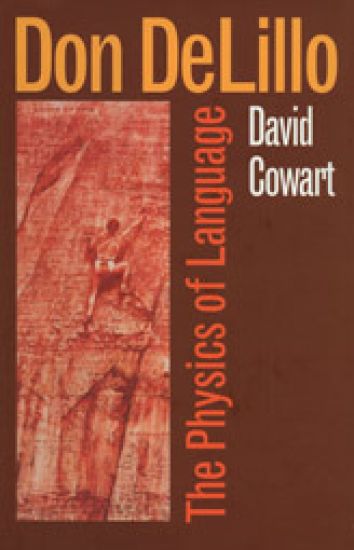
Don DeLillo

Don DeLillo

David Cowart

University of Georgia Press
2003
pokkari
Don DeLillo, author of twelve novels and winner of the National Book Award, the PEN/Faulkner Award, the William Dean Howells Medal, and the Jerusalem Prize, has begun to rival Thomas Pynchon as the definitive postmodern novelist. Always thought-provoking and occasionally controversial, DeLillo has become the voice of the bimillennial moment.Charting DeLillo's emergence as a contemporary novelist of major stature, David Cowart discusses each of DeLillo's twelve novels, including his most recent work, The Body Artist (2001). Rejecting the idea that DeLillo lacks affinities across the cultural spectrum, Cowart argues that DeLillo's work invites comparison with that of wide range of antecedents, including Dunbar, Whitman, Wittgenstein, Heidegger, Freud, Lacan, Derrida, Hemingway, Joyce, Rilke, and Eliot. At the same time, Cowart explores the ways in which DeLillo's art anticipates, parallels, and contests ideas that have become the common currency of poststructuralist theory. The major site of DeLillo's engagement with postmodernism, Cowart argues, is language, which DeLillo represents as more mysterious—numinous even—than current theory allows. For DeLillo, language remains what Cowart calls "the ground of all making."Don DeLillo: The Physics of Language is a provocative investigation of the most compelling issues of contemporary fiction.
Don Delillo

Don Delillo

Jesse Kavadlo

Peter Lang Publishing Inc
2003
sidottu
Don DeLillo - winner of the National Book Award, the William Dean Howells Medal, and the Jerusalem Prize - is one of the most important novelists of the late-twentieth and early-twenty-first centuries. While his work can be understood and taught as prescient and postmodern examples of millennial culture, this book argues that DeLillo's recent novels - White Noise, Libra, Mao II, Underworld, and The Body Artist - are more concerned with spiritual crisis. Although DeLillo's worlds are rife with rejection of belief and littered with faithfulness, estrangement, and desperation, his novels provide a balancing moral corrective against the conditions they describe. Speaking the vernacular of contemporary America, DeLillo explores the mysteries of what it means to be human.
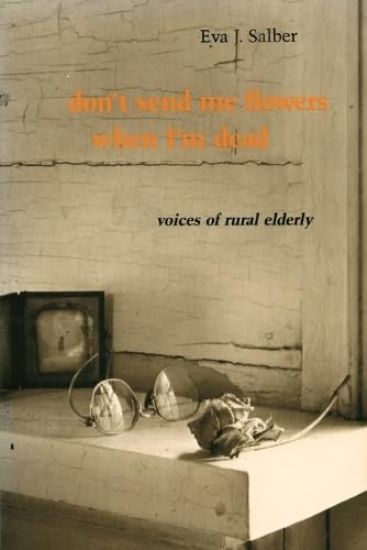
Don't Send Me Flowers When I'm Dead

Don't Send Me Flowers When I'm Dead

Eva J. Salber

Duke University Press
1983
pokkari
"This extraordinary book is yet another example of a growing tradition-a literature of compelling and edifying oral history. Dr. Salber has worked for years in one of North Carolina's rural areas, and doing so, has come to know certain elderly people rather well. She has attended their physical complaints, but she has also wanted to know how they live, what they hope for, and what they worry about. She has asked them to speak on the record, to declare to others what occurs to them in the waning hours of their particular lives. The result is a series of American voices reminding us what it has been like for relatively vulnerable, if not defenseless, southern country folk in this rapidly disappearing 20th century. "They are men and women, blacks and whites, Dr. Salber's teachers. The North Carolinians in this book have no trouble giving us a good measure of open-eyed social comment, not to mention intelligent self-scrutiny and astute moral reflection. These pages glow with all that. . . . This book represents an intense and unyielding ethical as well as medical and literary commitment by a most impressive physician."-Robert Coles