
Kirjahaku
Etsi kirjoja tekijän nimen, kirjan nimen tai ISBN:n perusteella.
1000 tulosta hakusanalla E.C. Segar


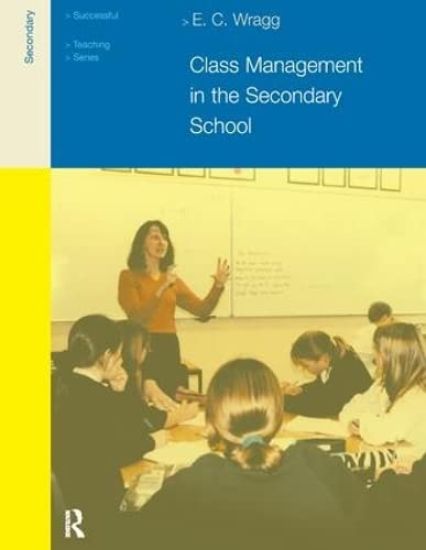
This book is one of a set of eight innovative yet practical resource books for teachers, focussing on the classroom and covering vital skills for primary and secondary teachers. The books are strongly influenced by the findings of numerous research projects during which hundreds of teachers were observed at work. The first editions of the series were best sellers, and these revised second editions of the series will be equally welcomed by teachers eager to improve their teaching skills. Successful secondary teachers operate in many different ways, but they have one thing in common - an ability to manage their classrooms effectively. Without the skills required to do this, the most inspiring and knowledgeable teacher will fail.In Class Management in the Secondary School, Ted Wragg helps teachers to clarify their own aims and to find the strategies which will work for them. Topics covered include:*first encounters*the establishment of rules*relationships*management of time and space*specific discipline problemsThere are certain skills that teachers possess that are of paramount importance - class management is one of those areas. Effective classroom management can be the single most influential factor in getting it right and is a core teaching skill that both trainee and experienced teachers should constantly be improving on.
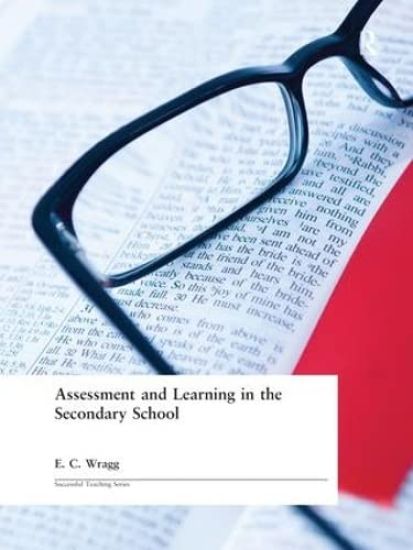
Assessment is now regarded as a 'high stakes' issue: schools, teachers, and individual pupils are often judged by the results of national tests and public examinations. This book addresses both formal and informal ways of assessing children's work and progress. Pupils' learning is often neglected in the debate, so this book puts what children actually learn right at its centre and involves them sensibly and appropriately in the improvement of teaching and learning. The book is divided into six units where Ted Wragg address topics such as: principles and purposes of assessment written, oral and practical evaluation self-assessment the 'whole school' approach staff development and appraisal. The inclusion of tried and tested practical activities, discussion topics, photographs, cartoons and case examples makes this a very user-friendly book for both trainee and experienced teachers in secondary schools. This is one of a set of eight innovative yet practical resource books for teachers, focussing on the classroom and covering vital skills for primary and secondary teachers. The books are strongly influenced by the findings of numerous research projects during which hundreds of teachers were observed at work. The first editions of the series were bestsellers, and these revised second editions will be equally welcomed by teachers eager to improve their teaching skills.
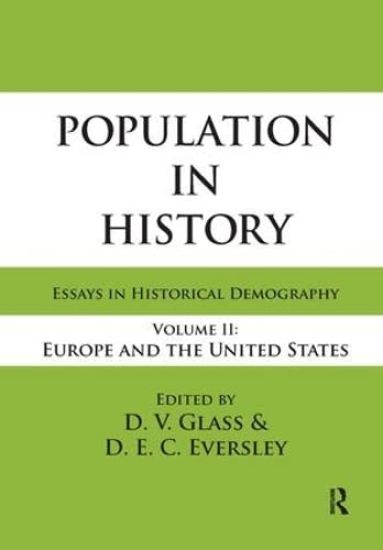
This large-scale comparative endeavor, complete in two volumes, reflects increasing concern with the population factor in economic and social change worldwide. Demographers, on their side, have been focusing on history. In response to this, Population in History represents the work of two practitioners that have begun to work together, using their combined approaches in an attempt to assess and account for population growth experienced by the West since the seventeenth century.There is a long record of interest in the history of population. But the interest now displayed is likely to be both more persistent and far more fruitful in its consequences. New studies have been initiated in many countries. And because the studies are more informed and systematic than many of those of earlier periods, they are already provoking the further spread of research. A much more positive part is now also being played by national and international associations of historians and demographers. It is not unlikely that, within the next fifteen or twenty years, the main outlines of population change in the seventeenth and eighteenth centuries will be firmly established for much of Europe.Previous research has tended to appear in specialist journals and academic publications. This volume is intended to provide a more easily accessible publication. It has been thought appropriate to include some earlier work, both because of its intrinsic interest and because it provided the background and part of the stimulus to the later research. Of the twenty-seven contributions to this outstanding volume, seven are unabridged reprints of earlier work; the remaining contributions are either entirely new or represent substantial revisions of work published elsewhere.
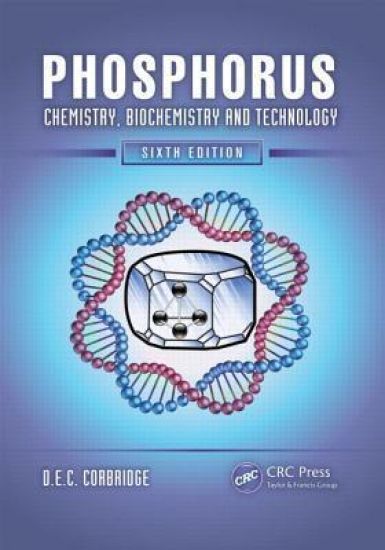
Over two decades have passed since the fifth edition of Phosphorus: Chemistry, Biochemistry and Technology. Major advances in chemistry, materials science, electronics, and medicine have expanded and clarified the role of phosphorus in both our everyday appliances and groundbreaking research. Significantly expanded, updated, and reorganized, this sixth edition organizes and explains vital phosphorus research and relevant information available in highly specialized reviews and references on select related topics. An authoritative and comprehensive review of phosphorus chemistry and related technology, Phosphorus: Chemistry, Biochemistry and Technology covers historical, academic, industrial, agricultural, military, biological, and medical aspects of phosphorous. Furthermore, it offers a starting point for more extended studies of the highly specialized branches of phosphorus chemistry.Although this book deals with a small fraction of the > 106 known phosphorus compounds, it thoroughly covers the simpler derivatives and most key compounds of economic, sociological, and biological importance. Extensively updated and expanded with tables, figures, equations, structural formulae, and references, it is ideal for scientists in related fields seeking a rapid introduction to phosphorus chemistry.


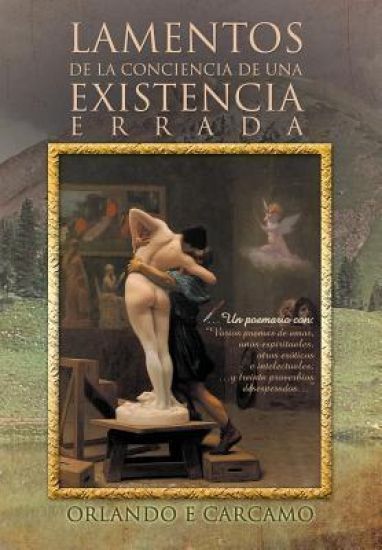
Lamentos de La Conciencia de Una Existencia Errada
Orlando E C Rcamo; Orlando E Carcamo
Palibrio
2011
sidottu
Lamentos de La Conciencia de Una Existencia Errada
Orlando E C Rcamo; Orlando E Carcamo
Palibrio
2011
pokkari
Throughout history, groups of people disillusioned with society have tried to create utopian communities organized on new principles. Typically, they hold some or all of their property in common. Often, they are motivated by religious convictions, or by some type of socialist ideology. While many of these communities collapsed, some in a matter of months, a few of them continued for decades and even generations. This book analyzes what makes a utopian group successful and what can be learned from their example. Among the most successful of these utopian experiments were those inspired by the teachings of American economist Henry George. George's vision of expanded individual freedom coupled with economic justice gives us a map towards a better world.

The inquiring mind seeks to understand the nature of the physical world in which we live and how it got this way. Science has taken us a long way toward understanding the physical laws of the universe and those things that are beyond human control, yet these scientific observations still stop short of addressing the philosophical or teleological question behind these investigationswhat is the purpose of it all? A Christian Scientist explores this intersection of the physical and the metaphysicalor the spiritualby looking to those scientific truths we know about the physical world and buttressing them with the metaphysical truths of Christianity. Author Robert E. C. Weaver begins with a discussion of the underlying principles governing the universe, as uncovered and defined by scientific giants like Isaac Newton and Albert Einstein, and links these principles to what we know about creation and the beginning of humankind. In the end, Weaver posits that scientific wisdom and Judeo-Christian ethical and moral guidelines are essential for our lives. While often seen as contentious or even contradictory, science and religion are in fact complementary pillars of our human experience. It takes one to truly understand the other, and both can function together as the lenses through which we can see the world and ourselves clearly. And by finally addressing the question of the purpose behind it all, we can come to know God and find direction, responsibility, and fulfillment in the lives we live.

The inquiring mind seeks to understand the nature of the physical world in which we live and how it got this way. Science has taken us a long way toward understanding the physical laws of the universe and those things that are beyond human control, yet these scientific observations still stop short of addressing the philosophical or teleological question behind these investigationswhat is the purpose of it all? A Christian Scientist explores this intersection of the physical and the metaphysicalor the spiritualby looking to those scientific truths we know about the physical world and buttressing them with the metaphysical truths of Christianity. Author Robert E. C. Weaver begins with a discussion of the underlying principles governing the universe, as uncovered and defined by scientific giants like Isaac Newton and Albert Einstein, and links these principles to what we know about creation and the beginning of humankind. In the end, Weaver posits that scientific wisdom and Judeo-Christian ethical and moral guidelines are essential for our lives. While often seen as contentious or even contradictory, science and religion are in fact complementary pillars of our human experience. It takes one to truly understand the other, and both can function together as the lenses through which we can see the world and ourselves clearly. And by finally addressing the question of the purpose behind it all, we can come to know God and find direction, responsibility, and fulfillment in the lives we live.