Kirjojen hintavertailu. Mukana 11 717 486 kirjaa ja 12 kauppaa.

Kirjahaku

Etsi kirjoja tekijän nimen, kirjan nimen tai ISBN:n perusteella.

1000 tulosta hakusanalla Edwards J.

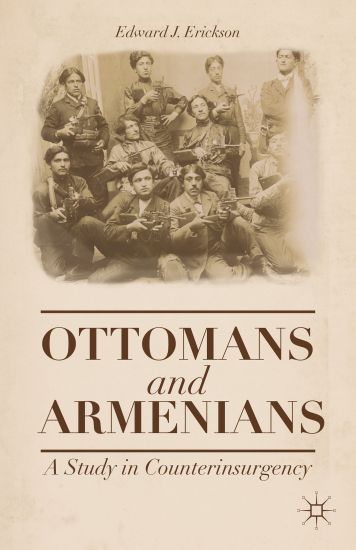
Ottomans and Armenians

Ottomans and Armenians

Edward J. Erickson

Palgrave Macmillan
2013
nidottu
Covering the period from 1878-1915, Ottomans and Armenians is a military history of the Ottoman army and the counterinsurgency campaigns it waged in the last days of the Ottoman empire. Although Ottomans were among the most active practitioners of counterinsurgency campaigning in the late-nineteenth and early-twentieth centuries, in the vast literature available on counterinsurgency in the early twenty-first century, there is very little scholarly analysis of how Ottomans reacted to insurgency and then went about counterinsurgency. This book presents the thesis that the Ottoman government developed an evolving, 35-year, empire-wide array of counterinsurgency practices that varied in scope and execution depending on the strategic importance of the affected provinces.
Biogeography and Biodiversity of Western Atlantic Mollusks
Shallow water marine molluscan faunas are distributed in a pattern of distinct, geographically definable areas. This makes mollusks ideal for studying the distribution of organisms in the marine environment and the processes and patterns that control their evolution. Biogeography and Biodiversity of Western Atlantic Mollusks is the first book to use quantitative methodologies to define marine molluscan biogeographical patterns. It traces the historical development of these patterns for the subtropical and tropical western Atlantic. The book discusses the multistage process of evolving new taxa caused by eustatic fluctuations, ecological stress, and evolutionary selection. Drawing on his decades of intensive field work, the author defines three western Atlantic molluscan provinces and 15 subprovinces based on his Provincial Combined Index, a modern refinement of Valentine’s 50% rule. The faunal provinces—Carolinian, Caribbean, and Brazilian—are discussed in detail. The text defines the physical aspects of the provinces using quantitative data, with water temperature as the primary parameter. It discusses the details of the 15 subprovinces—geographically definable faunal subdivisions—as well as provinciatones, transition zones of provincial overlap. The author’s algorithms demonstrate that the bulk of the molluscan biodiversity is concentrated in 40 separate centers of speciation, ranging from Cape Hatteras, North Carolina, south to Argentina. Many of these evolutionary hotspots reside on remote archipelagos and offshore banks as well as within areas of provincial overlap. The text describes some of the more exotic and poorly known areas and presents maps and color photographs of characteristic habitats, index species, and live animals, including over 400 species of rare and seldom seen shells.
Internet Searches for Vetting, Investigations, and Open-Source Intelligence
In the information age, it is critical that we understand the implications and exposure of the activities and data documented on the Internet. Improved efficiencies and the added capabilities of instant communication, high-speed connectivity to browsers, search engines, websites, databases, indexing, searching and analytical applications have made information technology (IT) and the Internet a vital issued for public and private enterprises. The downside is that this increased level of complexity and vulnerability presents a daunting challenge for enterprise and personal security.Internet Searches for Vetting, Investigations, and Open-Source Intelligence provides an understanding of the implications of the activities and data documented by individuals on the Internet. It delineates a much-needed framework for the responsible collection and use of the Internet for intelligence, investigation, vetting, and open-source information. This book makes a compelling case for action as well as reviews relevant laws, regulations, and rulings as they pertain to Internet crimes, misbehaviors, and individuals’ privacy. Exploring technologies such as social media and aggregate information services, the author outlines the techniques and skills that can be used to leverage the capabilities of networked systems on the Internet and find critically important data to complete an up-to-date picture of people, employees, entities, and their activities. Outlining appropriate adoption of legal, policy, and procedural principles—and emphasizing the careful and appropriate use of Internet searching within the law—the book includes coverage of cases, privacy issues, and solutions for common problems encountered in Internet searching practice and information usage, from internal and external threats. The book is a valuable resource on how to utilize open-source, online sources to gather important information and screen and vet employees, prospective employees, corporate partners, and vendors.
Church and State in Western Society

Church and State in Western Society

Edward J. Eberle

Routledge
2016
nidottu
The role of religion as a contentious and motivating force in society is examined here through the lens of the church-state dynamic in countries with three very different approaches to this crucial relationship. Focusing on the United Kingdom, where there is official recognition of one religion by the state, the United States, where law imposes a separatism between religion and the state and Germany, where there is cooperation between the church and state, this book compares these three models. It describes the components of each model, illustrates their operation and uses case law to examine what each model might learn from the other. Controversial and timely issues such as the refusal of medical treatment on religious grounds, the wearing of Islamic headscarves and ritual animal slaughter are discussed with new insight, providing a comprehensive review of varied approaches to law, government and religious freedom.
Urban Confrontations in Literature and Social Science, 1848-2001
In an innovative contribution to the challenging of disciplinary boundaries, Edward J. Ahearn juxtaposes works of literature with the writings of social scientists to discover how together they illuminate city life in ways that neither can accomplish separately. Ahearn's argument spans from the second half of the nineteenth century in Western Europe to the present-day United States and encompasses a wide range of literary genres and sociological schools. For example, Charles Baudelaire's essays on the city are viewed alongside the work of Emile Durkheim and Georg Simmel; Bertolt Brecht's Jungle of Cities heightens the arguments of Louis Wirth and Robert Park; Richard Wright's Native Son and Saul Bellow's The Adventures of Augie March are re-visioned in tandem with works by William Julius Wilson and others; Herman Melville's "Bartleby the Scrivener" poses a challenge to James Q. Wilson's Bureaucracy; Toni Morrison's historical novel Jazz is buttressed by the career of Robert Moses and the revisionist work of historians Hilary Ballon and Kenneth T. Jackson; and Don DeLillos's Cosmopolis comes into brilliant focus in the light of arguments on world cybercities by David Harvey, Saskia Sassen, and Manuel Cassels. Resisting the temptation to ignore contradictions for the sake of interpretation, Ahearn instead offers the reader a view of the modern city as complex as his subject matter. Here the methodologies and knowledge generated by the social sciences are both complemented and subverted by the experience of city life as portrayed in literature. With its diverse narrative tactics and shifting points of view, which can be as disorienting to the reader as a foreign city is to an arriving immigrant, literature reinforces the importance of method and outlook in the social sciences. Ultimately, Ahearn suggests, neither literature nor the social sciences can capture the experience of urban misery.
Human Resources, Care Giving, Career Progression and Gender
This book presents a challenge to feminist perspectives that see the glass ceiling as the exclusive domain of women's careers and work life. The authors address existing debates and extend them to include original empirical evidence from several US and UK comparative studies that look at the effect of caring for dependents (including care for children and elder care) upon the careers and aspirations of both men and women.
Corrections in the Community

Corrections in the Community

Edward J. Latessa; Brian Lovins

Routledge
2019
sidottu
Corrections in the Community, Seventh Edition, examines the current state of community corrections and proposes an evidence-based approach to making programs more effective. As the U.S. prison and jail systems continue to struggle, options like probation, parole, alternative sentencing, and both residential and non-residential programs in the community continue to grow in importance. This text provides a solid foundation and includes the most salient information available on the broad and dynamic subject of community corrections. Authors Latessa and Lovins organize and evaluate the latest data on the assessment of offender risk/need/responsivity and successful methods that continue to improve community supervision and its effects on different types of clients, from those with mental illness or substance abuse problems to juveniles.This book provides students with a thorough understanding of the theoretical and practical aspects of community corrections and prepares them to evaluate and strengthen these crucial programs. This seventh edition includes new chapters on pretrial, and graduated responses as well as updated information on specialty drug and other problem-solving courts. Now found in every state, these specialty courts represent a way to deal with some of the most devastating problems that face our population, be it substance abuse or re-entry to the community from prison. Chapters contain key terms, boxed material, review questions, and recommended readings, and a glossary is provided to clarify important concepts. The instructor’s guide is expanded, offering sample syllabi for semester, quarter, and online classes; student exercises; and research and information links. A test bank and lecture slides are also available at no cost.
Corrections in the Community

Corrections in the Community

Edward J. Latessa; Brian Lovins

Routledge
2019
nidottu
Corrections in the Community, Seventh Edition, examines the current state of community corrections and proposes an evidence-based approach to making programs more effective. As the U.S. prison and jail systems continue to struggle, options like probation, parole, alternative sentencing, and both residential and non-residential programs in the community continue to grow in importance. This text provides a solid foundation and includes the most salient information available on the broad and dynamic subject of community corrections. Authors Latessa and Lovins organize and evaluate the latest data on the assessment of offender risk/need/responsivity and successful methods that continue to improve community supervision and its effects on different types of clients, from those with mental illness or substance abuse problems to juveniles.This book provides students with a thorough understanding of the theoretical and practical aspects of community corrections and prepares them to evaluate and strengthen these crucial programs. This seventh edition includes new chapters on pretrial, and graduated responses as well as updated information on specialty drug and other problem-solving courts. Now found in every state, these specialty courts represent a way to deal with some of the most devastating problems that face our population, be it substance abuse or re-entry to the community from prison. Chapters contain key terms, boxed material, review questions, and recommended readings, and a glossary is provided to clarify important concepts. The instructor’s guide is expanded, offering sample syllabi for semester, quarter, and online classes; student exercises; and research and information links. A test bank and lecture slides are also available at no cost.
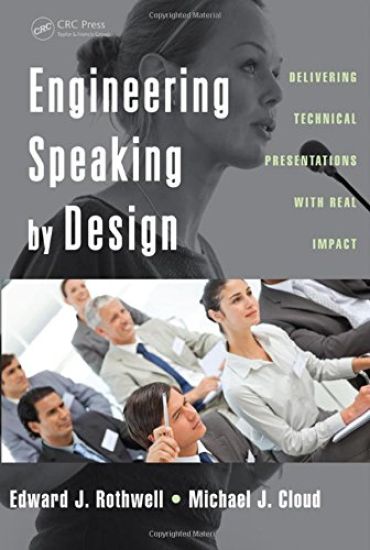
Engineering Speaking by Design

Engineering Speaking by Design

Edward J. Rothwell; Michael J. Cloud

CRC Press
2017
sidottu
From the Authors of Engineering Writing by Design: Creating Formal Documents of Lasting Value Engineering presentations are often a topic of frustration. Engineers complain that they don't enjoy public speaking, and that they don't know how to address audiences with varying levels of technical knowledge. Their colleagues complain about the state of information transfer in the profession. Non-engineers complain that engineers are boring and talk over everybody‘s heads. Although many public speaking books exist, most concentrate on surface issues, failing to distinguish the formal oral technical presentation from general public speaking. Engineering Speaking by Design: Delivering Technical Presentations with Real Impact targets the formal oral technical presentation skills needed to succeed in modern engineering. Providing clear and concise instruction supported by illustrative examples, the book explains how to avoid logical fallacies (both formal and informal), use physical reasoning to catch mistakes in claims, master the essentials of presentation style, conquer the elements of mathematical exposition, and forge a connection with the audience. Each chapter ends with a convenient checklist, bulleted summary, and set of exercises. A solutions manual is available with qualifying course adoption. Yet the book‘s most unique feature is its conceptual organization around the engineering design process. This is the process taught in most engineering survey courses: understand the problem, collect relevant information, generate alternative solutions, choose a preferred solution, refine the chosen solution, and so on. Since virtually all engineers learn and practice this process, it is so familiar that it can be applied seamlessly to formal oral technical presentations. Thus, Engineering Speaking by Design: Delivering Technical Presentations with Real Impact is inherently valuable in that it
Alcohol Interactions with Drugs and Chemicals
Alcohol Interactions with Drugs and Chemicals is a concise volume that identifies, documents, and assesses the capacity of alcohol to alter the toxicity of chemical pollutants and drugs in animal models and humans. The book systematically assesses interactions according to general chemical classes of inorganic and organic agents. It also presents an integrative discussion of the significance of these findings to public health.Alcohol Interactions with Drugs and Chemicals will be a valuable reference tool for environmental scientists, toxicologists, epidemiologists, and alcohol researchers studying the interactions of alcohol with drugs and chemical pollutants.
Principles of Animal Extrapolation (1991)

Principles of Animal Extrapolation (1991)

Edward J. Calabrese

CRC Press
2017
sidottu
Principles of Animal Extrapolation addresses the conceptual basis for animal extrapolation and provides an abundance of documentation that illustrates how these principles may be applied in the selection of the more appropriate models and in the interpretation of toxicological studies. The book analyzes and documents each specific biological cause of interspecies differences in susceptibility to toxic agents, including differences in absorption, gut flora, tissue distribution, metabolism, mechanisms and efficiencies of repair, and excretion. The problem of the heterogenicity of the human population is addressed through several chapters that assess the availability and prospects of developing predictive animal models for normal humans, as well as selected potential high-risk groups. Other topics presented in this book include the biological basis of regulatory actions involving attempts to extrapolate from exceptionally high exposure levels to realistic values, especially carcinogens; an assessment of genotoxicity tests, their ability to predict carcinogenicity in whole animals, and the manner in which they should be used by regulatory agencies; birth defects; and predicting the risk of human teratogenesis. Principle of Animal Extrapolation is essential for environmental toxicologists. It also provides valuable information to biomedical scientists (especially those involved in drug development and testing) and regulatory personnel in agencies such as the EPA, the OSHA, the NIOSH, and the FDA.
Safe Drinking Water Act (1989)

Safe Drinking Water Act (1989)

Edward J. Calabrese

CRC Press
2017
sidottu
This new book covers drinking water regulations such as disinfectant by-products, synthetic organics, inorganic chemicals, microbiological contaminants, volatile organic chemicals, radionuclides, fluoride, toxicological approaches to setting new national drinking water regulations, and trihalomethanes. In addition, organic and inorganic compounds scheduled to be regulated in 1989 and new candidates for the 1990s regulations are detailed.
Individual and Group Privacy

Individual and Group Privacy

Edward J. Bloustein; Nathaniel J. Pallone

Routledge
2018
sidottu
In exploring a series of problems associated with privacy and the First Amendment, Bloustein defines individual and group privacy, distinguishing them from each other and related concepts. He also identifies the public interest in individual privacy as individual integrity or liberty, and that of group privacy as the integrity of social structure. The legal protection afforded each of these forms of privacy is illustrated at length, as is the clash between them and the constitutional guarantees of the First Amendment and the citizen's general right to know. In his final essay, Bloustein insists that the concept of group privacy is essential to a properly functioning social structure, and warns that it would be disastrous if this principle were neglected as part of an overreaction to the misuse of group confidences that characterized the Nixon era.
Alcohol Interactions with Drugs and Chemicals
Alcohol Interactions with Drugs and Chemicals is a concise volume that identifies, documents, and assesses the capacity of alcohol to alter the toxicity of chemical pollutants and drugs in animal models and humans. The book systematically assesses interactions according to general chemical classes of inorganic and organic agents. It also presents an integrative discussion of the significance of these findings to public health.Alcohol Interactions with Drugs and Chemicals will be a valuable reference tool for environmental scientists, toxicologists, epidemiologists, and alcohol researchers studying the interactions of alcohol with drugs and chemical pollutants.
Principles of Animal Extrapolation (1991)

Principles of Animal Extrapolation (1991)

Edward J. Calabrese

CRC Press
2019
nidottu
Principles of Animal Extrapolation addresses the conceptual basis for animal extrapolation and provides an abundance of documentation that illustrates how these principles may be applied in the selection of the more appropriate models and in the interpretation of toxicological studies. The book analyzes and documents each specific biological cause of interspecies differences in susceptibility to toxic agents, including differences in absorption, gut flora, tissue distribution, metabolism, mechanisms and efficiencies of repair, and excretion. The problem of the heterogenicity of the human population is addressed through several chapters that assess the availability and prospects of developing predictive animal models for normal humans, as well as selected potential high-risk groups. Other topics presented in this book include the biological basis of regulatory actions involving attempts to extrapolate from exceptionally high exposure levels to realistic values, especially carcinogens; an assessment of genotoxicity tests, their ability to predict carcinogenicity in whole animals, and the manner in which they should be used by regulatory agencies; birth defects; and predicting the risk of human teratogenesis. Principle of Animal Extrapolation is essential for environmental toxicologists. It also provides valuable information to biomedical scientists (especially those involved in drug development and testing) and regulatory personnel in agencies such as the EPA, the OSHA, the NIOSH, and the FDA.
Revival: Safe Drinking Water Act (1989)

Revival: Safe Drinking Water Act (1989)

Edward J. Calabrese

CRC Press
2019
nidottu
This new book covers drinking water regulations such as disinfectant by-products, synthetic organics, inorganic chemicals, microbiological contaminants, volatile organic chemicals, radionuclides, fluoride, toxicological approaches to setting new national drinking water regulations, and trihalomethanes. In addition, organic and inorganic compounds scheduled to be regulated in 1989 and new candidates for the 1990s regulations are detailed.
Sexuality and the Devil

Sexuality and the Devil

Edward J. Tejirian

Routledge
2016
sidottu
At the time of publication our understanding of sexuality relied heavily on biology, and also on morality, as was particularly evident when homosexuality and bisexuality were discussed. In this title, originally published in 1990, the author presents a compelling case for viewing the sexual dimension of life through an understanding of its symbols. The potent figure of the devil serves as his avenue of approach.In the first part of the book, the author presents a detailed case history of a young man who began psychoanalytic therapy with him because of a terrifying conviction that he could be possessed by the devil. In the course of therapy it emerged that the devil had entered into his consciousness as a vehicle to express a complex of homosexual wishes and fears that were deeply troubling to a man whose life history had been entirely heterosexual. The author argues that the assumptions about male psychology that came to pervade psychoanalytic theory after Freud’s death could not account for the nature of this young man’s conflicts or for the outcome of the analysis.In the second part of the book, the author cites historical and anthropological data to demonstrate that the depth and breadth of male psychology extend beyond the limits of what was considered normal by the neoconservative theorists who revised Freud’s theories to exclude his ideas about bisexuality. Rejecting the reduction of sexuality to biology, the author asserts that sexuality can be properly regarded as symbolic, in the same way that meaningful works of art and rituals are symbolic. The power of sexual images and actions comes from their ability to combine important meaning with intensely felt emotion. Finally, the author examines the way in which culture affects sexuality through its control of consciousness and its influence on what kinds of sexual symbols may be utilized and what kinds of meanings they may express.
Sexuality and the Devil

Sexuality and the Devil

Edward J. Tejirian

Routledge
2018
nidottu
At the time of publication our understanding of sexuality relied heavily on biology, and also on morality, as was particularly evident when homosexuality and bisexuality were discussed. In this title, originally published in 1990, the author presents a compelling case for viewing the sexual dimension of life through an understanding of its symbols. The potent figure of the devil serves as his avenue of approach.In the first part of the book, the author presents a detailed case history of a young man who began psychoanalytic therapy with him because of a terrifying conviction that he could be possessed by the devil. In the course of therapy it emerged that the devil had entered into his consciousness as a vehicle to express a complex of homosexual wishes and fears that were deeply troubling to a man whose life history had been entirely heterosexual. The author argues that the assumptions about male psychology that came to pervade psychoanalytic theory after Freud’s death could not account for the nature of this young man’s conflicts or for the outcome of the analysis.In the second part of the book, the author cites historical and anthropological data to demonstrate that the depth and breadth of male psychology extend beyond the limits of what was considered normal by the neoconservative theorists who revised Freud’s theories to exclude his ideas about bisexuality. Rejecting the reduction of sexuality to biology, the author asserts that sexuality can be properly regarded as symbolic, in the same way that meaningful works of art and rituals are symbolic. The power of sexual images and actions comes from their ability to combine important meaning with intensely felt emotion. Finally, the author examines the way in which culture affects sexuality through its control of consciousness and its influence on what kinds of sexual symbols may be utilized and what kinds of meanings they may express.
Yeniseian Peoples and Languages

Yeniseian Peoples and Languages

Edward J. Vajda

Routledge
2015
nidottu
The Kets of Central Siberia are perhaps the most enigmatic of Siberia's aboriginal tribes. Today numbering barely 1,100 souls living in several small villages on the middle reaches of the Yenisei, the Kets have retained much of their ancient culture, as well as their unique language.Genetic studies of the Ket hint at an ancient affinity with Tibetans, Burmese, and other peoples of peoples of South East Asia not shared by any other Siberian people. The Ket language, which is unrelated to any other living Siberian tongue, also appears to be a relic of a bygone linguistic landscape of Inner Asia.Because language isolates such as Ket are of special value to scholars of the original peopling of the continents, linguists have recently attempted to link Ket with North Caucasian, Sino- Tibetan, Burushaski, Basque and Na Dene. None of these links have been proved to the satisfaction of all linguists, and the research continues both in Russia and abroad.