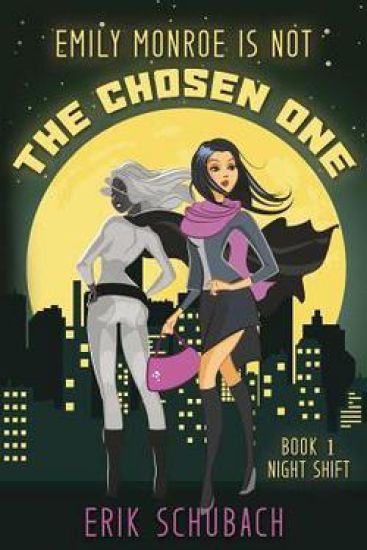
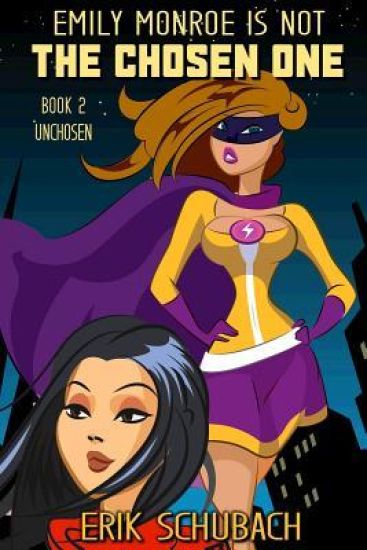
Emily Monroe may be a lot of things, but one thing is for sure, she is NOT the Chosen One. Emily is a normal girl working at Big Burger who has the unfortunate luck to look exactly like Big City's superhero darling, the Chosen One. It has been the bane of her existence as it disrupts her life and those around her when super villains come knocking, wanting to prove their mettle by fighting the Chosen One. Nobody listens when she insists she isn't who they think she is. With common sense and years of rage built up inside, she usually serves their butts to them on a platter, asking "Did you want fries with that?" No cape required.
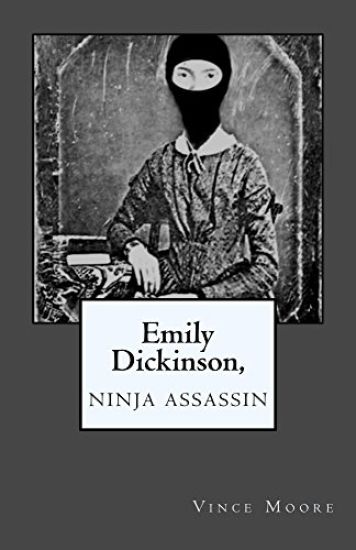
A hermit, a recluse, a mere poet? We know Emily Dickinson through her poetry, but that is hardly the real story.Emily Dickinson, Ninja Assassin chronicles the life of America's top nineteenth century assassin. Hiding in plain sight as a reclusive poet, she has the perfect disguise. This book chronicles the true story: her rise through the Ninja hierarchy in America, her international exploits; her adventures with Sir Richard Burton and Abraham Lincoln, and even her role in the latter's assassination.
Poems by Emily Dickinson and edited by two of her friends Mabel Loomis Todd and T.W. Higginson. Emily Elizabeth Dickinson (December 10, 1830 - May 15, 1886) was an American poet. Dickinson was born in Amherst, Massachusetts into a prominent family with strong ties to its community. After studying at the Amherst Academy for seven years in her youth, she briefly attended the Mount Holyoke Female Seminary before returning to her family's house in Amherst. Dickinson lived much of her life in reclusive isolation. Considered an eccentric by locals, she developed a noted penchant for white clothing and became known for her reluctance to greet guests or, later in life, to even leave her bedroom. Dickinson never married, and most friendships between her and others depended entirely upon correspondence. She was a recluse for the later years of her life. The verses of Emily Dickinson belong emphatically to what Emerson long since called "the Poetry of the Portfolio,"- something produced absolutely without the thought of publication, and solely by way of expression of the writer's own mind. Such verse must inevitably forfeit whatever advantage lies in the discipline of public criticism and the enforced conformity to accepted ways. On the other hand, it may often gain something through the habit of freedom and the unconventional utterance of daring thoughts. In the case of the present author, there was absolutely no choice in the matter; she must write thus, or not at all. A recluse by temperament and habit, literally spending years without setting her foot beyond the doorstep, and many more years during which her walks were strictly limited to her father's grounds, she habitually concealed her mind, like her person, from all but a very few friends; and it was with great difficulty that she was persuaded to print, during her lifetime, three or four poems. Yet she wrote verses in great abundance; and though brought curiously indifferent to all conventional rules, had yet a rigorous literary standard of her own, and often altered a word many times to suit an ear which had its own tenacious fastidiousness.
Poems by Emily Dickinson: Second Series by Emily Dickinson and edited by two of her friends Mabel Loomis Todd and T.W. Higginson. The eagerness with which the first volume of Emily Dickinson's poems has been read shows very clearly that all our alleged modern artificiality does not prevent a prompt appreciation of the qualities of directness and simplicity in approaching the greatest themes - life and love and death. That "irresistible needle-touch," as one of her best critics has called it, piercing at once the very core of a thought, has found a response as wide and sympathetic as it has been unexpected even to those who knew best her compelling power. This second volume, while open to the same criticism as to form with its predecessor, shows also the same shining beauties. Although Emily Dickinson had been in the habit of sending occasional poems to friends and correspondents, the full extent of her writing was by no means imagined by them. Her friend "H.H." must at least have suspected it, for in a letter dated 5th September, 1884, she wrote: - MY DEAR FRIEND - What portfolios full of verses you must have It is a cruel wrong to your "day and generation" that you will not give them light.
Emily's story. Once Emily came to visit her grandmother. They had a good time, they ate delicious food and talked. That night, Emily did not sleep well, so she decided to take a walk. She walked for a long time and suddenly saw forest animals. OH MY GOD, the animals are frying marshmallows What will be next? Interesting?
*Includes pictures *Includes quotes *Includes online resources and a bibliography for further reading "Saying nothing...sometimes says the most." - Emily Dickinson Like many writers of her day, Emily Dickinson was a virtual unknown during her lifetime. After her death, however, when people discovered the incredible amount of poetry that she had written, Dickinson became celebrated as one of America's greatest poets. Dickinson was notoriously introverted and mostly lived as a recluse, carrying out her friendships almost entirely by written letters. Her work was just as unique; her poetry is written with short lines, occasionally lacked titles, and often used slant rhyme and unconventional capitalization and punctuation. Only a few of her poems were published in her lifetime, but American schoolchildren across the country read her work today. As a result, Dickinson is, even to those who have studied her the most, an enigma and, even more to the point, a contradiction. Born in an era when women rarely received more than a rudimentary education, she attended college but left before graduating. Considered by many evangelical Christians to be a pioneer of religious poetry, she struggled during her entire life to fully embrace the Calvinist doctrines taught in her New England home. She embraced the friendship of women, sometimes to a level that bordered on the obsessive, but then easily removed herself from physical contact with all but a few of her closest family members. She seemed to be, in every way, the quintessential Victorian spinster, but her poetry and letters reveal shocking passions, often shared with married men. Not surprisingly, her poetry was just as diverse as her personal life, as she praised romantic love but criticized marriage. She wrote stanza after stanza of verse based on religious themes but never quite presented a clear cut view of the Christian faith. She produced in the same year passionate, even sexually charged verses, and also stilted observations of natural science. But in the midst of all this, she created a new genre of poetry, one that allowed her to speak her mind but in such a way that she could still move about, to the extent she wanted to, in polite society. As one writer has observed, "To make the abstract tangible, to define meaning without confining it, to inhabit a house that never became a prison, Dickinson created in her writing a distinctively elliptical language for expressing what was possible but not yet realized. Like the Concord Transcendentalists whose works she knew well, she saw poetry as a double-edged sword. While it liberated the individual, it as readily left him ungrounded." This then, proved to be both her blessing and her burden, for, left adrift, she eventually lost at least some of her grip on reality and finished her life as a mysterious recluse, not unlike a character in her own poetry. Emily Dickinson: The Life and Legacy of the Famous American Poet looks at the reclusive life and remarkable work of the poet. Along with pictures depicting important people, places, and events, you will learn about Emily Dickinson like never before.
*Includes pictures *Includes quotes *Includes online resources and a bibliography for further reading "Saying nothing...sometimes says the most." - Emily Dickinson Like many writers of her day, Emily Dickinson was a virtual unknown during her lifetime. After her death, however, when people discovered the incredible amount of poetry that she had written, Dickinson became celebrated as one of America's greatest poets. Dickinson was notoriously introverted and mostly lived as a recluse, carrying out her friendships almost entirely by written letters. Her work was just as unique; her poetry is written with short lines, occasionally lacked titles, and often used slant rhyme and unconventional capitalization and punctuation. Only a few of her poems were published in her lifetime, but American schoolchildren across the country read her work today. As a result, Dickinson is, even to those who have studied her the most, an enigma and, even more to the point, a contradiction. Born in an era when women rarely received more than a rudimentary education, she attended college but left before graduating. Considered by many evangelical Christians to be a pioneer of religious poetry, she struggled during her entire life to fully embrace the Calvinist doctrines taught in her New England home. She embraced the friendship of women, sometimes to a level that bordered on the obsessive, but then easily removed herself from physical contact with all but a few of her closest family members. She seemed to be, in every way, the quintessential Victorian spinster, but her poetry and letters reveal shocking passions, often shared with married men. Not surprisingly, her poetry was just as diverse as her personal life, as she praised romantic love but criticized marriage. She wrote stanza after stanza of verse based on religious themes but never quite presented a clear cut view of the Christian faith. She produced in the same year passionate, even sexually charged verses, and also stilted observations of natural science. But in the midst of all this, she created a new genre of poetry, one that allowed her to speak her mind but in such a way that she could still move about, to the extent she wanted to, in polite society. As one writer has observed, "To make the abstract tangible, to define meaning without confining it, to inhabit a house that never became a prison, Dickinson created in her writing a distinctively elliptical language for expressing what was possible but not yet realized. Like the Concord Transcendentalists whose works she knew well, she saw poetry as a double-edged sword. While it liberated the individual, it as readily left him ungrounded." This then, proved to be both her blessing and her burden, for, left adrift, she eventually lost at least some of her grip on reality and finished her life as a mysterious recluse, not unlike a character in her own poetry. Emily Dickinson: The Life and Legacy of the Famous American Poet looks at the reclusive life and remarkable work of the poet. Along with pictures depicting important people, places, and events, you will learn about Emily Dickinson like never before.
*Includes pictures*Includes contemporary accounts*Includes online resources and a bibliography for further readingWalt Whitman, the great American poet, is also in many ways a great American enigma, for more and less are known about him than other famous men in 19th century American history. On the one hand, he was the product of something of an all-American family, the sort of salt of the earth people he would later describe so vividly in his work. On the other, he was a complete bohemian and profligate, given to vanity in the way he dressed and lived. He started out his career as a school teacher and was later a newspaper man, but he left both those types of work for a job as a government bureaucrat. As a young man, when most of his peers were sowing their wild oats, he was considered by many to be a stick in the mud who neither drank nor chased women. Then, as a middle-aged man, when his peers had settled down into quieter lives, he remained single and seems to have pursued romantic relationships with both men and women.Then, of course, there was his poetry, words that summarized both the best and worst about his nation. His seminal work, Leaves of Grass, began as little more than a pamphlet but grew for decades, as each new edition added more poems. By the time of his death, it had become a large volume still studied today. While he wrote other pieces for publication, Leaves of Grass remained his magnum opus and his baby, nurturing and developing it throughout his life. And yet, through it all, the title remained the same self-deprecating play on words that he had given it when he first self-published the work in 1855.Like many writers of her day, Emily Dickinson was a virtual unknown during her lifetime. After her death, however, when people discovered the incredible amount of poetry that she had written, Dickinson became celebrated as one of America's greatest poets. Dickinson was notoriously introverted and mostly lived as a recluse, carrying out her friendships almost entirely by written letters. Her work was just as unique; her poetry is written with short lines, occasionally lacked titles, and often used slant rhyme and unconventional capitalization and punctuation. Only a few of her poems were published in her lifetime, but American schoolchildren across the country read her work today. As a result, Dickinson is, even to those who have studied her the most, an enigma and, even more to the point, a contradiction. Born in an era when women rarely received more than a rudimentary education, she attended college but left before graduating. Considered by many evangelical Christians to be a pioneer of religious poetry, she struggled during her entire life to fully embrace the Calvinist doctrines taught in her New England home. She embraced the friendship of women, sometimes to a level that bordered on the obsessive, but then easily removed herself from physical contact with all but a few of her closest family members. She seemed to be, in every way, the quintessential Victorian spinster, but her poetry and letters reveal shocking passions, often shared with married men. Not surprisingly, her poetry was just as diverse as her personal life, as she praised romantic love but criticized marriage. She wrote stanza after stanza of verse based on religious themes but never quite presented a clear cut view of the Christian faith. She produced in the same year passionate, even sexually charged verses, and also stilted observations of natural science. But in the midst of all this, she created a new genre of poetry, one that allowed her to speak her mind but in such a way that she could still move about, to the extent she wanted to, in polite society. Emily Dickinson and Walt Whitman: The Lives and Careers of 19th Century America's Most Famous Poets looks at the remarkable lives of the two, and the impact their famous works have had.
*Includes pictures*Includes contemporary accounts*Includes online resources and a bibliography for further readingWalt Whitman, the great American poet, is also in many ways a great American enigma, for more and less are known about him than other famous men in 19th century American history. On the one hand, he was the product of something of an all-American family, the sort of salt of the earth people he would later describe so vividly in his work. On the other, he was a complete bohemian and profligate, given to vanity in the way he dressed and lived. He started out his career as a school teacher and was later a newspaper man, but he left both those types of work for a job as a government bureaucrat. As a young man, when most of his peers were sowing their wild oats, he was considered by many to be a stick in the mud who neither drank nor chased women. Then, as a middle-aged man, when his peers had settled down into quieter lives, he remained single and seems to have pursued romantic relationships with both men and women.Then, of course, there was his poetry, words that summarized both the best and worst about his nation. His seminal work, Leaves of Grass, began as little more than a pamphlet but grew for decades, as each new edition added more poems. By the time of his death, it had become a large volume still studied today. While he wrote other pieces for publication, Leaves of Grass remained his magnum opus and his baby, nurturing and developing it throughout his life. And yet, through it all, the title remained the same self-deprecating play on words that he had given it when he first self-published the work in 1855.Like many writers of her day, Emily Dickinson was a virtual unknown during her lifetime. After her death, however, when people discovered the incredible amount of poetry that she had written, Dickinson became celebrated as one of America's greatest poets. Dickinson was notoriously introverted and mostly lived as a recluse, carrying out her friendships almost entirely by written letters. Her work was just as unique; her poetry is written with short lines, occasionally lacked titles, and often used slant rhyme and unconventional capitalization and punctuation. Only a few of her poems were published in her lifetime, but American schoolchildren across the country read her work today. As a result, Dickinson is, even to those who have studied her the most, an enigma and, even more to the point, a contradiction. Born in an era when women rarely received more than a rudimentary education, she attended college but left before graduating. Considered by many evangelical Christians to be a pioneer of religious poetry, she struggled during her entire life to fully embrace the Calvinist doctrines taught in her New England home. She embraced the friendship of women, sometimes to a level that bordered on the obsessive, but then easily removed herself from physical contact with all but a few of her closest family members. She seemed to be, in every way, the quintessential Victorian spinster, but her poetry and letters reveal shocking passions, often shared with married men. Not surprisingly, her poetry was just as diverse as her personal life, as she praised romantic love but criticized marriage. She wrote stanza after stanza of verse based on religious themes but never quite presented a clear cut view of the Christian faith. She produced in the same year passionate, even sexually charged verses, and also stilted observations of natural science. But in the midst of all this, she created a new genre of poetry, one that allowed her to speak her mind but in such a way that she could still move about, to the extent she wanted to, in polite society. Emily Dickinson and Walt Whitman: The Lives and Careers of 19th Century America's Most Famous Poets looks at the remarkable lives of the two, and the impact their famous works have had.
Emily Fox-Seton by Frances Hodgson Burnett is one of the greatest works in the field of fiction. It is one of the vintage collections by the Frances Hodgson Burnett.
Emily Monroe may be a lot of things, but one thing is for sure, she is NOT the Chosen One. Now that the truth about Emily and the Chosen One has been revealed to them, they are reeling and things will never again be the same for Emily at Big Burger. The Chosen One rebels, learning the truth about her family and the Mayor strips her of the mantle of the champion of Big City. While the new hero of the city, Mega Girl, makes dangerous decisions, the Chosen One must learn to be a normal person and get a new job.
Emily is unwittingly drawn through a secret gate and trapped in Netherworld, as her brothers are teleported away to another town.While she wonders what to do, another gate suddently opens and someone says "don't worry Emily - we've been expecting you"She is very frightened but she recognises the voice and knows she has to follow them because they are her brothers - Oliver & Daniel But suddenly, they are much older than they were just a few minutes ago
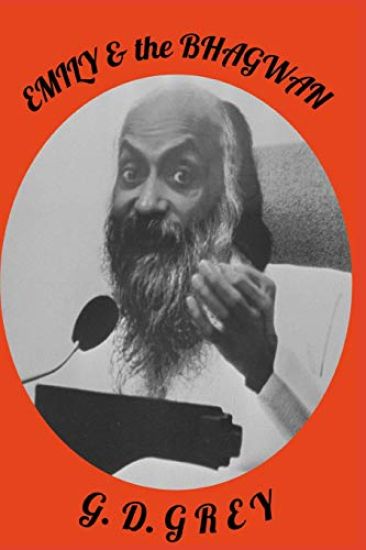
Who is the real Bhagwan? What is the reality behind his 50th birthday celebration? Is there really a conspiracy that threatens America? Retired policewoman and active CIA agent want to find out This is of course a work of fiction - but written by someone who was there.
This is a story of a young girl named Emily who has a cancer and what she has to go through. Author is hoping that by writing this, it will help comfort kids who have cancer and bring them happiness.
Emily Byrd Starr longs to attend Queen's Academy to earn her teaching license, but her tradition-bound relatives at New Moon refuse. She is instead offered the chance to go to Shrewsbury High School with her friends, on two conditions. The first is that she board with her disliked Aunt Ruth, but it is the second that causes Emily difficulties. Emily must not write a word during her high-school education. At first, Emily refuses the offer, unable to contemplate a life without any writing. Cousin Jimmy changes the condition slightly, saying that she cannot write a word of "fiction". Emily does not think this much of an improvement but it turns out to be an excellent exercise for her budding writing career. Although Emily clashes with Aunt Ruth and Evelyn Blake, the school's would-be writer, she starts to develop her powers of storytelling. Through a series of adventures, Emily is furnished with materials to write stories and poems, and even sees success with the short story "The Woman Who Spanked the King." In the meantime, Emily also begins to see romantic possibilities for her life. She and Teddy Kent draw closer, but due to misunderstandings and interference from Teddy's mother, the romance stalls. Emily also refuses a proposal from Perry Miller, and continues her long-lasting friendship with Dean Priest. At the end of the novel, Emily, now a budding young writer, chooses to remain at her beloved New Moon rather than leaving for New York with famous writer Janet Royal
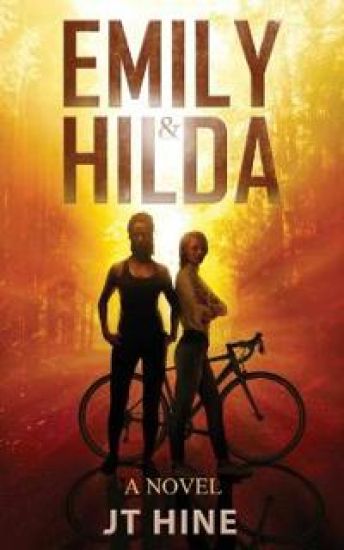
Cycling was already an adventure, but then...Teenage bicycle racing phenom Emily Hampstead is training for a major race. Retired Army nurse Hilda Paisley is traveling the USA on her bicycle. They meet by chance on a deserted road in Kansas, not suspecting that they'll ever cross paths again.Emily continues to win races to the delight and surprise of bicycle racing fans in the US and abroad. Her family moves to Virginia, where she attracts unexpected and deadly attention.Meanwhile, after witnessing a terrorist attack, Hilda helps the police make arrests - and the terrorists add her name to their hit list. After escaping the immediate threat, Hilda reports to a temporary nursing job in a Southern hospital.When Emily accepts Hilda's offer to ride to Canada - with Hilda's friend Jack - it promises to be a fun adventure.If they can survive it.