Kirjojen hintavertailu. Mukana 11 627 067 kirjaa ja 12 kauppaa.

Kirjahaku

Etsi kirjoja tekijän nimen, kirjan nimen tai ISBN:n perusteella.

1000 tulosta hakusanalla Eugene Bagger

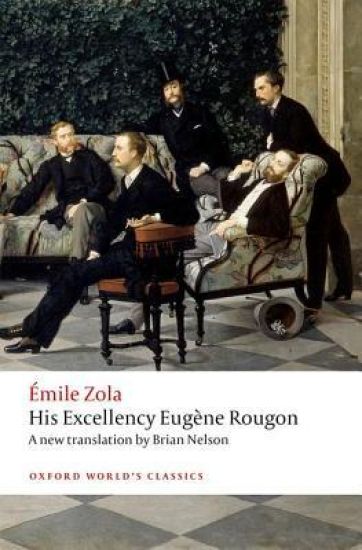
His Excellency Eugène Rougon

His Excellency Eugène Rougon

Emile Zola

Oxford University Press
2018
nidottu
'He loved power for power's sake . . . He was without question the greatest of the Rougons.' His Excellency Eugène Rougon (1876) is the sixth novel in Zola's twenty-volume Rougon-Macquart cycle. A political novel set in the corridors of power and in the upper échelons of French Second Empire society, including the Imperial court, it focuses on the fluctuating fortunes of the authoritarian Eugène Rougon, the 'vice-Emperor'. But it is more than just a chronicle. It plunges the reader into the essential dynamics of the political: the rivalries, the scheming, the jockeying for position, the ups and downs, the play of interests, the lobbying and gossip, the patronage and string-pulling, the bribery and blackmail, and, especially, the manipulation of language for political purposes. The novel's themes-especially its treatment of political discourse-have remarkable contemporary resonance. His Excellency Eugène Rougon is about politics everywhere.
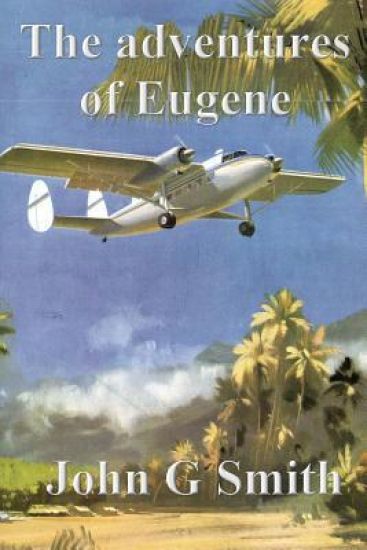
The adventures of Eugene

The adventures of Eugene

John G Smith

Lulu.com
2018
pokkari
Eugene was a butcher-boy. When he was only twelve years old he could make sausages and pies and cut up joints of meat. But, when he was eighteen, he was sent to Burma to drop rice from an aeroplane to villagers starving in the jungle. The Japanese soldiers were running scared. Eugene fell in love with a beautiful Burmese girl named Chit but when he returned to England, she was not allowed to come with him. They were both very sad. Years later he married Dorothy and they opened only the second supermarket in England. Things started to go wrong. There was an explosion down a coal mine, a terrible car crash and then Dorothy died: but how? Worse was to come. Two brothers disappeared without trace and then a farmer's dog sniffed out a man's arm buried in a field. The police came to see Eugene. Had he killed his brothers after a family argument?
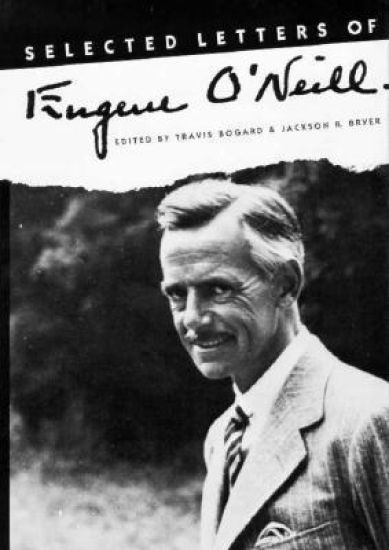
Selected Letters of Eugene O`Neill

Selected Letters of Eugene O`Neill

Bryer Jackson; Eugene O'Neill

Yale University Press
1988
sidottu
This book--published on the centenary of Eugene O’Neill’s birth--contains the only comprehensive collection of his letters. Providing a representative selection of O’Neill’s voluminous correspondence written over a fiftyyear period to intimate friends and family as well as to literary and theatrical personalities, the distinguished O’Neill scholars Travis Bogard and Jackson R. Bryer here offer through O’Neill’s letters new and revealing insights into the highly private life and thoughts of America’s greatest playwright.
The Critical Response to Eugene O'Neill

The Critical Response to Eugene O'Neill

John H. Houchin

Greenwood Press
1993
sidottu
Extolled and maligned, Eugene O'Neill was unquestionably the first American playwright of international stature, and his major plays, such as The Iceman Cometh and Long Day's Journey Into Night, remain giants of the American stage. Acres of print have been devoted to O'Neill by theatre critics and literary scholars. This new collection assesses the full range of critical response, considered historically through the entire oeuvre and covering major themes and critical stances. It culls from opening night reviews of premieres and revivals as well as scholarly essays from influential critics and anonymous writers, from boosters and detractors, with the uniqueness of the critical observation being the main criterion for selection. An introduction outlines the major issues and avenues of O'Neill discourse, and a selective bibliography provides additional sources for O'Neill study.
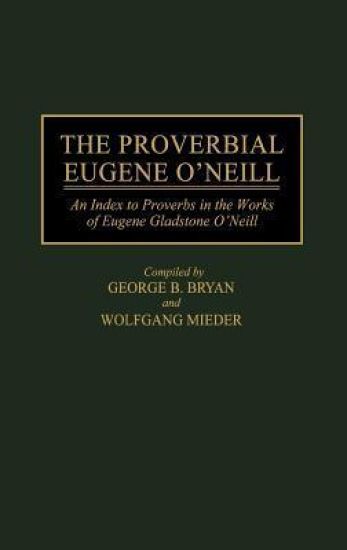
The Proverbial Eugene O'Neill
Proverbial language figures prominently in the works of Eugene O'Neill (1883-1953), the recipient of four Pulitzer prizes and a Nobel laureateship for literature. This book is a directory to the proverbs, proverbial expressions, and proverbial comparisons in O'Neill's 50 dramas and numerous letters, articles, diaries, and notebooks. Very little attention has been given to any aspect of O'Neill's language, to say nothing of the virtual disregard of him as a wielder of proverbial diction. This collection of 2,059 examples of O'Neill's proverbial usage is a first step towards remedying that situation and provides a foundation for future scholarship.The introduction shows how O'Neill used proverbs as a structural element of his dramas and places his proverbial usage in the context of international proverb scholarship, offers examples and generalizations about his manipulation of proverbs, and suggests fruitful areas of further investigation. The heart of the book is a key-word index to the proverbial texts that identifies the locations of the proverbial examples in the canon of O'Neill's works and facilitates comparisons of similar locutions. Each proverbial construction is dated so that the reader can immediately see the chronological range of the texts. For those interested in the history of particular proverbs, citations of standard proverb dictionaries are appended to most of the texts. Two appendices show the frequency with which proverbs appear and their distribution among the various dramas.
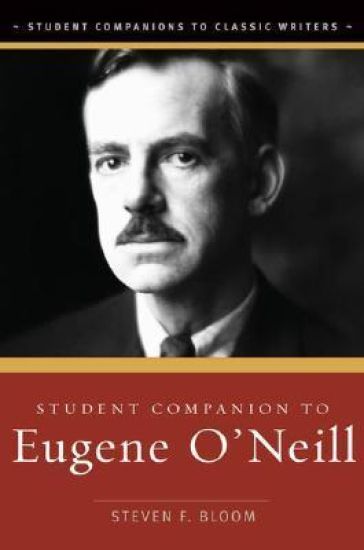
Student Companion to Eugene O'Neill

Student Companion to Eugene O'Neill

Steven F. Bloom

Greenwood Press
2007
sidottu
Eugene O'Neill is the only American dramatist ever to have received the Nobel Prize for Literature. He wrote over 50 plays; a number are virtually unknown by the general public; several are considered classics of the American stage; all of them demonstrate, in one way or another, how O'Neill challenged the conventional boundaries of the drama of his time and thereby paved the way for modern American theatre. This volume will provide guides to eight of O'Neill's plays that are most often studied in schools and colleges: The Hairy Ape, Anna Christie, The Emperor Jones, Desire Under the Elms, Ah, Wilderness!, The Iceman Cometh, Long Day's Journey Into Night, and A Moon for the Misbegotten. More than almost any other author in any fictional genre, O'Neill's works are highly autobiographical. The love/hate relationships he had with the members of his own family resonate throughout his dramatic works. The son of an alcoholic and a morphine addict, he struggled with chemical dependency throughout his life, but determined to be an artist or nothing, he eventually gave up drinking and fulfilled his artistic ambitions, transforming the traumatic experiences of his life into compelling drama. O'Neill's drama provides insights into the complexities of human behavior and raises questions about the forces, both external and internal, that shape human lives.
Alexander Pushkin: Eugene Onegin

Alexander Pushkin: Eugene Onegin

Briggs A. D. P.

Cambridge University Press
2008
pokkari
This is a lively and readable guide to Alexander Pushkin's novel in verse Eugene Onegin, a landmark of European Romanticism, and arguably the best of all Russian poetry. Professor Briggs addresses the question of how such remarkable poetry can have been composed about a rather banal plot, and considers the form of the work and its poetic techniques in detail. He offers fresh interpretations of the characters and events of the poem, and sets it against its European background. He discusses its influence - notably Tchaikovsky's operatic version - and points to its life-affirming philosophy and spirit of joyfulness. The book includes a chronological chart and a guide to further reading.
The Cambridge Companion to Eugene O'Neill
This is a volume of specially commissioned essays containing studies of Eugene O'Neill's life, his intellectual and creative forebears, and his relation to the theatrical world of his creative period, 1916–42. Also included are descriptions of the O'Neill canon and its production history on stage and screen, and a series of essays on 'special topics' related to the playwright, such as his treatment of women in the plays, his portrayals of Irish and African Americans, and his attempts to deal in dramatic terms with his parental family culminating in his greatest play, Long Day's Journey Into Night. One of the essays speaks for those who are critical of O'Neill's work, and the volume concludes with an essay on O'Neill criticism containing a select bibliography of full-length studies of the playwright's work.
The Cambridge Companion to Eugene O'Neill
This is a volume of specially commissioned essays containing studies of Eugene O’Neill’s life, his intellectual and creative forebears, and his relation to the theatrical world of his creative period, 1916–42. Also included are descriptions of the O’Neill canon and its production history on stage and screen, and a series of essays on ‘special topics’ related to the playwright, such as his treatment of women in the plays, his portrayals of Irish and African Americans, and his attempts to deal in dramatic terms with his parental family culminating in his greatest play, Long Day’s Journey Into Night. One of the essays speaks for those who are critical of O’Neill’s work, and the volume concludes with an essay on O’Neill criticism containing a select bibliography of full-length studies of the playwright’s work.
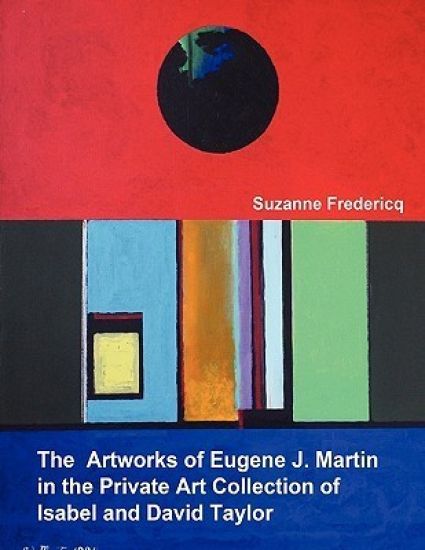
The Artworks of Eugene J. Martin in the Private Art Collection of Isabel and David Taylor
This publication includes reproductions of thirty-eight works of art created by Eugene James Martin (1938-2005) that belong in the private art collection of Isabel and David Taylor in Washington D.C. The artworks include drawings, mixed works on paper, collages, and acrylic paintings on paper and canvas spanning the period 1970 to 1994. Also included are photographs showing Isabel and David Taylor living amid their art, and of visits to Eugene Martin's apartment in Washington D.C. These artworks by E.J. Martin in the Taylor collection can also be viewed at http://youtube.com/nemastoma. The site http://en.wikipedia.org/wiki/Eugene_J._Martin provides links to other Martin works as well.
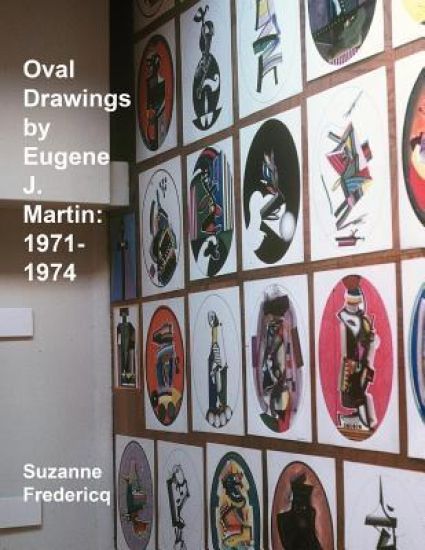
Oval Drawings by Eugene J. Martin: 1971-1974

Oval Drawings by Eugene J. Martin: 1971-1974

Suzanne Fredericq

Estate of Eugene James Martin
2009
pokkari
This publication includes reproductions of more than ninety oval-shaped works on paper created by Eugene James Martin (1938-2005) between 1971 and 1974 in Washington D.C. The works are mostly felt-tip drawings that may include ink washes and mixed media; others are oval-shaped pen and ink drawings. Also included are photographs of the depicted drawings hanging in Eugene Martin's studio in Washington D.C., and in some private collections. These artworks can also be viewed at http://youtube.com/nemastoma. The site http://en.wikipedia.org/wiki/Eugene_J._Martin provides links to other Martin works as well. Reproductions of additional oval drawings have been published in "The Artworks of Eugene J. Martin in the Private Art Collection of Isabel and David Taylor" by S. Fredericq, 2009, Estate of Eugene James Martin, ISBN:978-0-578-02940-5.
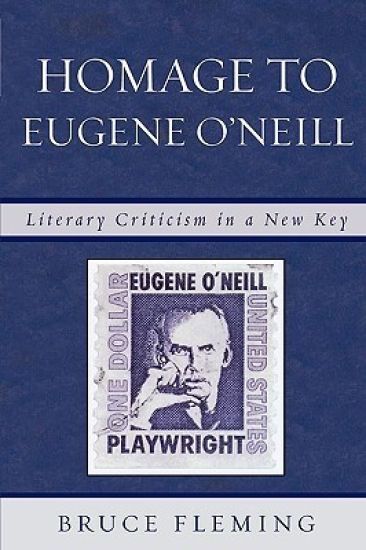
Homage to Eugene O'Neill

Homage to Eugene O'Neill

Bruce Fleming

University Press of America
2008
nidottu
Homage to Eugene O'Neill re-invokes O'Neill's own muses to offer a re-conception of his artistic world, a re-enactment, and an entirely new work not so much in the style but in the spirit of the Nobel-prize winning American dramatist. Most closely allied with Strange Interlude but with echoes as well of Long Day's Journey Into Night and Morning Becomes Electra, Homage to Eugene O'Neill breathes new life into an epic sweep of familial history: the rise, fall, and perhaps rise again of a family of North Carolina industrialists-a family which may have bought its success by sacrificing its son to war, a family of weak men and strong women, a family that both embraces and tries to understand its tumultuous fate. Homage to Eugene O'Neill is both new work and an old, speaking through the masks of the ancestors, causing them to live anew-the literary criticism of the future.