Kirjojen hintavertailu. Mukana 12 595 353 kirjaa ja 12 kauppaa.

Kirjahaku

Etsi kirjoja tekijän nimen, kirjan nimen tai ISBN:n perusteella.

1000 tulosta hakusanalla Fernando Silva

Still Life

Still Life

Fernando Dominguez Rubio

University of Chicago Press
2020
pokkari
How do you keep the cracks in Starry Night from spreading? How do you prevent artworks made of hugs or candies from disappearing? How do you render a fading photograph eternal--or should you attempt it at all? These are some of the questions that conservators, curators, registrars, and exhibition designers dealing with contemporary art face on a daily basis. In Still Life, Fernando Dominguez Rubio delves into one of the most important museums of the world, the Museum of Modern Art in New York, to explore the day-to-day dilemmas that museums workers face when the immortal artworks that we see in the exhibition room reveal themselves to be slowly unfolding disasters. Still Life offers a fascinating and detailed ethnographic account of what it takes to prevent these disasters from happening. Going behind the scenes at MoMA, Dominguez Rubio provides a rare view of the vast technological apparatus--from climatic infrastructures and storage facilities, to conservation labs and machines rooms--and teams of workers--from conservators and engineers to guards and couriers--who fight to hold artworks still. As the MoMA reopens after massive expansion and rearranging of its space and collections, Still Life not only offers a much-needed account of the spaces, actors, and forms of labor traditionally left out of the main narratives of art, but it also offers a timely meditation on how far we, as a society, are willing to go to keep the things we value from disappearing into oblivion.
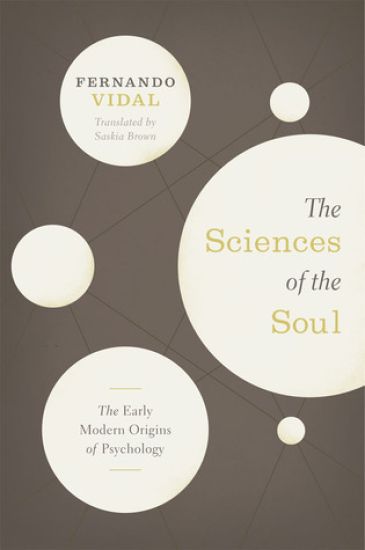
The Sciences of the Soul

The Sciences of the Soul

Fernando Vidal

University of Chicago Press
2011
sidottu
"The Sciences of the Soul" is the first attempt to explain the development of the disciplinary conception of psychology from its appearance in the late sixteenth century to its redefinition at the end of the seventeenth and its emergence as an institutionalized field in the eighteenth. Fernando Vidal traces this development through university courses and textbooks, encyclopedias, and nonacademic books, as well as through various histories of psychology. Vidal reveals that psychology existed before the eighteenth century essentially as a "physics of the soul", and it belonged as much to natural philosophy as to Christian anthropology. It remained so until the eighteenth century, when the "science of the soul" became the "science of the mind". Vidal demonstrates that this Enlightenment refashioning took place within a Christian framework, and he explores how the preservation of the Christian idea of the soul was essential to the development of the science. Not only were most psychologists convinced that an empirical science of the soul was compatible with Christian faith; their perception that psychology preserved the soul also helped to elevate its rank as an empirical science. Broad-ranging and impeccably researched, this book will be of wide importance in the history and philosophy of psychology, the history of the human sciences more generally, and in the social and intellectual history of eighteenth-century Europe.
Global Health Inequities

Global Health Inequities

Fernando De Maio

Red Globe Press
2014
nidottu
Despite living in a 'globalized' world where advances in medicine, technology and science come at an ever-increasing pace, there exist staggering inequalities in health. Even as we celebrate new pharmaceutical developments, access to already-existing medicines is hindered by economic and political barriers for poor people around the world. Critical but accessible, Global Health Inequities questions taken-for-granted assumptions, showing how breakthroughs in biomedicine alone cannot address inequities in health. The book's analysis of theory and empirical work elucidates key debates and highlights the most significant challenges facing global health today, including the growing burden of chronic non-communicable diseases and the persistent injustice of neglected tropical diseases. Fernando De Maio identifies the need for sociological analysis in global health, drawing together research from public health, sociology, anthropology and related fields, in order to expand the scope of the medical gaze towards a more holistic and structural perspective of health inequity.
Health and Social Theory

Health and Social Theory

Fernando De Maio

Red Globe Press
2009
sidottu
What we consider to be 'healthy' is shaped by society; we compare our own health with those around us and identify illness according to social norms. But how are these standards established and how do they change? Is health a 'personal trouble' or a 'public issue'? And can Sociology allow us to develop a comprehensive analysis of the determinants of health? This book examines how social theory shows us that health is not only shaped by our access to medical interventions, but also by power and inequality. From the personal experience of the unwell individual to the social, historical, cultural, and economic factors that affect national morbidity rates, the text looks at medical sociology from micro and macro levels. The chapters use examples from the most significant empirical work in the field to shed light on and challenge classical and contemporary social theory. In particular, the book looks at recent developments in medical sociology by specifically analysing:• Inequities based on income, gender, and racism• The role of the pharmaceutical industry in shaping our ideas about disease • Medical encounters and the medicalization of everyday life• The structure of health care systems and health care reformsHealth and Social Theory is a concise, comprehensive and cutting edge account of medical sociology. It is essential critical reading for all scholars and students interested in the field.
Health and Social Theory

Health and Social Theory

Fernando De Maio

Red Globe Press
2009
nidottu
What we consider to be 'healthy' is shaped by society; we compare our own health with those around us and identify illness according to social norms. But how are these standards established and how do they change? Is health a 'personal trouble' or a 'public issue'? And can Sociology allow us to develop a comprehensive analysis of the determinants of health? This book examines how social theory shows us that health is not only shaped by our access to medical interventions, but also by power and inequality. From the personal experience of the unwell individual to the social, historical, cultural, and economic factors that affect national morbidity rates, the text looks at medical sociology from micro and macro levels. The chapters use examples from the most significant empirical work in the field to shed light on and challenge classical and contemporary social theory. In particular, the book looks at recent developments in medical sociology by specifically analysing:• Inequities based on income, gender, and racism• The role of the pharmaceutical industry in shaping our ideas about disease • Medical encounters and the medicalization of everyday life• The structure of health care systems and health care reformsHealth and Social Theory is a concise, comprehensive and cutting edge account of medical sociology. It is essential critical reading for all scholars and students interested in the field.
Al-Qaeda's Revenge

Al-Qaeda's Revenge

Fernando Reinares; Bruce Riedel

Columbia University Press
2017
sidottu
In Al-Qaeda's Revenge: The 2004 Madrid Train Bombings, Fernando Reinares tells the story of "3/11" - the March 11, 2004, bombings of commuter trains in Madrid, which killed 191 people and injured more than 1,800. He examines the development of an al-Qaeda conspiracy in Spain from the 1990s through the formation of the 3/11 bombing network beginning in March 2002, and discusses the preparations for and fallout from the attacks. Reinares draws on judicial, police, and intelligence documents to which he had privileged access, as well as on personal interviews with officials in Spain and elsewhere. His full analysis links the Madrid bombings to al-Qaeda's senior leadership and unveils connections between 3/11 and 9/11. Al-Qaeda's Revenge, Spain's counterpart to The 9/11 Commission Report, was a bestseller in Spain.
Al-Qaeda's Revenge

Al-Qaeda's Revenge

Fernando Reinares; Bruce Riedel

Columbia University Press
2022
pokkari
In Al-Qaeda's Revenge: The 2004 Madrid Train Bombings, Fernando Reinares tells the story of "3/11" - the March 11, 2004, bombings of commuter trains in Madrid, which killed 192 people and injured more than 1,800. He examines the development of an al-Qaeda conspiracy in Spain from the 1990s through the formation of the 3/11 bombing network beginning in March 2002, and discusses the preparations for and fallout from the attacks. Reinares draws on judicial, police, and intelligence documents to which he had privileged access, as well as on personal interviews with officials in Spain and elsewhere. His full analysis links the Madrid bombings to al-Qaeda's senior leadership and unveils connections between 3/11 and 9/11.Al-Qaeda's Revenge, Spain's counterpart to The 9/11 Commission Report, was a bestseller in Spain.
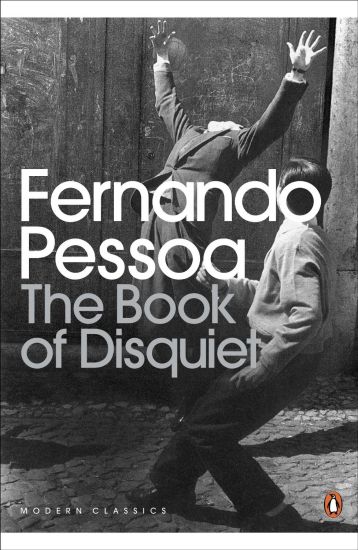
The Book of Disquiet

The Book of Disquiet

Fernando Pessoa

Penguin Classics
2015
pokkari
Fernando Pessoa's The Book of Disquiet is a modernist masterwork that has now taken on a similar iconic status to Ulysses, The Trial or In Search of Lost Time. This complete and unabridged edition – published in Penguin Modern Classics - is edited and translated with an introduction by Richard Zenith'The best English-language version we are likely to see for a long time, if ever' - The Guardian*Winner of the Calouste Gulbenkian Translation Prize for Portuguese Translation*'Fernando Pessoa, strictly speaking, doesn't exist,' - so claimed Alvaro de Campos, one of the 'heteronyms', fully-realised substitute personalities invented by Fernando Pessoa to spare himself the trouble of living real life. In this extraordinary book, the putative 'factless autobiography' of an accountant named Bernardo Soares, Fernando Pessoa explores and dismantles the nature of memory, identity, time and narrative, creating one of the greatest - but also the strangest - modernist texts. An assembly of sometimes-linked fragments, The Book of Disquiet is a mesmerising, haunting 'novel' without parallel in any other culture.This edition includes notes on the reconstruction of the text, appendices containing material omitted from the final version and letters which Pessoa intended to incorporate into the text. This edition also includes a table of the 'heteronyms' used by Pessoa in his writing.Fernando Pessoa (1888– 1935) was born in Lisbon but went to live in Durban, South Africa, at the age of seven. He returned to Lisbon in 1905. A prolific writer who ascribed much of his work to a variety of personas, or heteronyms, Pessoa published relatively little of his vast output and supported himself by writing letters in English for import– export firms. Although acknowledged as an intellectual and a poet, his literary genius went largely unrecognized until after his death.Richard Zenith lives in Lisbon, where he works as a freelance writer, researcher and translator. He has edited and translated many works by Fernando Pessoa, including A Little Larger Than the Entire Universe – Selected Poems. His Pessoa: An Experimental Life was a finalist for the Pulitzer Prize in Biography.
I Have More Souls Than One

I Have More Souls Than One

Fernando Pessoa

Penguin Classics
2018
nidottu
'But no, she's abstract, is a birdOf sound in the air of air soaring,And her soul sings unencumberedBecause the song's what makes her sing.'Dramatic, lyrical and ranging over four distinct personae, these poems by one of Portugal's greatest poets trace a mind shaken by intense suffering and a tireless search for meaning.Penguin Modern: fifty new books celebrating the pioneering spirit of the iconic Penguin Modern Classics series, with each one offering a concentrated hit of its contemporary, international flavour. Here are authors ranging from Kathy Acker to James Baldwin, Truman Capote to Stanislaw Lem and George Orwell to Shirley Jackson; essays radical and inspiring; poems moving and disturbing; stories surreal and fabulous; taking us from the deep South to modern Japan, New York's underground scene to the farthest reaches of outer space.
Actualización en trasplante hepático

Actualización en trasplante hepático

Fernando Manuel Jiménez Macías

Lulu.com
2018
pokkari
Es para mi un orgullo personal haber elaborado esta obra completa sobre el manejo pretrasplante y post-trasplante hepatico.He intentado hacer un abordaje completo, de las diferentes fases por la que pasa un paciente que debuta con insuficiencia hepatica aguda o cronica, y que para sobrevivir, necesita someterse a esta tecnica quirurgica, en la que existen muchos aspectos que he querido daros a conocer, dentro de una claridad y metodologia optima tanto para medicos de familia y especialistas en Aparato Digestivo, que se encuentran alejados en su practica clinica habitual del manejo multidisciplinario de los pacientes que llegan a un trasplante hepatico. Por eso, espero que haya sido de utilidad su lectura, con objeto de si en alguna ocasion teneis que manejar un paciente sometido a trasplante hepatico, tengais una guia de actuacion resumida.
El otro yo

El otro yo

Fernando Arenaza Alejandro

Lulu.com
2019
sidottu
Son relatos basados en experiencias reales que se desarrollan con visiones que llegan a mi mente sin poder entender su significado. Sucesos ocurridos en varios pa ses. Hago menci n de futuras profec as. Una breve rese a de mi autobiograf a. Entre otros temas m sticos; Fen menos Paranormales, reencarnaci n y creencia religiosa.
El otro yo

El otro yo

Fernando Arenaza Alejandro

Lulu.com
2019
pokkari
Es mi vida como Psiquico. Son relatos basados en experiencias reales que se desarrollan con visiones que llegan a mi mente sin poder entender su significado. Sucesos ocurridos en varios pa ses. Hago menci n de futuras profec as. Una breve rese a de mi autobiograf a. Entre otros temas m sticos; Fen menos Paranormales, reencarnaci n y creencia religiosa.
Extratlante

Extratlante

Fernando Tornisiello

Lulu Press Inc
2015
pokkari
selezione dei lavori di illustrazione, architettura e design a partire dal 1978 selection of the works of illustration, architecture and design since 1978
Understanding Pain

Understanding Pain

Fernando Cervero

MIT Press
2014
pokkari
An expert explores the nature of pain: why it hurts and why some pain is good and some pain is bad.If you touch something hot, it hurts. You snatch your hand away from the hot thing immediately. Obviously. But what is really happening, biologically-and emotionally? In Understanding Pain, Fernando Cervero explores the mechanisms and the meaning of pain. You touch something hot and your brain triggers a reflex action that causes you to withdraw your hand, protecting you from injury. That kind of pain, Cervero explains, is actually good for us; it acts as an alarm that warns us of danger and keeps us away from harm.But, Cervero tells us, not all pain is good for you. There is another kind of pain that is more like a curse: chronic pain that is not related to injury. This is the kind of pain that fills pain clinics and makes life miserable. Cervero describes current research into the mysteries of chronic pain and efforts to develop more effective treatments.Cervero reminds us that pain is the most common reason for people to seek medical attention, but that it remains a biological enigma. It is protective, but not always. Its effects are not only sensory but also emotional. There is no way to measure it objectively, no test that comes back positive for pain; the only way a medical professional can gauge pain is by listening to the patient's description of it. The idea of pain as a test of character or a punishment to be borne is changing; prevention and treatment of pain are increasingly important to researchers, clinicians, and patients. Cervero's account brings us closer to understanding the meaning of pain.
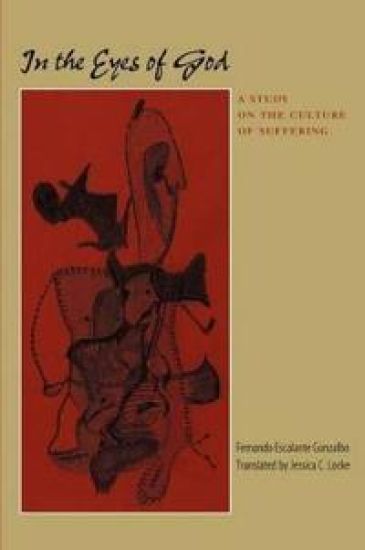
In the Eyes of God

In the Eyes of God

Fernando Escalante Gonzalbo

University of Texas Press
2006
pokkari
"Every culture needs to appropriate the universal truth of human suffering," says Fernando Escalante, ". . . to give its own meaning to this suffering, so that human existence is bearable." Originally published in Spanish as La mirada de Dios: Estudios sobre la cultura del sufrimiento, this book is a remarkable study of the evolution of the culture of suffering and the different elements that constitute it, beginning with a reading of Rousseau and ending with the appearance of the Shoah in the Western consciousness-"The memory endures, and this constitutes a fundamental transition for the Western conscience: we have witnessed." Drawing on writings from the Greeks to Cervantes, Voltaire to Nietzsche, and Freud to William James, Escalante combines his considerable knowledge of politics and political theory with a vast array of literary examples to arrive at an intellectual understanding of the history and meaning of suffering. His investigation encompasses the rise of popular politics, the role of messianism in modern nationalism, and the contemporary implications of the Shoah. This book will appeal to a wide audience: students of political theory, humanism, and philosophy, as well as the general reader interested in a glimpse into the mind of a highly original Latin American thinker.
Vital Enemies

Vital Enemies

Fernando Santos-Granero

University of Texas Press
2009
pokkari
Analyzing slavery and other forms of servitude in six non-state indigenous societies of tropical America at the time of European contact, Vital Enemies offers a fascinating new approach to the study of slavery based on the notion of "political economy of life." Fernando Santos-Granero draws on the earliest available historical sources to provide novel information on Amerindian regimes of servitude, sociologies of submission, and ideologies of capture. Estimating that captive slaves represented up to 20 percent of the total population and up to 40 percent when combined with other forms of servitude, Santos-Granero argues that native forms of servitude fulfill the modern understandings of slavery, though Amerindian contexts provide crucial distinctions with slavery as it developed in the American South. The Amerindian understanding of life forces as being finite, scarce, unequally distributed, and in constant circulation yields a concept of all living beings as competing for vital energy. The capture of human beings is an extreme manifestation of this understanding, but it marks an important element in the ways Amerindian "captive slavery" was misconstrued by European conquistadors. Illuminating a cultural facet that has been widely overlooked or miscast for centuries, Vital Enemies makes possible new dialogues regarding hierarchies in the field of native studies, as well as a provocative re-framing of pre- and post-contact America.
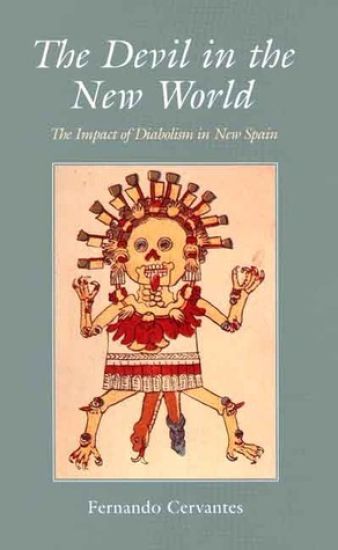
The Devil in the New World

The Devil in the New World

Fernando Cervantes

Yale University Press
2013
pokkari
Until the end of the eighteenth century, missionaries to the New World agreed that diabolism lay at the heart of the Native American belief system and at the root of their own failure to establish a church purged of Satan and pagan superstition. The Devil mattered, and he occupied a central place in discussions of all non-Christian religious systems and in the bitter disputes over how to combat them.In this elegant and sensitive analysis, Fernando Cervantes gives the Devil his due, illuminating a neglected aspect of the European encounter with America and setting the full history of the "spiritual conquest" in a rich and original context. He reveals how Native Americans reinterpreted the view of Christianity presented to them, how they refused to see the world as the missionaries saw it. Drawing on archival sources, he brings into clear focus the complex, often bewildering, and sometimes tragic clash between a theology that posited the existence of competing forces and one that insisted that all deities were multiform beings within which good and evil coexisted. He deals in compelling and persuasive detail with the social history of the interaction between the two cultures, explaining not only the impact of European ideas upon the New World but the influence of diabolism on the ideology of the Old. And he provides a subtle account of the role of diabolism in the emerging baroque culture of the seventeenth and eighteenth centuries that strikingly challenges conventional explanations of the growth of skepticism in the period.