Kirjojen hintavertailu. Mukana 11 244 527 kirjaa ja 12 kauppaa.

Kirjahaku

Etsi kirjoja tekijän nimen, kirjan nimen tai ISBN:n perusteella.

1000 tulosta hakusanalla G. Addison Powell

G. K. Chesterton's Early Poetry

G. K. Chesterton's Early Poetry

G K Chesterton

Inkling Books
2004
pokkari
This book unites under one cover G. K. Chesterton's first three books of poetry: Greybeards at Play (1900), The Wild Knight and Other Poems (1900) and The Ballad of the White Horse (1911). All text and illustrations are based on the first UK editions. Poet W. H. Auden noted that the first book "contains some of the best pure nonsense verse in English."
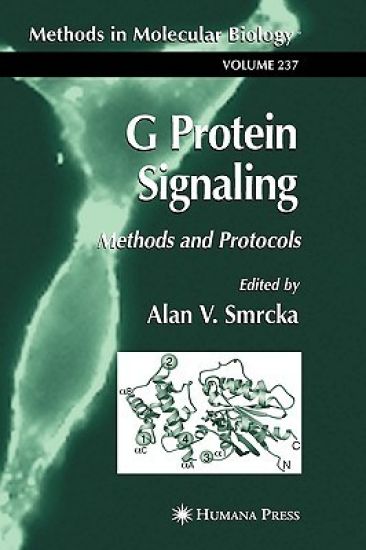
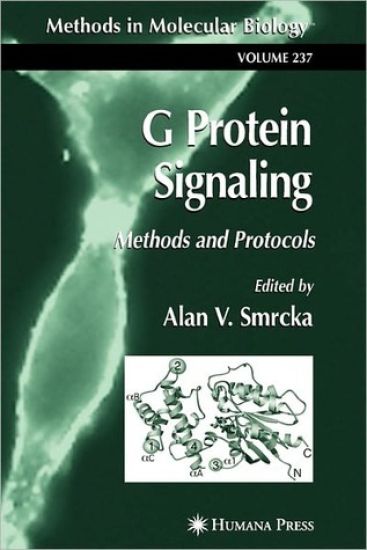
G Protein Signaling

G Protein Signaling

Humana Press Inc.
2003
sidottu
Since the initial discovery of the G protein-coupled receptor system that regulates cyclicAMP production, the G protein field has rapidly expanded. Cell surface receptors that couple to heterotrimeric G proteins, the G prote- coupled receptors (GPCRs), number in the hundreds and bind to a wide div- sity of ligands including, biogenic amines (e. g. , adrenaline), lipid derivatives (e. g. , lysophosphatidic acid), peptides (e. g. , opioid peptides), proteins (e. g. , thyroid-stimulating hormone), and odorants to name a few. The GPCR system is found throughout biology in such simple organisms as yeast and in such more complex organisms as Dictyostelium discoideum (slime mold), Caen- habditis elegans (nematode worm), and of course in humans. GPCRs and their associated G protein systems are the subject of intense academic research and because of their involvement in a human biology and disease, the pharmac- tical industry has large research initiatives dedicated to the study of GPCRs. By some estimates, more than 50% of the pharmaceuticals on the market are targeted at GPCRs. The G protein/G protein-coupled receptor system consists of a receptor (GPCR), a heterotrimeric G protein consisting of ?, ?, and ? subunits, and an effector. G protein effector molecules, such as enzymes or ion channels, respond to acti- tion by the G protein to generate second messengers or changes in membrane potential that lead to alterations in cell physiology.
G-Quadruplex DNA

G-Quadruplex DNA

Humana Press Inc.
2009
sidottu
Recent work has revealed that stabilizing G-quadruplexes in telomeric DNA inhibits telomerase activity, providing impetus for the development of G-quartet-interacting drugs, while G-quartet-containing oligonucleotides have been recognized as a potent class of aptamers effective against STAT3 and other transcription factors implicated in oncogenesis, proving these guanine-quartets to be a vital and rich area for future study. In "G-Quadruplex DNA: Methods and Protocols", experts in the field present a collection of detailed techniques for studying G-quartet formation, dynamics, and molecular recognition. Written in the highly successful Methods in Molecular Biology™ series format, chapters include brief introductions to their respective topics, lists of the necessary materials and reagents, step-by-step, readily reproducible laboratory protocols, and notes on troubleshooting and avoiding known pitfalls. Authoritative and cutting-edge, "G-Quadruplex DNA: Methods and Protocols "promises to be a useful resource for those familiar with G-quartets as well as an easy entry point for those researchers from diverse fields who are just developing an interest in the exciting implications of G-quadruplex DNA.
G E Moore: The Elements Of Ethics

G E Moore: The Elements Of Ethics

Tom Regan

Temple University Press,U.S.
2003
pokkari
George Edward Moore is among this century's most influential philosophers. Perhaps best known for his \u0022defense of common sense,\u0022 he also made important contributions to metaphysics and theory of knowledge. But it is in ethics, and especially owing to the positions he develops in his Principia Ethica, first published in 1903, that his ideas have had their most enduring influence. A forerunner to this famous work, The Elements of Ethics is a series of ten unpublished lectures that were presented by Moore, then in his mid-twenties. The Elements shows that Principia Ethica did not spring fully-formed from Moore's pen but evolved slowly over time. In these lectures, Moore begins with the same question he asks in Principia Ethica: What is Good? Importantly, his answer is the same one he offers in Principia and many of its supporting arguments also appear, though sometimes in embryonic form. Moreover, in these lectures we also find sustained critiques of those who commit the \u0022naturalistic fallacy,\u0022 and of John Stuart Mill's commission of it in particular. In The Elements, however, Moore's position regarding ethics in relation to conduct differs in important respects from the one presented in Principia, and the former work contains important discussions, ranging from Christian ethics and the possibility of free will, not found in the latter.
G. K. Chesterton

G. K. Chesterton

Stephen R. L. Clark

Templeton Foundation Press,U.S.
2006
sidottu
In this book, Stephen R. L. Clark, a philosopher with a lifelong "addiction" to science fiction, explores G. K. Chesterton's ideas and arguments in their historical context and evaluates them philosophically. He addresses Chesterton's sense that the way things are is not how they must have been or need be in the future and his willingness to face up to the apparent effects of the nihilism he detected in the science and politics of his day. Clark offers a detailed study of some of Chesterton's works that have been identified by science fiction writers and critics as seminal influences. He attempts to deal with some of Chesterton's theories that have been found offensive or "positively wicked" by later writers and critics, including his arguments against female suffrage and in praise of war, his medievalist leanings, and his contemptuous rejection of the Darwinian evolutionary theory.
G Protein-Coupled Receptors in Drug Discovery
The G protein-coupled receptors (GPCRs) and associated peripheral G proteins underpin a multitude of physiological processes. The GPCRs represent one of the largest superfamilies in the human genome and are a significant target for bioactive and drug discovery programs. It is estimated that greater than 50% of all drugs, including those in development, currently target GPCRs. Many of the characterized GPCRs have known ligands; however, approximately 20% of GPCRs are described as orphan GPCRs, apparent GPCRs that share the generic high-level structure charact- istic of GPCRs but whose endogenous ligand is not known. Therefore, it is expected that the field of GPCR drug discovery and development will greatly expand in the coming years with emphasis on new generations of drugs against GPCRs with unique therapeuticuseswhichmayincludedrugssuchasallostericregulators,inverseagonists, and identification of orphan GPCR ligands. AswelearnmoreaboutthemolecularsignalingcascadesfollowingGPCRactivation, we acquire a better appreciation of the complexity of cell signaling and as a result, also acquire a vast array ofnew molecularmethods toinvestigate these andother processes. Thegeneralaimofthisbookistoprovideresearcherswitharangeofprotocolsthatmay be useful in their GPCR drug discovery programs. It is also the basis for the devel- ment of future assays in this field. Therefore, the range of topics covered and the appropriate methodological approaches in GPCR drug discovery are reflected in this book. Itisinterestingtonotethatfuturedirectionsindrugdiscoverywillrequireinput and collaboration from a plethora of fields of research. As such, this book will likely be of interest to scientists involved in such fields as molecular biology, pharmacology, biochemistry, cellular signaling, andbio-nanotechnology.
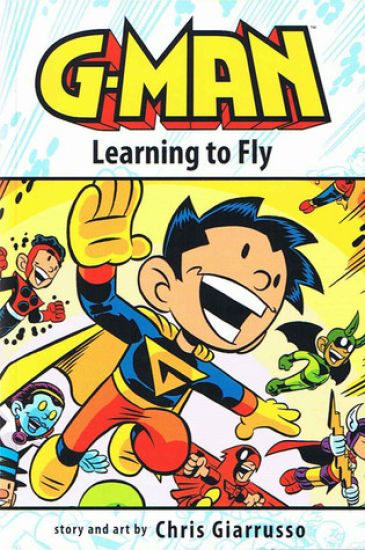
G-Man Volume 1: Learning To Fly

G-Man Volume 1: Learning To Fly

Chris Giarrusso

Image Comics
2010
nidottu
From Chris Giarrusso, illustrator of Scholastic's Amazing Adventures of Nate Banks and Marvel Comics' Mini Marvels Ultimate Collection comes the first volume of his own superhero, G-Man! When Mikey G unlocks the powers of his family's magic blanket, he is transformed into G-Man, the newest kid superhero on the block! G-Man joins his superhero friends Billy Demon, Tan Man, Suntrooper, and the Spark on their very first superhero adventure. But what are they to do when their enemy is Kid Thunder, son of the city's greatest champion, Captain Thunderman? And will G-Man's big brother, Great Man, prove to be friend or foe?
G. I. Tunkin

G. I. Tunkin

Grigorii Ivanovich Tunkin

Talbot Publishing
2025
sidottu
Six decades on, Tunkin's classic Theory of International Law continues to inform Russian concepts of the international legal process and has not been replaced by a successor. Its authoritative English translation, long out of print, appears here with a newly-compiled extensive bibliography of his writings and original translations of two predecessor works unknown to the international legal community, the abstract of his doctoral (habilitation) dissertation on the Korean War (1954) and his pioneering Fundamental Principles of Contemporary International Law (1956). Grigorii Ivanovich Tunkin (1906-1993), an international lawyer, diplomat and academician, was the Legal Advisor to the USSR Ministry of Foreign Affairs for many years and thereafter Professor and Head of the Chair of International Law, Moscow State Lomonosov University.William E. Butler is the John Edward Fowler Distinguished Professor of Law, Penn State Dickinson Law, and Emeritus Professor of Comparative Law, University College London. The author of numerous works on post-Soviet legal systems, including Russian Law and Legal Institutions (3d ed.; 2021), he has over sixty years of experience as a translator of Soviet and CIS materials ranging from articles, major treatises, codes, legislative acts and treaties to other international and comparative legal materials.xxxiv, 706 pp.
G Protein Signaling

G Protein Signaling

Humana Press Inc.
2010
nidottu
Since the initial discovery of the G protein-coupled receptor system that regulates cyclicAMP production, the G protein field has rapidly expanded. Cell surface receptors that couple to heterotrimeric G proteins, the G prote- coupled receptors (GPCRs), number in the hundreds and bind to a wide div- sity of ligands including, biogenic amines (e. g. , adrenaline), lipid derivatives (e. g. , lysophosphatidic acid), peptides (e. g. , opioid peptides), proteins (e. g. , thyroid-stimulating hormone), and odorants to name a few. The GPCR system is found throughout biology in such simple organisms as yeast and in such more complex organisms as Dictyostelium discoideum (slime mold), Caen- habditis elegans (nematode worm), and of course in humans. GPCRs and their associated G protein systems are the subject of intense academic research and because of their involvement in a human biology and disease, the pharmac- tical industry has large research initiatives dedicated to the study of GPCRs. By some estimates, more than 50% of the pharmaceuticals on the market are targeted at GPCRs. The G protein/G protein-coupled receptor system consists of a receptor (GPCR), a heterotrimeric G protein consisting of ?, ?, and ? subunits, and an effector. G protein effector molecules, such as enzymes or ion channels, respond to acti- tion by the G protein to generate second messengers or changes in membrane potential that lead to alterations in cell physiology.