Kirjojen hintavertailu. Mukana 12 390 323 kirjaa ja 12 kauppaa.

Kirjahaku

Etsi kirjoja tekijän nimen, kirjan nimen tai ISBN:n perusteella.

1000 tulosta hakusanalla G. Atkins

Irish impressions. By: G. K. Chesterton: Irish question, Ireland

Irish impressions. By: G. K. Chesterton: Irish question, Ireland

G. K. Chesterton

Createspace Independent Publishing Platform
2016
nidottu
Written at the defining moment when Ireland was heading toward complete national independence, Chesterton's study of the Irish question demonstrates that if both the English and the Irish had modified their attitudes slightly, subsequent Anglo-Irish relations could have been radically improved. Unlike most historians, he tackles the question from an ideological, philosophical, and religious standpoint. As a Roman Catholic and a lover of English nationalism, Chesterton shared many sentiments with the Irish. Written objectively and frankly, this is an important work for any student of English/Irish history as well as an excellent study of the effects of ideology and religion on society.... Gilbert Keith Chesterton, (29 May 1874 - 14 June 1936), better known as G. K. Chesterton, was an English writer, poet, philosopher, dramatist, journalist, orator, lay theologian, biographer, and literary and art critic. Chesterton is often referred to as the "prince of paradox".Time magazine has observed of his writing style: "Whenever possible Chesterton made his points with popular sayings, proverbs, allegories-first carefully turning them inside out." Chesterton is well known for his fictional priest-detective Father Brown, and for his reasoned apologetics. Even some of those who disagree with him have recognised the wide appeal of such works as Orthodoxy and The Everlasting Man.Chesterton, as a political thinker, cast aspersions on both Progressivism and Conservatism, saying, "The whole modern world has divided itself into Conservatives and Progressives. The business of Progressives is to go on making mistakes. The business of the Conservatives is to prevent the mistakes from being corrected."Chesterton routinely referred to himself as an "orthodox" Christian, and came to identify this position more and more with Catholicism, eventually converting to Catholicism from High Church Anglicanism. George Bernard Shaw, Chesterton's "friendly enemy" according to Time, said of him, "He was a man of colossal genius." 4] Biographers have identified him as a successor to such Victorian authors as Matthew Arnold, Thomas Carlyle, Cardinal John Henry Newman, and John Ruskin.Chesterton was born in Campden Hill in Kensington, London, the son of Marie Louise, n e Grosjean, and Edward Chesterton.He was baptised at the age of one month into the Church of England, though his family themselves were irregularly practising Unitarians.According to his autobiography, as a young man Chesterton became fascinated with the occult and, along with his brother Cecil, experimented with Ouija boards. Chesterton was educated at St Paul's School, then attended the Slade School of Art to become an illustrator. The Slade is a department of University College London, where Chesterton also took classes in literature, but did not complete a degree in either subject.Chesterton married Frances Blogg in 1901; the marriage lasted the rest of his life. Chesterton credited Frances with leading him back to Anglicanism, though he later considered Anglicanism to be a "pale imitation". He entered full communion with the Catholic Church in 1922..........
G.S.B.

G.S.B.

Jean-Pierre Vartan Boghossian; Jean-Pierre Gueffier

Createspace Independent Publishing Platform
2016
nidottu
Les GSB sont les grandes surfaces de bricolage. Hovann s Dartanian entre dans l'une d'elles l' ge de vingt-cinq ans en tant qu'employ libre-service. Il en ressortira vingt-huit ann es plus tard avec le statut de vendeur technique. Entre-temps, il aura v cu les affres du commerce de d tail entre des clients plus exigeants les uns que les autres, des coll gues pr ts tout craser sur leur passage pour se faire une place au soleil et des chefs qui n'ont que la progression de leurs chiffres d'affaires la bouche. Ce roman est l'occasion pour le lecteur de p n trer dans un monde dans lequel les tres purs et altruistes n'ont pas leur place. Il est aussi une sorte de petit guide subversif l'usage des personnes qui d sireraient miner de l'int rieur l'entreprise dans laquelle ils travaillent.
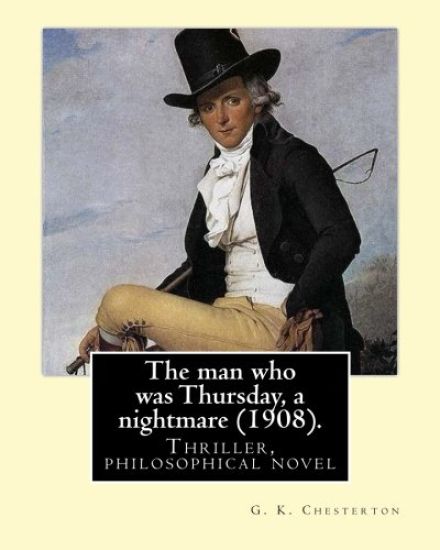
The man who was Thursday, a nightmare (1908) . By: G. K. Chesterton: Thriller, philosophical novel, adventure, fantasy
The Man Who Was Thursday: A Nightmare is a novel by G. K. Chesterton, first published in 1907. The book is sometimes referred to as a metaphysical thriller.In Edwardian era London, Gabriel Syme is recruited at Scotland Yard to a secret anti-anarchist police corps. Lucian Gregory, an anarchistic poet, lives in the suburb of Saffron Park. Syme meets him at a party and they debate the meaning of poetry. Gregory argues that revolt is the basis of poetry. Syme demurs, insisting the essence of poetry is not revolution but law. He antagonises Gregory by asserting that the most poetical of human creations is the timetable for the London Underground. He suggests Gregory isn't really serious about anarchism, which so irritates Gregory that he takes Syme to an underground anarchist meeting place, revealing his public endorsement of anarchy is a ruse to make him seem harmless, when in fact he is an influential member of the local chapter of the European anarchist council. The central council consists of seven men, each using the name of a day of the week as a cover; the position of Thursday is about to be elected by Gregory's local chapter. Gregory expects to win the election but just before, Syme reveals to Gregory after an oath of secrecy, that he is a secret policeman. Fearful Syme may use his speech in evidence of a prosecution, Gregory's weakened words fail to convince the local chapter that he is sufficiently dangerous for the job. Syme makes a rousing anarchist speech and wins the vote. He is sent immediately as the chapter's delegate to the central council. In his efforts to thwart the council, Syme eventually discovers that the other five members are also undercover detectives; each was employed just as mysteriously and assigned to defeat the Council. They soon find out they were fighting each other and not real anarchists; such was the mastermind plan of their president, Sunday. In a surreal conclusion, Sunday is unmasked as only seeming to be terrible; in fact, he is a force of good like the detectives. Sunday is unable to give an answer to the question of why he caused so much trouble and pain for the detectives. Gregory, the only real anarchist, seems to challenge the good council. His accusation is that they, as rulers, have never suffered like Gregory and their other subjects and so their power is illegitimate. Syme refutes the accusation immediately, because of the terrors inflicted by Sunday on the rest of the council. The dream ends when Sunday is asked if he has ever suffered. His last words, "can ye drink of the cup that I drink of?", is the question Jesus asks St. James and St. John in the Gospel of Mark, chapter 10, vs 38-39, to challenge their commitment in becoming his disciples... Gilbert Keith Chesterton, KC*SG (29 May 1874 - 14 June 1936), better known as G. K. Chesterton, was an English writer, poet, philosopher, dramatist, journalist, orator, lay theologian, biographer, and literary and art critic. Chesterton is often referred to as the "prince of paradox". Time magazine has observed of his writing style: "Whenever possible Chesterton made his points with popular sayings, proverbs, allegories-first carefully turning them inside out." Chesterton is well known for his fictional priest-detective Father Brown, and for his reasoned apologetics. Even some of those who disagree with him have recognised the wide appeal of such works as Orthodoxy and The Everlasting Man.Chesterton, as a political thinker, cast aspersions on both Progressivism and Conservatism, saying, "The whole modern world has divided itself into Conservatives and Progressives. The business of Progressives is to go on making mistakes. The business of the Conservatives is to prevent the mistakes from being corrected."Chesterton routinely referred to himself as an "orthodox" Christian, and came to identify this position more and more with Catholicism, eventually converting to Catholicism from High Church Anglicanism....
Robert Browning. By: G. K. Chesterton: Robert Browning (7 May 1812 - 12 December 1889) was an English poet and playwright whose mastery of
Robert Browning (7 May 1812 - 12 December 1889) was an English poet and playwright whose mastery of the dramatic monologue made him one of the foremost Victorian poets. His poems are known for their irony, characterization, dark humour, social commentary, historical settings, and challenging vocabulary and syntax. Browning's early career began promisingly, but was not a success. The long poem Pauline brought him to the attention of Dante Gabriel Rossetti, and was followed by Paracelsus, which was praised by Wordsworth and Dickens, but in 1840 the difficult Sordello, which was seen as wilfully obscure, brought his poetry into disrepute. His reputation took more than a decade to recover, during which time he moved away from the Shelleyan forms of his early period and developed a more personal style. In 1846 Browning married the older poet Elizabeth Barrett, who at the time was considerably better known than himself. So started one of history's most famous literary marriages. They went to live in Italy, a country he called "my university", and which features frequently in his work. By the time of her death in 1861, he had published the crucial collection Men and Women. The collection Dramatis Personae and the book-length epic poem The Ring and the Book followed, and made him a leading British poet. He continued to write prolifically, but his reputation today rests largely on the poetry he wrote in this middle period. When Browning died in 1889, he was regarded as a sage and philosopher-poet who through his writing had made contributions to Victorian social and political discourse - as in the poem Caliban upon Setebos, which some critics have seen as a comment on the theory of evolution, which had recently been put forward by Darwin and others. Unusually for a poet, societies for the study of his work were founded while he was still alive. Such Browning Societies remained common in Britain and the United States until the early 20th century.......... Gilbert Keith Chesterton, KC*SG (29 May 1874 - 14 June 1936), better known as G. K. Chesterton, was an English writer, poet, philosopher, dramatist, journalist, orator, lay theologian, biographer, and literary and art critic. Chesterton is often referred to as the "prince of paradox". Time magazine has observed of his writing style: "Whenever possible Chesterton made his points with popular sayings, proverbs, allegories-first carefully turning them inside out." Chesterton is well known for his fictional priest-detective Father Brown, and for his reasoned apologetics. Even some of those who disagree with him have recognised the wide appeal of such works as Orthodoxy and The Everlasting Man.Chesterton, as a political thinker, cast aspersions on both Progressivism and Conservatism, saying, "The whole modern world has divided itself into Conservatives and Progressives. The business of Progressives is to go on making mistakes. The business of the Conservatives is to prevent the mistakes from being corrected."Chesterton routinely referred to himself as an "orthodox" Christian, and came to identify this position more and more with Catholicism, eventually converting to Catholicism from High Church Anglicanism. George Bernard Shaw, Chesterton's "friendly enemy" according to Time, said of him, "He was a man of colossal genius."Biographers have identified him as a successor to such Victorian authors as Matthew Arnold, Thomas Carlyle, Cardinal John Henry Newman, and John Ruskin...........
The New Jerusalem (1920). By: Gilbert Keith Chesterton: The New Jerusalem is a 1920 book written by British writer G. K. Chesterton. Dale Ahlquist c
The New Jerusalem is a 1920 book written by British writer G. K. Chesterton. Dale Ahlquist calls it a "philosophical travelogue" of Chesterton's journey across Europe to Palestine. *Quotes* "On the road to Cairo one may see twenty groups exactly like that of the Holy Family in the pictures of the Flight into Egypt; with only one difference. The man is riding on the ass." "The real mistake of the Muslims is something much more modern in its application than any particular passing persecution of Christians as such. It lay in the very fact that they did think they had a simpler and saner sort of Christianity, as do many modern Christians. They thought it could be made universal merely by being made uninteresting. Now a man preaching what he thinks is a platitude is far more intolerant than a man preaching what he admits is a paradox. It was exactly because it seemed self-evident, to Muslims as to Bolshevists, that their simple creed was suited to everybody, that they wished in that particular sweeping fashion to impose it on everybody."....... Gilbert Keith Chesterton, KC*SG (29 May 1874 - 14 June 1936), better known as G. K. Chesterton, was an English writer, poet, philosopher, dramatist, journalist, orator, lay theologian, biographer, and literary and art critic. Chesterton is often referred to as the "prince of paradox". Time magazine has observed of his writing style: "Whenever possible Chesterton made his points with popular sayings, proverbs, allegories-first carefully turning them inside out." Chesterton is well known for his fictional priest-detective Father Brown, and for his reasoned apologetics. Even some of those who disagree with him have recognised the wide appeal of such works as Orthodoxy and The Everlasting Man.Chesterton, as a political thinker, cast aspersions on both Progressivism and Conservatism, saying, "The whole modern world has divided itself into Conservatives and Progressives. The business of Progressives is to go on making mistakes. The business of the Conservatives is to prevent the mistakes from being corrected."Chesterton routinely referred to himself as an "orthodox" Christian, and came to identify this position more and more with Catholicism, eventually converting to Catholicism from High Church Anglicanism. George Bernard Shaw, Chesterton's "friendly enemy" according to Time, said of him, "He was a man of colossal genius."Biographers have identified him as a successor to such Victorian authors as Matthew Arnold, Thomas Carlyle, Cardinal John Henry Newman, and John Ruskin.
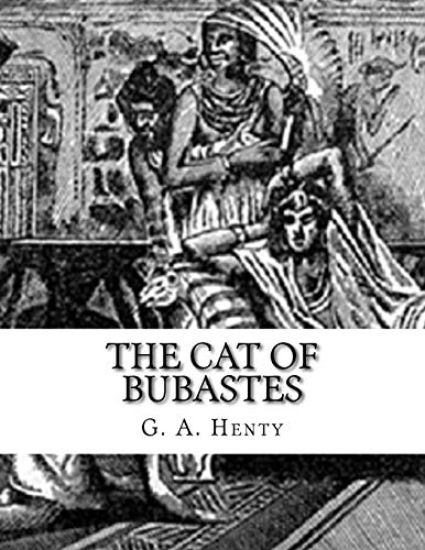
The Cat of Bubastes: G. A. Henty

The Cat of Bubastes: G. A. Henty

G. a. Henty

Createspace Independent Publishing Platform
2017
nidottu
The sacred cat of Bubastes has accidentally been slain; now young Chebron must pay for the offence with his own life, as this is the law of the Pagans in Egypt, 1250 BC. Chebron, the son of a high Egyptian priest, flees for his life taking his sister Mysa, one of the household slaves Amuba and several companions with him. They escape through closely guarded Egyptian exits only to find themselves in unfamiliar and dangerous lands inhabited by a very different culture of people. Along the way, the roving band of refugees encounters and befriends a Hebrew girl, who exposes them to very strange ideas including the worship of "one true God.
Love and freindship [i.e. friendship]: and other early works. By: Jane Austen, with a preface By: G. K. Chesterton: Love and Freindship is a juvenile
Love and Freindship sic] is a juvenile story by Jane Austen, dated 1790. From the age of eleven until she was eighteen, Austen wrote her tales in three notebooks. These still exist, one in the Bodleian Library and the other two in the British Museum. They contain, among other works, Love and Freindship, written when she was fourteen, and The History of England, written when she was fifteen.This presents a glimpse into the life of Laura from Isabel's perspective. Isabel asks Laura to tell the "misfortunes and adventures" of her life to Isabel's daughter Marianne (Austen 516). Isabel argues that because Laura is turning 55, she is past the danger of "disagreeable lovers" and "obstinate fathers" (Austen 516). This initial letter sets up the rest of Austen's narrative through Laura's letters to Marianne. Letter The Second Laura to Isabel This consists of a reply from Laura to Isabel. Laura initially disagrees with Isabel's assessment that she is safe from "misfortunes" simply because of her advanced age (Austen 516). Laura agrees to write to Marianne and detail her life experiences to "satisfy the curiosity of Marianne" and to teach her useful lessons (Poplawski 183). The useful lessons are lessons learned from the misfortunes caused by "disagreeable lovers" and "obstinate fathers" (Poplawski 183). Poplawski highlights the importance of the relationship between females and their lovers and also between females and their fathers as a means through which Austen is able to criticise stereotypical female behaviour. As seen throughout the work, these two relationships are constantly criticised by satirical anecdotes. Janetta's relations with her father and with her lover, Capitan M'Kenzie in the twelfth letter, shows Austen mocking the fickleness of family ties and romantic relationships.... Jane Austen ( 16 December 1775 - 18 July 1817) was an English novelist known primarily for her six major novels, which interpret, critique and comment upon the British landed gentry at the end of the 18th century. Austen's plots often explore the dependence of women on marriage in the pursuit of favourable social standing and economic security. Her works critique the novels of sensibility of the second half of the 18th century and are part of the transition to 19th-century literary realism.... Gilbert Keith Chesterton, KC*SG (29 May 1874 - 14 June 1936), better known as G. K. Chesterton, was an English writer, poet, philosopher, dramatist, journalist, orator, lay theologian, biographer, and literary and art critic. Chesterton is often referred to as the "prince of paradox".Time magazine has observed of his writing style: "Whenever possible Chesterton made his points with popular sayings, proverbs, allegories-first carefully turning them inside out."
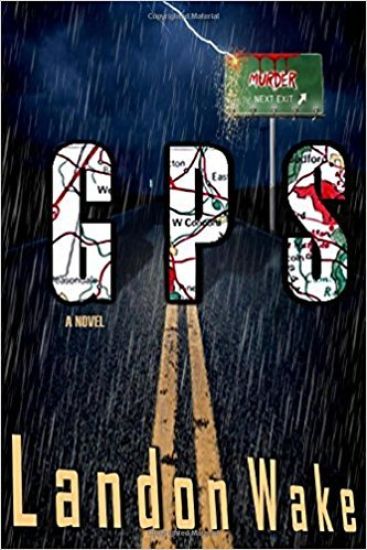
G P S: Murder Next Exit

G P S: Murder Next Exit

Korey L. Ward; Landon Wake

Createspace Independent Publishing Platform
2017
nidottu
Linsey finds herself broken down on a dark and rainy highway. She'd walked out on her career as senior editor to attend her daughter's first violin solo with the middle school orchestra. Her husband, Jason is already there waiting. When a utility truck pulls up, she thinks herself saved. What she gets instead, is a terrifying and brutal encounter with a man in a yellow suit, who has the power to control her every move. Forced to follow the predetermined destinations on her vehicle's GPS, the Man in Yellow sets Linsey to preform tasks so horrible it would make even the most twisted person cringe. And perhaps the most terrifying thing of all - He makes her like it.Buckle up and hold on tight, there's Murder Next Exit.
GET UP by Viedra Sullivan and G. David Rodgers: GET UP by Viedra Sullivan and G. David Rodgers

GET UP by Viedra Sullivan and G. David Rodgers: GET UP by Viedra Sullivan and G. David Rodgers

G. David Rodgers; Viedra Sullivan

Createspace Independent Publishing Platform
2017
nidottu
Do you believe that you have the authority to CHOOSE your outcome? It all comes down to being INTENTIONAL in your approach and deciding that you want more. No matter how long you've been stagnant, no matter how long you've been stuck, no matter how long you've been down you can DECIDE TO GET UP This book will lead you through 4 principles found in the compelling story of a lame beggar we learned about in the Bible, in the book of Acts. Something as simple as your own DECISION can lead you into the life you were created to live.
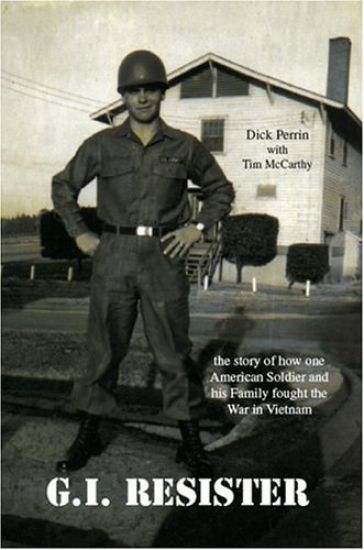
G.I. Resister

G.I. Resister

Dick Perrin

Trafford Publishing
2001
pokkari
G.I. Resister has to do with a nation so deeply cleaved by the ill-fated and unjust war in Vietnam that a generation later the United States has only just begun to heal. Perrin's story is a part of that, both in the hurt and the healing.
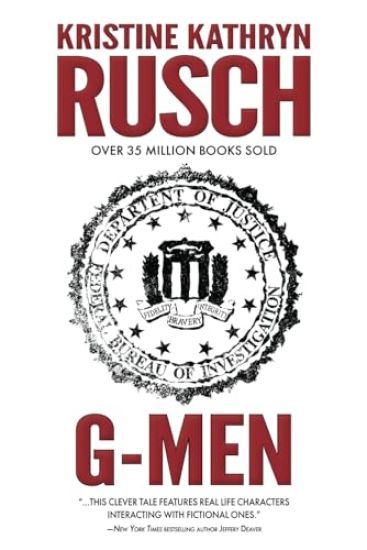
G-Men

G-Men

Kristine Kathryn Rusch

Wmg Publishing, Inc.
2024
pokkari
The acclaimed short story that inspired the award-winning novel, The Enemy Within. February, 1964: Two men die in a squalid alley in a bad neighborhood. New York Homicide Detective Seamus O'Reilly receives the shock of his life when he looks at the men's identification: J. Edgar Hoover, the famous, tyrannical director of the FBI, and his number one assistant, Clyde Tolson. O'Reilly teams up with FBI agent Frank Bryce to solve the high-level assassination before the murders unleash even greater consequences. In our world, Hoover kept his secrets until long after his death. In Seamus O'Reilly's world, Hoover's secrets get him killed. Two different best of the year collections, including the prestigious Best American Mystery Stories, chose "G-Men" as one of the best stories of the year. Nominated for the Sidewise Award for Best Alternate History. New York Times bestselling author Jeffery Deaver says of "G-Men," "If you liked E.L. Doctorow's Ragtime or the writing of Caleb Carr (The Alienist), you'll enjoy this. Part police procedural, part political thriller, this clever tale features real life characters interacting with fictional ones."
G-Men

G-Men

Kristine Kathryn Rusch

Wmg Publishing, Inc.
2024
sidottu
The acclaimed short story that inspired the award-winning novel, The Enemy Within. February, 1964: Two men die in a squalid alley in a bad neighborhood. New York Homicide Detective Seamus O'Reilly receives the shock of his life when he looks at the men's identification: J. Edgar Hoover, the famous, tyrannical director of the FBI, and his number one assistant, Clyde Tolson. O'Reilly teams up with FBI agent Frank Bryce to solve the high-level assassination before the murders unleash even greater consequences. In our world, Hoover kept his secrets until long after his death. In Seamus O'Reilly's world, Hoover's secrets get him killed. Two different best of the year collections, including the prestigious Best American Mystery Stories, chose "G-Men" as one of the best stories of the year. Nominated for the Sidewise Award for Best Alternate History. New York Times bestselling author Jeffery Deaver says of "G-Men," "If you liked E.L. Doctorow's Ragtime or the writing of Caleb Carr (The Alienist), you'll enjoy this. Part police procedural, part political thriller, this clever tale features real life characters interacting with fictional ones."