Kirjojen hintavertailu. Mukana 11 717 486 kirjaa ja 12 kauppaa.

Kirjahaku

Etsi kirjoja tekijän nimen, kirjan nimen tai ISBN:n perusteella.

1000 tulosta hakusanalla Gardner McFall

Veda

Veda

Ellen Gardner

Ellen Gardner
2013
nidottu
If Veda's mama hadn't pounded religion into her "the way she pounded the dirt out of Papa's overalls" she probably wouldn't have married Raymond in the first place. It's the Great Depression and jobs are scarce, but it seems to Veda that Raymond uses religion as an excuse for why he can't find work. He can't work on the Sabbath, he can't work around crude or vulgar men, and he will not join a union. After years of financial hardship, four babies, and what Raymond calls "Veda's accident", Veda defies her church and files for divorce. The mysterious loss of her second husband is devastating and in order to raise her kids, she does things she is not proud of. Over the years she has blamed the church, Raymond, fate, and herself for her troubles, but it is Charlie's recklessness that swallows up every bit of pride she has left.

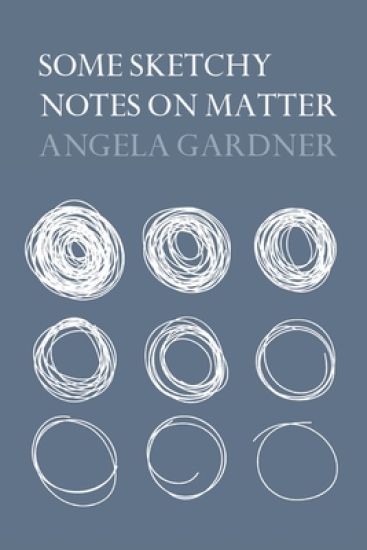
Some Sketchy Notes on Matter

Some Sketchy Notes on Matter

Angela Gardner

Recent Work Press
2020
pokkari
Some Sketchy Notes on Matter came together slowly around preoccupations of safety and shelter at an individual, societal and global level. I also wanted to look at the tensions between digital and analogue reality, between the city and a natural world that exists without us, strange, compelling and precarious. At its worst these tensions become an imbalance, a violence, threatening not only the individual body but the entire planet.
Practical Pursuits

Practical Pursuits

Ellen Gardner Nakamura

Harvard University, Asia Center
2005
sidottu
The history of Western medicine in the late Tokugawa period is usually depicted as a prelude to modern medicine. By comparison to the Western medical science that was systematically introduced in the Meiji period, the Tokugawa study of Western learning is often seen as a hopelessly backward exercise in which inadequately equipped Japanese doctors valiantly struggled to make sense of outdated Dutch knowledge. In contrast, this book argues that the study of Western medicine was a dynamic activity that brought together doctors from all over the country in efforts to effect social change. Western knowledge was not simply the property of elite samurai doctors working for the Bakufu or domains but was shared even by commoner doctors working in local practices in rural backwaters. Through the examples of the doctors Takano Choei (1804-1850) and Takahashi Keisaku (1799-1875), this book explores the context into which local Japanese doctors incorporated Western ideas, the social networks through which they communicated them, and the geographical spaces that supported these activities. By examining the social impact of Western learning at the level of everyday life rather than simply its impact at the theoretical level, the book offers a broad picture of the way in which Western medicine, and Western knowledge, was absorbed and adapted in Japan.
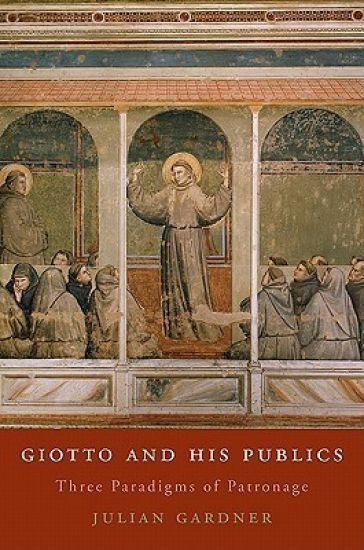
Giotto and His Publics

Giotto and His Publics

Julian Gardner

Harvard University Press
2011
sidottu
This probing analysis of three works by Giotto and the patrons who commissioned them goes far beyond the clichés of Giotto as the founding figure of Western painting. It traces the interactions between Franciscan friars and powerful bankers, illuminating the complex interplay between mercantile wealth and the iconography of poverty.Political strife and religious faction lacerated fourteenth-century Italy. Giotto’s commissions are best understood against the background of this social turmoil. They reflected the demands of his patrons, the requirements of the Franciscan Order, and the restlessly inventive genius of the painter. Julian Gardner examines this important period of Giotto’s path-breaking career through works originally created for Franciscan churches: Stigmatization of Saint Francis from San Francesco at Pisa, now in the Louvre, the Bardi Chapel cycle of the Life of St. Francis in Santa Croce at Florence, and the frescoes of the crossing vault above the tomb of Saint Francis in the Lower Church of San Francesco at Assisi.These murals were executed during a twenty-year period when internal tensions divided the friars themselves and when the Order was confronted by a radical change of papal policy toward its defining vow of poverty. The Order had amassed great wealth and built ostentatious churches, alienating many Franciscans in the process and incurring the hostility of other Orders. Many elements in Giotto’s frescoes, including references to St. Peter, Florentine politics, and church architecture, were included to satisfy patrons, redefine the figure of Francis, and celebrate the dominant group within the Franciscan brotherhood.
In Defence of the Imagination

In Defence of the Imagination

Helen Gardner

Harvard University Press
1984
pokkari
Helen Gardner is a vigorous and eloquent champion of traditional literary values. These values have been subverted, she feels, by some of the ablest of modern academics and by prevalent tendencies in criticism and teaching today. She discusses the new schools of criticism which exalt the sometimes unintelligible theorist above the creator of the work of art, the imaginative interpreter of life, or which replace the authority of the author with that of the reader. She regrets the tendency of teachers to emphasize contemporary literature to the neglect of the great writings of the past and to teach past literature only if it can somehow be made "relevant." She reproves theater directors who distort Shakespeare's plays and who convert serious drama into happenings. And she finds that biographers of writers are so preoccupied with the inner lives of their subjects that the writings become psychological documents rather than works of the imagination.In a closing chapter, partly autobiographical, she affirms the values she has found in a life devoted to the study of literature. Even the most polemical sections of the book are courteous and good-humored. Her own lucidity, range of reference, and passionate concern for literature are in themselves powerful affirmations of her argument.
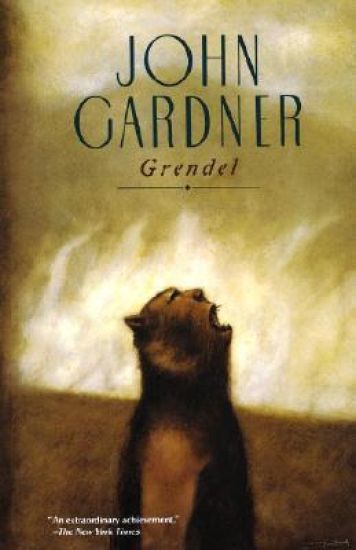
Grendel

Grendel

John Gardner

VINTAGE
1989
nidottu
This classic and much lauded retelling of Beowulf follows the monster Grendel as he learns about humans and fights the war at the center of the Anglo Saxon classic epic. "An extraordinary achievement."--New York Times The first and most terrifying monster in English literature, from the great early epic Beowulf, tells his own side of the story in this frequently banned book. This is the novel William Gass called "one of the finest of our contemporary fictions."
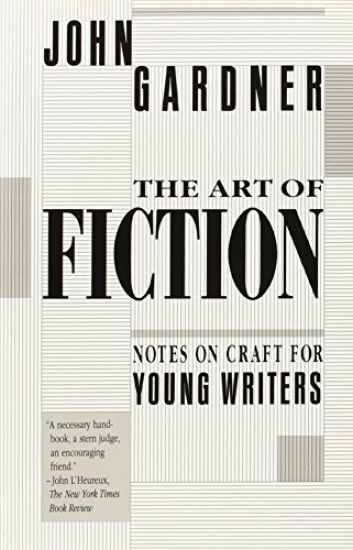
The Art of Fiction: Notes on Craft for Young Writers
This classic guide, from the renowned novelist and professor, has helped transform generations of aspiring writers into masterful writers--and will continue to do so for many years to come. John Gardner was almost as famous as a teacher of creative writing as he was for his own works. In this practical, instructive handbook, based on the courses and seminars that he gave, he explains, simply and cogently, the principles and techniques of good writing. Gardner's lessons, exemplified with detailed excerpts from classic works of literature, sweep across a complete range of topics--from the nature of aesthetics to the shape of a refined sentence. Written with passion, precision, and a deep respect for the art of writing, Gardner's book serves by turns as a critic, mentor, and friend. Anyone who has ever thought of taking the step from reader to writer should begin here.
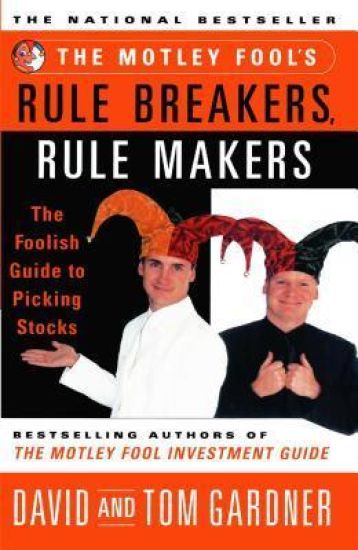
The Motley Fool's Rule Breakers, Rule Makers

The Motley Fool's Rule Breakers, Rule Makers

David Gardner; Tom Gardner

Prentice Hall IBD
2000
nidottu
THE "NEW YORK TIMES" BESTSELLER From the bestselling authors of "The Motley Fool Investment Guide" and its successful, savvy prequel, "The Motley Fool's You Have More Than You Think, " here's an engaging, humorous, and practical stock-picking guide, packed with Foolish insights, that caps off this invaluable personal finance trilogy from David and Tom Gardner. "The Motley Fool's Rule Breakers, Rule Makers" presents the sophisticated, yet easy-to-understand stock-picking methods that have kept the Motley Fool portfolio beating the Standard & Poor's averages by more than 30 percent. The key is investing in small start-up companies that have historically offered the greatest investment returns (the "rule breakers") as well as huge companies that maintain legal monopolies in their fields (the "rule makers"). The Gardner brothers explain * How to identify the best investments in today's public markets: the rule breakers and the rule makers * The definition of a "tweener" -- a maturing rule breaker -- and how to detect the Tweener Death Rattle * When to buy and when to sell, and how to manage your portfolio on a regular basis In their first two books, the Fools got you started in investing and freed you from the fees and worries that Wall Street's Wise Men have been imposing on investors for decades. Now, by sharing their methods for picking rule breakers and rule makers, they guide you through a stock market that has seen company valuations soar to unprecedented heights and that promises to continue providing roller-coaster thrills. The Motley Fools are the ultimate companions to bring along for a safe, fun, and profitable ride.
The Qualities of a Citizen

The Qualities of a Citizen

Martha Gardner

Princeton University Press
2009
pokkari
The Qualities of a Citizen traces the application of U.S. immigration and naturalization law to women from the 1870s to the late 1960s. Like no other book before, it explores how racialized, gendered, and historical anxieties shaped our current understandings of the histories of immigrant women. The book takes us from the first federal immigration restrictions against Asian prostitutes in the 1870s to the immigration "reform" measures of the late 1960s. Throughout this period, topics such as morality, family, marriage, poverty, and nationality structured historical debates over women's immigration and citizenship. At the border, women immigrants, immigration officials, social service providers, and federal judges argued the grounds on which women would be included within the nation. As interview transcripts and court documents reveal, when, where, and how women were welcomed into the country depended on their racial status, their roles in the family, and their work skills. Gender and race mattered. The book emphasizes the comparative nature of racial ideologies in which the inclusion of one group often came with the exclusion of another. It explores how U.S. officials insisted on the link between race and gender in understanding America's peculiar brand of nationalism. It also serves as a social history of the law, detailing women's experiences and strategies, successes and failures, to belong to the nation.
Undiluted Hocus-Pocus

Undiluted Hocus-Pocus

Martin Gardner; Persi Diaconis; James Randi

Princeton University Press
2013
sidottu
Martin Gardner wrote the Mathematical Games column for Scientific American for twenty-five years and published more than seventy books on topics as diverse as magic, religion, and Alice in Wonderland. Gardner's illuminating autobiography is a candid self-portrait by the man evolutionary theorist Stephen Jay Gould called our "single brightest beacon" for the defense of rationality and good science against mysticism and anti-intellectualism. Gardner takes readers from his childhood in Oklahoma to his varied and wide-ranging professional pursuits. He shares colorful anecdotes about the many fascinating people he met and mentored, and voices strong opinions on the subjects that matter to him most, from his love of mathematics to his uncompromising stance against pseudoscience. For Gardner, our mathematically structured universe is undiluted hocus-pocus--a marvelous enigma, in other words. Undiluted Hocus-Pocus offers a rare, intimate look at Gardner's life and work, and the experiences that shaped both.
Undiluted Hocus-Pocus

Undiluted Hocus-Pocus

Martin Gardner; Persi Diaconis; James Randi

Princeton University Press
2015
pokkari
Martin Gardner wrote the Mathematical Games column for Scientific American for twenty-five years and published more than seventy books on topics as diverse as magic, religion, and Alice in Wonderland. Gardner's illuminating autobiography is a candid self-portrait by the man evolutionary theorist Stephen Jay Gould called our "single brightest beacon" for the defense of rationality and good science against mysticism and anti-intellectualism. Gardner takes readers from his childhood in Oklahoma to his varied and wide-ranging professional pursuits. He shares colorful anecdotes about the many fascinating people he met and mentored, and voices strong opinions on the subjects that matter to him most, from his love of mathematics to his uncompromising stance against pseudoscience. For Gardner, our mathematically structured universe is undiluted hocus-pocus--a marvelous enigma, in other words. Undiluted Hocus-Pocus offers a rare, intimate look at Gardner's life and work, and the experiences that shaped both.