Kirjojen hintavertailu. Mukana 11 244 527 kirjaa ja 12 kauppaa.

Kirjahaku

Etsi kirjoja tekijän nimen, kirjan nimen tai ISBN:n perusteella.

1000 tulosta hakusanalla George Barrell Cheever

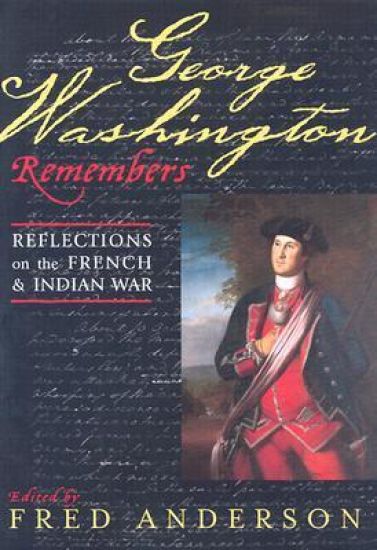
George Washington Remembers

George Washington Remembers

Rowman Littlefield Publishers
2004
sidottu
In 1786, George Washington wrote a rare autobiographical account of his service in the French and Indian War. In these eleven pages, Washington relates the compelling narrative of his experiences during the war, including a striking account of the friendly-fire incident at Fort Ligonier in 1758 that ". . . involved the life of GW in as much jeopardy as it had ever been before or since. . . . " George Washington Remembers presents for the first time in print this extraordinary account that offers a very personal glimpse of a self-reflective leader seldom seen in Washington's other writings. The reproduction is accompanied by an annotated transcription of the piece and original essays that place the work in the context of the French and Indian War and Washington's life. Lavishly illustrated, this remarkable book is essential for all interested in George Washington and our nation's founding period.
George W. Bushisms

George W. Bushisms

George W. Bush; Jacob (EDT) Weisberg

Simon Schuster Ltd
2001
pokkari
"They misunderestimated me." Or did they? Judge for yourself. Here are over 100 memorable misstatements by our syntactically challenged president, collected, annotated, and introduced by "Slate" magazine's Jacob Weisberg. "I know the human being and fish can coexist peacefully." "Families is where our nation finds hope, where wings take dream." "We'll let our friends be the peacekeepers and the great country called America will be the pacemakers." "It's clearly a budget. It's got a lot of numbers in it." "I know how hard it is for you to put food on your family." "I do know I'm ready for the job [the presidency]. And if not, that's just the way it goes."
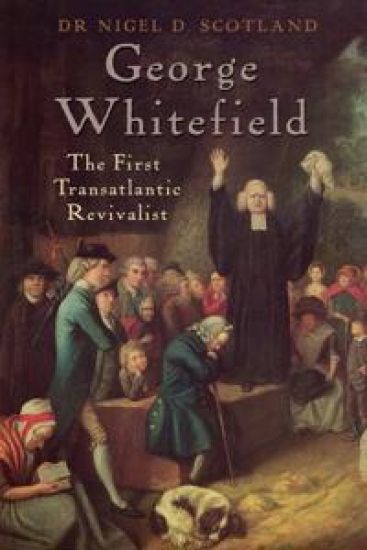
George Whitefield

George Whitefield

Nigel D Scotland

Lion Books
2019
nidottu
George Whitefield proclaimed the Christian message to more people in history than anyone else, before or since, who spoke with an unaided voice. A preacher of revival almost from his childhood, when he prophesied his own destiny, he had a profound impact on the social, religious and political life of both Britain and America. He crossed the Atlantic thirteen times, and merged as a celebrity figure, whose message captivated both rich and poor alike. Whitefield heralded a new kind of revival that was both spiritually powerful and entertaining at the same time. He was also a man of contradictions. He loved the Anglican liturgy but would happily break canon law. He was a devoted Puritan yet he was also able to befriend those with more liberal morals, Above all, Whitefield was a driven man, and his overwhelming passion was to preach New Birth in Christ - the theme he was to speak on over a thousand times. He valued education, opposed slavery, cared for orphan children and changed the course of both British and American history.
George Herbert

George Herbert

T. S. Eliot

Liverpool University Press
1994
nidottu
T.S. Eliot considered George Herbert one of the liveliest and most profound of English poets with whose work he felt an instinctive accord. Describing The Temple as … ‘not simply a collection of poems but … a record of the spiritual struggles of a man of intellectual power and emotional intensity who gave much toil to perfecting his verses …’ T.S. Eliot considered Herbert’s religious verse above John Donne’s and placed him firmly in the ranks of the great English poets. Peter Porter’s new introduction gives a fresh perspective on the poetry of Herbert and on Eliot’s study itself.
George Eliot

George Eliot

Josephine McDonagh

Liverpool University Press
1997
nidottu
Since the publication of her first full length novel, Adam Bede, in 1859 George Eliot has enjoyed the reputation of the greatest realist novelist in English and as the guardian of traditional English values. But the way in which her works have been understood has changed dramatically in the light of shifting trends in literary criticism. In this new study, which draws on the findings of recent literary scholarship, Josephine McDonagh shows how Eliot needs to be recognized, not as an uncritical traditionalist, but as a writer who examined the processes of social and cultural change from the stand point of the progressive intellectual culture of her time. In her works, Eliot wove together issues and ideas taken from a broad range of contemporary fields – science, medicine, philosophy, and social theory. This study provides an accessible and informative analysis of Eliot’s techniques as a realist writer in the context of the dynamic intellectual culture of mid-Victorian England.
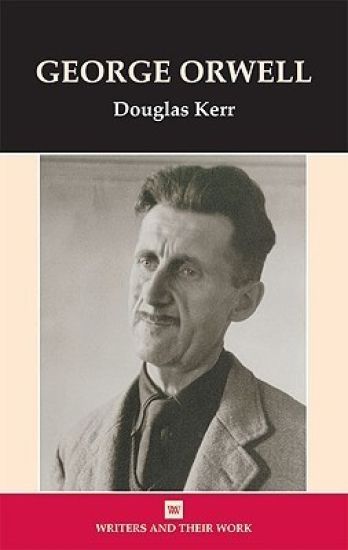
George Orwell

George Orwell

Douglas Kerr

Northcote House Publishers Ltd
2003
nidottu
A fresh account of the development and achievement of the novelist and essayist who became Britain's greatest political writer of modern times. George Orwell (1903-1950) is one of the most important, admired, and controversial British writers of modern times. This new study examines his writing - the novels, journalism, essays and polemics - by looking at the context and development of his passionately held views, and at the genres, representations and narratives in which they found expression. Douglas Kerr gives an account of Orwell's whole writing career, from its awkward beginnings in Down and Out in Paris and London to the ambiguous triumphs of Animal Farm and Nineteen Eighty-Four, tracing its relation to four contexts - the East, England, Europe, and the nightmare police-state of Oceania. In particular he argues for the importance of Orwell's youthful service in the colonial police in Burma, and for the way his experience of the East and of what he called 'the dirty work of empire' shaped the writer's emerging understanding of oppression and freedom, inequality and justice.
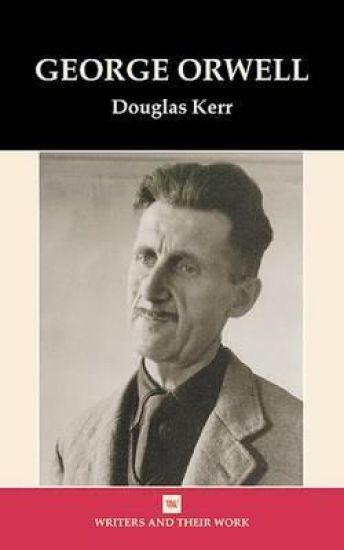
George Orwell

George Orwell

Douglas Kerr

Northcote House Publishers Ltd
2003
sidottu
A fresh account of the development and achievement of the novelist and essayist who became Britain's greatest political writer of modern times. George Orwell (1903-1950) is one of the most important, admired, and controversial British writers of modern times. This new study examines his writing - the novels, journalism, essays and polemics - by looking at the context and development of his passionately held views, and at the genres, representations and narratives in which they found expression. Douglas Kerr gives an account of Orwell's whole writing career, from its awkward beginnings in Down and Out in Paris and London to the ambiguous triumphs of Animal Farm and Nineteen Eighty-Four, tracing its relation to four contexts - the East, England, Europe, and the nightmare police-state of Oceania. In particular he argues for the importance of Orwell's youthful service in the colonial police in Burma, and for the way his experience of the East and of what he called 'the dirty work of empire' shaped the writer's emerging understanding of oppression and freedom, inequality and justice.
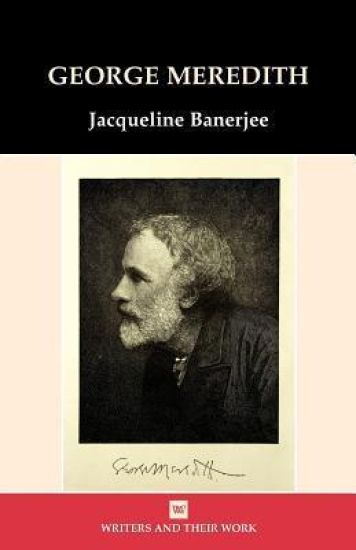
George Meredith

George Meredith

Jacqueline Banerjee

Northcote House Publishers Ltd
2012
nidottu
George Meredith was a lyrical yet searingly honest poet, and an influential novelist whose fiction distilled, contributed to and animated the major debates of the Victorian age. He became at once an arbiter of taste in his own times, and a trailblazer for modernism. In many ways an extraordinary, larger-than-life figure, he has always had his admirers, and critics have continued to be drawn to the biographical, socio-political, scientific and experimental aspects of his oeuvre. Some of his works, including the sonnets ofModern Love, his ‘Essay on Comedy and the Uses of the Comic Spirit’, and novels like The Egoist, have attained the status of classics. The present study focuses on such works, putting them in context to show how innovatively this versatile writer shaped and reshaped his material, and how powerfully his inimitable voice still resonates with (and challenges) us in the twenty first century.
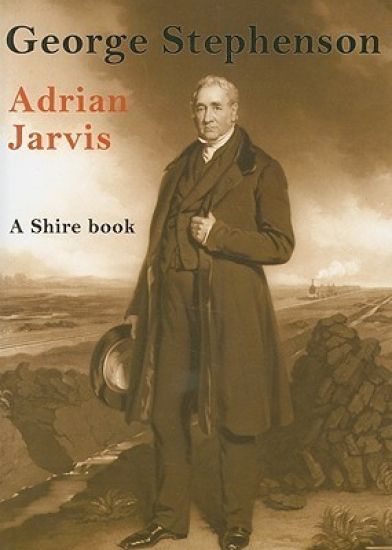
George Stephenson

George Stephenson

Jarvis Adrian

Shire Publications
2006
nidottu
George Stephenson is among the most famous engineers of all time. His rise from 'rags to riches' is a stirring story of its kind, but many of the works attributed to him should in fact be credited to young subordinates, not least his son, Robert. But much of the work of innovative engineers for his period lay not in the work itself but in persuading people that such work was desirable and necessary. It was in this field that George Stephenson excelled, providing openings in which his young proteges could change the world. They did not let him down, and we should give him full credit for being 'The Father of the Railways'. Adrian Jarvis specialises in the engineering and finance of dock and harbour construction, on which he has published extensively, but he also has a strong interest in early railways and in the general history of technology. Another book for Shire by this author is: The Victorian Engineer
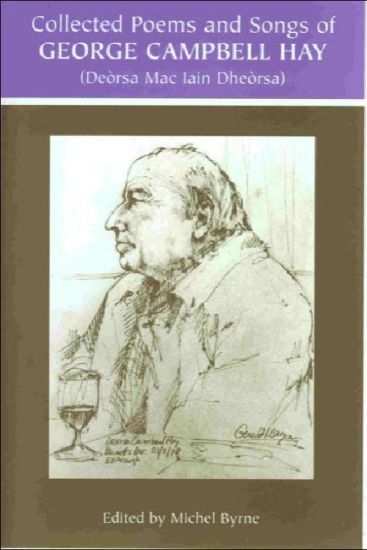
George Campbell Hay (Dersa Mac Iain Dhersa) - Collected Poems and Songs
George Campbell Hay (Deorsa Mac Iain Dheorsa) has been hailed as an important voice in Scottish literature and as a crucial figure in the renaissance of Gaelic poetry in the twentieth century. Yet with his collections long out of print, only a small proportion of his work has been available to the public. This book gathers together for the first time George Campbell Hay's complete original poems, in Gaelic, Scots, English, French, Italian and Norwegian. Volume I presents all of the poems chronologically, with accompanying English translations. Volume II provides annotations to each poem, including a full list of sources; a detailed biography, heavily reliant on Hay's own correspondence, which sheds new light on the social, political and literary context of his work; an outline of Hay's main poetic concerns, in theme and in form; and some of Hay's own musical settings. The publication of this long-awaited scholarly edition is a landmark in Scottish and Gaelic publishing. The volumes represent a notable addition to the canon of twentieth-century Scottish literature and should permit a full evaluation of Hay's significance. Published as a two-volume set in a deluxe edition in association with the Lorimer Memorial Trust.
George Campbell Hay (Dersa Mac Iain Dhersa) - Collected Poems and Songs
The work of a highly significant figure in the renaissance of Gaelic poetry in the twentieth century is gathered together for the first time in one authoritative volume. George Campbell Hay's complete original poems, in Gaelic, Scots, English, French, Italian and Norwegian, are presented chronologically with accompanying English translations and annotations to each poem. This edition also includes a detailed biography, drawing on Hay's own correspondence, which sheds new light on the social, political and literary context of his work; an outline of Hay's main poetic concerns in theme and in form; and some of Hay's own musical settings. Hardback still available in deluxe 2-volume set
George Mackay Brown and the Philosophy of Community

George Mackay Brown and the Philosophy of Community

Timothy C Baker

Edinburgh University Press
2009
sidottu
George Mackay Brown has long been recognised as one of the most original and important Scottish writers of the twentieth century. This book is the first comprehensive account of Brown's work from a philosophical perspective and offers a radical new approach to the study of Scottish literature. The importance of local community in the work of Scottish novelists ranging from Walter Scott to Neil M. Gunn has often been noted, but few critics have addressed the relation of this concept to current philosophical and sociological models of community. Timothy C. Baker uses Brown's work as a primary case study to demonstrate that the relationship between the individual and the community is a dominant narrative question in Scottish fiction. Baker traces the development of Brown's writing in relation to contemporary developments in the study of community, drawing on both continental and Anglo-American traditions. Focusing on Brown's novels, Baker argues for Brown's importance not only within a Scottish literary tradition, but as a major thinker of community. The book also suggests the utility of community, as opposed to nation and region, for productive discourse on modern literature. Combining close readings with theoretical elaborations, and including a broad national and historical overview, Baker offers a new perspective both on Brown's work and contemporary national literatures. Key Features: *Offers the first philosophically-informed critique of George Mackay Brown *Shows how fiction can contribute to an understanding of the problems of community in modernity *Suggests new directions for the study of contemporary Scottish literature *Takes into account Brown's late and posthumous writings as well as unpublished material not covered before
George Cukor

George Cukor

Edinburgh University Press
2015
sidottu
Presents a critical analysis of the films and career of George Cukor. Though many of his films are celebrated as classics, Cukor has yet to receive his proper due from academic critics. The film maker's interest in the various forms of indoor cinema lacked the generic focus of Ford's westerns and Hitchcock's thrillers, which were championed by the Cahiers critics in the 1950s. His style was theatricality writ large, a successful transference to the screen of what he had learned from his stage career, including the outsized, often flamboyant handling of emotionality. Ultimately, Cukor was much more than a man of the theatre who happened to spend most of his career making films. With ten original essays by leading film scholars, this volume celebrates Cukor's filmmaking career and supplies a hitherto missing chapter in the history of classic Hollywood. One of the first scholarly books to critical evaluate the work of George Cukor; Covers his work in theatre and his early films as well as his later work and emphasis on Cukor and performance.
George III's Children

George III's Children

John Kiste

The History Press Ltd
2004
nidottu
On 12 August 1762, Queen Charlotte gave birth to her first child. Twenty-one years later, to the week, the 15th and youngest was born. All but two children survived to maturity. The eldest of King George III's children, who became Prince Regent and King George IV, is less remembered for his patronage of the arts than for his extravagance, and maltreatment of his wife Caroline. As Commander-in-Chief to the British army, the administrative qualities of Frederick, Duke of York are largely forgotten, while King William IV, usually dismissed as a figure of fun, brought a new affability to the monarchy which helped him through the storms engendered during the passage of the Great Reform Bill in 1832. The princesses, for many years victims of their parents' possessiveness, married late in life, if at all, and are passed off as non-entities. This objective portrayal of the royal family draws upon contemporary sources to lay to rest the gossip and exaggeration.
George V's Children

George V's Children

John Kiste

The History Press Ltd
2003
nidottu
The six children of King George V and Queen Mary all lived to maturity except the youngest, Prince John. The eldest, who was Prince of Wales and heir to the throne, reigned as King Edward VIII for less than a year. His infamous romance with Mrs Simpson plunged the country into the abdication crisis and led both of them into a long period of exile. King George VI, who reluctantly and unexpectedly ascended to the throne, was a shy man, handicapped by a speech impediment and a sense of his own inadequacy. However, together with his Consort, Queen Elizabeth, and the Prime Minister, Winston Churchill, he gave the nation spirited guidance throughout World War II. Both surviving younger brothers served in the armed forces during war-time. Henry, Duke of Gloucester, was Governor General of Australia from 1944-6 and crowned his military career with promotion to the rank of Field-Marshal. George, Duke of Kent, an officer in the RAF, was tragically killed on active service in 1942. The only sister, Mary, Princess Royal, worked both as a nurse, and a royal ambassador abroad. This book tells the story of the family.
George Stephenson

George Stephenson

Hunter Davies

The History Press Ltd
2004
nidottu
Much is known about the achievements of George Stephenson and of his infamous creation, the Rocket, yet little is known of the man himself. This volume is a profile of the self-taught and often testy Geordie, whose Victorian invention is now the backbone of every nation on the planet.
George Raynor

George Raynor

Ashley Hyne

The History Press Ltd
2014
nidottu
The Guinness Book of Records called him the most successful football coach in history, but English-born George Raynor is the great unknown of British football. His remarkable successes (coaching ‘amateur’ Sweden to an Olympic Gold medal and a World Cup final) were contrasted bizarrely by how he was and has been treated in England since those heady years. Months after becoming the first Englishman to take a side to the World Cup Final, where he pit his skills against the Brazilians of Pele and Garrincha, Raynor was scratching a living coaching Skegness Town in the Midland League. His death went unrecorded by the local and national press and even today references to him in football books give no insight into this remarkable character: ‘a little known clogger’ according to one, and in a history of football tactics reference to Raynor is not only fleeting but even his name is misspelt. Yet Raynor unquestionably holds a revered position, internationally, as a leading light of coaching whose impact is still relevant today.
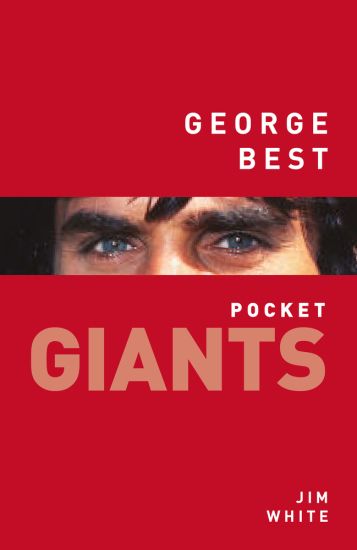
George Best: pocket GIANTS

George Best: pocket GIANTS

Jim White

The History Press Ltd
2017
nidottu
On Sunday 5 October 2014, the 75,000 strong crowd at Old Trafford for Manchester United’s game against Everton joined in with an extended version of a chant which echoed around the stadium. ‘We all live in a Georgie Best world,’ it went. Eleven years after his death, forty years after he walked out of the club for the last time as a player, Best remains a Giant – extraordinary given that his star shone for such a brief time. He was at the top of the game for no more than half a dozen years. How did he do it?
George and Robert Stephenson

George and Robert Stephenson

David Ross

The History Press Ltd
2018
nidottu
From poverty to immense wealth, from humble beginnings to international celebrity, George and Robert Stephenson’s was an extraordinary joint career. Together they overshadow all other engineers, except perhaps Robert’s friend Isambard Kingdom Brunel, for one vital reason: they were winners. For them it was not enough to follow the progress made by others. They had to be the best. Colossal in confidence, ability, energy and ambition, George Stephenson was also a man of huge rages and jealousies, determined to create his own legend. Brought up from infancy by his father, Robert was a very different person. Driven by the need to be the super-successful son his father wanted, he struggled with self-distrust and morbid depression. More than once his career and reputation teetered on the edge of disaster. But, by being flawed, he emerges as a far more interesting and sympathetic figure than the conventional picture of the ‘eminent engineer.’ David Ross’s biography of George and Robert Stephenson sheds much new light on this remarkable father and son. Authoritative and containing many new discoveries, it is a highly readable account of how these two men set the modern industrial world in motion.
George Newnes and the New Journalism in Britain, 1880–1910
This is a study of the noted newspaper proprietor, publisher and editor, George Newnes and his involvement in the so-called New Journalism in Britain from 1880 to 1910. The author examines seven of Newnes’s most successful periodicals - Tit-Bits (1881), The Strand Magazine (1891), The Million (1892), The Westminster Gazette (1893), The Wide World Magazine (1898), The Ladies’ Field (1898) and The Captain (1899) - from a biographical, journalistic and broader cultural perspective. Newnes assumed a pioneering role in the creation of the penny miscellany paper, the short-story magazine, the true-story magazine and the respectable boys’ paper, in the development of colour printing, magazine illustration and photographic reproduction, and in the redefinition of both political and sporting journalism. His publications were shaped by his own distinctive brand of paternalism, his professional progression within the field of journalism, his liberal-democratic and imperialist beliefs, and his particular skill as an entrepreneur. This innovative periodical publisher utilised the techniques of personalised journalism, commercial promotion and audience targeting to establish an interactive relationship and a strong bond of identification with his many readers. Kate Jackson employs an interdisciplinary approach, building on recent scholarship in the field of periodical research, to demonstrate that Newnes balanced and synthesised various potentially conflicting imperatives to create a kind of synergy between business and benevolence, popular and quality journalism, old and new journalism and , ultimately, culture and profit.