Kirjojen hintavertailu. Mukana 12 016 292 kirjaa ja 12 kauppaa.

Kirjahaku

Etsi kirjoja tekijän nimen, kirjan nimen tai ISBN:n perusteella.

1000 tulosta hakusanalla Gerda Nehring

Professor Odd: The Dragons of Geda: Professor Odd #5

Professor Odd: The Dragons of Geda: Professor Odd #5

Goldeen Ogawa

Heliopause Productions
2014
nidottu
Searching for a place to hide after uncovering a treacherous conspiracy among her people, Timantiel Tuvielstytar ya Suku Lohihuya (Kilni for short) instead stumbles into the Oddity, interrupting Professor Odd and her companions' day at the beach-much to Alister Bane's chagrin. For Kilni brings with her a troubling tale, which Professor Odd is, of course, bent on investigating. This leads them on a quest that reaches across the marvelous world of Geda; where the descendants of dinosaurs live side-by-side with the elf-like Luinisetians, and in conflict with the mysterious orka. But when they dig into Geda's history, they find the truth is far more deep and disturbing: now a city is in danger, and the orka are their best hope for saving the elves and dinosaurs alike. "The Dragons of Geda" is the fifth installment in Goldeen Ogawa's sci-fi novella series chronicling the adventures of Professor Odd and her wayward companions-former student Alister Bane, anthropomorphic wolf Elo Marh tz, and Dave, the green tentacle monster.
100 Questions  &  Answers About Gastroesophageal Reflux Disease (GERD): A Lahey Clinic Guide

100 Questions & Answers About Gastroesophageal Reflux Disease (GERD): A Lahey Clinic Guide

David L. Burns; Neeral L. Shah

Jones and Bartlett Publishers, Inc
2006
nidottu
More than 25 million Americans suffer from gastro-esophageal reflux disease (GERD). Whether you've recently been diagnosed with GERD, want to gain a better understanding of GERD, or know someone who suffers from this condition, this book offers help. The only text to provide both the patient's and physician's perspectives, this invaluable resource offers readers authoritative, practical answers to 100 of the most common questions asked by patients and families.
pH Balance Health and Diet Guide for Gerd, IBS and IBD
Maintaining an optimum acid-alkaline balance is integral to enjoying optimal health, yet our modern-day habits and preferences often wreak havoc with this delicate balance. Highly processed foods acidify the body as does a diet high in meat, dairy and sugar. The body becomes overwhelmed with this acid imbalance and this, in turn, causes acidosis, which can lead to a host of problems. Weight gain, gastrointestinal conditions, skin conditions, chronic fatigue and respiratory ailments are just some of the complications. The ideal diet that supports pH balance is rich in fresh fruits, roots, vegetables, legumes and nuts and avoids excess fats, sugars, refined foods, salt, alcohol, tobacco, coffee and tea. Part 1 - Understanding pH and Diet: What is pH? Acid Imbalance (Acidosis), Alkaline Balance (Homeostasis). Part 2 - Common Gastrointestinal (GI) Conditions: pH Imbalance symptoms, Acidosis Diagnosis and pH rebalance for: Gastroesophageal Reflux Disease (GERD), Irritable Bowel Syndrome (IBS), and Inflammatory Bowel Disease (IBD). Part 3 - Managing pH-Related Disease: Drug therapy, nutritional supplements, herbal remedies, mind-body strategies, diet therapy. Part 4 - The pH Diet Solution Program: 10 Steps for Implementing the pH diet, 28-day balanced meal plan, 175 + pH balanced recipes and 28-day menu plan. To reach optimum health one must address the acidity of the foods put into the body. This book will become the key resource on the crucial pH balance required.
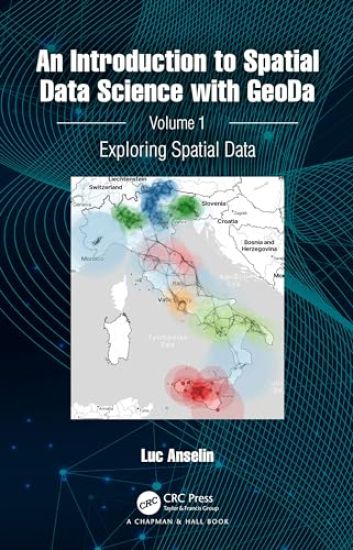
An Introduction to Spatial Data Science with GeoDa
This book is the first in a two-volume series that introduces the field of spatial data science. It offers an accessible overview of the methodology of exploratory spatial data analysis. It also constitutes the definitive user’s guide for the widely adopted GeoDa open-source software for spatial analysis. Leveraging a large number of real-world empirical illustrations, readers will gain an understanding of the main concepts and techniques, using dynamic graphics for thematic mapping, statistical graphing, and, most centrally, the analysis of spatial autocorrelation. Key to this analysis is the concept of local indicators of spatial association, pioneered by the author and recently extended to the analysis of multivariate data.The focus of the book is on intuitive methods to discover interesting patterns in spatial data. It offers a progression from basic data manipulation through description and exploration to the identification of clusters and outliers by means of local spatial autocorrelation analysis. A distinctive approach is to spatialize intrinsically non-spatial methods by means of linking and brushing with a range of map representations, including several that are unique to the GeoDa software. The book also represents the most in-depth treatment of local spatial autocorrelation and its visualization and interpretation by means of GeoDa.The book is intended for readers interested in going beyond simple mapping of geographical data to gain insight into interesting patterns. Some basic familiarity with statistical concepts is assumed, but no previous knowledge of GIS or mapping is required.Key Features:• Includes spatial perspectives on cluster analysis• Focuses on exploring spatial data• Supplemented by extensive support with sample data sets and examples on the GeoDaCenter websiteThis book is both useful as a reference for the software and as a text for students and researchers of spatial data science.
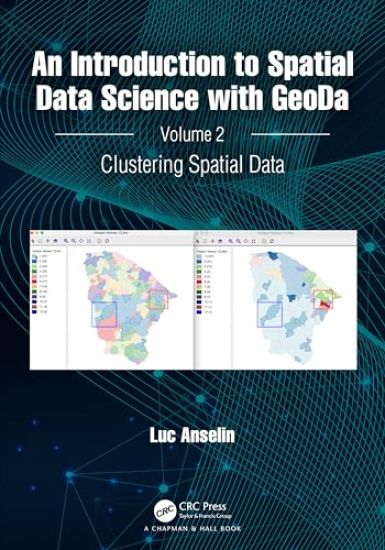
An Introduction to Spatial Data Science with GeoDa
This book is the second in a two-volume series that introduces the field of spatial data science. It moves beyond pure data exploration to the organization of observations into meaningful groups, i.e., spatial clustering. This constitutes an important component of so-called unsupervised learning, a major aspect of modern machine learning.The distinctive aspects of the book are both to explore ways to spatialize classic clustering methods through linked maps and graphs, as well as the explicit introduction of spatial contiguity constraints into clustering algorithms. Leveraging a large number of real-world empirical illustrations, readers will gain an understanding of the main concepts and techniques and their relative advantages and disadvantages. The book also constitutes the definitive user’s guide for these methods as implemented in the GeoDa open source software for spatial analysis.It is organized into three major parts, dealing with dimension reduction (principal components, multidimensional scaling, stochastic network embedding), classic clustering methods (hierarchical clustering, k-means, k-medians, k-medoids and spectral clustering), and spatially constrained clustering methods (both hierarchical and partitioning). It closes with an assessment of spatial and non-spatial cluster properties.The book is intended for readers interested in going beyond simple mapping of geographical data to gain insight into interesting patterns as expressed in spatial clusters of observations. Familiarity with the material in Volume 1 is assumed, especially the analysis of local spatial autocorrelation and the full range of visualization methods.
An Introduction to Spatial Data Science with GeoDa
This book is the first in a two-volume series that introduces the field of spatial data science. It offers an accessible overview of the methodology of exploratory spatial data analysis. It also constitutes the definitive user’s guide for the widely adopted GeoDa open source software for spatial analysis. Leveraging a large number of real-world empirical illustrations, readers will gain an understanding of the main concepts and techniques, using dynamic graphics for thematic mapping, statistical graphing, and, most centrally, the analysis of spatial autocorrelation. Key to this analysis is the concept of local indicators of spatial association, pioneered by the author and recently extended to the analysis of multivariate data.The focus of the book is on intuitive methods to discover interesting patterns in spatial data. It offers a progression from basic data manipulation through description and exploration, to the identification of clusters and outliers by means of local spatial autocorrelation analysis. A distinctive approach is to spatialize intrinsically non-spatial methods, by means of linking and brushing with a range of map representations, including several that are unique to the GeoDa software. The book also represents the most in-depth treatment of local spatial autocorrelation and its visualization and interpretation by means of GeoDa.This book is the second in a two-volume series that introduces the field of spatial data science. It moves beyond pure data exploration to the organization of observations into meaningful groups, i.e., spatial clustering. This constitutes an important component of so-called unsupervised learning, a major aspect of modern machine learning.The distinctive aspects of the book are both to explore ways to spatialize classic clustering methods through linked maps and graphs, as well as the explicit introduction of spatial contiguity constraints into clustering algorithms. Leveraging a large number of real-world empirical illustrations, readers will gain an understanding of the main concepts and techniques and their relative advantages and disadvantages. The book also constitutes the definitive user’s guide for these methods as implemented in the GeoDa open source software for spatial analysis.It is organized into three major parts, dealing with dimension reduction (principal components, multi-dimensional scaling, stochastic network embedding), classic clustering methods (hierarchical clustering, k-means, k-medians, k-medoids and spectral clustering), and spatially constrained clustering methods (both hierarchical and partitioning). It closes with an assessment of spatial and non-spatial cluster properties.The book is intended for readers interested in going beyond simple mapping of geographical data to gain insight into interesting patterns as expressed in spatial clusters of observations. Familiarity with the material in Volume 1 is assumed, especially the analysis of local spatial autocorrelation and the full range of visualization methods.
La Penisola Di Sirmione Sul Lago Di Garda Illustrata.

La Penisola Di Sirmione Sul Lago Di Garda Illustrata.

Giovanni Girolamo Orti

British Library, Historical Print Editions
2011
pokkari
Title: La Penisola di Sirmione sul Lago di Garda illustrata.Publisher: British Library, Historical Print EditionsThe British Library is the national library of the United Kingdom. It is one of the world's largest research libraries holding over 150 million items in all known languages and formats: books, journals, newspapers, sound recordings, patents, maps, stamps, prints and much more. Its collections include around 14 million books, along with substantial additional collections of manuscripts and historical items dating back as far as 300 BC.The HISTORY OF EUROPE collection includes books from the British Library digitised by Microsoft. This collection includes works chronicling the development of Western civilisation to the modern age. Highlights include the development of language, political and educational systems, philosophy, science, and the arts. The selection documents periods of civil war, migration, shifts in power, Muslim expansion into Central Europe, complex feudal loyalties, the aristocracy of new nations, and European expansion into the New World. ++++The below data was compiled from various identification fields in the bibliographic record of this title. This data is provided as an additional tool in helping to insure edition identification: ++++ British Library Orti, Giovanni Girolamo; 1856. 4 . 10130.i.15.
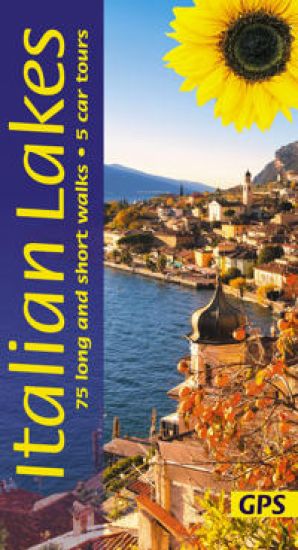
Italian Lakes Sunflower Walking Guide - Lake Garda, Lake Como, Lake Maggiore, Lake Orta
The go-to Italian Lakes travel guide for discovering the best walks and car tours. Strap on your boots and discover the Italian Lakes on foot with the Sunflower Italian Lakes travel guide. And on the days when your feet may have had enough, enjoy some spectacular scenery on one of our legendary car tours. Area covered: While the term ‘Italian Lakes’ generally refers to Lake Maggiore, Lake Lugano, Lake Como and Lake Garda, there are many other, smaller lakes, some of which are included in this guidebook. Whatever your age or ability we’ve got some glorious walks and car tours to ensure you have a memorable trip to the Italian Lakes. Inside the Sunflower Italian Lakes guide book you’ll find: 75 long and short walks for all ages and abilities - each walk is graded so you can easily match your ability to the level of walkTopographical walking maps - give you a clear sense of the surrounding terrain with a scale of 1:50 000Free downloadable gps tracks - for the techiesSatnav guidance to walk starts for motorists 5 car tours and fold-out touring map - for easy reference on your tour Strolls to idyllic picnic spots - enjoy our recommendations for where to picnic along the wayTimetables for public transport - ideal if you want to link two walks or avoid hiring a car on your holidayOnline update service for the latest information The Sunflower Italian Lakes guide is indispensable for hiking in the Italian Lakes or seeing the lakes by car. These great expanses of water, bound to the north by high mountains and stretching down towards the Lombardy Plain, all resulted from glacial activity. While this guide focuses primarily on walking the Italian Lakes, you can gain huge satisfaction from touring the Italian Lakes by car as well. Whether on foot or by car, you will discover timeless hill villages, ancient mule tracks and panoramic mountain viewpoints. Whether you tour the region by car or explore on foot, we look forward to showing you around.