Kirjojen hintavertailu. Mukana 11 342 296 kirjaa ja 12 kauppaa.

Kirjahaku

Etsi kirjoja tekijän nimen, kirjan nimen tai ISBN:n perusteella.

1000 tulosta hakusanalla Gilbert Dalgalian

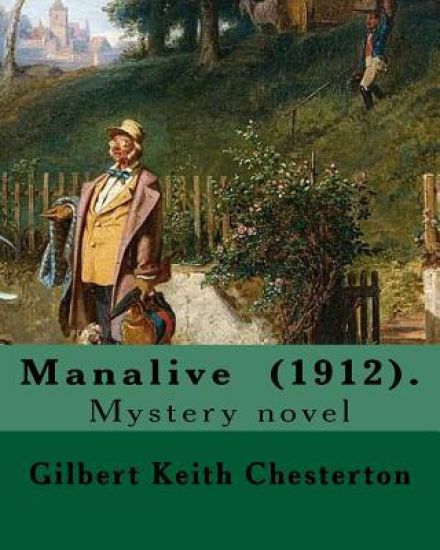
Manalive (1912). By Gilbert Keith Chesterton: Mystery novel

Manalive (1912). By Gilbert Keith Chesterton: Mystery novel

G. K. Chesterton

Createspace Independent Publishing Platform
2017
nidottu
Manalive (1912) is a book by G. K. Chesterton detailing a popular theme both in his own philosophy, and in Christianity, of the "holy fool", such as in Dostoevsky's The Idiot and Cervantes' Don Quixote.This is a book in two parts. The first, "The Enigma of Innocent Smith", concerns the arrival of a new tenant at Beacon House, a London boarding establishment. Like Mary Poppins, this man (who is tentatively identified by lodger Arthur Inglewood as an ex-schoolmate named Innocent Smith) is accompanied by a great wind, and he breathes new life into the household with his games and antics. During his first day in residence the eccentric Smith creates the High Court of Beacon; arranges to elope with Mary Gray, paid companion to heiress Rosamund Hunt; inspires Inglewood to declare his love for Diana Duke, the landlady's niece; and prompts a reconciliation between jaded journalist Michael Moon and Rosamund. However, when the household is at its happiest two doctors appear with awful news: Smith is wanted on charges of burglary, desertion of a spouse, polygamy, and attempted murder. The fact that Smith almost immediately fires several shots from a revolver at Inglewood's friend Dr. Herbert Warner seems to confirm the worst. Before Smith can be taken to a jail or an asylum, Michael Moon declares that the case falls under the purview of the High Court of Beacon and suggests that the household investigate the matter before involving the authorities or the press. The second part, "The Explanations of Innocent Smith", follows the trial. The prosecution consists of Moses Gould, a merrily cynical Jew who lives at Beacon House and considers Smith at best a fool and at worst a scoundrel, and Dr. Cyrus Pym, an American criminal specialist called in by Dr. Warner; Michael Moon and Arthur Inglewood act for the defence. The evidence consists of correspondence from people who witnessed or participated in the exploits that led to the charges against Smith. In every case, the defendant is revealed to be, as his first name states, innocent. He fires bullets near people to make them value life; the house he breaks into is his own; he travels around the world only to return with renewed appreciation for his house and family; and the women he absconded with are actually his wife Mary, posing as a spinster under different aliases so they may repeatedly re-enact their courtship.Smith is, needless to say, acquitted on all charges.... Gilbert Keith Chesterton, KC*SG (29 May 1874 - 14 June 1936), better known as G. K. Chesterton, was an English writer, poet, philosopher, dramatist, journalist, orator, lay theologian, biographer, and literary and art critic. Chesterton is often referred to as the "prince of paradox". Time magazine has observed of his writing style: "Whenever possible Chesterton made his points with popular sayings, proverbs, allegories-first carefully turning them inside out." Chesterton is well known for his fictional priest-detective Father Brown, and for his reasoned apologetics. Even some of those who disagree with him have recognised the wide appeal of such works as Orthodoxy and The Everlasting Man.Chesterton, as a political thinker, cast aspersions on both Progressivism and Conservatism, saying, "The whole modern world has divided itself into Conservatives and Progressives. The business of Progressives is to go on making mistakes. The business of the Conservatives is to prevent the mistakes from being corrected."Chesterton routinely referred to himself as an "orthodox" Christian, and came to identify this position more and more with Catholicism, eventually converting to Catholicism from High Church Anglicanism. George Bernard Shaw, Chesterton's "friendly enemy" according to Time, said of him, "He was a man of colossal genius."Biographers have identified him as a successor to such Victorian authors as Matthew Arnold, Thomas Carlyle, Cardinal John Henry Newman, and John Ruskin....
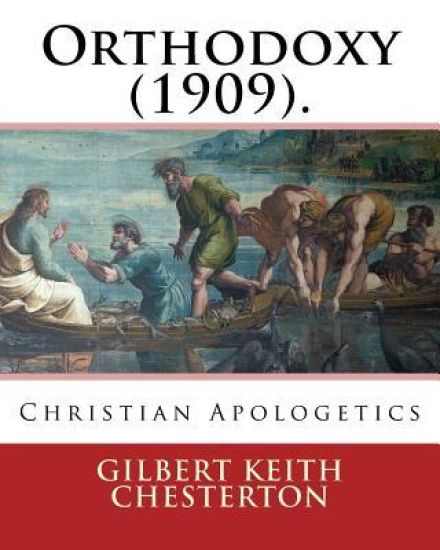
Orthodoxy (1909). By: Gilbert Keith Chesterton: Christian Apologetics

Orthodoxy (1909). By: Gilbert Keith Chesterton: Christian Apologetics

G. K. Chesterton

Createspace Independent Publishing Platform
2017
nidottu
Orthodoxy (1908) is a book by G. K. Chesterton that has become a classic of Christian apologetics. Chesterton considered this book a companion to his other work, Heretics, writing it expressly in response to G.S. Street's criticism of the earlier work, "that he was not going to bother about his theology until I had really stated mine". 1] In the book's preface Chesterton states the purpose is to "attempt an explanation, not of whether the Christian faith can be believed, but of how he personally has come to believe it." In it, Chesterton presents an original view of Christian religion. He sees it as the answer to natural human needs, the "answer to a riddle" in his own words, and not simply as an arbitrary truth received from somewhere outside the boundaries of human experience. The book was written when Chesterton was an Anglican. He converted to Catholicism 14 years later. Chesterton chose the title, Orthodoxy, to focus instead on the plainness of the Apostles' Creed, though he admitted the general sound of the title was "a thinnish sort of thing". Gilbert Keith Chesterton, KC*SG (29 May 1874 - 14 June 1936), better known as G. K. Chesterton, was an English writer, poet, philosopher, dramatist, journalist, orator, lay theologian, biographer, and literary and art critic. Chesterton is often referred to as the "prince of paradox". Time magazine has observed of his writing style: "Whenever possible Chesterton made his points with popular sayings, proverbs, allegories-first carefully turning them inside out." Chesterton is well known for his fictional priest-detective Father Brown, and for his reasoned apologetics. Even some of those who disagree with him have recognised the wide appeal of such works as Orthodoxy and The Everlasting Man.Chesterton, as a political thinker, cast aspersions on both Progressivism and Conservatism, saying, "The whole modern world has divided itself into Conservatives and Progressives. The business of Progressives is to go on making mistakes. The business of the Conservatives is to prevent the mistakes from being corrected."Chesterton routinely referred to himself as an "orthodox" Christian, and came to identify this position more and more with Catholicism, eventually converting to Catholicism from High Church Anglicanism. George Bernard Shaw, Chesterton's "friendly enemy" according to Time, said of him, "He was a man of colossal genius."Biographers have identified him as a successor to such Victorian authors as Matthew Arnold, Thomas Carlyle, Cardinal John Henry Newman, and John Ruskin.
Irish Impressions (1919). By: Gilbert Keith Chesterton: Novel (Original Classics)

Irish Impressions (1919). By: Gilbert Keith Chesterton: Novel (Original Classics)

G. K. Chesterton

Createspace Independent Publishing Platform
2017
nidottu
Written at the defining moment when Ireland was heading toward complete national independence, Chesterton's study of the Irish question demonstrates that if both the English and the Irish had modified their attitudes slightly, subsequent Anglo-Irish relations could have been radically improved. Unlike most historians, he tackles the question from an ideological, philosophical, and religious standpoint. As a Roman Catholic and a lover of English nationalism, Chesterton shared many sentiments with the Irish. Written objectively and frankly, this is an important work for any student of English/Irish history as well as an excellent study of the effects of ideology and religion on society. Gilbert Keith Chesterton, KC*SG (29 May 1874 - 14 June 1936), better known as G. K. Chesterton, was an English writer, poet, philosopher, dramatist, journalist, orator, lay theologian, biographer, and literary and art critic. Chesterton is often referred to as the "prince of paradox". Time magazine has observed of his writing style: "Whenever possible Chesterton made his points with popular sayings, proverbs, allegories-first carefully turning them inside out." Chesterton is well known for his fictional priest-detective Father Brown, and for his reasoned apologetics. Even some of those who disagree with him have recognised the wide appeal of such works as Orthodoxy and The Everlasting Man.Chesterton, as a political thinker, cast aspersions on both Progressivism and Conservatism, saying, "The whole modern world has divided itself into Conservatives and Progressives. The business of Progressives is to go on making mistakes. The business of the Conservatives is to prevent the mistakes from being corrected."Chesterton routinely referred to himself as an "orthodox" Christian, and came to identify this position more and more with Catholicism, eventually converting to Catholicism from High Church Anglicanism. George Bernard Shaw, Chesterton's "friendly enemy" according to Time, said of him, "He was a man of colossal genius."Biographers have identified him as a successor to such Victorian authors as Matthew Arnold, Thomas Carlyle, Cardinal John Henry Newman, and John Ruskin.
The Soul of a Bishop (1917). By: H. G. Wells, frontispiece By: C. Allan Gilbert (September 3, 1873 - April 20, 1929).: The Soul of a Bishop is a 1917
The Soul of a Bishop is a 1917 novel by H. G. Wells.The Soul of a Bishop tells the story of a spiritual crisis that leads Edward Scrope, Lord Bishop of Princhester, to give up his diocese in England's industrial heartland and leave the Anglican Church. Troubled during World War I by doctrinal doubts and a sense of the irrelevance of his Anglicism as well as nervousness and insomnia, a crisis is precipitated by a visit to a wealthy parishioner's home where he meets an extremely wealthy American widow, Lady Sunderbund. To her he speaks for the first time of his religious discontent. Shortly thereafter he takes a drug that, instead of mitigating his symptoms, gives him "a new and more vivid apprehension of things."The bishop experiences a mystical vision of "the Angel of God" and then God in the North Library of the Athenaeum Club, London. 2] He emerges from the experience convinced that he must leave the Church, but is persuaded by an old mentor, Bishop Likeman, to wait three months before doing anything, during which time he continues in his episcopal duties. Bishop Scrope keeps these developments from his wife, Lady Ella, and his four daughters until Lady Sunderbund arrives unannounced in Princhester, vowing to become his spiritual pupil. The strain of this new situation leads him to take Dr. Dale's drug a second time, and under its influence he has a second vision, this time of the terrestrial globe in a state of spiritual ferment to which the world's clergy is not ministering. Under the influence of this revelation he delivers a heretical confirmation address in the cathedral and resolves thereafter to leave the Church. Lady Sunderbund wishes to devote her riches to helping him found a new church, but in the process of developing plans for it Scrope realizes, in a third vision that this time is not mediated by any drug, that in the new religion he must serve "there must be no idea of any pulpit, of any sustained mission." In a final epiphany, he realizes that his refusal to "trust his family to God" has been holding him back, and that "this distrust has been the flaw in the faith of all religious systems hitherto." Five years after it began, Scrope's spiritual crisis is resolved.... Charles Allan Gilbert (September 3, 1873 - April 20, 1929), better known as C. Allan Gilbert, was a prominent American illustrator. He is especially remembered for a widely published drawing (a memento mori or vanitas) titled All Is Vanity.... Herbert George Wells (21 September 1866 - 13 August 1946)-known as H. G. Wells-was a prolific English writer in many genres, including the novel, history, politics, social commentary, and textbooks and rules for war games. Wells is now best remembered for his science fiction novels and is called a "father of science fiction", along with Jules Verne and Hugo Gernsback.His most notable science fiction works include The Time Machine (1895), The Island of Doctor Moreau (1896), The Invisible Man (1897), and The War of the Worlds (1898). He was nominated for the Nobel Prize in Literature four times.....
The Man Who Knew Too Much (1922) by: Gilbert Keith Chesterton

The Man Who Knew Too Much (1922) by: Gilbert Keith Chesterton

G. K. Chesterton

Createspace Independent Publishing Platform
2017
nidottu
The Man Who Knew Too Much A prolific and popular writer, G. K. Chesterton (1874-1936) is best known as the creator of detective-priest Father Brown (even though Chesterton's mystery stories constitute only a small fraction of his writings). The eight adventures in this classic British mystery trace the activities of Horne Fisher, the man who knew too much, and his trusted friend Harold March. Although Horne's keen mind and powerful deductive gifts make him a natural sleuth, his inquiries have a way of developing moral complications. Notable for their wit and sense of wonder, these tales offer an evocative portrait of upper-crust society in pre-World War I England.
Varied Types (1908). By: Gilbert Keith Chesterton: Speculative fiction

Varied Types (1908). By: Gilbert Keith Chesterton: Speculative fiction

G. K. Chesterton

Createspace Independent Publishing Platform
2017
nidottu
These essays, with some alterations & additions, are reprinted from the Daily News & the Speaker. The 1st 12 were published in London, by A.L. Humphreys, 1903, as Twelve Types. Charlie Bront William Morris & his school The optimism of Byron Pope & the art of satire Francis Rostand Charles II Stevenson Thomas Carlyle Tolstoy & the cult of simpliccity The position of Sir Walter Scott Bret Harte Alfred the great Maeterlinck Ruskin Queen Victoria The German emperor Tennyson Elizabeth Barrett Browning. Gilbert Keith Chesterton, KC*SG (29 May 1874 - 14 June 1936), better known as G. K. Chesterton, was an English writer, poet, philosopher, dramatist, journalist, orator, lay theologian, biographer, and literary and art critic. Chesterton is often referred to as the "prince of paradox". Time magazine has observed of his writing style: "Whenever possible Chesterton made his points with popular sayings, proverbs, allegories-first carefully turning them inside out." Chesterton is well known for his fictional priest-detective Father Brown, and for his reasoned apologetics. Even some of those who disagree with him have recognised the wide appeal of such works as Orthodoxy and The Everlasting Man.Chesterton, as a political thinker, cast aspersions on both Progressivism and Conservatism, saying, "The whole modern world has divided itself into Conservatives and Progressives. The business of Progressives is to go on making mistakes. The business of the Conservatives is to prevent the mistakes from being corrected."Chesterton routinely referred to himself as an "orthodox" Christian, and came to identify this position more and more with Catholicism, eventually converting to Catholicism from High Church Anglicanism. George Bernard Shaw, Chesterton's "friendly enemy" according to Time, said of him, "He was a man of colossal genius."Biographers have identified him as a successor to such Victorian authors as Matthew Arnold, Thomas Carlyle, Cardinal John Henry Newman, and John Ruskin.
Tremendous Trifles (1909). By: Gilbert Keith Chesterton: (World's classic's)

Tremendous Trifles (1909). By: Gilbert Keith Chesterton: (World's classic's)

G. K. Chesterton

Createspace Independent Publishing Platform
2017
nidottu
Gilbert Keith Chesterton, KC*SG (29 May 1874 - 14 June 1936), better known as G. K. Chesterton, was an English writer, poet, philosopher, dramatist, journalist, orator, lay theologian, biographer, and literary and art critic. Chesterton is often referred to as the "prince of paradox". Time magazine has observed of his writing style: "Whenever possible Chesterton made his points with popular sayings, proverbs, allegories-first carefully turning them inside out." Chesterton is well known for his fictional priest-detective Father Brown, and for his reasoned apologetics. Even some of those who disagree with him have recognised the wide appeal of such works as Orthodoxy and The Everlasting Man.Chesterton, as a political thinker, cast aspersions on both Progressivism and Conservatism, saying, "The whole modern world has divided itself into Conservatives and Progressives. The business of Progressives is to go on making mistakes. The business of the Conservatives is to prevent the mistakes from being corrected."Chesterton routinely referred to himself as an "orthodox" Christian, and came to identify this position more and more with Catholicism, eventually converting to Catholicism from High Church Anglicanism. George Bernard Shaw, Chesterton's "friendly enemy" according to Time, said of him, "He was a man of colossal genius."Biographers have identified him as a successor to such Victorian authors as Matthew Arnold, Thomas Carlyle, Cardinal John Henry Newman, and John Ruskin.Chesterton was born in Campden Hill in Kensington, London, the son of Marie Louise, n e Grosjean, and Edward Chesterton.He was baptised at the age of one month into the Church of England, though his family themselves were irregularly practising Unitarians. According to his autobiography, as a young man Chesterton became fascinated with the occult and, along with his brother Cecil, experimented with Ouija boards. Chesterton was educated at St Paul's School, then attended the Slade School of Art to become an illustrator. The Slade is a department of University College London, where Chesterton also took classes in literature, but did not complete a degree in either subject.
Looking For Mr. Gilbert

Looking For Mr. Gilbert

John Hanson Mitchell

Counterpoint
2004
sidottu
In the mid-1970s, John Hanson Mitchell discovered over two thousand antique glass plate negatives in the attic of an estate in Massachusetts. At the time, he believed the photographs to be the work of William Brewster, the nineteenth century ornithologist and conservationist. As a result of a tip from a Harvard research assistant, Mitchell came to believe that the plates were not the work of Brewster, but of his assistant, a little-known African American named Robert Gilbert. In his quest to uncover the story, Mitchell's trail leads from the archives of the Museum of Comparative Zoology at Harvard, to the countryside of Virginia; from the haunts of American expatriates in Paris, to the culturally-rich world of African Americans in Boston at the turn of the last century. Gilbert remained as illusive as the image on the original negatives that he created more than a hundred years ago, but with careful deconstruction of the photographic images, Mitchell is able to make visible this invisible man. From the investigation of the haunting photographs of landscapes and people, Gilbert slowly comes into focus as a quiet, unassuming Renaissance man who forged on in the face of social pressures and American racism.
Looking For Mr. Gilbert

Looking For Mr. Gilbert

John Hanson Mitchell

Counterpoint
2006
nidottu
Thirty years ago in the attic of an old estate in Massachusetts, John Hanson Mitchell discovered over two thousand antique glass plate negatives. He was told that the photographs had been taken by nineteenth-century ornithologist and conservationist William Brewster, but as a result of a tip from a Harvard research assistant, he began to suspect that the images were actually the work of Brewster's African American assistant, Robert A. Gilbert.So begins the author's journey. From the maze-like archives at Harvard's Museum of Comparative Zoology to the Virginia countryside and haunts of American expats in 1920s Paris, as well as the rich cultural world of blacks in nineteenth-century Boston, Mitchell brings sharp focus to the figure of Mr. Gilbert, a quiet, unassuming Renaissance man who succeeded as best as he could beneath the iron ceiling of American racism. Told with Mitchell's trademark grace and style, the fascinating story of this "invisible man" deepens our understanding of the African American past as well as the history of American photography.
Witness 2021 - Poems from the NC Poetry Society's Gilbert-Chappell Distinguished Poet Series
The Gilbert-Chappell Distinguished Poet Series supports the mission of the North Carolina Poetry Society to foster the reading, writing, and enjoyment of poetry across the state. Three Distinguished Poets from the east, central, and west of North Carolina mentor a middle-school, a high-school, a college or university student, and an adult within their respective regions. The 2021 Gilbert-Chappell participant poets were: Eastern Region: Distinguished Poet Anna Lena Phillips Bell, Jules Miller (graduate student, Wilmington); Melissa Newcity, (student, Wilmington); Lisa Pursley (adult, Swansboro); and Vanessa Okoyeh (law student, Greensboro). Central Region: Distinguished Poet Dasan Ahanu, Colin James Cutler (graduate student, Greensboro); Lisa Lundeen (adult, Greensboro); Iris Newlin (student, Greensboro); and Isabel Yates (high school student, Raleigh). Western Region: Distinguished Poet Jessica Jacobs, Kathleen Calby (adult, Hendersonville) and Caroline Poole (student, Asheville).
Vie Politique de Marie-Paul-Jean-Roch-Yves-Gilbert Motié, Marquis de Lafayette

Vie Politique de Marie-Paul-Jean-Roch-Yves-Gilbert Motié, Marquis de Lafayette

Émile de la Bédollière; E Gigault

Hachette Livre - BNF
2013
pokkari
Vie politique de Marie-Paul-Jean-Roch-Yves-Gilbert Motie, marquis de Lafayette... par E. Gigault, ...Date de l'edition originale: 1833Sujet de l'ouvrage: La Fayette, Marie-Paul-Jean-Roch-Yves-Gilbert Motie, Mis deCe livre est la reproduction fidele d'une oeuvre publiee avant 1920 et fait partie d'une collection de livres reimprimes a la demande editee par Hachette Livre, dans le cadre d'un partenariat avec la Bibliotheque nationale de France, offrant l'opportunite d'acceder a des ouvrages anciens et souvent rares issus des fonds patrimoniaux de la BnF.Les oeuvres faisant partie de cette collection ont ete numerisees par la BnF et sont presentes sur Gallica, sa bibliotheque numerique.En entreprenant de redonner vie a ces ouvrages au travers d'une collection de livres reimprimes a la demande, nous leur donnons la possibilite de rencontrer un public elargi et participons a la transmission de connaissances et de savoirs parfois difficilement accessibles.Nous avons cherche a concilier la reproduction fidele d'un livre ancien a partir de sa version numerisee avec le souci d'un confort de lecture optimal. Nous esperons que les ouvrages de cette nouvelle collection vous apporteront entiere satisfaction.Pour plus d'informations, rendez-vous sur www.hachettebnf.fr
Caillou Waits for Santa Gift Set: Book with 2 Stories and Gilbert Plush Toy [With Plush]
A gift set to help little ones be patient until Christmas. It includes - A harcover book with 2 Caillou stories: CAILLOU WAITS FOR SANTA in which Caillou just can't wait for night time on Christmas Eve. He's planning to stay up all night to see Santa, but he finds this a lot harder than he thought it would be. And in the morning his stocking is full of gifts WHERE IS MY CAT? Gilbert has disappeared and Mommy and Caillou play detective to find him. - A Gilbert plush toy straight out of Caillou's stories