Kirjojen hintavertailu. Mukana 12 016 292 kirjaa ja 12 kauppaa.

Kirjahaku

Etsi kirjoja tekijän nimen, kirjan nimen tai ISBN:n perusteella.

1000 tulosta hakusanalla Gregory Larkin

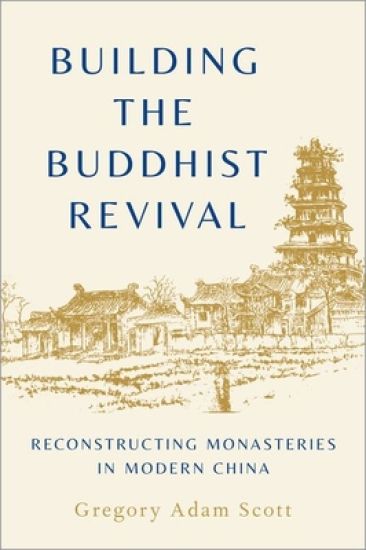
Building the Buddhist Revival

Building the Buddhist Revival

Gregory Adam Scott

Oxford University Press Inc
2020
sidottu
Between 1850 and 1966, tens of thousands of Buddhist sacred sites in China were destroyed, victims of targeted destruction, accidental damage, or simply neglect. During the same period, however, many of these sites were reconstructed, a process that involved both rebuilding material structures and reviving religious communities. The conventionally accepted narrative of Chinese Buddhism during the modern era is that it underwent a revival initiated by innovative monastics and laypersons, leaders who reinvented Buddhist traditions to meet the challenges of modernity. Gregory Adam Scott shows, however, that over time it became increasingly difficult for reconstruction leaders to resist the interests of state actors, who sought to refashion monastery sites as cultural monuments rather than as living religious communities. These sites were then intended to serve as symbols of Chinese history and cultural heritage, while their function as a frame for religious life was increasingly pushed aside. As a result, the power to determine whether and how a monastery would be reconstructed, and the types of activities that would be reinstated or newly introduced, began to shift from religious leaders and communities to state agencies that had a radically different set of motivations and values. Building the Buddhist Revival explores the history of Chinese Buddhist monastery reconstruction from the end of the Imperial period through the first seventeen years of the People's Republic. Over this century of history, the nature and significance of reconstructing Buddhist monasteries changes drastically, mirroring broader changes in Chinese society. Yet this book argues that change has always been in the nature of religious communities such as Buddhist monasteries, and that reconstruction, rather than a return to the past, represents innovative and adaptive change. In this way, it helps us understand the broader significance of the Buddhist "revival" in China during this era, as a creative reconstruction of religion upon longstanding foundations.
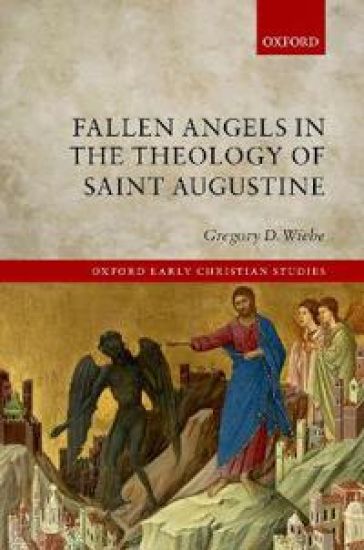
Fallen Angels in the Theology of St Augustine

Fallen Angels in the Theology of St Augustine

Gregory D. Wiebe

Oxford University Press
2021
sidottu
This book ventures to describe Augustine of Hippo's understanding of demons, including the theology, angelology, and anthropology that contextualize it. Demons are, for Augustine as for the Psalmist (95:5 LXX) and the Apostle (1 Cor 10:20), the "gods of the nations." This means that Augustine's demons are best understood neither when they are "spiritualized" as personifications of psychological struggles, nor in terms of materialist contagions that undergird a superstitious moralism. Rather, because the gods of the nations are the paradigm of demonic power and influence over humanity, Augustine sees the Christian's moral struggle against them within broader questions of social bonds, cultural form, popular opinion, philosophical investigation, liturgical movement, and so forth. In a word, Augustine's demons have a religious significance, particularly in its Augustinian sense of bonds and duties between persons, and between persons and that which is divine. Demons are a highly integrated component of his broader theology, rooted in his conception of angels as the ministers of all creation under God, and informed by the doctrine of evil as privation and his understanding of the fall, his thoughts on human embodiment, desire, visions, and the limits of human knowledge, as well as his theology of religious incorporation and sacraments. As false mediators, demons are mediated by false religion, the body of the devil, which Augustine opposes with an appeal to the true mediator, Christ, and the true religion of his body, the church.
Imagining and Knowing

Imagining and Knowing

Gregory Currie

Oxford University Press
2022
nidottu
Works of fiction are works of the imagination and for the imagination. Gregory Currie energetically defends the familiar idea that fictions are guides to the imagination, a view which has come under attack in recent years. Responding to a number of challenges to this standpoint, he argues that within the domain of the imagination there lies a number of distinct and not well-recognized capacities which make the connection between fiction and imagination work. Currie then considers the question of whether in guiding the imagination fictions may also guide our beliefs, our outlook, and our habits in directions of learning. It is widely held that fictions very often provide opportunities for the acquisition of knowledge and of skills. Without denying that this sometimes happens, this book explores the difficulties and dangers of too optimistic a picture of learning from fiction. It is easy to exaggerate the connection between fiction and learning, to ignore countervailing tendencies in fiction to create error and ignorance, and to suppose that claims about learning from fiction require no serious empirical support. Currie makes a case for modesty about learning from fiction -- reasoning that a lot of what we take to be learning in this area is itself a kind of pretence, that we are too optimistic about the psychological and moral insights of authors, that the case for fiction as a Darwinian adaptation is weak, and that empathy is both hard to acquire and not always morally advantageous.
Inequality at Work

Inequality at Work

Gregory DeFreitas

Oxford University Press Inc
1992
sidottu
This book presents a comprehensive economic analysis of the rapidly growing Hispanic labour force in the U.S. The author evaluates the leading economic theories on immigration and on racial and ethnic inequality in incomes and employment. He then tests these theories empirically with a variety of recent national data sets. Many of the findings throw into question widely held views among the public, academics, and policymakers. The author surveys the evolution of each of the main national-origin subgroups: Mexicans, Puerto Ricans, Cubans, Central and South Americans, and other Hispanic Labour forces in the U.S. He finds that the Hispanic disadvantage in income, poverty, and unemployment has remained chronically large and has actually been increasing in recent years. He finds that Hispanics are unusually vulnerable to recessionary downturns in the national economy. His study of the impact of undocumented Hispanic immigration into the U.S. contradicts claims that immigration, either legal or illegal, increases the unemployment or lowers the earnings of American workers.
Liberalism, Fascism, or Social Democracy

Liberalism, Fascism, or Social Democracy

Gregory M. Luebbert

Oxford University Press Inc
1991
sidottu
This work provides a sweeping historical analysis of the political development of Western Europe in the late nineteenth and twentieth century. The author argues that the evolution of most European nations into liberal democracies, social democracies or fascist regimes was attributable to a discrete set of social and class alliances within individual nations. In Britain, France, and Switzerland, countries with a unified middle class, liberal forces established political hegemony before the First World War. In countries with a strong, cohesive working class and a fractured middle class, Luebbert points out, a liberal solution was impossible. In Norway, Sweden, Denmark, and Czechoslovakia, political coalitions of social democrats and `family peasantry' emerged as a result of the First World War, resulting in social democracies. In Spain, Italy, and Germany, on the other hand, the urban middle class united with a peasantry hostile to socialism to facilitate the rise of fascism.
Liberalism, Fascism, or Social Democracy

Liberalism, Fascism, or Social Democracy

Gregory M. Luebbert

Oxford University Press Inc
1991
nidottu
This work provides a sweeping historical analysis of the political development of Western Europe in the late 19th and early 20th century. The author argues that the evolution of most European nations into liberal democracies, social democracies or facist regimes was attributable to a discrete set of social and class alliances within individual nations. In Britain, France and Switzerland, countries with a unified middle class, liberal forces established political hegemony before World War I. By co-opting considerable sections of the working class with reforms that weakened union movements, liberals essentially excluded the fragmented working class from the political process, remaining in power throughout the inter-war period. In countries with a strong, cohesive working class and a fractured middle class, Luebbert points out, a liberal solution was impossible. In Norway, Sweden, Denmark and Czechoslovakia, political coalitions of social democrats and "family peasantry" emerged as a result of World War I, resulting in social democracies. In Spain, Italy and Germany, on the other hand, the urban middle class united with a peasantry hostile to socialism to facilitate the rise of fascism.
Dynamic Economics

Dynamic Economics

Gregory C. Chow

Oxford University Press Inc
1997
sidottu
This work provides a unified and simple treatment of dynamic economics using dynamic optimization as the main theme, and the method of Lagrange multipliers to solve dynamic economic problems. The author presents the optimization framework for dynamic economics in order that readers can understand the approach and use it as they see fit. Instead of using dynamic programming, the author chooses instead to use the method of Lagrange multipliers in the analysis of dynamic optimization because it is easier and more efficient than dynamic programming, and allows readers to understand the substance of dynamic economics better. The author treats a number of topics in economics, including economic growth, macroeconomics, microeconomics, finance and dynamic games. The book also teaches by examples, using concepts to solve simple problems; it then moves to general propositions.
Democratic Religion

Democratic Religion

Gregory A. Wills

Oxford University Press Inc
1997
sidottu
No American denomination identified itself more closely with the nation's democratic ideal than the Baptists. Most antebellum southern Baptist churches allowed women and slaves to vote on membership matters and preferred populists preachers who addressed their appeals to the common person. Paradoxically no denomination could wield religious authority as zealously as the Baptists. Between 1785 and 1860 they ritually excommunicated forty to fifty thousand church members in Georgia alone. Wills demonstrates how a denomination of freedom-loving individualists came to embrace an exclusivist spirituality--a spirituality that continues to shape Southern Baptist churches in contemporary conflicts between moderates who urge tolerance and conservatives who require belief in scriptural inerrancy. Wills's analysis advances our understanding of the interaction between democracy and religious authority, and will appeal to scholars of American religion, culture, and history, as well as to Baptist observers.
Figures of Play

Figures of Play

Gregory W. Dobrov

Oxford University Press Inc
1999
sidottu
Figures of Play explores the reflexive aspects of ancient theatrical culture across genres. Fifth century tragedy and comedy sublimated the agonistic basis of Greek civilization in a way that invited the community of the polis to confront itself. In the theatre, as in the courts and assemblies, a significant subset of the Athenian public was spectator and judge of contests where important social and ideological issues were played to it by its own members. The "syntax" of drama is shown to involve specific "figures of play" through which the theatrical medium turns back on itself to study the various contexts of its production. Greek tragedy and comedy were argued to be tempermentally metafictional in that they are always involved in recycling older fictions into contemporary scenarios of immediate relevance to the polis. The phemonenology of this process is discussed under three headings, each a "figure of play": 1) surface play--momentary disruption of the theatrical pretense through word, sign, gesture; 2) mise en abyme--a mini-drama embedded in a larger framework; 3) contrafact--an extended remake in which one play is based on another. Following three chapters in which this framework is set forth and illustrated with concrete examples there are five case studies named after the protagonists of the plays in question: Aias, Pentheus, Tereus, Bellerophontes, Herakles. Hence the other meaning of "figures of play" as stage figures. In the second section of the book on "the Anatomy of Dramatic Fiction," special attention is paid to the interaction between genres. In particular, Aristophanic comedy is shown to be engaged in an intense rivalry with tragedy that underscores the different ways in which each genre deployed its powers of representation. Tragedy refashions myth: in Bakkhai, for example, it is argued that Euripides reinvented Dionysis to be specifically a theatrical god, a symbol of tragedy's powers of representation. Comedy refashions tragedy: in a series of utopian comedies, Aristophanes re-enacts a tragic scenario in a way that revals comedy as a superior means of solving political and social crisis.
Russell's Hidden Substitutional Theory

Russell's Hidden Substitutional Theory

Gregory Landini

Oxford University Press Inc
1998
sidottu
This book explores an important central thread that unifies Russell's thoughts on logic in two works previously considered at odds with each other, the Principles of Mathematics and the later Principia Mathematica. This thread is Russell's doctrine that logic is an absolutely general science and that any calculus for it must embrace wholly unrestricted variables. The heart of Landini's book is a careful analysis of Russell's largely unpublished "substitutional" theory. On Landini's showing, the substitutional theory reveals the unity of Russell's philosophy of logic and offers new avenues for a genuine solution of the paradoxes plaguing Logicism.
Democratic Religion

Democratic Religion

Gregory A. Wills

Oxford University Press Inc
2003
nidottu
No American denomination identified itself more closely with the nation's democratic ideal than the Baptists. Most antebellum southern Baptist churches allowed women and slaves to vote on membership matters and preferred populists preachers who addressed their appeals to the common person. Paradoxically no denomination could wield religious authority as zealously as the Baptists. Between 1785 and 1860 they ritually excommunicated forty to fifty thousand church members in Georgia alone. Wills demonstrates how a denomination of freedom-loving individualists came to embrace an exclusivist spirituality--a spirituality that continues to shape Southern Baptist churches in contemporary conflicts between moderates who urge tolerance and conservatives who require belief in scriptural inerrancy. Wills's analysis advances our understanding of the interaction between democracy and religious authority, and will appeal to scholars of American religion, culture, and history, as well as to Baptist observers.
Ecology and Evolution of the Grass-Endophyte Symbiosis

Ecology and Evolution of the Grass-Endophyte Symbiosis

Gregory P. Cheplick; Stanley Faeth

Oxford University Press Inc
2009
sidottu
Endophytic fungi are common and diverse in plants. Yet the nature of their interactions with host plants, and how these interactions cascade upward to communities and ecosystems are largely unknown. In the first book of its kind, Gregory P. Cheplick and Stanley H. Faeth provide a new synthesis of existing studies of endophyte-grass symbioses within the context of modern ecological and evolutionary concepts. The authors present a large body of research covering a range of topics including the effects of endophytes on host growth, physiology, reproduction, and competitive ability in a variety of grasses and environments. Clearly and engagingly written, this long-needed book highlights the most essential aspects of symbiosis ecology and evolution while suggesting avenues for significant future research.
Teaching Religion and Film

Teaching Religion and Film

Gregory J Watkins

Oxford University Press Inc
2008
sidottu
In a culture increasingly focused on visual media, students have learned not only to embrace multimedia presentations in the classroom, but to expect them. Such expectations are perhaps more prevalent in a field as dynamic and cross-disciplinary as religious studies, but the practice nevertheless poses some difficult educational issues -- the use of movies in academic coursework has far outpaced the scholarship on teaching religion and film. What does it mean to utilize film in religious studies, and what are the best ways to do it? In Teaching Religion and Film, an interdisciplinary team of scholars thinks about the theoretical and pedagogical concerns involved with the intersection of film and religion in the classroom. They examine the use of film to teach specific religious traditions, religious theories, and perspectives on fundamental human values. Some instructors already teach some version of a film-and-religion course, and many have integrated film as an ancillary to achieving central course goals. This collection of essays helps them understand the field better and draws the sharp distinction between merely "watching movies" in the classroom and comprehending film in an informed and critical way.
Neuropsychology of Epilepsy and Epilepsy Surgery

Neuropsychology of Epilepsy and Epilepsy Surgery

Gregory P. Lee

Oxford University Press Inc
2010
nidottu
This book provides essential information about the variety of seizure disorders to serve as a basic epilepsy reference guide for students and practicing clinical neuropsychologists. In addition to epilepsy neuropsychological assessment issues, the book provides an overview of the known cognitive effects of seizures as well as the adaptive, emotional, and psychiatric consequences of epilepsy including a chapter on psychogenic nonepileptic seizures. Diagnostic tests, such as EEG and structural neuroimaging, are described and the leading treatment options are detailed with a chapter on pharmacologic therapies which reviews the known cognitive and behaivoral side effects of specific antiepileptic drugs. Many of the more rare epilepsy disorders have been included in the appendices for quick and easy reference. The book also details the role of neuropsychology within the epilepsy surgery process including pre/post surgery cognitive evaluations, cortical stimulation mapping, functional neuroimaging, and intracarotid amobarbital (Wada) procedures and reviews the major surgical treatment options used in the intractable epilepsies. Case examples are dispersed throughout the text with neuropsychological results as heuristic aids. The book ends with a glossary of epilepsy terms that may be used as a dictionary for the more experienced clinician or as a tool to assist students and residents in learning.
Southern Baptist Theological Seminary, 1859-2009

Southern Baptist Theological Seminary, 1859-2009

Gregory Wills

Oxford University Press Inc
2009
sidottu
With 16.3 million members and 44,000 churches, the Southern Baptist Church is the largest Baptist group in the world, and the largest Protestant denomination in the United States. Unlike the so-called mainstream Protestant denominations, Southern Baptists have remained stubbornly conservative, refusing to adapt their beliefs and practices to modernity's individualist and populist values. Instead, they have held fast to traditional orthodoxy in such fundamental areas as biblical inspiration, creation, conversion, and miracles. Gregory Wills argues that Southern Baptist Theological Seminary has played a fundamental role in the persistence of conservatism, not entirely intentionally. Tracing the history of the seminary from the beginning to the present, Wills shows how its foundational commitment to preserving orthodoxy was implanted in denominational memory in ways that strengthened the denomination's conservatism and limited the seminary's ability to stray from it. In a set of circumstances in which the seminary played a central part, Southern Baptists' populist values bolstered traditional orthodoxy rather than diminishing it. In the end, says Wills, their populism privileged orthodoxy over individualism. The story of Southern Seminary is fundamental to understanding Southern Baptist controversy and identity. Wills's study sheds important new light on the denomination that has played - and continues to play - such a central role in our national history.
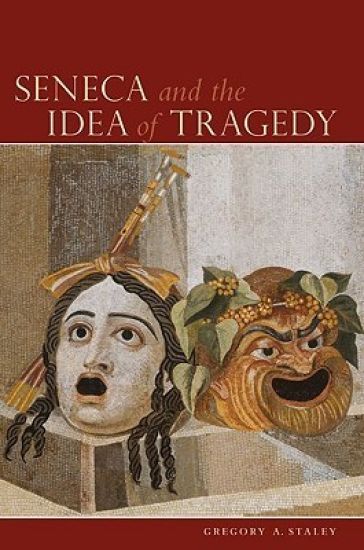
Seneca and the Idea of Tragedy

Seneca and the Idea of Tragedy

Gregory A. Staley

Oxford University Press Inc
2010
sidottu
As both a literary genre and a view of life, tragedy has from the very beginning spurred a dialogue between poetry and philosophy. Plato famously banned tragedians from his ideal community because he believed that their representations of vicious behavior could deform minds. Aristotle set out to answer Plato's objections, arguing that fiction offers a faithful image of the truth and that it promotes emotional health through the mechanism of catharsis. Aristotle's definition of tragedy actually had its greatest impact not on Greek tragedy itself but on later Latin literature, beginning with the tragedies of the Roman poet and Stoic philosopher Seneca (4 BC - AD 65). Scholarship over the last fifty years, however, has increasingly sought to identify in Seneca's prose writings a Platonic poetics which is antagonistic toward tragedy and which might therefore explain why Seneca's plays seem so often to present the failure of Stoicism. As Gregory Staley argues in this book, when Senecan tragedy fails to stage virtue we should see in this not the failure of Stoicism but a Stoic conception of tragedy as the right vehicle for imaging Seneca's familiar world of madmen and fools. Senecan tragedy enacts Aristotle's conception of the genre as a vivid image of the truth and treats tragedy as a natural venue in which to explore the human soul. Staley's reading of Seneca's plays draws on current scholarship about Stoicism as well as on the writings of Renaissance authors like Sir Philip Sidney, who borrowed from Seneca the word "idea" to designate what we would now label as a "theory" of tragedy. Seneca and the Idea of Tragedy will appeal broadly to students and scholars of classics, ancient philosophy, and English literature.
Property and Community

Property and Community

Gregory S. Alexander; Eduardo M. Penalver

Oxford University Press Inc
2010
sidottu
Property and Community fills a major gap in the legal literature on property and its relationship to community. The essays included differ from past discussions, including those provided by law-and-economics, by providing richer accounts of community. By and large, prior discussions by property theorists treat communities as agglomerations of individuals and eschew substantive accounts of justice, favoring what Charles Taylor has called ¨procedural¨ conceptions. These perspectives on ownership obscure the possibility that the ¨community¨ might have a moral status that differs from neighboring owners or from non-owning individuals. This book examines a variety of social practices that implicate community in its relationship to property. These practices range from more obvious property-based communities like Israeli kibbutzim to surprising examples such as queues. Aspects of law and community in relationship to legal and social institutions both inside and outside of the United States are discussed. Alexander and Peñalver seek to mediate the distance between abstract theory and mundane features of daily life to provide a rich, textured treatment of the relationship between law and community. Instead of defining community in abstractly theoretical terms, they approach the subject through the lens of concrete institutions and social practices. In doing so, they not only enrich our empirical understanding of the relationship between property and community but also provide important insights into the concept of community itself.
Niebuhrian International Relations

Niebuhrian International Relations

Gregory J. Moore

Oxford University Press Inc
2020
sidottu
Reinhold Niebuhr's ideas about ethics, social justice, and foreign policy have been hugely influential for American political thought, and this has been true across the political spectrum, from progressive social justice activists to neo-conservatives. A one-time leader in the Socialist party, Niebuhr worked with Eleanor Roosevelt to found Americans for Democratic Action. Jimmy Carter took inspiration from his ideas about love and justice, and Barack Obama has praised him as one of his favorite philosophers. His theories have also influenced neoconservatives, many of whom cited his work to support the 2003 invasion of Iraq. Yet, Niebuhr never published a single, comprehensive book on his approach to international relations, and, because he was so prolific, one would have to sift through volumes of his work to try to construct such a unified vision. This book distills Niebuhr's disparate and heretofore difficult-to-access work on international relations into one concise and accessible volume. Drawing from the well-springs of Niebuhr's Christian social thought, the volume explores the depths of Niebuhr's views on human nature, race, collective life, U.S. foreign policy, Just War Theory, Cold War era containment, globalization, and the U.N. It then applies his approach to contemporary foreign policy issues such as the 2003 Iraq War, the Responsibility to Protect, and the rise of China. The book also considers Niebuhr's contribution to IR theory and contextualizes it in the present day revival of classical Realism with a multivariate, existentialist twist. Ultimately, the book asserts that Niebuhr's notion of a fallible, self-interested view of human nature, his dialectical approach, and a related moral dualism run throughout his work on politics and international relations as they did through the rest of his work.
Confronting Cyber Risk

Confronting Cyber Risk

Gregory J. Falco; Eric Rosenbach

OXFORD UNIVERSITY PRESS INC
2022
nidottu
An adaptive cyber risk management guide from MIT scientist and Johns Hopkins professor Gregory Falco and "Cyber Czar" Eric Rosenbach Cyberattacks continue to grow in number, intensity, and sophistication. While attackers persistently adapt, business leaders have suffered from employing the same cyber risk management strategies for decades. Organizations must learn how to move past temporary solutions and invest in long-term resiliency measures to thrive in the future cyber economy. Confronting Cyber Risk: An Embedded Endurance Strategy for Cybersecurity is a practical leadership guidebook outlining a new strategy for improving organizational cybersecurity and mitigating cyber risk. Veteran cybersecurity experts Falco and Rosenbach introduce the Embedded Endurance strategy as a systems-level approach to cyber risk management which addresses interdependent components of organizational risk and prepares organizations for the inevitability of cyber threats over the long-term. Using real world examples from SolarWinds to the Colonial Pipeline attack, the authors extend beyond hardware and software to provide a thoughtful ten-step process for organizations to address the simultaneous operational, reputational, and litigation risks common to cyberattacks. They conclude with helpful "cryptograms" from the future, in which business leaders are confronted with the next generation of cyber risk challenges. Clear and informative, Confronting Cyber Risk provides CEOs and cyber newcomers alike with concrete guidance on how to implement a cutting-edge strategy to mitigate an organization's overall risk to malicious cyberattacks in an evolving cyber risk landscape.
Where Credit Is Due: How Africa's Debt Can Be a Benefit, Not a Burden
Borrowing is a crucial source of financing for governments all over the world. If they get it wrong, then debt crises can bring progress to a halt. But if it's done right, investment happens and conditions improve. African countries are seeking calmer capital, to raise living standards and give their economies a competitive edge. The African debt landscape has changed radically in the first two decades of the twenty-first century. Since the clean slate of extensive debt relief, states have sought new borrowing opportunities from international capital markets and emerging global powers like China. The new debt composition has increased risk, exacerbated by the 2020 coronavirus pandemic: richer countries borrowed at rock-bottom interest rates, while Africa faced an expensive jump in indebtedness. The escalating debt burden has provoked calls by the G20 for suspension of debt payments. But Africa's debt today is highly complex, and owed to a wider range of lenders. A new approach is needed, and could turn crisis into opportunity. Urgent action by both lenders and borrowers can reduce risk, while carefully preserving market access; and smart deployment of private finance can provide the scale of investment needed to achieve development goals and tackle the climate emergency.