2020 EUREKA Excellence in Nonfiction Awards - Honoree Though small in size at approximately 5/8 of an inch (15 mm), Apis mellifera, otherwise known as the honey bee, is one of the most important insects on the planet. Due to their status as super pollinators, it is estimated that a third of the food we eat each day can be attributed to bee activity. And the delicious honey that our winged friends produce makes its way into numerous food, health, and beauty products. This is one busy bee But the health and welfare of honey bees are in dire need of our attention and help. Habitat loss, pesticides, and climate change are threatening bee colonies around the world. Helping to better educate readers of all ages, beekeeper and wildlife rehabilitator Robbyn Smith van Frankenhuyzen gives a "behind-the-hive" peek into the world of the honey bee in H is for Honey Bee: A Beekeeping Alphabet.
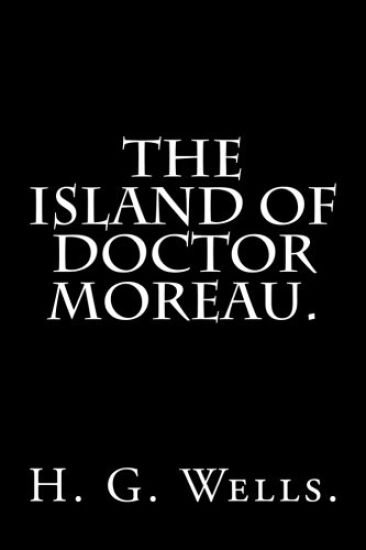
The Island of Doctor Moreau is an 1896 science fiction novel by H. G. Wells, who called it "an exercise in youthful blasphemy". The text of the novel is the narration of Edward Prendick, a shipwrecked man rescued by a passing boat who is left on the island home of Doctor Moreau, who creates human-like hybrid beings from animals via vivisection. The novel deals with a number of philosophical themes, including pain and cruelty, moral responsibility, human identity, and human interference with nature. At the time of the novel's publication in 1896, there was growing discussion in Europe regarding degeneration and animal vivisection. Several interest groups were formed to oppose vivisection, the two largest being the National Anti-Vivisection Society in 1875 and the British Union for the Abolition of Vivisection in 1898.The Island of Doctor Moreau is the account of Edward Prendick, a shipwrecked Englishman with a scientific education. A passing ship takes him aboard, and a man named Montgomery revives him. Prendick also meets a grotesque bestial native named M'ling, who appears to be Montgomery's manservant. The ship is transporting a number of animals which belong to Montgomery. As they approach the island, Montgomery's destination, the captain demands Prendick leave the ship with Montgomery. Montgomery explains that he will not be able to host Prendick on the island. Despite this, the captain leaves Prendick in a dinghy and sails away. Seeing that the captain has abandoned Prendick, Montgomery takes pity and rescues him. As ships rarely pass the island, Prendick will be housed in an outer room of an enclosed compound. The island belongs to Dr. Moreau. Prendick remembers that he has heard of Moreau, formerly an eminent physiologist in London whose gruesome experiments in vivisection had been publicly exposed. The next day, Moreau begins working on a puma. Prendick gathers that Moreau is performing a painful experiment on the animal, and its anguished cries drive Prendick out into the jungle. While he wanders, he comes upon a group of people who seem human but have an unmistakable resemblance to swine. As he walks back to the enclosure, he suddenly realises he is being followed by a figure in the jungle. He panics and flees, and the figure gives chase. As his pursuer bears down on him, Prendick manages to stun him with a stone and observes the pursuer is a monstrous hybrid of animal and man. When Prendrick returns to the enclosure and questions Montgomery, Montgomery refuses to be open with him. After failing to get an explanation, Prendick finally gives in and takes a sleeping draught. Prendick awakes the next morning with the previous night's activities fresh in his mind. Seeing that the door to Moreau's operating room has been left unlocked, he walks in to find a humanoid form lying in bandages on the table before he is ejected by a shocked and angry Moreau. He believes that Moreau has been vivisecting humans and that he is the next test subject. He flees into the jungle where he meets an Ape-Man who takes him to a colony of similarly half-human/half-animal creatures. Their leader is a large grey thing named the Sayer of the Law who has him recite a strange litany called the Law that involves prohibitions against bestial behaviour and praise for Moreau.
Little Dorrit is a novel by Charles Dickens, originally published in serial form between 1855 and 1857. It satirizes the shortcomings of both government and society, including the institution of debtors' prisons, where debtors were imprisoned, unable to work, until they repaid their debts. The prison in this case is the Marshalsea, where Dickens's own father had been imprisoned. Dickens is also critical of the lack of a social safety net, the treatment and safety of industrial workers, as well the bureaucracy of the British Treasury, in the form of his fictional "Circumlocution Office". In addition he satirizes the stratification of society that results from the British class system.Little Dorrit is a novel by Charles Dickens, originally published in serial form between 1855 and 1857. It satirizes the shortcomings of both government and society, including the institution of debtors' prisons, where debtors were imprisoned, unable to work, until they repaid their debts. The prison in this case is the Marshalsea, where Dickens's own father had been imprisoned. Dickens is also critical of the lack of a social safety net, the treatment and safety of industrial workers, as well the bureaucracy of the British Treasury, in the form of his fictional "Circumlocution Office". In addition he satirizes the stratification of society that results from the British class system.The novel begins in Marseilles "thirty years ago" (i.e., c. 1826), with the notorious murderer Rigaud telling his cell mate how he killed his wife. Arthur Clennam is returning to London to see his mother after the death of his father, with whom he had lived for twenty years in China. On his deathbed, his father had given him a mysterious watch murmuring "Your mother," which Arthur naturally assumed was intended for Mrs. Clennam, whom he and everyone else believed to be his mother.Inside the watch casing was an old silk paper with the initials DNF (Do Not Forget) worked into it in beads. It was a message, but when Arthur showed it to the harsh and implacable Mrs Clennam, a religious fanatic, she refused to tell him what it meant and the two become estranged. In London, William Dorrit, imprisoned as a debtor, has been a resident of Marshalsea debtors' prison for so long that his three children - snobbish Fanny, idle Edward (known as Tip) and Amy (known as Little Dorrit) - have all grown up there, although they are free to pass in and out of the prison as they please. Little Dorrit, devoted to her father, has been supporting them both through her sewing. Once in London, Arthur is reacquainted with his former fianc e Flora Finching, who is now overweight and simpering. His supposed mother, Mrs Clennam, though arthritic and wheelchair-bound, still runs the family business with the help of her servant Jeremiah Flintwinch and his downtrodden wife Affery. When Arthur learns that Mrs Clennam has employed Little Dorrit as a seamstress, showing her unusual kindness, he wonders whether the young girl might be connected with the mystery of the watch. Suspecting his mother was partially responsible for the misfortunes of the Dorrits, Arthur follows the girl to the Marshalsea. He vainly tries to inquire about William Dorrit's debt in the poorly run Circumlocution Office, assuming the role of benefactor towards Little Dorrit, her father, and her brother. While at the Circumlocution Office he meets the struggling inventor Daniel Doyce, whom he decides to help by going into business with him. The grateful Little Dorrit falls in love with Arthur, but Arthur fails to recognise Little Dorrit's interest. At last, aided by the indefatigable rent-collector Pancks, Arthur discovers that William Dorrit is the lost heir to a large fortune, finally enabling him to pay his way out of prison.....
Beatrice is a 1890 novel by the British writer H. Rider Haggard.The author later called it "one of the best bits of work I ever did." An emotional account of the love affair between Beatrice Granger, an unmarried schoolteacher, and Geoffrey Bingham, an unhappily married barrister who lives in London.. ir Henry Rider Haggard, KBE ( 22 June 1856 - 14 May 1925), known as H. Rider Haggard, was an English writer of adventure novels set in exotic locations, predominantly Africa, and a pioneer of the Lost World literary genre.He was also involved in agricultural reform throughout the British Empire. His stories, situated at the lighter end of Victorian literature, continue to be popular and influential.Henry Rider Haggard, generally known as H. Rider Haggard or Rider Haggard, was born at Bradenham, Norfolk, the eighth of ten children, to Sir William Meybohm Rider Haggard, a barrister, and Ella Doveton, an author and poet.His father was born in Saint Petersburg, Russia, to British parents.Haggard was initially sent to Garsington Rectory in Oxfordshire to study under Reverend H. J. Graham, but unlike his older brothers who graduated from various private schools, he attended Ipswich Grammar School.This was becausehis father, who perhaps regarded him as somebody who was not going to amount to much, could no longer afford to maintain his expensive private education. After failing his army entrance exam, he was sent to a private crammer in London to prepare for the entrance exam for the British Foreign Office, for which he never sat. During his two years in London he came into contact with people interested in the study of psychical phenomena....
The Island of Doctor Moreau By H. G. Wells. The Island of Doctor Moreau is an 1896 science fiction novel by English author H. G. Wells. The text of the novel is the narration of Edward Prendick, a shipwrecked man rescued by a passing boat who is left on the island home of Doctor Moreau, who creates human-like hybrid beings from animals via vivisection. The novel deals with a number of philosophical themes, including pain and cruelty, moral responsibility, human identity, and human interference with nature. Wells described the novel as "an exercise in youthful blasphemy". The Island of Doctor Moreau is a classic of early science fiction and remains one of Wells's best-known books, and has been adapted to film and other media on many occasions.