Kirjojen hintavertailu. Mukana 11 717 486 kirjaa ja 12 kauppaa.

Kirjahaku

Etsi kirjoja tekijän nimen, kirjan nimen tai ISBN:n perusteella.

1000 tulosta hakusanalla Harold L Doerr

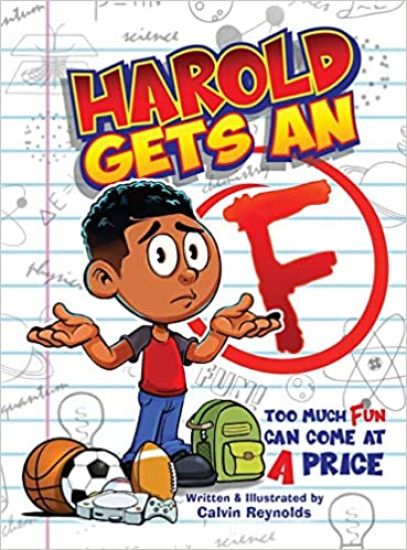
Harold Gets An F

Harold Gets An F

Calvin Reynolds

Concepts Redefined
2020
sidottu
Harold is a super-smart 5th grader who loves going to school and making good grades. With a big test looming, Harold chooses to have fun with his friends and hobbies instead of studying and preparing. Harold Gets An "F" is a fun and colorful story that showcases the importance of responsibility. Too much fun can come at a price.
Harold's Big Dreams

Harold's Big Dreams

Calvin Reynolds

Concepts Redefined
2022
pokkari
Harold's Big Dreams is a captivating story that explores the various possibilities of Harold's visions and aspirations.Harold's imagination runs wild and has no limits in this fascinating story about having big dreams. Dreams can come true if you dare to believe.
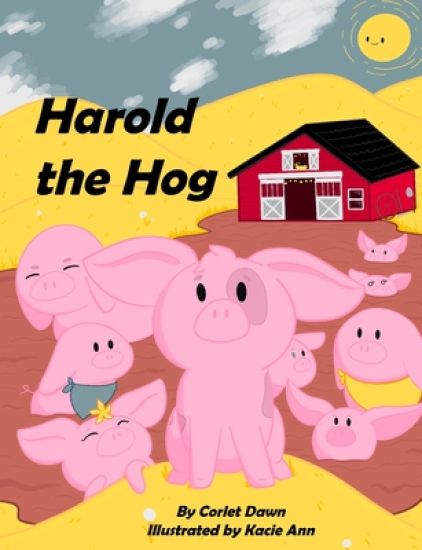
Harold the Hog

Harold the Hog

Corlet Dawn

Corlet Boelman
2020
pokkari
Harold, the hog is a snob. He isn't like his brothers and sisters. He doesn't like slop, mud, or fun. His siblings want to have fun with him. Will he always be this way, or will he learn to let loose and have some fun?
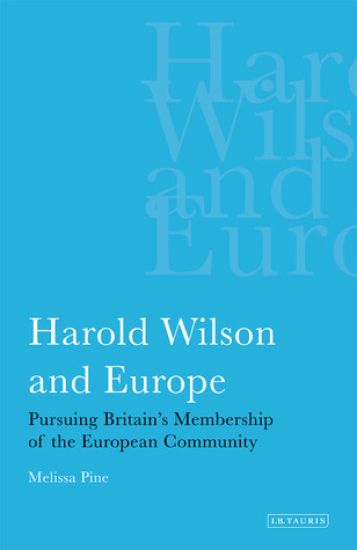
Harold Wilson and Europe

Harold Wilson and Europe

Pine Melissa

I.B. Tauris
2012
nidottu
The second British application to join the European Communities (EC) was made during Harold Wilson's second Labour government. It ended in failure with French President Charles de Gaulle's veto in November 1967. Harold Wilson and Europe traces the development of Britain's policy towards the EC from the veto to the end of Wilson's government in June 1970. Based on detailed archival research, Melissa Pine traces Wilson's efforts to forge stronger bonds with EC states while managing both a cabinet divided on the issue, and a complex broader foreign policy. This fascinating insight into the Wilson government reveals Wilson's early diplomacy was vital for the Conservatives' successful negotiation of British entry into the EC by 1973. Pine concludes that Wilson was personally committed to securing membership, and that he and key members of his government played a crucial role in securing the UK's eventual membership of the EC.
Harold Wilson, Denmark and the making of Labour European policy
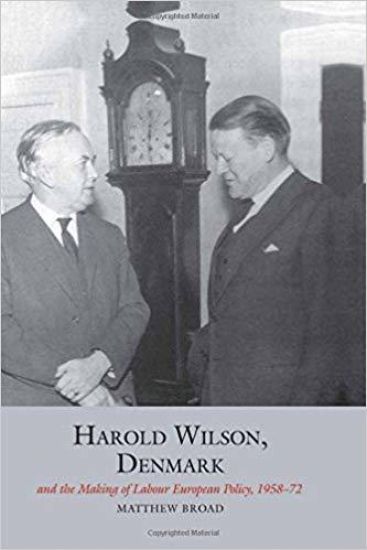
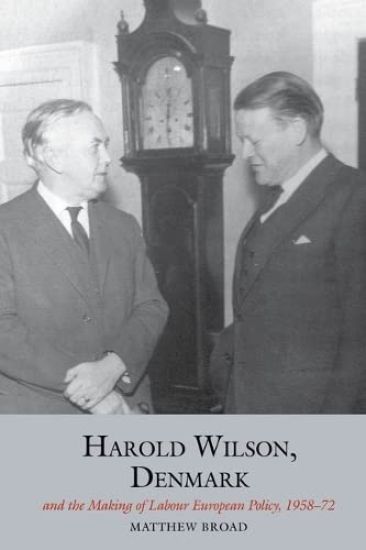
'In 1958, Britain and Denmark both advocated closer European cooperation through the looser framework of the Free Trade Area (FTA) rather than membership of the nascent European Economic Community (EEC). By 1972, however, the situation had changed drastically. The FTA was a long-forgotten concept. Its replacement, the European Free Trade Association (EFTA), seemed economically and politically inept. Now, at the third time of asking, both countries were on the verge of joining the EEC as full members. This compelling analysis compares how the European policies of the British Labour Party and the Danish Social Democrats evolved amid this environment. Based on material from 12 archives in four countries, it updates our knowledge of key moments in both parties’ interaction with the integration story, including in the formative stages of the EEC in 1958¬–60 and the negotiations for British and Danish EEC membership in 1961–63, 1967 and 1970–72. More innovatively, this book argues that amid an array of national and international constraints the reciprocal influence exerted by Labour and the SD on each other via informal party contacts was itself a crucial determinant in European policymaking. In so doing, it sheds light on the sources of Labour European thinking, the role of small states like Denmark in the integration process, and the prominence of the Anglo-Scandinavian nexus in the broader narrative of British foreign policy in this period.'
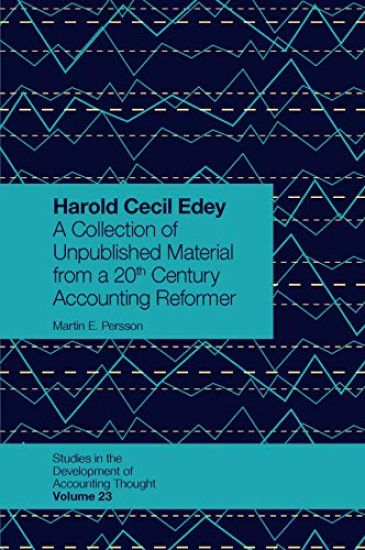
Harold Cecil Edey

Harold Cecil Edey

Emerald Publishing Limited
2019
sidottu
Harold Cecil Edey (1913–2007) and his colleagues David Solomons (1912–1995) and William T. Baxter (1907–2006) at the London School of Economics and Political Science (LSE) were instrumental in the development of British accounting thought in the mid-1900s. These three influential scholars influenced a generation of students who came to populate the British accounting profession and academia to the point where, in the early 1970s, half of all full-time accounting professors in the United Kingdom were LSE alumni. Edey’s role in these developments, however, remains relatively underappreciated. This edited volume contains 13 of Edey’s unpublished manuscripts written during the heyday of the LSE Triumvirate. These manuscripts address issues of accounting education, measurements, and theory, and they are accompanied by editorial comments that put the material in its historical context. The volume also contains an aide-mémoire of Edey’s professional activities and a complete bibliography of his published work. The material offers new insight into Edey’s contribution to the British accounting profession, and developments at the LSE, during a critical period of academic expansion and struggle to address the problem of accounting for rising inflation. The material is of value to anyone interested in the development of accounting thought.
Harold Wilson

Harold Wilson

Alan Johnson

Swift Press
2024
sidottu
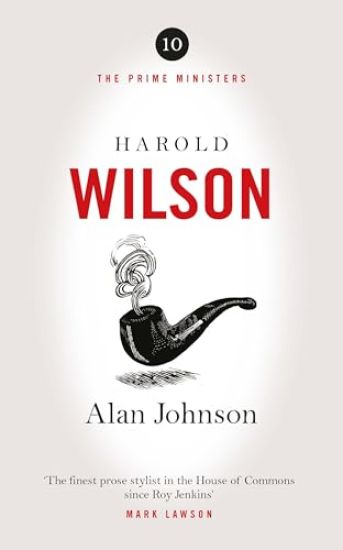
‘The finest prose stylist in the House of Commons since Roy Jenkins’ Mark Lawson WINNER OF A WESTMINSTER BOOK AWARD ?Harold Wilson was one of the most successful politicians of the twentieth century. Prime Minister from 1964-70, and again from 1974-76, he won four elections as well as a referendum on UK membership of the European Community. The achievements of the Wilson Era – from legalising homosexuality to protecting ethnic minorities, from women’s rights to the Open University – radically improved ordinary people’s lives for the better. In Harold Wilson, former Labour cabinet minister and bestselling author Alan Johnson presents a portrait of a truly twentieth-century man, whose ‘white heat’ speech proclaimed a scientific and technological revolution – and who was as much a part of the sixties as the Beatles and the Profumo scandal.
Harold Wilson, Denmark and the making of Labour European policy
'In 1958, Britain and Denmark both advocated closer European cooperation through the looser framework of the Free Trade Area (FTA) rather than membership of the nascent European Economic Community (EEC). By 1972, however, the situation had changed drastically. The FTA was a long-forgotten concept. Its replacement, the European Free Trade Association (EFTA), seemed economically and politically inept. Now, at the third time of asking, both countries were on the verge of joining the EEC as full members. This compelling analysis compares how the European policies of the British Labour Party and the Danish Social Democrats evolved amid this environment. Based on material from 12 archives in four countries, it updates our knowledge of key moments in both parties’ interaction with the integration story, including in the formative stages of the EEC in 1958¬–60 and the negotiations for British and Danish EEC membership in 1961–63, 1967 and 1970–72. More innovatively, this book argues that amid an array of national and international constraints the reciprocal influence exerted by Labour and the SD on each other via informal party contacts was itself a crucial determinant in European policymaking. In so doing, it sheds light on the sources of Labour European thinking, the role of small states like Denmark in the integration process, and the prominence of the Anglo-Scandinavian nexus in the broader narrative of British foreign policy in this period.'
Harold and Joan: Life Before We Got Modern
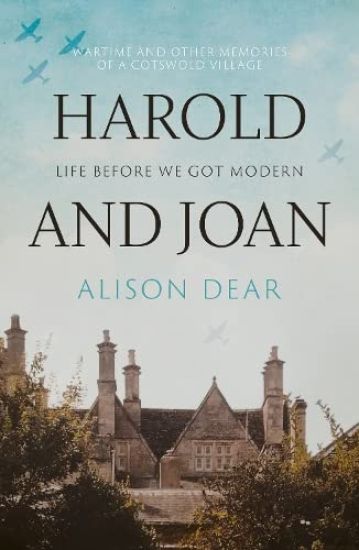
The words ‘Second World War’ evoke strong images of a time that very few of us have experienced directly. But these images are shaped by the thousands of TV programmes, films and books that document this time from an adults perspective. Children, unless they were directly involved in momentous events such as the evacuation or the blitz, are rarely heard especially if they lived in the country rather than towns or cities.My dad Harold is one of those unheard children whose perspective on the war was very different. Rather than sadness and hardship, it brought fun and excitement. These are his memories from Ampney Crucis, a small village in South Gloucestershire that few people of heard of and fewer can spell. It describes a life with Lords of the Manor and the power they had over the community as well and the lives of his own family who have lived in the village for hundreds of years. Events of the war, the attacks, crashes and victory celebrations are described from his perspective as are the daily pre-occupations of a child school, food and fun. After the war he ‘Harold’ became ‘Harold and Joan’ and together they describe how the social changes of the 1950s and 60s allowed them to use their skills to break away from tied cottages and build their own home. Along the way they recall the how the village has changed, highlighting what we have gained now in our modern life but also what we have lost.
Harold's Cross

Harold's Cross

Joe Curtis

Nonsuch Publishing
2016
nidottu
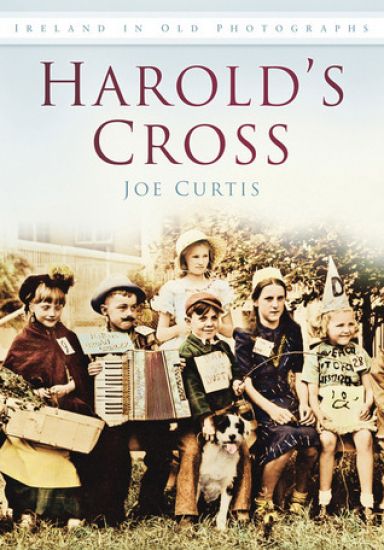
In ancient times, the main road from Dublin to the province of Leinster was Slige Chualann, passing through Harold's Cross. The River Poddle forked at the 'tongue' in the locality, with one-third of the water providing a water supply for the city, and the remaining two-thirds flowed through Harold's Cross towards the Liberties and the River Liffey, while operating a number of waterwheels in the mills along the way. Therefore, it is not surprising that Harold's Cross developed into a thriving village, not unlike many small towns throughout Ireland. Local historian Joe Curtis was born and reared in Harold's Cross, and in this lively book, traces the evolution of the village over the past few hundred years, whilst also providing a first-hand account of changes over the past 60 years.
Harold's Cross

Harold's Cross

Joe Curtis

Nonsuch Publishing
2011
nidottu
Harold’s Cross got its name from a cross which marked the boundary of the lands owned by the Archbishop of Dublin, and the lands of the Harold clan in the 1500s. Today Harold’s Cross is a bustling thoroughfare, and although it is now a suburb on the south side of Dublin, it was once akin to the best little town in Ireland, being completely self-sufficient, with schools, churches, shops, pubs, hospital, orphanage, convents, monastery, cinema, a major cemetery, mills and factories, park, canal, large and small houses, dog track, barracks, and many farms and orchards. For its residents, it has a rich and varied history, which is beautifully captured in this book of archive photographs.
Harold Finds a Voice

Harold Finds a Voice

Dicmas Courtney

CHILD'S PLAY INTERNATIONAL LTD
2013
muu
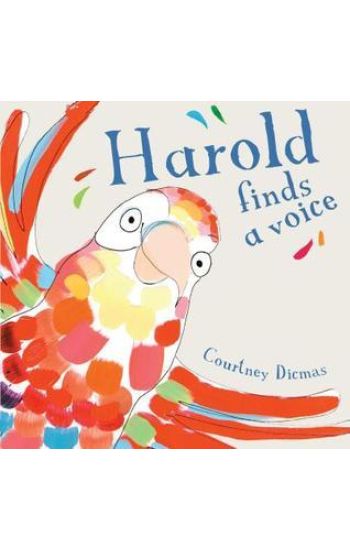
Harold is an amazing mimic, and can imitate the sound of everything in his home. Tired of repeating the same old noises, he yearns to find out what other voices there are in the big, wide world. But what happens when he suddenly realises that he doesn’t yet have a voice of his own? This fantastic debut by author/illustrator Courtney Dicmas recounts Harold’s hilarious tale. It’s full of colour, humour and invention, and children will love to join in with Harold as he mimics everyday noises.
Harold Finds a Voice 8x8 edition

Harold Finds a Voice 8x8 edition

Courtney Dicmas

CHILD'S PLAY INTERNATIONAL LTD
2021
nidottu
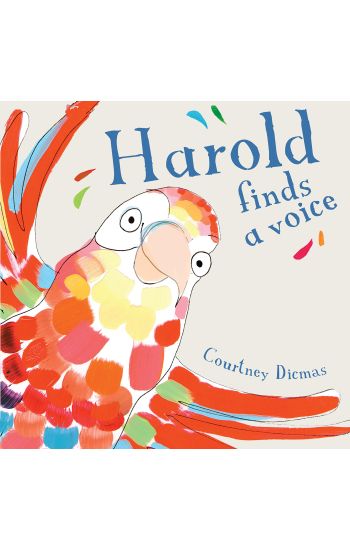
Harold is an amazing mimic, and can imitate the sound of everything in his home. Tired of repeating the same old noises, he yearns to find out what other voices there are in the big, wide world. But what happens when he suddenly realises that he doesn’t yet have a voice of his own? This fantastic debut by author/illustrator Courtney Dicmas recounts Harold’s hilarious tale. It’s full of colour, humour and invention, and children will love to join in with Harold as he mimics everyday noises.