Coppedge has approached his subject intelligently....His approach is novel and completely successful in this readable and scholarly introduction to an American giant..
Huss (1862-1953) was a New York contemporary of the so-called "Boston Classicists." He was widely known and performed during the central portion of his career (1880-1920). Includes an annotated worklist, with suggestions of pieces for further exploration by performers, a list of writings on musical topics, and numerous illustrations. The documentation extant about Huss from his time is immense, making this biography also a documentary study, and the bibliography is accordingly extensive.
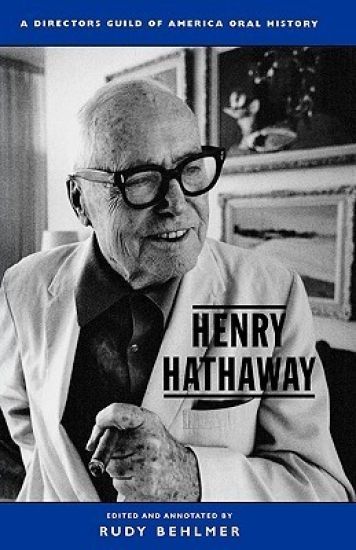
This collection of interviews traces the career of filmmaker Henry Hathaway from his beginnings as a child actor for the American Film Company in 1911 through his directorial triumphs How the West Was Won (1962) and True Grit (1969). Begun as a special project for the American Film Institute, this oral history has now been edited and is being released for the first time in book form. Polly Platt, production designer, screenwriter, and producer of such films as Broadcast News, Pretty Baby, and The War of the Roses conducted the interviews and intended to edit them herself, but her busy career prevented her from completing the project. Now edited for release, this collection contains Hathaway's fascinating reflections about the studio system and working with such Hollywood luminaries as John Wayne, Marilyn Monroe, Jimmy Stewart, and Shirley Temple. A must for any Hollywood history buff.
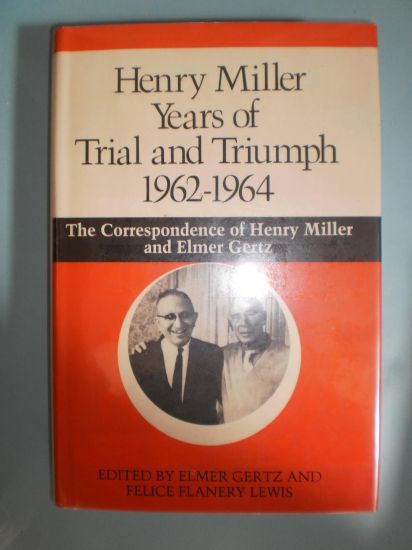
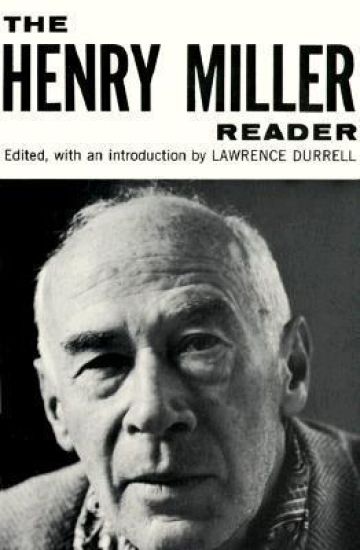
In 1958, when Henry Miller was elected to membership in the American Institute of Arts and Letters, the citation described him as: "The veteran author of many books whose originality and richness of technique are matched by the variety and daring of his subject matter. His boldness of approach and intense curiosity concerning man and nature are unequalled in the prose literature of our times." It is most fitting that this anthology of "the best" of Henry Miller should have been assembled by one of the first among Miller’s contemporaries to recognize his genius, the eminent British writer Lawrence Durrell. Drawing material from a dozen different books Durrell has traced the main line and principal themes of the "single, endless autobiography" which is Henry Miller’s life work. "I suspect," writes Durrell in his Introduction, "that Miller’s final place will be among those towering anomalies of authorship like Whitman or Blake who have left us, not simply works of art, but a corpus of ideas which motivate and influence a whole cultural pattern." Earlier, H. L. Mencken had said, "his is one of the most beautiful prose styles today," and the late Sir Herbert Read had written that "what makes Miller distinctive among modern writers is his ability to combine, without confusion, the aesthetic and prophetic functions." Included are stories, "portraits" of persons and places, philosophical essays, and aphorisms. For each selection Miller himself prepared a brief commentary which fits the piece into its place in his life story. This framework is supplemented by a chronology from Miller’s birth in 1891 up to the spring of 1959, a bibliography, and, as an appendix, an open letter to the Supreme Court of Norway written in protest of the ban on Sexus, a part of which appears in this volume.
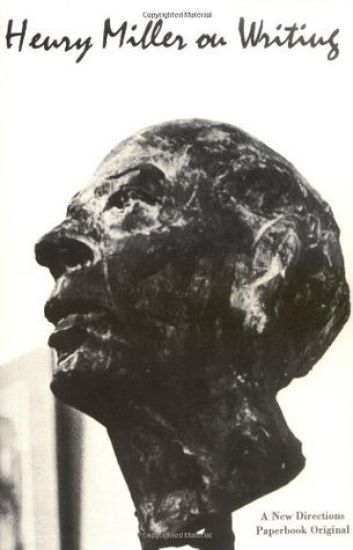
Some of the most rewarding pages in Henry Miller's books concern his self-education as a writer. He tells, as few great writers ever have, how he set his goals, how he discovered the excitement of using words, how the books he read influenced him, and how he learned to draw on his own experience.
The delights of his prose are many, not the least of which is Miller's comic irony, which as The London Times noted, can be "as stringent and urgent as Swift's." Frederick Turner has organized the whole to highlight the autobiographical chronology of Miller's life, and along the way places the author squarely where he belongs--in the great tradition of American radical individualism, as a child of Emerson, Thoreau, and Whitman. Miller, who joyously declared "I am interested--like God--only in the individual," would have been pleased. The keynotes here are self-liberation and the pleasures of Miller's "knotty, cross-grained" genius, as Turner describes it--"defying classification, ultimately unamenable to any vision, any program not his] own." Or, as Henry Miller himself put it: "I am the hero and the book is myself."
Using insights from feminist studies, men's studies, and gay and queer studies, Leland Person examines Henry James's subversion of male identity and the challenges he poses to conventional constructs of heterosexual masculinity. Sexual and gender categories proliferated in the nineteenth and early twentieth centuries, and Person argues that James exploited the taxonomic confusion of the times to experiment with alternative sexual and gender identities. In contrast to scholars who have tried to give a single label to James's sexuality, Person argues that establishing James's gender and sexual identity is less important than examining the novelist's shaping of male characters and his richly metaphorical language as an experiment in gender and sexual theorizing. Just as an author's creations can be animated by his or her own sexuality, Person contends, James's sexuality may be most usefully understood as something primarily aesthetic and textual. As Person shows in chapters devoted to some of this author's best-known novels-Roderick Hudson, The American, The Portrait of a Lady, The Bostonians, The Ambassadors, The Golden Bowl-James conducts a series of experiments in gender/sexual construction and deconstruction. He delights in positioning his male characters so that their gender and sexual orientations are reversed, ambiguous, and even multiple. Ultimately, he keeps male identity in suspense by pluralizing male subjectivity.
Over the course of the twelfth century, the county of Champagne grew into one of the wealthiest and most important of French principalities, home to a large and established aristocracy, the site of international trade fairs, and a center for artistic, literary, and intellectual production. It had not always been this way, notes Theodore Evergates, who charts the ascent of Champagne under the rule of Count Henry the Liberal. Tutored in the liberal arts and mentored in the practice of lordship from an early age, Henry commanded the barons and knights of Champagne on the Second Crusade at twenty and succeeded as count of Champagne at twenty-five. Over the next three decades Henry immersed himself in the details of governance, most often in his newly built capital in Troyes, where he resolved disputes, confirmed nonlitigious transactions, and monitored the disposition of his fiefs. He was a powerful presence beyond the county as well, serving in King Louis VII's military ventures and on diplomatic missions to the papacy and the monarchs of England and Germany. Evergates presents a chronicle of the transformation of the lands east of Paris as well as a biography of one of the most engaging princes of twelfth-century France. Count Henry was celebrated for balancing the arts of governance with learning and for his generosity and inquisitive mind, but his enduring achievement, Evergates makes clear, was to transform the county of Champagne into a dynamic principality within the emerging French state.
Henry IV sits on a usurped throne, his conscience and his nobles in revolt, while his son Hal is immersed in a self-indulgent life of revelry with the notorious Sir John Falstaff. Shakespeare explores questions of kingship and honor in this masterly mingling of history, comedy, and tragedy. Under the editorial supervision of Jonathan Bate and Eric Rasmussen, two of today's most accomplished Shakespearean scholars, this Modern Library series incorporates definitive texts and authoritative notes from William Shakespeare: Complete Works. Each play includes an Introduction as well as an overview of Shakespeare's theatrical career; commentary on past and current productions based on interviews with leading directors, actors, and designers; scene-by-scene analysis; key facts about the work; a chronology of Shakespeare's life and times; and black-and-white illustrations. Ideal for students, theater professionals, and general readers, these modern and accessible editions from the Royal Shakespeare Company set a new standard in Shakespearean literature for the twenty-first century.
After defeat at the Battle of Shrewsbury the rebels regroup. But Prince Hal's reluctance to inherit the crown threatens to destroy the ailing Henry IV's dream of a lasting dynasty. Shakespeare's portrait of the prodigal son's journey from youth to maturity embraces the full panorama of society. Under the editorial supervision of Jonathan Bate and Eric Rasmussen, two of today's most accomplished Shakespearean scholars, this Modern Library series incorporates definitive texts and authoritative notes from William Shakespeare: Complete Works. Each play includes an Introduction as well as an overview of Shakespeare's theatrical career; commentary on past and current productions based on interviews with leading directors, actors, and designers; scene-by-scene analysis; key facts about the work; a chronology of Shakespeare's life and times; and black-and-white illustrations. Ideal for students, theater professionals, and general readers, these modern and accessible editions from the Royal Shakespeare Company set a new standard in Shakespearean literature for the twenty-first century.
With his family's claim to the throne uncertain, Henry seeks to secure his position by turning the country's attention abroad. But when his outnumbered army is trapped at Agincourt, disaster seems inevitable. Shakespeare probes notions of leadership and power in this iconic depiction of England's charismatic warrior king. Under the editorial supervision of Jonathan Bate and Eric Rasmussen, two of today's most accomplished Shakespearean scholars, this Modern Library series incorporates definitive texts and authoritative notes from William Shakespeare: Complete Works. Each play includes an Introduction as well as an overview of Shakespeare's theatrical career; commentary on past and current productions based on interviews with leading directors, actors, and designers; scene-by-scene analysis; key facts about the work; a chronology of Shakespeare's life and times; and black-and-white illustrations. Ideal for students, theater professionals, and general readers, these modern and accessible editions from the Royal Shakespeare Company set a new standard in Shakespearean literature for the twenty-first century.
"The gaudy, blabbing and remorseful day Is crept into the bosom of the sea." --Henry VI Eminent Shakespearean scholars Jonathan Bate and Eric Rasmussen provide a fresh new edition of the three-part classic history that revolves around the epic, dynastic Wars of the Roses. THIS VOLUME ALSO INCLUDES MORE THAN A HUNDRED PAGES OF EXCLUSIVE FEATURES: - an original Introduction to Henry VI - incisive scene-by-scene synopses and analyses with vital facts about the work - commentary on past and current productions based on interviews with leading directors, actors, and designers - photographs of key RSC productions - an overview of Shakespeare's theatrical career and chronology of his plays Ideal for students, theater professionals, and general readers, these modern and accessible editions from the Royal Shakespeare Company set a new standard in Shakespearean literature for the twenty-first century.
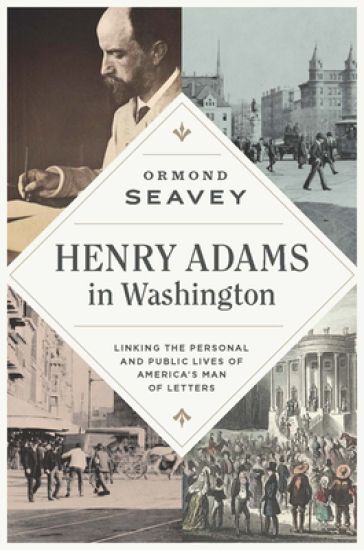
A descendent of two U.S. presidents and winner of the Pulitzer Prize, Henry Adams enjoyed a very particular place in American life, not least due to his ancestry. Yet despite his prolific writing in the years between 1877 and 1891, when he lived in Washington, D.C., Adams has somehow slipped into the gap between history and literature. In Henry Adams in Washington, Ormond Seavey integrates the diverse aspects of Adams’s writing, arguing for his placement among the major American writers of the nineteenth century.Examining Adams’s nine-volume History, which Seavey argues demands renewed literary attention, as well as his two novels, Democracy and Esther, and his biographies of Albert Gallatin and John Randolph of Roanoke, Seavey shows how Adams reveals his own character and personality in his writings, particularly his fondness for the personal rather than the public sphere. As a historian writing in Washington, D.C., Adams surely encountered the expectation that public life takes precedence over the personal; in the execution of both his historical writing and his novels, however, he dwells instead on the personal costs of public life and the diminishment of public figures who lack a fulfilling personal life. Revealing Adams to be a missing link between the essential American writers in the time of Emerson and the modernist writers of the early twentieth century, Seavey shows his novels to be considerations of contemporary political issues while also recognizing the novelistic dimensions in his history and biographies.
A descendent of two U.S. presidents and winner of the Pulitzer Prize, Henry Adams enjoyed a very particular place in American life, not least due to his ancestry. Yet despite his prolific writing in the years between 1877 and 1891, when he lived in Washington, D.C., Adams has somehow slipped into the gap between history and literature. In Henry Adams in Washington, Ormond Seavey integrates the diverse aspects of Adams’s writing, arguing for his placement among the major American writers of the nineteenth century.Examining Adams’s nine-volume History, which Seavey argues demands renewed literary attention, as well as his two novels, Democracy and Esther, and his biographies of Albert Gallatin and John Randolph of Roanoke, Seavey shows how Adams reveals his own character and personality in his writings, particularly his fondness for the personal rather than the public sphere. As a historian writing in Washington, D.C., Adams surely encountered the expectation that public life takes precedence over the personal; in the execution of both his historical writing and his novels, however, he dwells instead on the personal costs of public life and the diminishment of public figures who lack a fulfilling personal life. Revealing Adams to be a missing link between the essential American writers in the time of Emerson and the modernist writers of the early twentieth century, Seavey shows his novels to be considerations of contemporary political issues while also recognizing the novelistic dimensions in his history and biographies.
Henry's Attic provides fascinating documentation of some of the one million artifacts in the Henry Ford Museum and Greenfield Village. The items represent both Henry Ford's passion for collecting Americana and the astonishing array of gifts-some of great historic value and others of a distinctly homegrown variety-that account for almost half of the museum's collections. It was the quantity of these gifts and the unusual and even unique nature of many of them that provided the inspiration for this book.Henry Ford Museum and Greenfield Village, which Ford established in Dearborn, Michigan in the late 1920s, was intended to recreate the slow-paced, rural character of America before the advent of the automobile. The purchases he made and the gifts he was given reflect his desire to document and preserve the lifeways of common people and to emphasize middle-class rural history, as represented by the tools of agriculture, industry, and transportation.
Although Henry Ford gloried in the limelight of highly publicized achievement, he privately admitted, "I don't do so much, I just go around lighting fires under other people." Henry's Lieutenants features biographies of thirty-five "other people" who served Henry Ford in a variety of capacities, and nearly all of whom contributed to his fame. These biographical sketches and career highlights reflect the people of high caliber employed by Henry Ford to accomplish his goals: Harry Bennett, Albert Kahn, Ernest Kanzler, William S. Knudsen, and Charles E. Sorenson, among others. Most were employed by the Ford Motor Company, although a few of them were Ford's personal employees satisfying concurrent needs of a more private nature, including his farming, educational, and sociological ventures. Ford Bryan obtained a considerable amount of the material in this book from the oral reminiscences of the subjects themselves.