Kirjojen hintavertailu. Mukana 12 481 166 kirjaa ja 12 kauppaa.

Kirjahaku

Etsi kirjoja tekijän nimen, kirjan nimen tai ISBN:n perusteella.

1000 tulosta hakusanalla Henry Ware

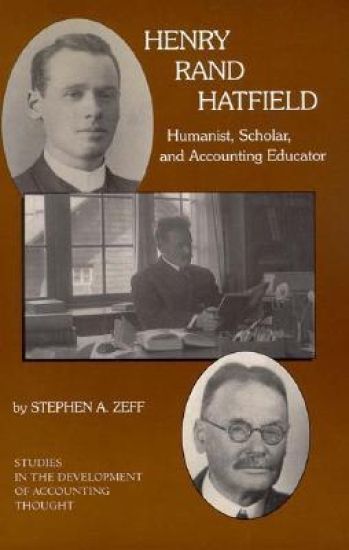
Henry Rand Hatfield

Henry Rand Hatfield

Stephen A. Zeff

JAI Press Inc.
2000
sidottu
This book is a biographical study of the first full-time accounting professor in a US university. Henry Rand Hatfield (1866-1945) was the first dean of the Chicago business school and the second dean of the Berkeley business school, and he was long regarded as the "dean of accounting teachers everywhere". His two textbooks, "Modern Accounting" (1909) and "Accounting" (1927), were among the most respected reference works in the first half century, and they and his articles continue to be cited today. His textbooks and carefully crafted articles were veritable annotations on the accounting literature and drew extensively on accounting and legal authorities in the US and overseas. He exemplified a principled approach to accounting debate and discussion, and he skewered sloppy and imprecise terminology and shoddy thinking. He did not propound any grand theories but was instead an astute critic of the literature, a delectable writer, and, above all, a consummate scholar. Hatfield was an authority on early bookkeeping history, and his essay, "An Historical Defense of Bookkeeping", has long been one of the most celebrated articles in the US literature. Professor Basil Yamey has written a commentary expressly for the book on Hatfield as a historian of accounting and bookkeeping. Stephen Zeff began his research in the 1960s, when he was granted access to Hatfield's extensive files of correspondence, notes and papers, and he proceeded to interview, or correspond with, many of Hatfield's former colleagues and students. The author also drew on the archives at the Northwestern University, the University of Chicago and the University of California, as well as the records of the American Accounting Association, of which Hatfield was a founder and President. The book is rich in references to primary sources. Many of Hatfield's unpublished and previously published papers are reproduced in the book, which also contains a complete list of Hatfield's publications, including his more than 50 penetrating book reviews.
Henry George's Writings on the United Kingdom
Henry George's political economy has been hailed as one of the great contributions of American social criticism. His writings have, however, invited interpretation in contradictory fashion. Commentaries have used him to uphold laissez-faire social Darwinism allowing for the aggrandizement of money. Some on the left have regarded his ideology as calling for a co-operative commonwealth well beyond the intentions of the single-tax mechanism. And there are those who see him as having, in effect, written a new Declaration of Independence as powerful as that of 1776. Bringing to light his previously unavailable British writings would clear up some misunderstandings and also present the man and his ideas in a fresher historical context.
Henry James

Henry James

Elizabeth Stevenson

Transaction Publishers
2000
nidottu
Certain readers and critics have faulted Henry James for two contradictory reasons. He has been thought a writer limited in scope and depth in his treatment of a particular class of people. On the other hand, he has been thought to be too complex, too extreme in putting into difficult language his view of relationships between his chosen characters.Elizabeth Stevenson depicts Henry James as a stout and strong presence in the literature of the English language. From the relatively youthful, straightforward, and simple writing of his early years, to the involved complexities of his later stories, his significance cannot be denied. The barrier seems to have been a misunderstanding on the part of some. It is true nearly all of his characters are well clothed, well fed, and roofed comfortably. They are usually fairly well educated and talk literately and wittily. James rarely treats raw or wild nature, but he is sensitive to landscape as a background. He also does children well, and they are often outside the norms of society. Who is not touched by the uncanny in the tainted children of The Turn of the Screw, whether the taint is actually in the children or in the mind of the governess?In James, one may not travel physically a great deal, except to the resorts of those well-off financially and socially. One does travel extensively through the minds and hearts of his characters. The journey rewards the traveler. The delicacy of James' "melodramatic" insights causes tremor or appreciation from a reader. He describes the way life is, both horrible and wonderful. No one else has expressed this understanding in quite his way. Henry James: The Crooked Corridor will be of interest to students of American literature and general readers interested in biographies.
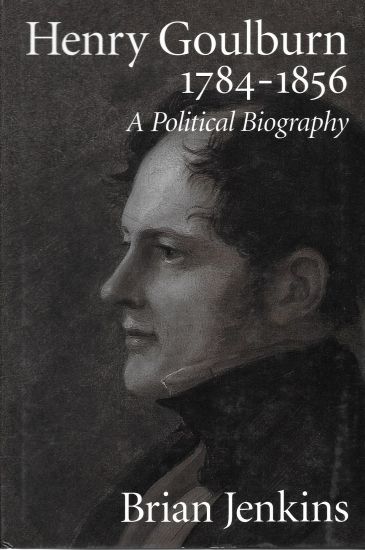
Henry Goulburn, 1784-1856

Henry Goulburn, 1784-1856

Brian Jenkins

McGill-Queen's University Press
1996
sidottu
Between 1812 and 1821 Goulburn worked in the War and Colonial Office, where he effectively administered Britain's far-flung possessions. Appointed chief secretary for Ireland in 1821 -- a Protestant to offset a "Catholic" viceroy -- Goulburn was at the heart of the final rearguard action by the opponents of Catholic emancipation. As chancellor of the exchequer for the Duke of Wellington (1828-30) and Sir Robert Peel (1841-46) he participated in such momentous decisions as Catholic emancipation and the repeal of the Corn Laws. An opponent of parliamentary reform, he worked closely with Peel, his lifelong friend, to build the Conservative Party and served as a parliamentary champion of the Established Church. Jenkins examines the conservative values Goulburn held, and the moral dilemma of an essentially good man who depended on the institution of slavery for his private income. A modest man and a loyal lieutenant, Goulburn himself allowed that he had been content to walk in the shadow of political giants. This self-effacement helps account for the lack of wide recognition generally given him but does not detract from his significant contribution to British history. Henry Goulburn accords a remarkable politician his rightful place.
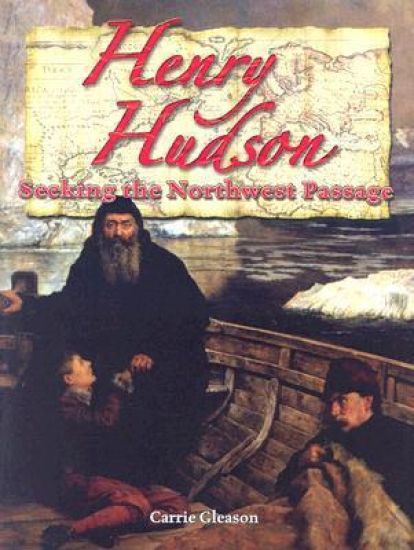
Henry Hudson

Henry Hudson

Carrie Gleason

Crabtree Publishing Co,Canada
2005
nidottu
Profiles the English explorer's journeys through early seventeenth-century America, including contact with natives, life aboard ship, and Dutch colonization.
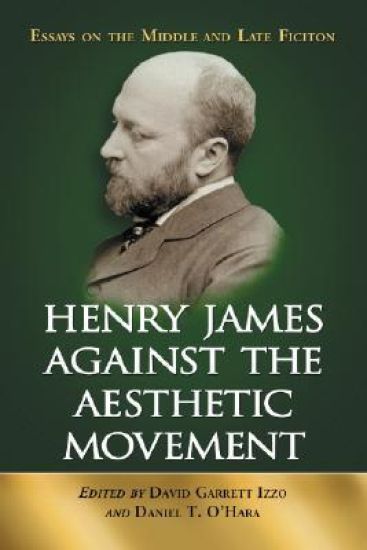
Henry James Against the Aesthetic Movement
Writer Henry James (1843-1916) was born in America but preferred to live in Europe; he finally become a British subject near the end of his life. His status as a permanent outsider is responsible for the recurring themes in his writing dealing with European sophistication (decadence) compared to American lack of sophistication (or innocence). He is respected in modern times for his psychological insight, for being able to reveal his characters' deepest motivations. These 11 essays, along with an introduction and an afterword, examine James's work through the prism of the author's latest style. Topics the contributing authors address include the Henry James revival of the 1930s, three of James's male aesthetics, women in his works, literary forgery, and parallels with the career and views of Margaret Oliphant. Three essays delve into issues of representation in art and fiction, then three more explore decadence, identity and homosexuality.
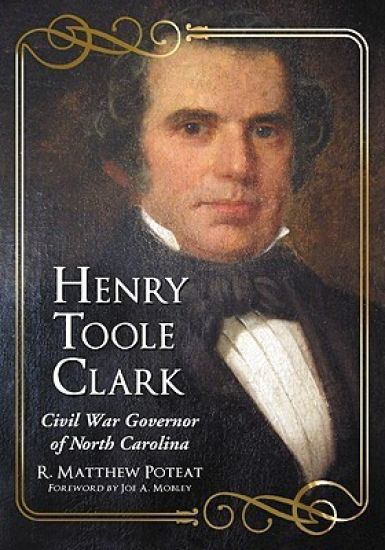
Henry Toole Clark

Henry Toole Clark

R. Matthew Poteat

McFarland Co Inc
2009
pokkari
This is the first in-depth, comprehensive biography of Henry Toole Clark, North Carolina's second Civil War governor. In addition to his actions as a war leader, it explores Clark's role as a member of the Old South's planter elite and his change in status after the war, his slaveholding business, the constitutional crisis that made him governor, and his career during the years of Reconstruction.
Henry Clay Frick

Henry Clay Frick

Quentin R. Skrabec

McFarland Co Inc
2010
pokkari
Henry Clay Frick, reviled in his own time, infamous in ours, was blamed for the Johnstown Flood (which killed 2,200 people) as well as the violent Homestead Strike of 1892, and survived an assassination attempt, yet at the same time was an ardent philanthropist, giving more than $100 million during his lifetime and in his will, while insisting on anonymity. This biography explores the contradictions in this great industrialist's nature and avoids the extremes of both hagiography and denunciation.
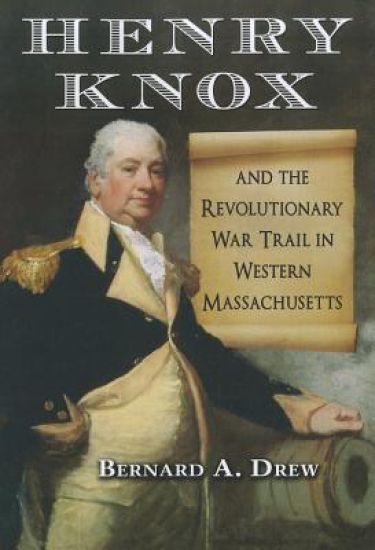
Henry Knox and the Revolutionary War Trail in Western Massachusetts
During the winter of 1776, in one of the most amazing logistical feats of the Revolutionary War, Henry Knox and his teamsters transported cannons from Fort Ticonderoga through the sparsely populated Berkshires to Boston to help drive British forces from the city. This history documents Knox's precise route--dubbed the Henry Knox Trail--and chronicles the evolution of an ordinary Indian path into a fur corridor, a settlement trail, and eventually a war road. By recounting the growth of this important but under appreciated thoroughfare, this study offers critical insight into a vital Revolutionary supply route.
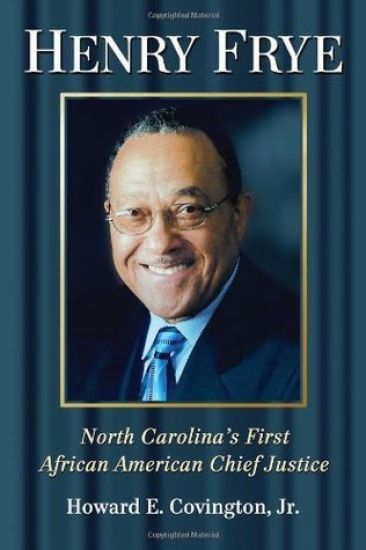
Henry Frye

Henry Frye

Howard E. Covington

McFarland Co Inc
2013
pokkari
Henry E. Frye came of age just as the South was beginning a transformational change. When he graduated from college in 1953, African Americans like him could only hope that the future would be different from the past. At the close of his public career in 2001, he was chief justice of the North Carolina Supreme Court--the head of the state's third branch of government. Throughout their lives, Frye and his wife, Shirley, were in the vanguard of the advances that shaped the lives of African Americans. His election to the state legislature in 1968 was the beginning of steady, determined efforts to expand opportunities for African Americans in politics, business and society at large. This book traces, along with his career, the growing participation of African Americans in the civic, political and social life of North Carolina.
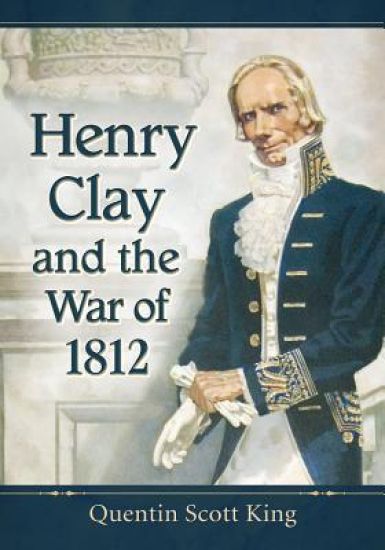
Henry Clay and the War of 1812

Henry Clay and the War of 1812

Quentin Scott King

McFarland Co Inc
2014
pokkari
Any biography of Henry Clay's 46 year political career quickly becomes entangled with his monumental, though youthful, political leadership of the War Hawks in urging the Madison Administration to arm the United States for war with Great Britain. He continued to advise in the war's progress and ended by being one of the five distinguished Americans to treat for peace with a difficult team of mediocre British envoys. There has been no detailed treatment of his major role in this early American war until this present work.
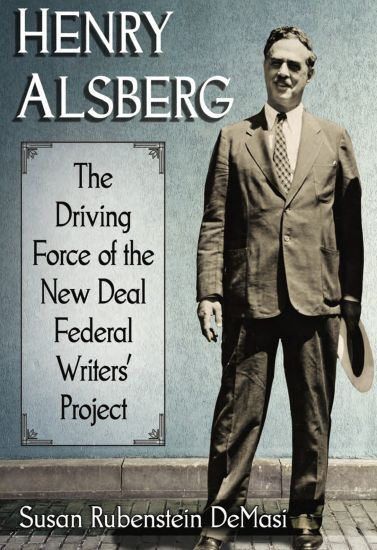
Henry Alsberg

Henry Alsberg

Susan Rubenstein DeMasi

McFarland Co Inc
2016
pokkari
During the Great Depression, Henry Alsberg, a journalist with a passion for social justice, directed the Federal Writers' Project, a New Deal program of the Works Progress Administration. Under his guidance, thousands of unemployed writers were hired. Despite attacks from the House Committee on Un-American Activities, the Project produced more than 1,000 publications from 1935 to 1939, including the still highly acclaimed American Guide series. Some writers, such as Richard Wright, went on to storied careers. Alsberg led the Project's collection of more than 10,000 oral histories from ex-slaves, immigrants and others. Alsberg was also a leader in the struggle to save Jewish pogrom survivors in Eastern Europe. Later, he initiated the first major effort to assist international political prisoners. His friends included anarchist revolutionary Emma Goldman and U.S. Supreme Court Justice Felix Frankfurter. This book brings Alsberg to light as an important but forgotten figure of the 20th century.