Kirjojen hintavertailu. Mukana 11 699 587 kirjaa ja 12 kauppaa.

Kirjahaku

Etsi kirjoja tekijän nimen, kirjan nimen tai ISBN:n perusteella.

1000 tulosta hakusanalla Howard Partridge

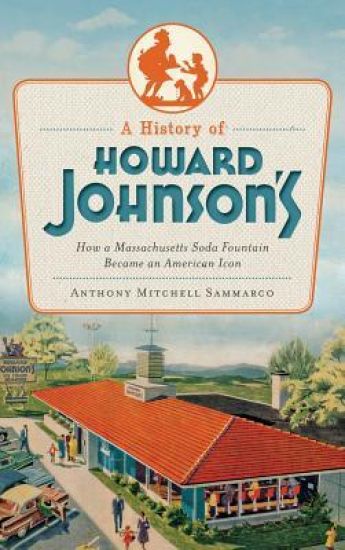
A History of Howard Johnson's: How a Massachusetts Soda Fountain Became an American Icon
Howard Johnson created an orange-roofed empire of ice cream stands and restaurants that stretched from Maine to Florida and all the way to the West Coast. Popularly known as the "Father of the Franchise Industry," Johnson delivered good food and prices that brought appreciative customers back for more. The attractive white Colonial Revival restaurants, with eye-catching porcelain tile roofs, illuminated cupolas and sea blue shutters, were described in "Reader's Digest" in 1949 as the epitome of "eating places that look like New England town meeting houses dressed up for Sunday." Boston historian and author Anthony M. Sammarco recounts how Howard Johnson introduced twenty-eight flavors of ice cream, the "Tendersweet" clam strips, grilled frankforts and a menu of delicious and traditional foods that families eagerly enjoyed when they traveled.
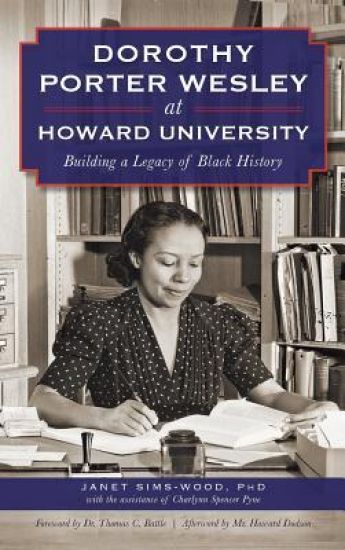
Dorothy Porter Wesley at Howard University: Building a Legacy of Black History
When Dorothy Burnett joined the library staff at Howard University in 1928, she was given a mandate to administer a library of Negro life and history. The school purchased the Arthur B. Spingarn Collection in 1946, along with other collections, and Burnett, who would later become Dorothy Porter Wesley, helped create a world-class archive known as the Moorland-Spingarn Research Center and cemented her place as an immensely important figure in the preservation of African American history. Wesley's zeal for unearthing materials related to African American history earned her the name of Shopping Bag Lady." Join author, historian and former Howard University librarian Janet Sims-Wood as she charts the award-winning and distinguished career of an iconic archivist."
Gods of the North Robert Ervin Howard

Gods of the North Robert Ervin Howard

Robert Ervin Howard

Createspace Independent Publishing Platform
2017
nidottu
Across the red drifts and mail-clad forms, two figures glared at each other. In that utter desolation only they moved. The frosty sky was over them, the white illimitable plain around them, the dead men at their feet. Slowly through the corpses they came, as ghosts might come to a tryst through the shambles of a dead world. In the brooding silence they stood face to face.Both were tall men, built like tigers. Their shields were gone, their corselets battered and dinted. Blood dried on their mail; their swords were stained red. Their horned helmets showed the marks of fierce strokes. One was beardless and black maned. The locks and beard of the other were red as the blood on the sunlit snow.
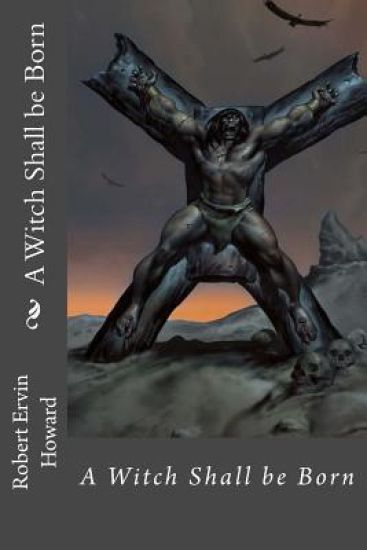
A Witch Shall be Born Robert Ervin Howard

A Witch Shall be Born Robert Ervin Howard

Robert Ervin Howard

Createspace Independent Publishing Platform
2017
nidottu
Taramis, Queen of Khauran, awakened from a dream-haunted slumber to a silence that seemed more like the stillness of nighted catacombs than the normal quiet of a sleeping place. She lay staring into the darkness, wondering why the candles in their golden candelabra had gone out. A flecking of stars marked a gold-barred casement that lent no illumination to the interior of the chamber. But as Taramis lay there, she became aware of a spot of radiance glowing in the darkness before her. She watched, puzzled. It grew and its intensity deepened as it expanded, a widening disk of lurid light hovering against the dark velvet hangings of the opposite wall. Taramis caught her breath, starting up to a sitting position. A dark object was visible in that circle of light-a human head.
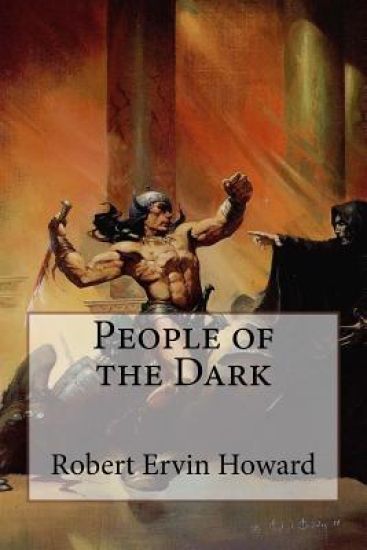
People of the Dark Robert Ervin Howard

People of the Dark Robert Ervin Howard

Robert Ervin Howard

Createspace Independent Publishing Platform
2017
nidottu
People of the Dark is a collection of stories by Robert E. Howard that includes: "The Black Stone", "Children of the Night", "The Dark Man", "The Footfalls Within", "Gods of Bal Sagoth", "Horror from the Mound", "Kings of the Night", "The Last Day", "People of the Dark", "The Song of the Mad Minstrel", and "The Thing on the Roof".The title story, "People of the Dark", is considered to be part of the Cthulhu Mythos. It was first published in Strange Tales, June 1932.
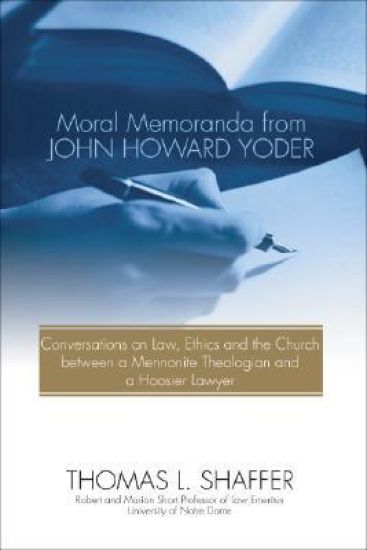
Moral Memoranda from John Howard Yoder

Moral Memoranda from John Howard Yoder

Thomas L Shaffer

Wipf Stock Publishers
2002
pokkari
'Moral Memoranda from John Howard Yoder: Conversations on Law, Ethics and the Church between a Mennonite Theologian and a Hoosier Lawyer' compiles fifteen years of advice and comment on law and government in the United States from a leading theologian who was as prominent for the wisdom he offered to mainline Christians as he was a resource and teacher within his own Mennonite Church. This volume of letters, notes, and essays combines deep understanding of Professor Yoder's Anabaptist tradition with insightful, sometimes wry, observation on modern American Catholicism, and an occasionally caustic but more often open, inquiring interest in law, lawyers, and legal education.
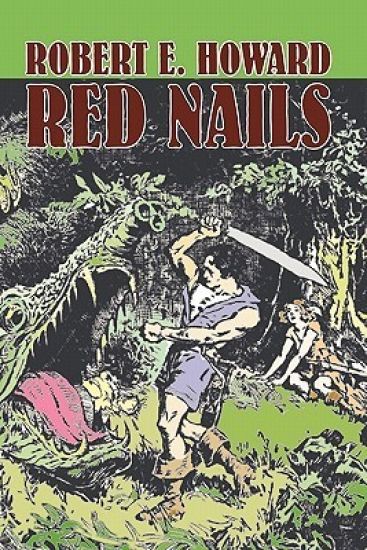
Red Nails by Robert E. Howard, Fiction, Fantasy
"One of the strangest stories ever written -- the tale of a barbarian adventurer, a woman pirate, and a weird roofed city inhabited by the most peculiar race of men ever spawned "That was the "Weird Tales" editor's original terse blurb for this story's magazine publication. (There was another, longer less coherent, but it wouldn't fit here on the back cover.) Death Decay "Red Nails" really is something special. It's classic Conan Conan lovers consider "Red Nails" to be one of the best, and you know, they make a point.
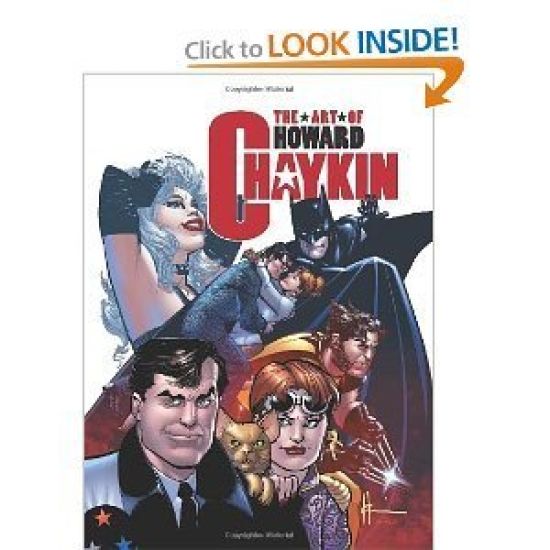
The Art of Howard Chaykin

The Art of Howard Chaykin

Robert Greenberger

Dynamic Forces Inc
2012
sidottu
Legendary for what he has done on the page and infamous for what he has said off it, Howard Chaykin ranks among the superstars of modern comics. In The Art of Howard Chaykin, go behind the scenes with the creator whose pioneering works include American Flagg! and Black Kiss, and experience the stories of his life as only he can tell them. Filled with no-holds-barred perspective from his longtime friends and colleagues, and featuring an extensive selection of artwork from throughout his career, including many never-before-published pieces from Chaykin’s own archives, The Art of Howard Chaykin takes readers on an in-depth journey from the 1970s to today with one of the medium’s great storytellers.
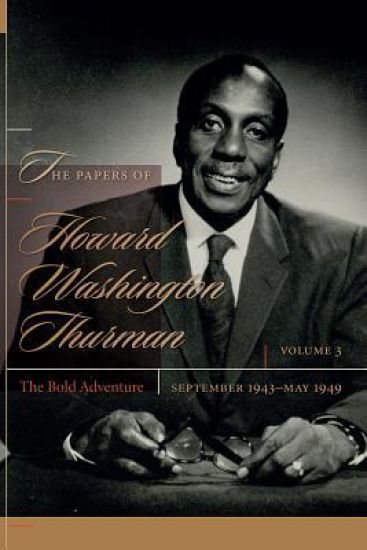
The Papers of Howard Washington Thurman

The Papers of Howard Washington Thurman

University of South Carolina Press
2012
sidottu
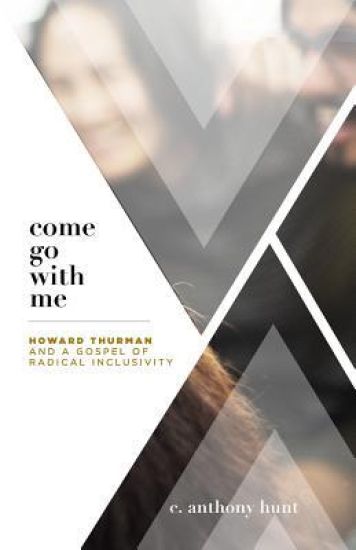
This is a four-volume, chronologically arranged documentary edition spanning the long and productive career of the Reverend Howard Thurman, one of the most significant leaders in the history of intellectual and religious life in the mid-twentieth-century US. Thurman was one of the principal architects of the modern non-violent Civil Rights Movement and a key mentor to Dr. Martin Luther King, Jr.
The Papers of Howard Washington Thurman

The Papers of Howard Washington Thurman

University of South Carolina Press
2015
sidottu
The Papers of Howard Washington Thurman is a multivolume, chronologically arranged documentary edition spanning the long and productive career of the Reverend Howard Thurman, one of the most significant leaders in the intellectual and religious life of United States in the mid-twentieth century. The first to lead a delegation of African Americans to meet with Mahatma Gandhi in 1936, Thurman later became one of the principal architects of the modern nonviolent civil rights movement and a key mentor to Dr. Martin Luther King, Jr. and others involved in the movement. In 1953 Life magazine named Thurman one of the twelve greatest preachers of the century.In volume 3 (September 1943-May 1949), Walter Earl Fluker documents Thurman's founding and leadership of the Fellowship Church for All Peoples in San Francisco, California--the nation's first major interracial, interfaith church. The war years showed Thurman new possibilities and strains in American culture. He felt the war had led to a moral coarsening as evidenced by a willingness to accept things that had been intolerable in peacetime, an emphasis on destroying enemies--real and imagined--and the conviction that the only way to solve problems was through the use of force, a conviction that became a self-fulfilling prophecy. Amid the uncertainty of this period, Thurman embarked on his great interfaith experiment as pastor to a small group of dedicated and courageous people who were primarily middle class, with at least as many white as black people, in a city that in 1940s America was far from the mainstream of black life. His letters, essays, and sermons show Thurman struggling to define and maintain the interracial character and practice of Fellowship Church, building its programs and membership while constantly wrestling with financial and location problems and preserving its separation from other organizations, most notably the Communist Party and its adult education program, the California Labour School. Thurman was also becoming more of a national figure, partly a result of the attention given to the Fellowship Church in publications such as Time magazine, but also because he had begun to publish regularly. From his first book, The Greatest of These, it was only three years until his Ingersoll lecture at Harvard, ""The Negro Spiritual Speaks of Life and Death,"" was offered by Harper. Two years later Thurman published what has proven his most enduring work, Jesus and the Disinherited, arguing that the key to understanding the religion of Jesus was his lack of Roman citizenship, a condition Thurman compared to the lives of southern black people, who, like Jesus, were effectively disinherited
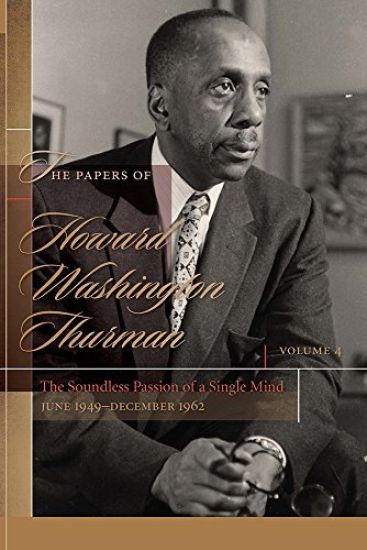
The Papers of Howard Washington Thurman, Volume 4

The Papers of Howard Washington Thurman, Volume 4

University of South Carolina Press
2017
sidottu
The Papers of Howard Washington Thurman is a multivolume, chronologically arranged documentary edition spanning the long and productive career of the Reverend Howard Thurman, one of the most significant leaders in the intellectual and religious life of the United States in the mid–twentieth century. The first to lead a delegation of African Americans to meet with Mahatma Gandhi in 1936, Thurman later became one of the principal architects of the modern nonviolent civil rights movement and a key mentor to Dr. Martin Luther King, Jr., and others involved in the movement. In 1953 Life magazine named Thurman one of the twelve greatest preachers of the century.In volume 4 (June 1949–December 1962), Walter Earl Fluker covers Thurman’s final years at the Fellowship Church in San Francisco and his years as the dean of Marsh Chapel at Boston University and professor of spiritual resources at Boston University School of Theology. In taking on these positions, Thurman became the first African American dean of chapel at a majority-white college or university in the United States and the first tenured African American professor at Boston University School of Theology.During his time at Boston University, Thurman tirelessly advocated for dialogue and understanding between faiths. Although charged with serving the university’s Protestant community, Thurman preferred to pursue a broader ministry. He sought to use his status as dean of the chapel to bring people together, always acting out of a profound belief that no religion holds a monopoly on truth or holiness. Thurman sought to make Marsh Chapel a place where Protestants, Catholics, Jews, and all others could learn from each other as they shared a universal search for meaning and purpose, each drawing strength and insights from his or her own religious tradition. He sought to make the university a place where people who had found safety and comfort in “keeping to their own” would come to understand that intellectual, spiritual, and ethical progress can take place only when barriers between groups are broken down. His vision of interreligious cooperation is as timely as ever, as people of many faiths work to build bridges of understanding and hope to carry us through the challenges of the twenty-first century.
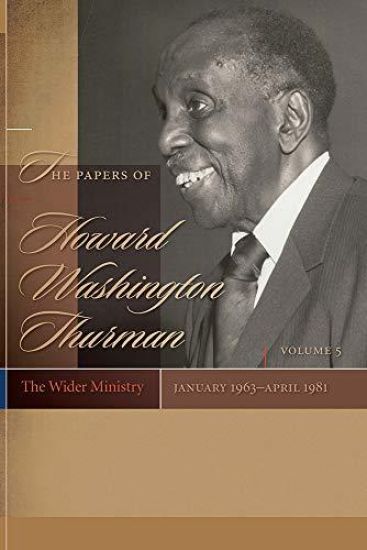
The Papers of Howard Washington Thurman, Volume 5

The Papers of Howard Washington Thurman, Volume 5

University of South Carolina Press
2019
sidottu
The Papers of Howard Washington Thurman is a five-volume, chronologically arranged documentary edition spanning the long and productive career of the Reverend Howard Thurman, one of the most significant leaders in the history of intellectual and religious life in the mid-twentieth-century United States. The first to lead a delegation of African Americans to meet personally with Mahatma Gandhi, in 1936, Thurman later became one of the principal architects of the modern, nonviolent civil rights movement and a key mentor to Martin Luther King, Jr. In 1953 Life magazine named Thurman as one of the twelve greatest preachers of the century.This fifth and final volume covers the last seventeen years of his life, from the end of his ministry as Boston University's dean of chapel in 1963 through his passing in April 1981. Thurman referred to these years as his ""wider ministry,"" one untethered to a specific congregation or institution, spreading his spiritual gifts and insights as widely as possible from his base in San Francisco. A resonant theme is Thurman's interaction with the black freedom struggle, from its heyday in the early 1960s through the turn to black power and nationalism. This includes Thurman's correspondence with many of the movement's leading figures and thinkers, among them Martin Luther King, Jr.; Whitney Young, Jr.; Jesse Jackson; Vincent Harding; and Lerone Bennett.Thurman's final years saw the culmination of his expansive religious vision, in his attempt to fashion a conception of spirituality that was at once deeply personal and truly inclusive. These final documents refer to many aspects of this, including his work with the Howard Thurman Educational Trust, his seminars with young African American divinity students, his outreach to Judaism and other religions, his efforts to come to terms with the cultural changes of the 1960s and 1970s, and his endeavors to pass on his legacy to another generation.