

Kirjahaku
Etsi kirjoja tekijän nimen, kirjan nimen tai ISBN:n perusteella.
1000 tulosta hakusanalla Isaac Luke



Mason Isaac Bodden 16th Birthday Celebration
Milenio Latino Institute, Inc
2026
pokkari
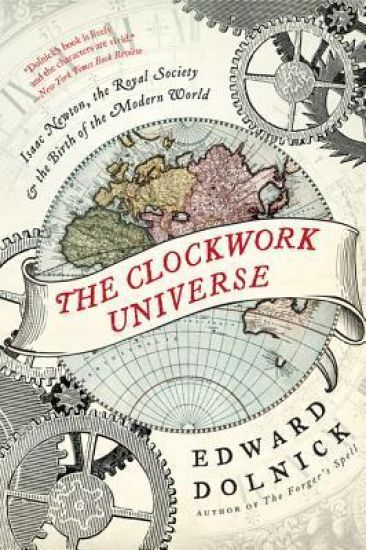
The Clockwork Universe: Isaac Newton, the Royal Society, and the Birth of the Modern World
Edward Dolnick
HARPER PERENNIAL
2012
nidottu
"Edward Dolnick's smoothly written history of the scientific revolution tells the stories of the key players and events that transformed society." -- Charlotte ObserverFrom New York Times bestselling author Edward Dolnick, the true story of a pivotal moment in modern history when a group of strange, tormented geniuses--Isaac Newton chief among them--invented science and remade our understanding of the world.At a time when the world was falling apart-- in an age of religious wars, plague, and the Great Fire of London--a group of men looked around them and saw a world of perfect order. Chaotic as it looked, these earliest scientists declared, the universe was in fact an intricate and perfectly regulated clockwork. This was the tail-end of Shakespeare's century, and these were brilliant, ambitious, confused, conflicted men. They believed in angels and alchemy and the devil, and they believed that the universe followed precise, mathematical laws. This is the story of the bewildered geniuses who made the modern world.
The ascetic tracts of 7th century writer Isaac of Nineveh (Isaac the Syrian) provide a wealth of material to better understand early Christian asceticism. By focusing on the role of the body in various ascetic techniques, such as fasting, vigils and prayer, as well as on the way the ascetic relates to the society a picture of asceticism as political activity emerges. For Isaac, the ascetic was to function as something like an icon, an image that showed the world the reality of God's Kingdom already in this life, by clearly indicating the difference between God's ways and men's. Patrik Hagman reviews the scholarly discussion on asceticism of the last three decades, and then proceeds to analyse the texts of Isaac to reveal an emphasis on asceticism as a practice that is at the same time performative, transformative and bodily. This contrasts with the long-established conception of asceticism as based on a negative view of the body. Isaac displays a profound understanding of the way body and soul are related, demonstrating how the body can be used to transform the personality of the ascetic, and to communicate the change to the world, without the use of words. The writings of Isaac offer a rare example of an extensive discussion of asceticism by a person who lived a radical ascetic life himself. Hagman's new study brings Isaac's fresh perspective to bear on an important, yet often overlooked, aspect of the Christian tradition.
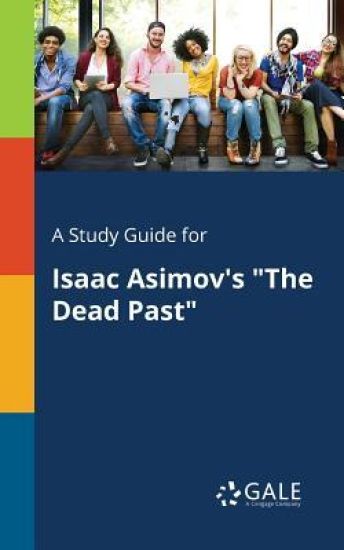
A Study Guide for Isaac Asimov's "The Dead Past"
Cengage Learning Gale
Gale, Study Guides
2018
pokkari
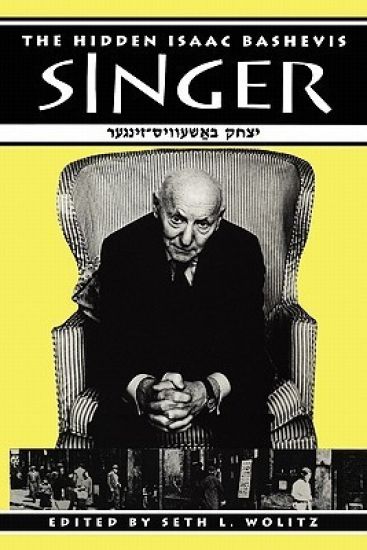
The Hidden Isaac Bashevis Singer
University of Texas Press
2002
pokkari
Nobel Prize-winning author Isaac Bashevis Singer stands virtually alone among prominent writers for being more widely known through translations of his work than through the original texts. Yet readers and critics of the Yiddish originals have long pointed out that the English versions are generally shortened, often shorn of much description and religious matter, and their perspectives and denouements are significantly altered. In short, they turn the Yiddish author into a Jewish-American English writer, detached from of his Eastern European Jewish literary and cultural roots. By contrast, this collection of essays by leading Yiddish scholars seeks to recover the authentic voice and vision of the writer known to his Yiddish readers as Yitskhok Bashevis. The essays are grouped around four themes: The Yiddish language and the Yiddish cultural experience in Bashevis's writings Thematic approaches to the study of Bashevis's literature Bashevis's interface with other times and cultures Interpretations of Bashevis's autobiographical writings A special feature of this volume is the inclusion of Joseph Sherman's new, faithful translation of a chapter from Bashevis's Yiddish "underworld" novel Yarme and Keyle.
The Plays of Isaac Bickerstaff
Routledge
2019
sidottu
This compilation of Isaac Bickerstaff's plays was originally compiled and published in 1981, and the plays written in the 1760s-70s. Edited and with an introduction by Peter A. Tasch, the volume contains seven plays: The Captive; He Wou'd if He Cou'd; or, An Old Fool worse than Any; The Recruiting Serjeant; 'Tis Well it's no Worse; The Brickdust-Man and Milk-Maid; The Sultan, or A Peep into the Seraglio; and The Spoil'd Child.
The Plays of Isaac Bickerstaff
Routledge
2020
nidottu
This compilation of Isaac Bickerstaff's plays was originally compiled and published in 1981, and the plays written in the 1760s-70s. Edited and with an introduction by Peter A. Tasch, the volume contains seven plays: The Captive; He Wou'd if He Cou'd; or, An Old Fool worse than Any; The Recruiting Serjeant; 'Tis Well it's no Worse; The Brickdust-Man and Milk-Maid; The Sultan, or A Peep into the Seraglio; and The Spoil'd Child.
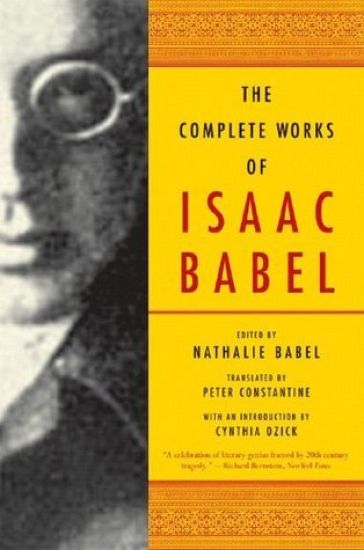
The Complete Works of Isaac Babel
Nathalie (EDT) Babel; Peter (TRN) Constantine
WW Norton Co
2005
pokkari
Finally in paperback, this "monumental collection; gathers all of Babel's deft and brutal writing, including a wide array of previously unavailable material, from never-before-translated stories to plays and film scripts" (David Ulin, "Los Angeles Times"). Reviewing the work in "The New Republic," James Woods wrote that this groundbreaking volume "represents a triumph of translating, editing, and publishing. Beautiful to hold, scholarly and also popularly accessible, it is an enactment of love." Considered one of the greatest writers of the twentieth century, Isaac Babel has left his mark on a generation of readers and writers. This book will stand as Babel's final, most enduring legacy. Winner of the Koret Jewish Book Award; A "New York Times" Notable Book, a and "Library Journal" Best Book, a "Washington Post" Book World Rave, a "Village Voice" Favorite Book of the Year.
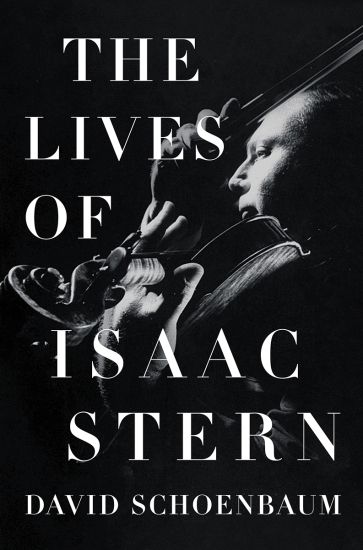
No single American could personify what Henry Luce called the American Century but Isaac Stern came closer than most. Despite modest origins as the child of Jewish immigrants in San Francisco, by the early 1940s talent and practice had brought him a Carnegie Hall debut, critical acclaim and the attention of the legendary Sol Hurok. As America came of age, so too did Stern. He would go on to make music on five continents, records in formats from 78 rpm to digital, friends as different as Frank Sinatra and Isaiah Berlin, and policy from Carnegie Hall to Washington, Jerusalem and Shanghai. He also loaned instruments to young players, brokered gigs for Soviet emigrés and replied in person to inquiring fans. Wide-ranging yet intimate, The Lives of Isaac Stern is a portrait of an artist and musical statesman who left a profound musical and cultural legacy.
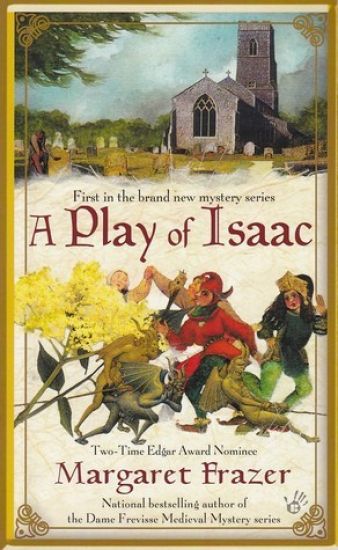
From the bestselling author of the Dame Frevisse Medieval mysteries comes the first in a new series featuring the popular character Joliffe. When his band is taken in by a patron, Joliffe finds that murder has taken the traveling players' place in the spotlight, and it's up to them to catch a killer in the act. Original.

Isaac Newton was always a loner, preferring to spend his time contemplating the mysteries of the universe. When the plague broke out in London in 1665 he was forced to return home from college. It was during this period of so much death, that Newton gave life to some of the most important theories in modern science, including gravity and the laws of motion.
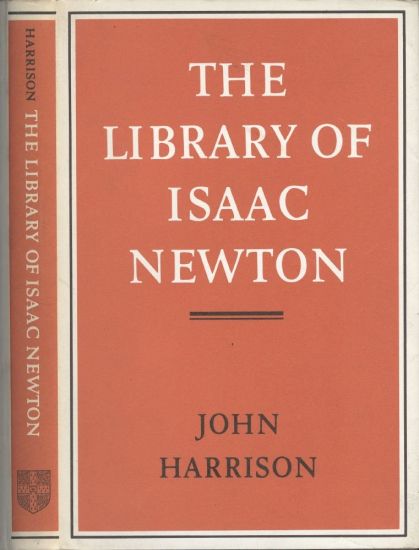
When Newton died in 1727 he left a library of some 2,100 volumes. This was largely a collection of books regarded by him as a set of working tools – several of the well-thumbed surviving items are evidence of this. The books Newton owned are of considerable interest and importance principally to Newtonian scholars and to historians of science, as well as to booksellers, librarians and book-collectors. The library was kept virtually intact until 1920 when more than half the volumes were auctioned and subsequently dispersed. Scholars have hitherto had to rely on the unpublished Huggins List (1727) and Musgrave Catalogue (c. 1766), or on their less than satisfactory transcription issued in 1931. John Harrison has now remedied this deficiency by compiling a complete and comprehensive catalogue of Newton's library.
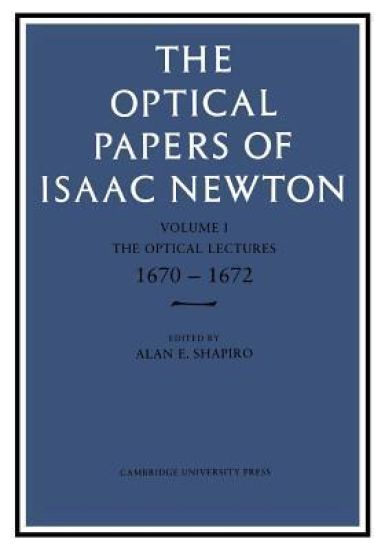
The Optical Papers of Isaac Newton: Volume 1, The Optical Lectures 1670–1672
Cambridge University Press
2011
pokkari
The first volume of a three-volume complete edition of Newton's optical papers contains his Optical Lectures, delivered at Cambridge University between 1670 and 1672. The Lectures is Newton's first major scientific treatise, and consequently it represents a crucial link between his early years of discovery and his mature investigations and publications, such as the Optiks in 1704. It is divided into two parts: the first part devoted to color and the second to refraction. Originally published in 1984, this edition made available the complete text, together with translation and commentary, of both surviving versions of the Lectures, a draft and a vastly expanded revision. Until the time of publication, scholars had to depend on an uncritical text of the revision and an inadequate partial English translation, both published shortly after Newton's death. Professor Shapiro's critical edition has made a great contribution to the study of Newtonian science.
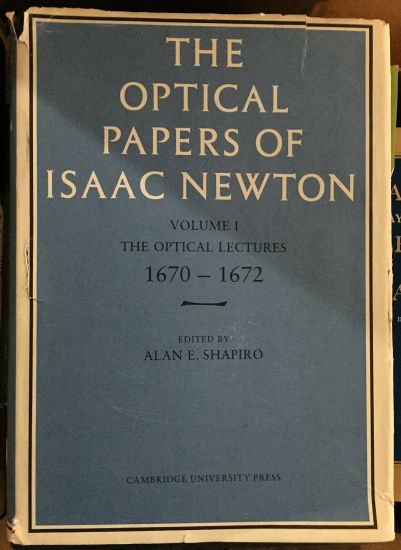
The Optical Papers of Isaac Newton: Volume 1, The Optical Lectures 1670–1672
Cambridge University Press
1984
sidottu
The first volume of a three-volume complete edition of Newton's optical papers contains his Optical Lectures, delivered at Cambridge University between 1670 and 1672. The Lectures is Newton's first major scientific treatise, and consequently it represents a crucial link between his early years of discovery and his mature investigations and publications, such as the Optiks in 1704. It is divided into two parts: the first part devoted to color and the second to refraction. Originally published in 1984, this edition made available the complete text, together with translation and commentary, of both surviving versions of the Lectures, a draft and a vastly expanded revision. Until the time of publication, scholars had to depend on an uncritical text of the revision and an inadequate partial English translation, both published shortly after Newton's death. Professor Shapiro's critical edition has made a great contribution to the study of Newtonian science.