Kirjojen hintavertailu. Mukana 11 342 296 kirjaa ja 12 kauppaa.

Kirjahaku

Etsi kirjoja tekijän nimen, kirjan nimen tai ISBN:n perusteella.

1000 tulosta hakusanalla Isabel Funke
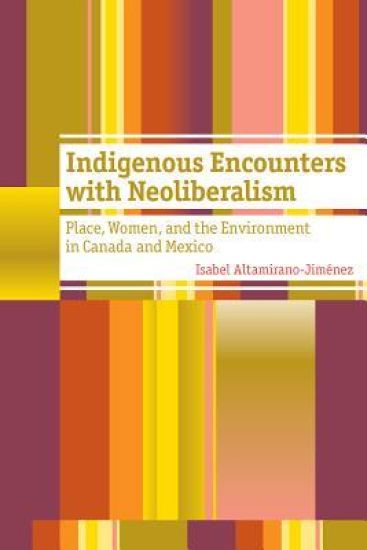
Indigenous Encounters with Neoliberalism

Indigenous Encounters with Neoliberalism

Isabel Altamirano-Jiménez

University of British Columbia Press
2013
sidottu
The recognition of Indigenous rights and the management of land and resources have always been fraught with complex power relations and conflicting expressions of identity. In Indigenous Encounters with Neoliberalism, Isabel Altamirano-Jiménez explores how this issue is playing out in two countries very differently marked by neoliberalism's local expressions – Canada and Mexico.Weaving together four distinct case studies, two from each country, Altamirano-Jiménez presents insights from Indigenous feminism, critical geography, political economy, and postcolonial studies. These specific examples highlight Indigenous people's responses to neoliberalism, reflecting the tensions that result from how Indigenous identity, gender, and the environment have been connected. Indigenous women's perspectives are particularly illuminating as they articulate diverse aspirations and concerns within a wider political framework.What emerges is a theoretical and empirical discussion of how indigeneity as an act of articulation is embedded in tensions between local needs and global wants. This study attempts to uncover the complexities of materializing neoliberalism and the fluidity of indigeneity.
Indigenous Encounters with Neoliberalism

Indigenous Encounters with Neoliberalism

Isabel Altamirano-Jiménez

University of British Columbia Press
2014
pokkari
The recognition of Indigenous rights and the management of land and resources have always been fraught with complex power relations and conflicting expressions of identity. In Indigenous Encounters with Neoliberalism, Isabel Altamirano-Jiménez explores how this issue is playing out in two countries very differently marked by neoliberalism's local expressions – Canada and Mexico.Weaving together four distinct case studies, two from each country, Altamirano-Jiménez presents insights from Indigenous feminism, critical geography, political economy, and postcolonial studies. These specific examples highlight Indigenous people's responses to neoliberalism, reflecting the tensions that result from how Indigenous identity, gender, and the environment have been connected. Indigenous women's perspectives are particularly illuminating as they articulate diverse aspirations and concerns within a wider political framework.What emerges is a theoretical and empirical discussion of how indigeneity as an act of articulation is embedded in tensions between local needs and global wants. This study attempts to uncover the complexities of materializing neoliberalism and the fluidity of indigeneity.
Unlikely Diplomats

Unlikely Diplomats

Isabel Campbell

University of British Columbia Press
2013
sidottu
In 1951, Canada sent troops to western Europe to support its NATO allies. The brigade helped Canada establish its international status. In private, however, Canadian officials and military leaders expressed grave doubts about NATO's strategies and operational plans. Despite these reservations, they sent military families overseas and implemented personnel policies that permanently changed the distribution of the defence budget and the character of the Canadian Army.By exposing the hidden agendas that pushed NATO's members in different directions even as they presented a united front, this original account of the evolution of the Canadian Army – from a small training cadre to a truly national force – offers a new perspective on military policy and diplomacy in the Cold War era.
Unlikely Diplomats

Unlikely Diplomats

Isabel Campbell

University of British Columbia Press
2014
pokkari
In 1951, Canada sent troops to western Europe to support its NATO allies. The brigade helped Canada establish its international status. In private, however, Canadian officials and military leaders expressed grave doubts about NATO's strategies and operational plans. Despite these reservations, they sent military families overseas and implemented personnel policies that permanently changed the distribution of the defence budget and the character of the Canadian Army.By exposing the hidden agendas that pushed NATO's members in different directions even as they presented a united front, this original account of the evolution of the Canadian Army – from a small training cadre to a truly national force – offers a new perspective on military policy and diplomacy in the Cold War era.
Motherhood in Mexican Cinema, 1941-1991

Motherhood in Mexican Cinema, 1941-1991

Isabel Arredondo

McFarland Co Inc
2013
nidottu
How were femininity and motherhood understood in Mexican cinema from the 1940s to the early 1990s? Film analysis, interviews with filmmakers, academic articles and film reviews from newspapers are used to answer the question and trace the changes the depiction of mothers goes through. Images of mothers in films by so-called third-wave filmmakers (Busi Cortes, Maria Novaro, Dana Rotberg, and Marisa Sistach) are contrasted with those of mothers in Mexican classical films (1935-1950) and in Mexican films from the 1970s and 1980s. The book produces some surprising results. The most important prohibition for mothers in classical cinema is not the imposition of strict sexual norms of the 1940s, but rather the portrayal of an autonomous identity. Also, in contrast to classical films, third-wave films show a woman's problems within a social dimension, making motherhood political-not in relation to militancy within the left, but in relation to women's issues. Third-wave films approach the problems of Latin American society as problems of individuals differentiated by gender, sexuality and ethnicity; in them mothers are citizens directly affected by laws, economic policies and cultural beliefs.
Recreational Terror

Recreational Terror

Isabel Cristina Pinedo

State University of New York Press
1997
pokkari
Challenges the conventional wisdom that violent horror films can only degrade women and incite violence.In Recreational Terror, Isabel Cristina Pinedo analyzes how the contemporary horror film produces recreational terror as a pleasurable encounter with violence and danger for female spectators. She challenges the conventional wisdom that violent horror films can only degrade women and incite violence, and contends instead that the contemporary horror film speaks to the cultural need to express rage and terror in the midst of social upheaval.
Berlin

Berlin

Isabel Best; Dietrich Bonhoeffer; David Higgins; Larry L. Rasmussen; Douglas W. Stott

Augsburg Fortress
2009
sidottu
"Then came the crisis of 1933." This is Bonhoeffer's own phrase in a letter that documents a turning point in his own life as well as that of the nation. Of Bonhoeffer's own life at this time, his biographer writes, "The period of learning and roaming" from 1928 until 1931 "had come to an end" as the young lecturer, age 26, began to teach "on a faculty whose theology he did not share" and to preach "in a church whose self-confidence he regarded as unfounded." Bonhoeffer was becoming part of a society "that was moving toward political, social, and economic chaos."Events moved quickly at the onset of 1933 in Berlin. In only one hundred days the path was cleared by the German Parliament and the Nazi Party for the establishment of the fascist dictatorship. These one hundred days, as well as the preceding and succeeding months, are reflected in the materials in this volume: in letters, in sermons, in Bonhoeffer's university teaching, in manifestos and a church confession, and in his proactive engagement in the developing church struggle. The vast majority of these are translated here for the first time.
London, 1933-1935

London, 1933-1935

Isabel Best

Augsburg Fortress
2007
sidottu
Dietrich Bonhoeffer's pastoral sojourn in England from October 1933 to April of 1935, which he initially viewed as a withdrawal from the church clashes in Germany, marked instead a new phase in his intensive participation in that struggle. This enlightening volume provides an almost daily documentation of his deepening engagement against the placid backdrop of his two London pastorates.Detailing Bonhoeffer's extensive contacts with German expatriates, ecumenical partners and allies, and friends and family, "London: 1933-1935" impressively records both Bonhoeffer's involvement in the rapidly developing clash with the deutsche Christen and the means by which he pursued it. The bulk of the material consists of his wide correspondence but also includes records and minutes of his congregational meetings, excerpts from the diaries of Bonhoeffer's friend and London colleague Julius Rieger, reports from international conferences from 1934, and more than twenty sermons he preached to his London congregations.The wealth of this material, says editor Keith Clements, allows us to experience a dramatic slice of this history and see the many and complex facets of Dietrich Bonhoeffer's personality.
The Collected Sermons of Dietrich Bonhoeffer

The Collected Sermons of Dietrich Bonhoeffer

Isabel Best; Dietrich Bonhoeffer

Augsburg Fortress
2012
sidottu
Preaching, according to Bonhoeffer, is like offering an apple to a child. The gospel is proclaimed, but for it to be received as gift depends on whether or not the hearer is in a position to do so. Offered here are thirty-one of Pastor Bonhoeffer's sermons, in new English translations, which he preached at various times of the year and in a variety of different settings. Each is introduced by Bonhoeffer translator Isabel Best who also provides a brief biography of Bonhoeffer. The foreword is by Victoria J. Barnett, general editor of the Dietrich Bonhoeffer Works, English edition, published by Fortress Press, from which these sermons are selected.In his preaching, Bonhoeffer's strong, personal faiththe foundation for everything he didshines in the darkness of Hitler's Third Reich and in the church struggle against it. Though not overtly political, Bonhoeffer's deep concern for the developments in his world is revealed in his sermons as he seeks to draw the listener into conversation with the promises and claims of the gospela conversation readers today are invited to join.
Dreams, Visions, and Spiritual Authority in Merovingian Gaul
In early medieval Europe, dreams and visions were believed to reveal divine information about Christian life and the hereafter. No consensus existed, however, as to whether all Christians, or only a spiritual elite, were entitled to have a relationship of this sort with the supernatural. Drawing on a rich variety of sources—histories, hagiographies, ascetic literature, and records of dreams at saints' shrines—Isabel Moreira provides insight into a society struggling to understand and negotiate its religious visions. Moreira analyzes changing attitudes toward dreams and visionary experiences beginning in late antiquity, when the church hierarchy considered lay dreamers a threat to its claims of spiritual authority. Moreira describes how, over the course of the Merovingian period, the clergy came to accept the visions of ordinary folk—peasants, women, and children—as authentic. Dream literature and accounts of visionary experiences infiltrated all aspects of medieval culture by the eighth century, and the dreams of ordinary Christians became central to the clergy's pastoral concerns. Written in clear and inviting prose, this book enables readers to understand how the clerics of Merovingian Gaul allowed a Christian culture of dreaming to develop and flourish without compromising the religious orthodoxy of the community or the primacy of their own authority.
Absolute Destruction

Absolute Destruction

Isabel V. Hull

Cornell University Press
2006
pokkari
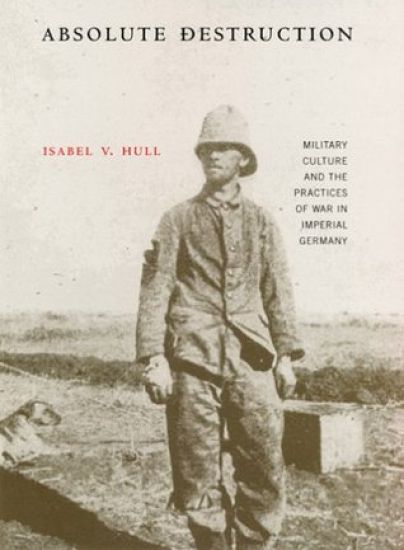
In a book that is at once a major contribution to modern European history and a cautionary tale for today, Isabel V. Hull argues that the routines and practices of the Imperial German Army, unchecked by effective civilian institutions, increasingly sought the absolute destruction of its enemies as the only guarantee of the nation's security. So deeply embedded were the assumptions and procedures of this distinctively German military culture that the Army, in its drive to annihilate the enemy military, did not shrink from the utter destruction of civilian property and lives. Carried to its extreme, the logic of "military necessity" found real security only in extremities of destruction, in the "silence of the graveyard."Hull begins with a dramatic account, based on fresh archival work, of the German Army's slide from administrative murder to genocide in German Southwest Africa (1904–7). The author then moves back to 1870 and the war that inaugurated the Imperial era in German history, and analyzes the genesis and nature of this specifically German military culture and its operations in colonial warfare. In the First World War the routines perfected in the colonies were visited upon European populations. Hull focuses on one set of cases (Belgium and northern France) in which the transition to total destruction was checked (if barely) and on another (Armenia) in which "military necessity" caused Germany to accept its ally's genocidal policies even after these became militarily counterproductive. She then turns to the Endkampf (1918), the German General Staff's plan to achieve victory in the Great War even if the homeland were destroyed in the process—a seemingly insane campaign that completes the logic of this deeply institutionalized set of military routines and practices. Hull concludes by speculating on the role of this distinctive military culture in National Socialism's military and racial policies.Absolute Destruction has serious implications for the nature of warmaking in any modern power. At its heart is a warning about the blindness of bureaucratic routines, especially when those bureaucracies command the instruments of mass death.
Sexuality, State, and Civil Society in Germany, 1700–1815
This long-awaited work reconstructs the ways in which the meanings and uses of sex changed during that important moment of political and social configuration viewed as the birth of modernity. Isabel V. Hull analyzes the shift in the "sexual system" which occurred in German-speaking Central Europe when the absolutist state relinquished its monopoly on public life and presided over the formation of an independent civil society. Hull defines a society's sexual system as the patterned way in which sexual behavior is shaped and given meaning through institutions. She shows that as the absolutist state encouraged an independent sphere of public activity, it gave up its theoretically unlimited right to regulate sexual behavior and invested this right in the active citizens of the new civil society. Among the questions posed by this political and social transformation are, When does sexual behavior merit society's regulation? What kinds of behaviors and groups prompt intervention? What interpretive framework does the public apply to sexual behavior? Hull persuades us that a culture's sexual system can be understood only in relation to the particularities of state, law, and society, and that when state and society are examined through the sexual lens, much conventional wisdom is cast in doubt.
A Summer to Be

A Summer to Be

Isabel Garland Lord; Victoria Doyle-Jones

Bison Books
2010
pokkari
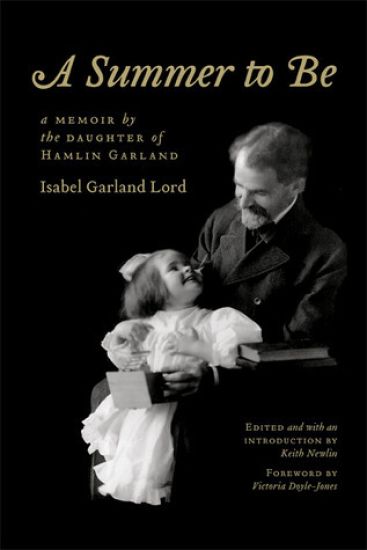
In A Summer to Be, Isabel Garland Lord writes an honest and revealing memoir of growing up in the shadow of her famous father, the pioneering realist and Pulitzer Prize–winning author Hamlin Garland. Lord unveils a hitherto unknown side of her father—the intensely loving, domineering patriarch whose deep love for his eldest daughter led him to change the trajectory of his career even as that love impeded his daughter's own independence. Written in the 1960s, A Summer to Be movingly weaves the story of Lord's own coming of age that is also a snapshot of American literary culture during the first decades of the twentieth century. Part memoir and part autobiography, A Summer to Be records a daughter's gradual emergence from her devoted and possessive father; it is a story full of moments of revelation and intrigue, betrayal and guilt, and ultimately the joy of self-discovery.
Kiowa

Kiowa

Isabel Crawford

Bison Books
1998
pokkari
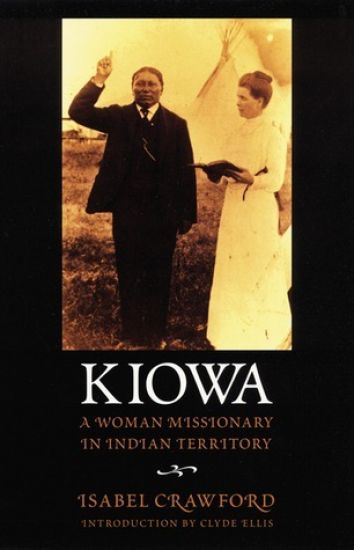
Near the close of the nineteenth century, Isabel Crawford went to the Kiowa-Comanche Reservation in Oklahoma and founded the Saddle Mountain Baptist Mission. This book, written in journal form, begins with her arrival at the reservation in 1896 and describes her decade-long crusade to convert the Indians to Christianity. She and her assistant were the only white women at the isolated station in the Wichita Mountains. Crawford's experience there tested her resourcefulness, endurance, and sometimes her faith. Humor marks her journal as she recounts her struggles to establish a formal mission. She lived with the Indians, at first putting up in a tipi and adjusting, not without difficulty, to their ways. She was "the Jesus woman" who taught the Ten Commandments. In her wake came camp meetings, baptisms, and "big eats." Through the years Isabel Crawford and her Indian brothers and sisters were bound more closely as they raised money to build a church. Though written with Christian purpose, Kiowa: A Woman Missionary in Indian Territory shows Crawford's sensitivity to Kiowa history and culture during a period of transition.The mission still exists and Isabel Crawford is still remembered kindly, according to Clyde Ellis, who introduces this Bison Books edition.
In Praise of New Travelers

In Praise of New Travelers

Isabel Hoving

Stanford University Press
2002
sidottu
Approaching postcolonial theory through cultural analysis, this book offers an accessible and concrete appraisal of current developments in postcolonial criticism. Detailed readings of a range of Anglophone Caribbean migrant women's texts from the late 1980s and 1990s lead to sharp insights into three issues that are crucial to an understanding of the field: place, voice, and silence. The discussion of these issues allows us to trace current feminist, postmodern, and postcolonial debates about the nature of the speaking subject, as it is emerging from today's postcolonial cultural practices. Postcolonial criticism often understands this subject as hybrid and multiple. This book shows how the specifics of this multiplicity must be acknowledged through analysis of the power structures and the violence through which this multiple subject is established. The book is also a consistent inquiry into reading positions. The argument about the differences between postcolonialist, black and Caribbean feminist, white feminist, and postmodern criticism is conducted as a discussion about the effects, insights, and blindnesses produced by these different ways of reading Caribbean migrant women's writing. Scrutinizing the grain of these texts encourages us to move beyond the kind of general statements for which postcolonial theory has been severely criticized. The author also extends her critique of reading positions to issues of methodology, using these approaches to direct her interpretation. Narratology is supplemented by an analysis of the interdiscursive processes through which texts are created, and psychoanalytic concepts are used to explore the ambiguous merits of postcolonial reading. Above all, In Praise of New Travelers celebrates the vigorous, subversive, and liberating creativity of an accomplished generation of Caribbean migrant women writers.
In Praise of New Travelers

In Praise of New Travelers

Isabel Hoving

Stanford University Press
2002
pokkari
Approaching postcolonial theory through cultural analysis, this book offers an accessible and concrete appraisal of current developments in postcolonial criticism. Detailed readings of a range of Anglophone Caribbean migrant women's texts from the late 1980s and 1990s lead to sharp insights into three issues that are crucial to an understanding of the field: place, voice, and silence. The discussion of these issues allows us to trace current feminist, postmodern, and postcolonial debates about the nature of the speaking subject, as it is emerging from today's postcolonial cultural practices. Postcolonial criticism often understands this subject as hybrid and multiple. This book shows how the specifics of this multiplicity must be acknowledged through analysis of the power structures and the violence through which this multiple subject is established. The book is also a consistent inquiry into reading positions. The argument about the differences between postcolonialist, black and Caribbean feminist, white feminist, and postmodern criticism is conducted as a discussion about the effects, insights, and blindnesses produced by these different ways of reading Caribbean migrant women's writing. Scrutinizing the grain of these texts encourages us to move beyond the kind of general statements for which postcolonial theory has been severely criticized. The author also extends her critique of reading positions to issues of methodology, using these approaches to direct her interpretation. Narratology is supplemented by an analysis of the interdiscursive processes through which texts are created, and psychoanalytic concepts are used to explore the ambiguous merits of postcolonial reading. Above all, In Praise of New Travelers celebrates the vigorous, subversive, and liberating creativity of an accomplished generation of Caribbean migrant women writers.
A Lady's Ranch Life in Montana

A Lady's Ranch Life in Montana

Isabel F. Randall; Shirley A. Leckie

University of Oklahoma Press
2004
sidottu
A faithful and unvarnished Record of a Settler's Life"" is how Isabel Randall described her letters when they were first published in 1887. Many foreign travelers published accounts of their visits to the American West, but Randall was one of the few European women to write about the western experience from the inside.In 1884 Randall and her husband settled on a ranch in Montana hoping to make their fortune in the livestock boom. Randall's letters home to England describe the practical affairs of daily life, rural social interactions, and the natural world around her. Her letters are cheerful, but they also suggest why the Randalls ultimately failed to achieve financial success.In this new edition of A Lady's Ranch Life in Montana, Richard L. Saunders supplements Randall's letters with notes and an extensive introduction drawn from a wealth of primary sources. He sketches the Randalls' lives before and after their western adventure, describes the stock industry that drew them to Montana, places Isabel's letters in the context of English attitudes toward Americans, and discusses her neighbors' reactions to her criticisms of local society.
A Lady's Ranch Life in Montana

A Lady's Ranch Life in Montana

Isabel F. Randall; Shirley A. Leckie

University of Oklahoma Press
2004
nidottu
A faithful and unvarnished Record of a Settler's Life"" is how Isabel Randall described her letters when they were first published in 1887. Many foreign travelers published accounts of their visits to the American West, but Randall was one of the few European women to write about the western experience from the inside.In 1884 Randall and her husband settled on a ranch in Montana hoping to make their fortune in the livestock boom. Randall's letters home to England describe the practical affairs of daily life, rural social interactions, and the natural world around her. Her letters are cheerful, but they also suggest why the Randalls ultimately failed to achieve financial success.In this new edition of A Lady's Ranch Life in Montana, Richard L. Saunders supplements Randall's letters with notes and an extensive introduction drawn from a wealth of primary sources. He sketches the Randalls' lives before and after their western adventure, describes the stock industry that drew them to Montana, places Isabel's letters in the context of English attitudes toward Americans, and discusses her neighbors' reactions to her criticisms of local society.
Worth Striking for

Worth Striking for

Isabel Nunez; Gregory Michie; Pamela Konkol; Pedro Noguera

Teachers' College Press
2015
nidottu
Written by activist educators, Worth Striking For speaks to teachers and teachers-to-be about the drastic changes in the landscape of public education in recent decades, and focuses on what they need to know about the debates and complex issues of reform affecting their lives and professions. The book identifies the most significant shifts in education policy, including how policy has helped or hindered the broader educational purposes of schools. Using the 2012 Chicago teachers strike as a framing device, the authors demonstrate how each of the policy areas addressed is critically important to teachers’ lives and work. Each chapter describes one of the Chicago teachers’ demands, and then explores a related policy arena through the lens of an associated philosophical purpose of education. The text features individually authored vignettes that juxtapose the authors’ personal experiences with the issues, bringing policy and policy activism to life. This hopeful book will inspire and empower teachers to take action in their schools, communities, districts, and states.