Kirjojen hintavertailu. Mukana 12 083 983 kirjaa ja 12 kauppaa.

Kirjahaku

Etsi kirjoja tekijän nimen, kirjan nimen tai ISBN:n perusteella.

1000 tulosta hakusanalla James Calbraith

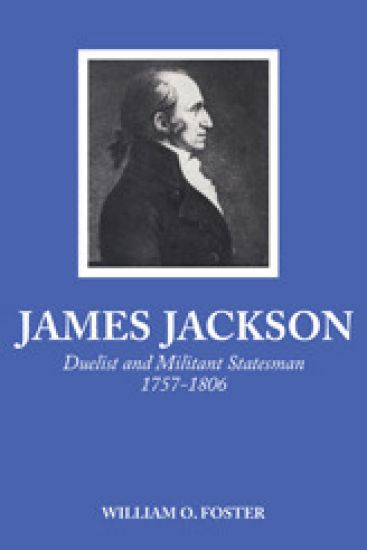
James Jackson

James Jackson

William O. Foster

University of Georgia Press
2009
pokkari
Published in 1960, this biography examines the life of James Jackson, a general in the Revolutionary War and later governor, congressman, and senator to Georgia. Jackson advocated strict construction of the Constitution, states' rights, and the welfare of the common man. He was a dominant figure in the affairs of Georgia during the last decade of his life and was at the center of the Yazoo controversy, where he worked for the repeal of the land sales. Foster's portrayal shows Jackson as a strong personality with a fiery disposition who played an important role in the history of the state.
James Habersham

James Habersham

Frank Lambert

University of Georgia Press
2012
pokkari
James Habersham was an early American success story. After arriving in Savannah in 1738, he failed in his efforts to wrest a living from the Georgia wilderness and lived his first year at public expense. Then, by dint of his own efforts and through the connections he forged, Habersham emerged as one of the colony's most influential and prosperous citizens, making his name as a planter, merchant, evangelist, and political leader. The third wealthiest person in the colony at the time of his death in 1775, Habersham had a public career that included service as the secretary of Georgia, president of the King's council, and acting Governor.But Habersham's story is more than biography. It also provides a window into colonial Georgia and its transformation from a struggling colony on the brink of collapse in the 1740s to a prosperous province in the 1770s, confident enough to defy the Crown. Ranging over such topics as the rise of Methodist missionary fervor, the development of transatlantic trade, the introduction of slavery, and the escalating debate over American independence, Frank Lambert tells how Habersham's success is inextricably tied to Georgia's fortunes and how he played a major role in helping the colony exploit its abundant resources. Habersham's economic development plan provided a blueprint for attracting new settlers, supplying an abundance of cheap labor, and opening new markets.Habersham's achievements, however, are obscured by his unpopular stance on American independence. While his three sons distinguished themselves as Patriots, Habersham remained loyal to the Crown, though he had opposed Britain's new imperial policies in the 1760's. Nevertheless, it was Habersham's loyal service to colonial Georgia that enabled the colony to separate successfully from the mother country and assume its place in the new republic as a prosperous, vigorous state.
James Rose

James Rose

Dean Cardasis

University of Georgia Press
2017
nidottu
The first biography of this important landscape architect, James Rose examines the work of one of the most radical figures in the history of mid-century modernist American landscape design. An artist who explored his profession with words and built works, Rose fearlessly critiqued the developing patterns of land use he witnessed during a period of rapid suburban development. The alternatives he offered in his designs for hundreds of gardens were based on innovative and iconoclastic environmental and philosophic principles, some of which have become mainstream today.A classmate of Garrett Eckbo and Dan Kiley at Harvard, Rose was expelled in 1937 for refusing to design landscapes in the Beaux-Arts method. In 1940, the year before he received his first commission, Rose also published the last of his influential articles for Architectural Record, a series of essays written with Eckbo and Kiley that would become a manifesto for developing a modernist landscape architecture. Over the next four decades, Rose articulated his philosophy in four major books. His writings foreshadowed many principles since embraced by the profession, including the concept of sustainability and the wisdom of accommodating growth and change.James Rose includes new scholarship on many important works, including the Dickenson Garden in Pasadena and the Averett House in Columbus, Georgia, as well as unpublished correspondence. Throughout his career Rose refined his conservation ethic, finding opportunities to create landscapes for contemplation, self-discovery, and pleasure. At a time when issues of economy and environmentalism are even more pressing, Rose’s writings and projects are both relevant and revelatory.
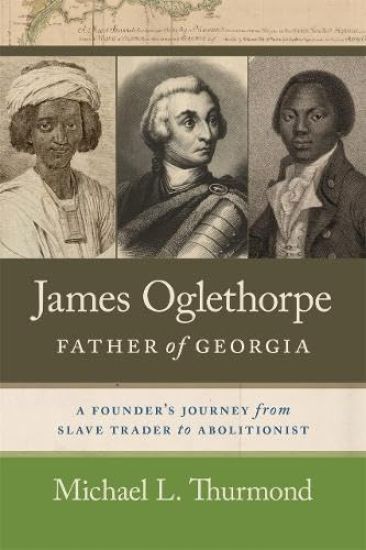
James Oglethorpe, Father of Georgia

James Oglethorpe, Father of Georgia

Michael L. Thurmond; James F. Brooks

UNIVERSITY OF GEORGIA PRESS
2025
pokkari
Founded by James Oglethorpe on February 12, 1733, the Georgia colony was envisioned as a unique social welfare experiment. Administered by twenty-one original trustees, the Georgia Plan offered England’s “worthy poor” and persecuted Christians an opportunity to achieve financial security in the New World by exporting goods produced on small farms. Most significantly, Oglethorpe and his fellow Trustees were convinced that economic vitality could not be achieved through the exploitation of enslaved Black laborers. Due primarily to Oglethorpe’s strident advocacy, Georgia was the only British American colony to prohibit chattel slavery prior to the American Revolutionary War. His outspoken opposition to the transatlantic slave trade distinguished Oglethorpe from British colonial America’s more celebrated founding fathers. James Oglethorpe, Father of Georgia uncovers how Oglethorpe's philosophical and moral evolution from slave trader to abolitionist was propelled by his intellectual relationships with two formerly enslaved Black men. Oglethorpe’s unique “friendships” with Ayuba Suleiman Diallo and Olaudah Equiano, two of eighteenth-century England’s most influential Black men, are little-known examples of interracial antislavery activism that breathed life into the formal abolitionist movement. Utilizing more than two decades of meticulous research, fresh historical analysis, and compelling storytelling, Michael L. Thurmond rewrites the prehistory of abolitionism and adds an important new chapter to Georgia’s origin story.
James Oglethorpe, Father of Georgia

James Oglethorpe, Father of Georgia

Michael L. Thurmond; James F. Brooks

UNIVERSITY OF GEORGIA PRESS
2024
sidottu
Founded by James Oglethorpe on February 12, 1733, the Georgia colony was envisioned as a unique social welfare experiment. Administered by twenty-one original trustees, the Georgia Plan offered England’s “worthy poor” and persecuted Christians an opportunity to achieve financial security in the New World by exporting goods produced on small farms. Most significantly, Oglethorpe and his fellow Trustees were convinced that economic vitality could not be achieved through the exploitation of enslaved Black laborers. Due primarily to Oglethorpe’s strident advocacy, Georgia was the only British American colony to prohibit chattel slavery prior to the American Revolutionary War. His outspoken opposition to the transatlantic slave trade distinguished Oglethorpe from British colonial America’s more celebrated founding fathers. James Oglethorpe, Father of Georgia uncovers how Oglethorpe's philosophical and moral evolution from slave trader to abolitionist was propelled by his intellectual relationships with two formerly enslaved Black men. Oglethorpe’s unique “friendships” with Ayuba Suleiman Diallo and Olaudah Equiano, two of eighteenth-century England’s most influential Black men, are little-known examples of interracial antislavery activism that breathed life into the formal abolitionist movement. Utilizing more than two decades of meticulous research, fresh historical analysis, and compelling storytelling, Michael L. Thurmond rewrites the prehistory of abolitionism and adds an important new chapter to Georgia’s origin story.
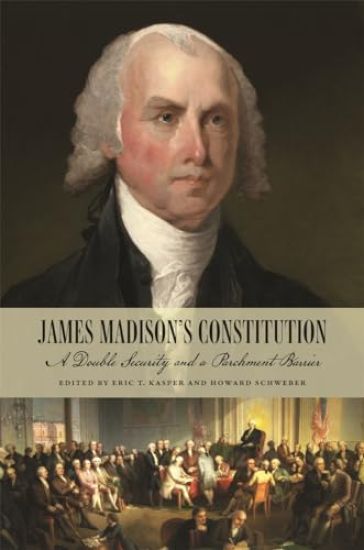
James Madison's Constitution

James Madison's Constitution

UNIVERSITY OF GEORGIA PRESS
2025
sidottu
In James Madison's Constitution, Eric T. Kasper and Howard Schweber have assembled a roster of ten prominent contributors to excavate Madison’s thinking about key concepts and issues over questions of what the Constitution requires, permits, and prohibits. Madison’s key role at the Constitution’s drafting was instrumental in forging the document into what it is today. In many areas, the modern Constitution still reflects Madison’s conception and design. In other areas, however, the Constitution as it emerged in a final text—and as it has been amended and interpreted to the present day—does not always conform to Madison’s vision. Nevertheless, examining Madison’s thinking across a range of constitutional issues has much to offer for understanding our nation’s primary governing document today. Indeed, there are great disagreements among jurists, policymakers, journalists, academics, and the general public about how to interpret the Constitution and what various clauses mean. Frequently, Madison is cited as a source on both sides of political, scholarly, and legal debates over the meaning of various constitutional provisions. CONTRIBUTORS: Jeff Broadwater, Paul Finkelman, Zachary K. German, Alan R. Gibson, Jack N. Rakove, David J. Siemers, Quentin P. Taylor, George Thomas, Lynn Uzzell, and Michael P. Zuckert
James Madison's Constitution

James Madison's Constitution

UNIVERSITY OF GEORGIA PRESS
2025
pokkari
In James Madison's Constitution, Eric T. Kasper and Howard Schweber have assembled a roster of ten prominent contributors to excavate Madison’s thinking about key concepts and issues over questions of what the Constitution requires, permits, and prohibits. Madison’s key role at the Constitution’s drafting was instrumental in forging the document into what it is today. In many areas, the modern Constitution still reflects Madison’s conception and design. In other areas, however, the Constitution as it emerged in a final text—and as it has been amended and interpreted to the present day—does not always conform to Madison’s vision. Nevertheless, examining Madison’s thinking across a range of constitutional issues has much to offer for understanding our nation’s primary governing document today. Indeed, there are great disagreements among jurists, policymakers, journalists, academics, and the general public about how to interpret the Constitution and what various clauses mean. Frequently, Madison is cited as a source on both sides of political, scholarly, and legal debates over the meaning of various constitutional provisions. CONTRIBUTORS: Jeff Broadwater, Paul Finkelman, Zachary K. German, Alan R. Gibson, Jack N. Rakove, David J. Siemers, Quentin P. Taylor, George Thomas, Lynn Uzzell, and Michael P. Zuckert
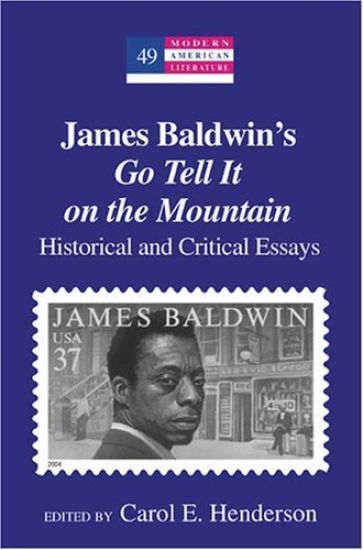
James Baldwin's Go Tell it on the Mountain
The publication of James Baldwin s Go Tell It on the Mountain ushered in a new age of the urban telling of a tale twice told yet rarely expressed in such vivid portraits. Go Tell It unveils the struggle of man with his God and that of man with himself. Baldwin s intense scrutiny of the spiritual and communal customs that serve as moral centers of the black community directs attention to the striking incongruities of religious fundamentalism and oppression. This book examines these multiple impulses, challenging the widely held convention that politics and religion do not mix."
James Wright

James Wright

Kevin Stein

Ohio University Press
1988
sidottu
Although some critics have identified two phases in the poetry of James Wright and have isolated particulars of his movement from traditional to more experimental forms, few have noted also the elements of constancy in the evolution of his poetry. In this first comprehensive scholarly introduction to Wright's work, Stein traces the unified growth of Wright's poetry, asserting that while stylistic changes are often more apparent than actual, Wright does undergo a continuing personal and aesthetic development throughout his career. Stein examines the entire body of Wright's poetry, including such previously unpublished materials as the collection Amenities of Stone. Stein locates Wright in the Emersonian tradition which sees struggle with language as a struggle with the self — a locating and defining of the self within a world of natural facts. Language, then, becomes a means of self-definition, and to be frivolous or irresponsible with language becomes a negation of the self and the world it inhabits. For Wright, "the poetry of a grown man" issues from this understanding. Because Wright joins the act of language with the act of selfhood, it is not surprising that the mode and tenor of his work would alter as the self redefines its values and goals, its very identity. In fact, Stein divides Wright's career into three interrelated stages of development: "containment," in which he relies on traditional religious and rhetorical measures to distance himself from a world of experience; "vulnerability," in which he enters the experiential world where the self is rewarded and equally threatened; and "integration," in which he accepts and balances the necessary combination of beauty and horror inherent in being human within a natural world. Stein shows that throughout his career Wright's presiding concern is to discover a way of writing and a way of life that might overcome the effects of an individual's separation from the human community, the natural world, and the spiritual presence in the universe. In Wright's world, to do less is to betray one's language — and one's self.
James Madison

James Madison

Ohio University Press
2008
sidottu
James Madison: Philosopher, Founder, and Statesman presents fresh scholarship on the nation's fourth president, who is often called both the father of the U.S. Constitution and the father of the Bill of Rights. These essays by historians and political scientists from the United States and abroad focus on six distinct aspects of Madison's life and work: his personality and development as a statesman; his work at the Constitutional Convention of 1787 and contributions to larger constitutional design; his advocacy for the adoption of the Bill of Rights; his controversial role as a party leader; his presidency; and his life after leaving office. James Madison continues to be regarded as one of America's great political theorists, a man who devoted his life to, and who found fulfillment in, public service. His philosophical contributions remain vital to any understanding of the modern American polity. This book will be of great interest to political scientists and theorists, as well as to historians of early American history and politics.
James Madison

James Madison

Ohio University Press
2008
pokkari
James Madison: Philosopher, Founder, and Statesman presents fresh scholarship on the nation's fourth president, who is often called both the father of the U.S. Constitution and the father of the Bill of Rights. These essays by historians and political scientists from the United States and abroad focus on six distinct aspects of Madison's life and work: his personality and development as a statesman; his work at the Constitutional Convention of 1787 and contributions to larger constitutional design; his advocacy for the adoption of the Bill of Rights; his controversial role as a party leader; his presidency; and his life after leaving office. James Madison continues to be regarded as one of America's great political theorists, a man who devoted his life to, and who found fulfillment in, public service. His philosophical contributions remain vital to any understanding of the modern American polity. This book will be of great interest to political scientists and theorists, as well as to historians of early American history and politics.
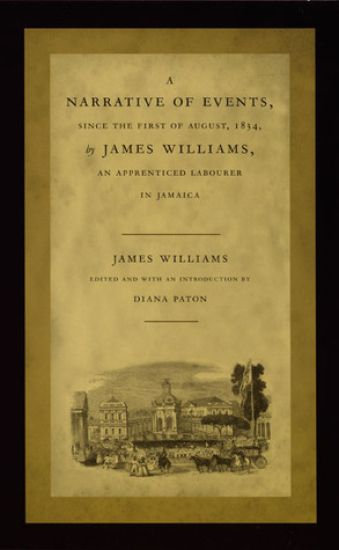
A Narrative of Events, Since the First of August, 1834, by James Williams, an Apprenticed Labourer in Jamaica
This book brings back into print, for the first time since the 1830s, a text that was central to the transatlantic campaign to fully abolish slavery in Britain’s colonies. James Williams, an eighteen-year-old Jamaican “apprentice” (former slave), came to Britain in 1837 at the instigation of the abolitionist Joseph Sturge. The Narrative he produced there, one of very few autobiographical texts by Caribbean slaves or former slaves, became one of the most powerful abolitionist tools for effecting the immediate end to the system of apprenticeship that had replaced slavery.Describing the hard working conditions on plantations and the harsh treatment of apprentices unjustly incarcerated, Williams argues that apprenticeship actually worsened the conditions of Jamaican ex-slaves: former owners, no longer legally permitted to directly punish their workers, used the Jamaican legal system as a punitive lever against them. Williams’s story documents the collaboration of local magistrates in this practice, wherein apprentices were routinely jailed and beaten for both real and imaginary infractions of the apprenticeship regulations. In addition to the complete text of Williams’s original Narrative, this fully annotated edition includes nineteenth-century responses to the controversy from the British and Jamaican press, as well as extensive testimony from the Commission of Enquiry that heard evidence regarding the Narrative’s claims. These fascinating and revealing documents constitute the largest extant body of direct testimony by Caribbean slaves or apprentices.
A Narrative of Events, Since the First of August, 1834, by James Williams, an Apprenticed Labourer in Jamaica
This book brings back into print, for the first time since the 1830s, a text that was central to the transatlantic campaign to fully abolish slavery in Britain’s colonies. James Williams, an eighteen-year-old Jamaican “apprentice” (former slave), came to Britain in 1837 at the instigation of the abolitionist Joseph Sturge. The Narrative he produced there, one of very few autobiographical texts by Caribbean slaves or former slaves, became one of the most powerful abolitionist tools for effecting the immediate end to the system of apprenticeship that had replaced slavery.Describing the hard working conditions on plantations and the harsh treatment of apprentices unjustly incarcerated, Williams argues that apprenticeship actually worsened the conditions of Jamaican ex-slaves: former owners, no longer legally permitted to directly punish their workers, used the Jamaican legal system as a punitive lever against them. Williams’s story documents the collaboration of local magistrates in this practice, wherein apprentices were routinely jailed and beaten for both real and imaginary infractions of the apprenticeship regulations. In addition to the complete text of Williams’s original Narrative, this fully annotated edition includes nineteenth-century responses to the controversy from the British and Jamaican press, as well as extensive testimony from the Commission of Enquiry that heard evidence regarding the Narrative’s claims. These fascinating and revealing documents constitute the largest extant body of direct testimony by Caribbean slaves or apprentices.
James Baldwin's Turkish Decade

James Baldwin's Turkish Decade

Magdalena J. Zaborowska

Duke University Press
2009
sidottu
Between 1961 and 1971 James Baldwin spent extended periods of time in Turkey, where he worked on some of his most important books. In this first in-depth exploration of Baldwin’s “Turkish decade,” Magdalena J. Zaborowska reveals the significant role that Turkish locales, cultures, and friends played in Baldwin’s life and thought. Turkey was a nurturing space for the author, who by 1961 had spent nearly ten years in France and Western Europe and failed to reestablish permanent residency in the United States. Zaborowska demonstrates how Baldwin’s Turkish sojourns enabled him to re-imagine himself as a black queer writer and to revise his views of American identity and U.S. race relations as the 1960s drew to a close.Following Baldwin’s footsteps through Istanbul, Ankara, and Bodrum, Zaborowska presents many never published photographs, new information from Turkish archives, and original interviews with Turkish artists and intellectuals who knew Baldwin and collaborated with him on a play that he directed in 1969. She analyzes the effect of his experiences on his novel Another Country (1962) and on two volumes of his essays, The Fire Next Time (1963) and No Name in the Street (1972), and she explains how Baldwin’s time in Turkey informed his ambivalent relationship to New York, his responses to the American South, and his decision to settle in southern France. James Baldwin’s Turkish Decade expands the knowledge of Baldwin’s role as a transnational African American intellectual, casts new light on his later works, and suggests ways of reassessing his earlier writing in relation to ideas of exile and migration.
James Baldwin's Turkish Decade

James Baldwin's Turkish Decade

Magdalena J. Zaborowska

Duke University Press
2009
pokkari
Between 1961 and 1971 James Baldwin spent extended periods of time in Turkey, where he worked on some of his most important books. In this first in-depth exploration of Baldwin’s “Turkish decade,” Magdalena J. Zaborowska reveals the significant role that Turkish locales, cultures, and friends played in Baldwin’s life and thought. Turkey was a nurturing space for the author, who by 1961 had spent nearly ten years in France and Western Europe and failed to reestablish permanent residency in the United States. Zaborowska demonstrates how Baldwin’s Turkish sojourns enabled him to re-imagine himself as a black queer writer and to revise his views of American identity and U.S. race relations as the 1960s drew to a close.Following Baldwin’s footsteps through Istanbul, Ankara, and Bodrum, Zaborowska presents many never published photographs, new information from Turkish archives, and original interviews with Turkish artists and intellectuals who knew Baldwin and collaborated with him on a play that he directed in 1969. She analyzes the effect of his experiences on his novel Another Country (1962) and on two volumes of his essays, The Fire Next Time (1963) and No Name in the Street (1972), and she explains how Baldwin’s time in Turkey informed his ambivalent relationship to New York, his responses to the American South, and his decision to settle in southern France. James Baldwin’s Turkish Decade expands the knowledge of Baldwin’s role as a transnational African American intellectual, casts new light on his later works, and suggests ways of reassessing his earlier writing in relation to ideas of exile and migration.
James Watt, Chemist

James Watt, Chemist

David Philip Miller

University of Pittsburgh Press
2018
nidottu
In the Victorian era, James Watt became an iconic engineer, but in his own time he was also an influential chemist. Miller examines Watt’s illustrious engineering career in light of his parallel interest in chemistry, arguing that Watt’s conception of steam engineering relied upon chemical understandings.Part I of the book—Representations—examines the way James Watt has been portrayed over time, emphasizing sculptural, pictorial and textual representations from the nineteenth century. As an important contributor to the development of arguably the most important technology of industrialization, Watt became a symbol that many groups of thinkers were anxious to claim. Part II—Realities—focuses on reconstructing the unsung "chemical Watt" instead of the lionized engineer.
For James and Gillian

For James and Gillian

James Gill

Fordham University Press
2002
sidottu
The inspiring memoir of a man The New York Times has called a "power broker with blarney in his pen." James F. Gill is one of the most influential New Yorkers you've never heard of. Now a senior partner at a prestigious New York law firm, Gill has quietly made his mark in the rarefied worlds of business and politics while distinguishing himself as a determined and idealistic advocate of the public interest. Gill has represented trade unions and celebrity estates; he has rubbed shoulders with governors and mayors; he is known and trusted by New York's movers and shakers. And as the head of the Battery Park City Authority, he is at the center of the efforts to rebuild Lower Manhattan in the aftermath of the attacks on the World Trade Center. Brimming with insight, passion, and his trademark humor, For James and Gillian is the story of a remarkable public servant whose accomplishments and idealism will inspire readers of all ages.