

Kirjahaku
Etsi kirjoja tekijän nimen, kirjan nimen tai ISBN:n perusteella.
1000 tulosta hakusanalla Jamie M Hocking
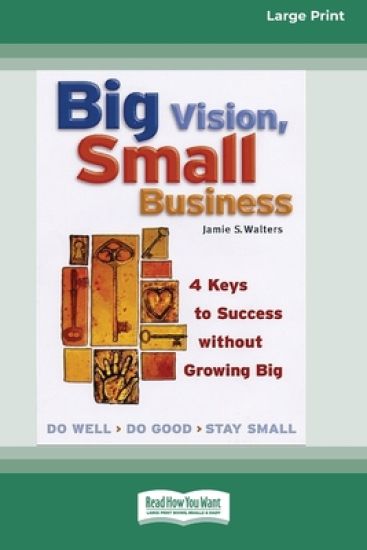
While most of the business world worships size and constant growth, Big Vision, Small Business celebrates the art - and power - of small. Based on interviews with more than seventy small - business owners and on her own experiences as a successful small - business entrepreneur, Jamie Walters shows how a business can stay small and remain vital, healthy, and rewarding. If you long to run a successful, socially conscious enterprise as one element of a fulfilling personal life, Big Vision, Small Business shows you how. Covering growth options and small - enterprise advantages, inspired visioning, communication, and right - relationship, mindset issues and expectation management, and wisdom and mastery practices, Big Vision, Small Business is a must - read for every entrepreneur and futurist. Walters defines for keys essential to creating a small business with a big vision: Creating alternatives to the dominant definition of ''''growth Learning the art of visioning big Creating ''''right relationships'''' with employees, customers, and others Overcoming the common stumbling blocks, such as money, risk, competition, and success.

Focusing on six principal subjects, Jamie James locates "a lost national school" of artists who left their homes for the unknown. There is Walter Spies, the devastatingly handsome German painter who remade his life in Bali; Raden Saleh, the Javanese painter who found fame in Europe; Isabelle Eberhardt, a Russian-Swiss writer who roamed the Sahara dressed as an Arab man; the American experimental filmmaker Maya Deren, who went to Haiti and became a committed follower of voodoo. From France, Paul Gauguin left for Tahiti; and Victor Segalen, a naval doctor, poet, and novelist, immersed himself in classical Chinese civilization in imperial Peking. In The Glamour of Strangeness, James evokes these extraordinary lives in portraits that bring the transcultural artist into sharp relief. Drawing on his own career as a travel writer and years of archival research uncovering previously unpublished letters and journals, James creates a penetrating study of the powerful connection between art and the exotic. Jamie James is the author of The Music of the Spheres, The Snake Charmer, Rimbaud in Java, and other titles. He has contributed to The New York Times, The Wall Street Journal, Vanity Fair, and National Geographic Traveler, among others, and served as the art critic at The New Yorker and The Times of London. He moved to Indonesia in 1999.
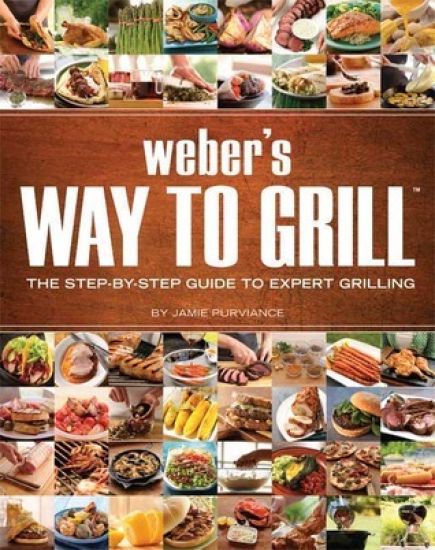
Weber's Way to Grill: The Step-By-Step Guide to Expert Grilling
Jamie Purviance
Harvest Publications
2009
nidottu
With indispensable tips and insights for getting better every step of the way, Weber's Way to Grill(TM) is an all-in-one master class in every aspect of outdoor cooking. It not only explains in clear, confidence-building recipes, it also shows readers with hundreds of color photographs exactly how to get the best results every time.Each chapter takes readers through successful techniques for grilling every item imaginable. The triple-tested recipes are wonderful by themselves, but even more valuable as delicious examples of how to put new skills to use. Next to the recipes, readers will find variations on all sorts of grilling methods, seasonings, and sauces. This book features hundreds of step-by-step photographs detailing every important moment in the process of grilling, along with captions about exactly how and why the techniques work as well as they do. It doesn't get more comprehensive than this.

Weber's Smoke: A Guide to Smoke Cooking for Everyone and Any Grill
Jamie Purviance
Harvest Publications
2012
nidottu
If you can grill, you can smoke Now you can add smoke flavor to almost any food on any grill. Weber's Smoke shows you how and inspires you with recipes that range from the classic (Best-on-the-Block Baby Back Ribs) to the ambitious (Smoked Duck and Cherry Sausages). And best of all, many of the recipes let you achieve mouthwatering smoke flavor in a matter of minutes-not hours.You'll learn: Basic and advanced smoke cooking methods for traditional smokers as well as standard backyard grillsOver 85 exciting recipes such as Brined and Maple-Smoked Bacon and Cedar-Planked Brie with Cherry Chutney and Toasted AlmondsSmoking woods' flavor characteristics and food pairing suggestions that complement each distinct type of woodWeber's Top Ten Smoking Tips for getting the best possible results on any grill

Grilling out is an essential part of the American culture, and Weber's name is synonymous with barbecue, bringing friends and families together to create moments that make lasting memories. Weber's New Real Grilling celebrates the joy of being in the backyard and gathering around the grill. Complete with more than 200 simple, classic, and--most of all--drop-to-your-knees delicious recipes, this book explores the foods and flavors that are made for grilling: the very best recipes for beef, pork, poultry, and seafood, small plates, vegetables and sides, desserts, and the best rubs, marinades, brines, and sauces. Find basic grilling skills, valuable tips, and tried-and-true techniques in Weber's New Real Grilling that will turn any griller into an expert outdoor entertainer. Weber's New Real Grilling includes: 200 delicious recipes, each with a full-color photoA guide on mastering the basics, including essential tools, advice on how to stock the griller's pantry, knife skills, common techniques, and moreTips on various grill set ups, different fuel types including lump charcoal and how to us and control it, plus grill cleaning essentials and safetyAdvanced Training on how to get the most from your grill with smoke cooking basics, rotisserie cooking, pizza on the grill, and using a wok to stir-fry on the grillGrill skills sections with tips, tricks, and how-tos of barbecue favorites for perfect steaks, ribs, turkey, and salmonFun detours into the past with classic recipes from Weber's grilling archives -- complete with an update for modern palatesClassic remix recipes which dive into Weber's grilling archives and update classic recipes for the modern palate.
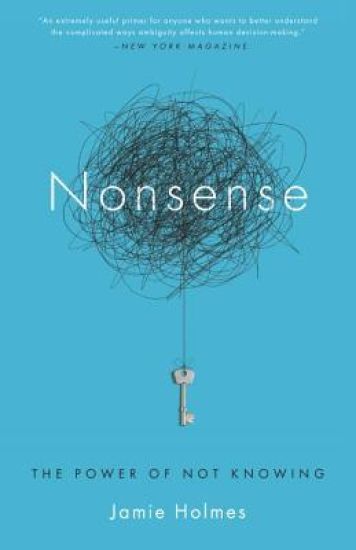
An illuminating look at the surprising upside of ambiguity and how, properly harnessed, it can inspire learning, creativity, even empathy Life today feels more overwhelming and chaotic than ever. Whether it s a confounding work problem or a faltering relationship or an unclear medical diagnosis, we face constant uncertainty. And we re continually bombarded with information, much of it contradictory. Managing ambiguity in our jobs, our relationships, and daily lives is quickly becoming an essential skill. Yet most of us don t know where to begin. As Jamie Holmes shows in Nonsense, being confused is unpleasant, so we tend to shutter our minds as we grasp for meaning and stability, especially in stressful circumstances. We re hard-wired to resolve contradictions quickly and extinguish anomalies. This can be useful, of course. When a tiger is chasing you, you can t be indecisive. But as Nonsense reveals, our need for closure has its own dangers. It makes us stick to our first answer, which is not always the best, and it makes us search for meaning in the wrong places. When we latch onto fast and easy truths, we lose a vital opportunity to learn something new, solve a hard problem, or see the world from another perspective. In other words, confusion that uncomfortable mental place has a hidden upside. We just need to know how to use it. This lively and original book points the way. Over the last few years, new insights from social psychology and cognitive science have deepened our understanding of the role of ambiguity in our lives and Holmes brings this research together for the first time, showing how we can use uncertainty to our advantage. Filled with illuminating stories from spy games and doomsday cults to Absolut Vodka s ad campaign and the creation of Mad Libs Nonsense promises to transform the way we conduct business, educate our children, and make decisions. In an increasingly unpredictable, complex world, it turns out that what matters most isn t IQ, willpower, or confidence in what we know. It s how we deal with what we don t understand.

Rabbi Jamie Korngold has always loved the outdoors, the place where humankind first met with God. Whether it's mountaineering, running ultramarathons, or just sitting by a stream, she finds her spirituality and Judaism thrive most in the wilderness. In her work as the Adventure Rabbi, leading groups toward spiritual fulfillment in the outdoors, Korngold has uncovered the rich traditions and lessons God taught our ancestors in the wild. In God in the Wilderness Korngold uses rabbinic wisdom and witty insights to guide readers through the Bible, showing people of all faiths that, despite the hectic pace of life today, it is vital for us to reclaim these lessons, awaken our inner spirituality, and find meaning, tranquillity, and purpose in our lives.

The parallel histories of music and science - from celestial harmony to cosmic dissonance. For centuries, scientists and philosophers believed that the universe was a stately, ordered mechanism, mathematical and musical. The perceived distances between objects in the sky mirrored (and were mirrored by) the spaces between notes that formed chords and scales. The smooth operation of the cosmos created a divine harmony that composers sought to capture. With The Music of the Spheres, readers will see how this scientific philosophy emerged, how it was shattered by changing views of the universe and the rise of Romanticism, and to what extent it survives today. From Pythagoras to Newton, Bach to Beethoven, and on into the twentieth century of Einstein, Schoenberg, Stravinsky, Cage, and Glass, this is a spellbinding examination of the interwoven fates of science and music throughout history.
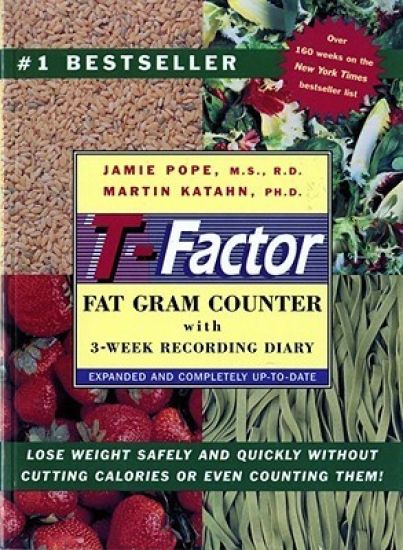
The T-Factor Fat Gram Counter grew out of The T-Factor Diet, the first popular diet book to show that fat was (and is) the major culprit in the American diet. All calories, Dr. Martin Katahn told us, are not created equal: his metabolic studies showed that the fat we consume in our food, as opposed to the carbohydrate and protein, is converted most efficiently to body fat and may lead to such conditions as cancer, hypertension, heart disease, and diabetes.The T-Factor Fat Gram Counter tells you everything you need to know to cut the hidden fat out of your food. It also provides a brief overview of vital diet and exercise principles, and target levels of fat consumption for men and women at varying body weights. Once you understand the role of dietary fat, you are liberated forever from the need to cut calories or even restrict your overall intake of food. Spend a few minutes a day checking the fat levels in various foods and making sensible choices, and you are well on your way to a longer, happier, and healthier life.

In this newly revised edition of the New York Times bestseller, Jamie Pope and Martin Katahn offer an informative, practical guide to low-fat eating that will help you lose weight while lowering your risk of disease. With listings of more than 2,000 foods, you'll find all the valuable information you need to make informed decisions about your diet. In this edition, the authors have updated listings, including total fat, saturated fat, calories, fiber, and sodium in the foods you eat each day; and they have, for the first time, listed grams of carbohydrates for each food. With up-to-date information on disease-fighting phytochemicals, the best sources of essential vitamins and minerals, and cholesterol content for many foods, this is an invaluable guide for anyone concerned with optimizing their food choices, achieving a healthy body weight, and preventing disease.

Commander Will Cushing: Daredevil Hero of the Civil War
Jamie Malanowski
W. W. Norton Company
2015
nidottu
October 1864. The confederate ironclad CSS Albemarle had sunk two federal warships and damaged seven others, taking control of the Roanoke River and threatening the Union blockade. Twenty-one-year-old navy lieutenant William Barker Cushing hatched a daring plan: to attack the fearsome warship with a few dozen men in two small wooden boats. What followed, the close-range torpedoing of the Albemarle and Cushing's harrowing two-day escape downriver from vengeful Rebel posses, is one of the most dramatic individual exploits in American military history. Theodore Roosevelt said that Cushing "comes next to Farragut on the hero roll of American naval history," but most have never heard of him today. Tossed out of the Naval Academy for "buffoonery," Cushing proved himself a prodigy in behind-the-lines warfare. Given command of a small union ship, he performed daring, near-suicidal raids, "cutting out" confederate ships and thwarting blockade runners. With higher commands and larger ships, Cushing's exploits grow bolder, culminating in the sinking of the Albemarle.A thrilling narrative biography, steeped in the tactics, weaponry, and battle techniques of the Union Navy, Commander Will Cushing brings to life a compelling yet flawed figure. Along with his three brothers, including one who fell at Gettysburg, Cushing served with bravery and heroism. But he was irascible and complicated--a loveable rogue, prideful and impulsive, who nonetheless possessed a genius for combat.In telling Cushing's story, Malanowski paints a vivid, memorable portrait of the army officials, engineers, and politicians scrambling to win the war. But he also goes deeper into the psychology of the daredevil soldier--and what this heroic and tragic figure, who died before his time, can tell us about the ways we remember the glories of war.

To varying extents in developed countries a minority of the population suffers from deprivation. Britain’s Labour government in particular has sought to deal with this through the notion of 'social exclusion', and similar ideas have been developed in other countries. This important text explores the various forms of this contemporary economic and social disadvantage and, in particular, investigates its social and spatial causes and the role of space in policies addressing disadvantage. Arranged in three distinct parts, it:introduces contemporary and historical conceptualizations of social exclusion and povertyanalyzes social exclusion’s origins by examining the different spheres of disadvantage and their relationsdiscusses strategies for overcoming social exclusion, and analyzes policy ideas from across the political spectrum.This book is the first to systematically analyze the role of geography in poverty and social exclusion, and deals with the roles of ‘globalization’ and localism. Though its main focus is Britain, it investigates similarities and differences in other developed countries. Spaces of Social Exclusion is a key text for researchers and students throughout the social sciences, social policy, human geography and urban studies, as well as policy makers and practitioners in social and urban policy.

To varying extents in developed countries a minority of the population suffers from deprivation. Britain’s Labour government in particular has sought to deal with this through the notion of 'social exclusion', and similar ideas have been developed in other countries. This important text explores the various forms of this contemporary economic and social disadvantage and, in particular, investigates its social and spatial causes and the role of space in policies addressing disadvantage. Arranged in three distinct parts, it:introduces contemporary and historical conceptualizations of social exclusion and povertyanalyzes social exclusion’s origins by examining the different spheres of disadvantage and their relationsdiscusses strategies for overcoming social exclusion, and analyzes policy ideas from across the political spectrum.This book is the first to systematically analyze the role of geography in poverty and social exclusion, and deals with the roles of ‘globalization’ and localism. Though its main focus is Britain, it investigates similarities and differences in other developed countries. Spaces of Social Exclusion is a key text for researchers and students throughout the social sciences, social policy, human geography and urban studies, as well as policy makers and practitioners in social and urban policy.

Although the increased awareness within public consciousness of the powerful nature of grooming has framed legal debates around increasing protection to children, these discussions have narrowly focused on the behaviours of perpetrators and have neglected to acknowledge the context in which grooming takes place. This book critically evaluates how and why social, cultural and gendered norms impact on a child’s vulnerability and provide an opportunity to abuse. This book provide evidence of how and why a fundamental paradigm shift is needed in relation to social and legal understandings of how grooming impacts on child vulnerability during the victimisation process and argues that placing the notion of the ‘child’ at the forefront of the debate surrounding grooming will develop a better understanding of the risk of harms posed to them.
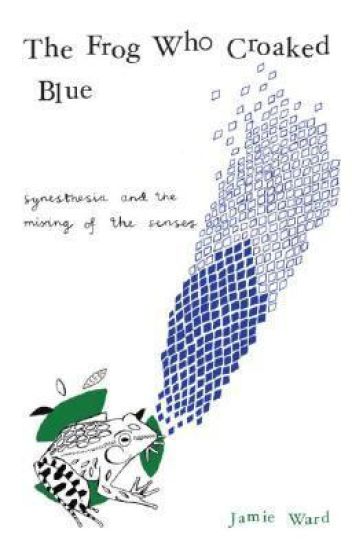
As little Edgar Curtis lay on his porch, he remarked to his mother how the noise of the rifle range was black, the chirp of the cricket was red, and the croak of the frog was bluish. Edgar, like many other people, has synesthesia - a fascinating condition in which music can have color, words can have taste, and time and numbers float through space. Everyone will be closely acquainted with at least 6 or 7 people who have synesthesia but you may not yet know who they are because, until very recently, synesthesia was largely hidden and unknown. Now science is uncovering its secrets and the findings are leading to a radical rethink about how our senses are organized. In this timely and thought-provoking book, Jamie Ward argues that sensory mixing is the norm even though only a few of us cross the barrier into the realms of synesthesia.How is it possible to experience color when no color is there? Why do some people experience touch when they see someone else being touched? Can blind people be made to see again by using their other senses? Why do scientists no longer believe that there are five senses? How does the food industry exploit the links that exist between our senses? Does synesthesia have a function? The Frog Who Croaked Blue explores all these questions in a lucid and entertaining way, making it fascinating reading for anyone with an interest in the intriguing workings of the mind.

As little Edgar Curtis lay on his porch, he remarked to his mother how the noise of the rifle range was black, the chirp of the cricket was red, and the croak of the frog was bluish. Edgar, like many other people, has synesthesia - a fascinating condition in which music can have color, words can have taste, and time and numbers float through space. Everyone will be closely acquainted with at least 6 or 7 people who have synesthesia but you may not yet know who they are because, until very recently, synesthesia was largely hidden and unknown. Now science is uncovering its secrets and the findings are leading to a radical rethink about how our senses are organized. In this timely and thought-provoking book, Jamie Ward argues that sensory mixing is the norm even though only a few of us cross the barrier into the realms of synesthesia.How is it possible to experience color when no color is there? Why do some people experience touch when they see someone else being touched? Can blind people be made to see again by using their other senses? Why do scientists no longer believe that there are five senses? How does the food industry exploit the links that exist between our senses? Does synesthesia have a function? The Frog Who Croaked Blue explores all these questions in a lucid and entertaining way, making it fascinating reading for anyone with an interest in the intriguing workings of the mind.

Deleuze & Guattari: Emergent Law is an exposition and development of Deleuze & Guattari's legal theory. Although there has been considerable interest in Deleuze & Guattari in critical legal studies, as well as considerable interest in legality in Deleuze & Guattari studies, this is the first book to focus exclusively on Deleuze & Guattari and law. Situating Deleuze & Guattari's engagement with social organisation and legality in the context of their theory of 'abstract machines' and 'intensive assemblages', Jamie Murray presents their theory of law as that of a two-fold conception of, first, a transcendent molar law and, second, an immanent molecular emergent law. Transcendent molar legality is the traditional object of legal theory. And, as explicated here, immanent molecular emergent law is the novel juridical object that Deleuze & Guattari identify. Developing this conception, Deleuze & Guattari: Emergent Law draws out its implications for current and for future legal theory; arguing that it provides the basis for a new jurisprudence capable of creating new concepts of legality.

Single-Case Research Methods in Sport and Exercise Psychology
Jamie Barker; Paul McCarthy; Marc Jones; Aidan Moran
Routledge
2011
sidottu
What is single-case research?How can single-case methods be used within sport and exercise?Single-case research is a powerful method for examining change in outcome variables such as behaviour, performance and psychological constructs, and for assessing the efficacy of interventions. It has innumerable uses within the context of sport and exercise science, such as in the development of more effective performance techniques for athletes and sportspeople and in helping us to better understand exercise behaviours in clinical populations. However, the fundamental principles and techniques of single-case research have not always been clearly understood by students and researchers working in these fields.Single-Case Research Methods in Sport and Exercise Psychology is the first book to fully explain single-case research in the context of sport and exercise. Starting with first principles, the book offers a comprehensive introduction to the single-case research process, from study design to data analysis and presentation. Including case studies and examples from across sport and exercise psychology, the book provides practical guidance for students and researchers and demonstrates the advantages and common pitfalls of single-case research for anybody working in applied or behavioural science in a sport or exercise setting.

Single-Case Research Methods in Sport and Exercise Psychology
Jamie Barker; Paul McCarthy; Marc Jones; Aidan Moran
Routledge
2011
nidottu
What is single-case research?How can single-case methods be used within sport and exercise?Single-case research is a powerful method for examining change in outcome variables such as behaviour, performance and psychological constructs, and for assessing the efficacy of interventions. It has innumerable uses within the context of sport and exercise science, such as in the development of more effective performance techniques for athletes and sportspeople and in helping us to better understand exercise behaviours in clinical populations. However, the fundamental principles and techniques of single-case research have not always been clearly understood by students and researchers working in these fields.Single-Case Research Methods in Sport and Exercise Psychology is the first book to fully explain single-case research in the context of sport and exercise. Starting with first principles, the book offers a comprehensive introduction to the single-case research process, from study design to data analysis and presentation. Including case studies and examples from across sport and exercise psychology, the book provides practical guidance for students and researchers and demonstrates the advantages and common pitfalls of single-case research for anybody working in applied or behavioural science in a sport or exercise setting.