Kirjojen hintavertailu. Mukana 12 016 292 kirjaa ja 12 kauppaa.

Kirjahaku

Etsi kirjoja tekijän nimen, kirjan nimen tai ISBN:n perusteella.

1000 tulosta hakusanalla Janet B. Croft

Hong Kong Movers and Stayers

Hong Kong Movers and Stayers

Janet W. Salaff; Siu-lun Wong; Arent Greve

University of Illinois Press
2010
sidottu
Half a million Hong Kong residents fled their homeland during the thirteen years before Hong Kong's reversion to China in 1997. Nearly half of those returned within the next several years. Filled with detailed, first-hand stories of nine Hong Kong families over nearly two decades, Hong Kong Movers and Stayers is a multifaceted yet intimate look at the forces behind Hong Kong families' successful, and failed, efforts at migration and settlement. Defining migration as a process, not a single act of leaving, Hong Kong Movers and Stayers provides an antidote to ethnocentric and simplistic theories by uncovering migration stories as they relate to social structures and social capital. The authors meld survey analysis, personal biography, and sociology and compare multiple families in order to give voice to the interplay of gender, age, and diverse family roles as motivating factors in migration.

Table Talk

Table Talk

Janet A. Flammang

University of Illinois Press
2016
sidottu
The civic virtues of a seat at the table Etiquette books insist that we never discuss politics during a meal. In Table Talk, Janet A. Flammang offers a polite rebuttal, presenting vivid firsthand accounts of people's lives at the table to show how mealtimes can teach us the conversational give-and-take foundational to democracy. Delving into the ground rules about listening, sharing, and respect that we obey when we break bread, Flammang shows how conversations and table activities represent occasions for developing our civil selves. If there are cultural differences over practices--who should speak, what behavior is acceptable, what topics are off limits, how to resolve conflict--our exposure to the making, enforcement, and breaking of these rules offers a daily dose of political awareness and growth. Political table talk provides a forum to practice the conversational skills upon which civil society depends. It also ignites the feelings of respect, trust, and empathy that undergird the idea of a common good that is fundamental to the democratic process.
Working-Class Girls Don't Become Artists

Working-Class Girls Don't Become Artists

Janet Zandy

UNIVERSITY OF ILLINOIS PRESS
2026
sidottu
Writing from a working-class perspective, Janet Zandy links labor and art to challenge the unnamed class biases in systems of art curation, categorization and expertise. Zandy orchestrates the voices of nine artists – Käthe Kollwitz and Elizabeth Catlett, Ruth Asawa and Marilyn Anderson, Milton Rogovin and Jens S. Jensen, Mark Rogovin and muralism, Ralph Fasanella, and Raymond Mason – whose work aligns with the histories and living conditions of working-class people. These paired portraits open larger conversations about class and artistic formation, intent, and accessibility. Zandy presents a model for writing about art in an inclusive, theoretically informed, and creatively constructed way. Art, as Zandy shows, is not a rare fruit to be plucked by the chosen few. Art is a human necessity and crucial for the sustenance of democracy. Ambitious and original, Working-Class Girls Don't Become Artists rewrites art history from a working-class perspective.
The Taste for Civilization

The Taste for Civilization

Janet A. Flammang

University of Illinois Press
2009
nidottu
This book explores the idea that table activities--the mealtime rituals of food preparation, serving, and dining--lay the foundation for a proper education on the value of civility, the importance of the common good, and what it means to be a good citizen. The arts of conversation and diplomatic speech are learned and practiced at tables, and a political history of food practices recasts thoughtfulness and generosity as virtues that enhance civil society and democracy. In our industrialized and profit-centered culture, however, foodwork is devalued and civility is eroding.Looking at the field of American civility, Janet A. Flammang addresses the gendered responsibilities for foodwork's civilizing functions and argues that any formulation of "civil society" must consider food practices and the household. To allow space for practicing civility, generosity, and thoughtfulness through everyday foodwork, Americans must challenge the norms of unbridled consumerism, work-life balance, and domesticity and caregiving. Connecting political theory with the quotidian activities of the dinner table, Flammang discusses practical ideas from the "delicious revolution" and Slow Food movement to illustrate how civic activities are linked to foodwork, and she points to farmers' markets and gardens in communities, schools, and jails as sites for strengthening civil society and degendering foodwork.
Hong Kong Movers and Stayers

Hong Kong Movers and Stayers

Janet W. Salaff; Siu-lun Wong; Arent Greve

University of Illinois Press
2010
nidottu
Half a million Hong Kong residents fled their homeland during the thirteen years before Hong Kong's reversion to China in 1997. Nearly half of those returned within the next several years. Filled with detailed, first-hand stories of nine Hong Kong families over nearly two decades, Hong Kong Movers and Stayers is a multifaceted yet intimate look at the forces behind Hong Kong families' successful, and failed, efforts at migration and settlement. Defining migration as a process, not a single act of leaving, Hong Kong Movers and Stayers provides an antidote to ethnocentric and simplistic theories by uncovering migration stories as they relate to social structures and social capital. The authors meld survey analysis, personal biography, and sociology and compare multiple families in order to give voice to the interplay of gender, age, and diverse family roles as motivating factors in migration.
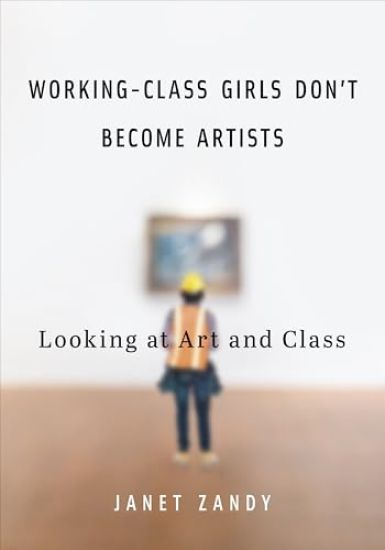
Table Talk

Table Talk

Janet A. Flammang

University of Illinois Press
2016
nidottu
The civic virtues of a seat at the table Etiquette books insist that we never discuss politics during a meal. In Table Talk, Janet A. Flammang offers a polite rebuttal, presenting vivid firsthand accounts of people's lives at the table to show how mealtimes can teach us the conversational give-and-take foundational to democracy. Delving into the ground rules about listening, sharing, and respect that we obey when we break bread, Flammang shows how conversations and table activities represent occasions for developing our civil selves. If there are cultural differences over practices--who should speak, what behavior is acceptable, what topics are off limits, how to resolve conflict--our exposure to the making, enforcement, and breaking of these rules offers a daily dose of political awareness and growth. Political table talk provides a forum to practice the conversational skills upon which civil society depends. It also ignites the feelings of respect, trust, and empathy that undergird the idea of a common good that is fundamental to the democratic process.
Working-Class Girls Don't Become Artists

Working-Class Girls Don't Become Artists

Janet Zandy

UNIVERSITY OF ILLINOIS PRESS
2026
nidottu
Writing from a working-class perspective, Janet Zandy links labor and art to challenge the unnamed class biases in systems of art curation, categorization and expertise. Zandy orchestrates the voices of nine artists – Käthe Kollwitz and Elizabeth Catlett, Ruth Asawa and Marilyn Anderson, Milton Rogovin and Jens S. Jensen, Mark Rogovin and muralism, Ralph Fasanella, and Raymond Mason – whose work aligns with the histories and living conditions of working-class people. These paired portraits open larger conversations about class and artistic formation, intent, and accessibility. Zandy presents a model for writing about art in an inclusive, theoretically informed, and creatively constructed way. Art, as Zandy shows, is not a rare fruit to be plucked by the chosen few. Art is a human necessity and crucial for the sustenance of democracy. Ambitious and original, Working-Class Girls Don't Become Artists rewrites art history from a working-class perspective.
The Time and Place That Gave Me Life

The Time and Place That Gave Me Life

Janet C. Bell

Indiana University Press
2007
nidottu
Janet Cheatham Bell's riveting memoir recounts her experiences coming of age as an African American girl in Indianapolis during the 1930s to the mid-1960s. In taut chapters, Bell introduces the reader to a life defined largely by race and racial discrimination. She begins with her birth in 1937 and her parents' early struggles after relocating to Indianapolis from Tennessee. Bell describes her first job as a maid in a wealthy white household and her humiliating experiences at a "white" high school. She describes experiences of racism at Indiana University and how she copes with personal tragedy that she is able to overcome. Devoid of hyperbole or the trauma that defines so many memoirs, particularly those of celebrities, the strength and appeal of Bell's memoir lies in her direct, but personal tone, and her deft use of anecdotes. "I think of myself as ordinary," writes Bell, "but the lives of ordinary people are not identical, and the details of those lives are worth knowing."
Gender Violence in Russia

Gender Violence in Russia

Janet Elise Johnson

Indiana University Press
2009
pokkari
Just a few years ago, most Russian citizens did not recognize the notion of domestic violence or acknowledge that such a problem existed. Today, after years of local and international pressure to combat violence against women, things have changed dramatically. Gender Violence in Russia examines why and how this shift occurred—and why there has been no similar reform on other gender violence issues such as rape, sexual assault, or human trafficking. Drawing on more than a decade of research, Janet Elise Johnson analyzes media coverage and survey data to explain why some interventions succeed while others fail. She describes the local-global dynamics between a range of international actors, from feminist activists to national governments, and an equally diverse set of Russian organizations and institutions.
Belle Gunness

Belle Gunness

Janet L. Langlois

Indiana University Press
1985
sidottu
The Guinness Book of World Records has in twelve editions listed Belle Gunness under the category "Most Prolific Murderers." She earned the epithet the Lady Bluebeard because she is believed to have killed as many as twenty spouses. She settled on a farm on the outskirts of LaPorte, Indiana, in 1901. Over the next seven years it is believed that she killed a husband, children, and an indeterminate number of would-be suitors who answered her matrimonial advertisements. Through symbolic analysis of the folk art about the murderess—anecdotes, personal-experience stories, legends, ballads, and plays and skits—Langlois discovers an integrated symbol system through which the community comes to various and contradictory conclusions about the deviant woman, deviancy in general, and social changes.
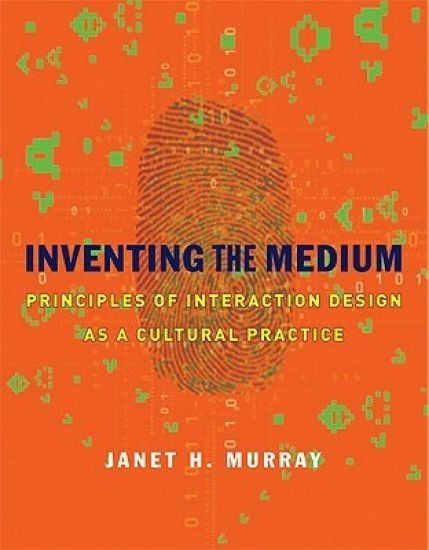
Inventing the Medium

Inventing the Medium

Janet H. Murray

MIT Press
2011
sidottu
A foundational text offering a unified design vocabulary and a common methodology for maximizing the expressive power of digital artifacts.Digital artifacts from iPads to databases pervade our lives, and the design decisions that shape them affect how we think, act, communicate, and understand the world. But the pace of change has been so rapid that technical innovation is outstripping design. Interactors are often mystified and frustrated by their enticing but confusing new devices; meanwhile, product design teams struggle to articulate shared and enduring design goals. With Inventing the Medium, Janet Murray provides a unified vocabulary and a common methodology for the design of digital objects and environments. It will be an essential guide for both students and practitioners in this evolving field.Murray explains that innovative interaction designers should think of all objects made with bits-whether games or Web pages, robots or the latest killer apps-as belonging to a single new medium: the digital medium. Designers can speed the process of useful and lasting innovation by focusing on the collective cultural task of inventing this new medium. Exploring strategies for maximizing the expressive power of digital artifacts, Murray identifies and examines four representational affordances of digital environments that provide the core palette for designers across applications: computational procedures, user participation, navigable space, and encyclopedic capacity. Each chapter includes a set of Design Explorations-creative exercises for students and thought experiments for practitioners-that allow readers to apply the ideas in the chapter to particular design problems. Inventing the Medium also provides more than 200 illustrations of specific design strategies drawn from multiple genres and platforms and a glossary of design concepts.
Designed for Success

Designed for Success

Janet Borgerson; Jonathan Schroeder

MIT PRESS LTD
2024
sidottu
A charmingly illustrated history of midcentury instructional records and their untold contribution to the American narrative of self-improvement, aspiration, and success.For the midcentury Americans who wished to better their golf game through hypnosis, teach their parakeet to talk, or achieve sexual harmony in their marriage, the answers lay no further than the record player. In Designed for Success, Janet Borgerson and Jonathan Schroeder shed light on these endearingly earnest albums that contributed to a powerful American vision of personal success. Rescued from charity shops, record store cast-off bins, or forgotten boxes in attics and basements, these educational records reveal the American consumers’ rich but sometimes surprising relationship to advertising, self-help, identity construction, and even aspects of transcendentalist thought.Relegated to obscurity and novelty, instructional records such as Secrets of Successful Varmint Calling, You Be a Disc Jockey, and How to Ski (A Living-Room Guide for Beginners) offer distinct insights into midcentury media production and consumption. Tracing the history of instructional records from the inception of the recording industry to the height of their popularity, Borgerson and Schroeder offer close readings of the abundant topics covered by “designed for success” records. Complemented by over a hundred full-color illustrations, Designed for Success is a wonderfully nostalgic tour that showcases the essential role these vinyl records played as an unappreciated precursor to contemporary do-it-yourself culture and modern conceptions of self-improvement.
Inventing the Internet

Inventing the Internet

Janet Abbate

MIT Press
2000
pokkari
Janet Abbate recounts the key players and technologies that allowed the Internet to develop; but her main focus is always on the social and cultural factors that influenced the Internet's design and use.Since the late 1960s the Internet has grown from a single experimental network serving a dozen sites in the United States to a network of networks linking millions of computers worldwide. In Inventing the Internet, Janet Abbate recounts the key players and technologies that allowed the Internet to develop; but her main focus is always on the social and cultural factors that influenced the Internets design and use. The story she unfolds is an often twisting tale of collaboration and conflict among a remarkable variety of players, including government and military agencies, computer scientists in academia and industry, graduate students, telecommunications companies, standards organizations, and network users.The story starts with the early networking breakthroughs formulated in Cold War think tanks and realized in the Defense Department's creation of the ARPANET. It ends with the emergence of the Internet and its rapid and seemingly chaotic growth. Abbate looks at how academic and military influences and attitudes shaped both networks; how the usual lines between producer and user of a technology were crossed with interesting and unique results; and how later users invented their own very successful applications, such as electronic mail and the World Wide Web. She concludes that such applications continue the trend of decentralized, user-driven development that has characterized the Internet's entire history and that the key to the Internet's success has been a commitment to flexibility and diversity, both in technical design and in organizational culture.
Hamlet on the Holodeck

Hamlet on the Holodeck

Janet H. Murray

MIT Press
2017
pokkari
An updated edition of the classic book on digital storytelling, with a new introduction and expansive chapter commentaries.I want to say to all the hacker-bards from every field—gamers, researchers, journalists, artists, programmers, scriptwriters, creators of authoring systems... please know that I wrote this book for you."— Hamlet on the Holodeck, from the author's introduction to the updated edition Janet Murray's Hamlet on the Holodeck was instantly influential and controversial when it was first published in 1997. Ahead of its time, it accurately predicted the rise of new genres of storytelling from the convergence of traditional media forms and computing. Taking the long view of artistic innovation over decades and even centuries, it remains forward-looking in its description of the development of new artistic traditions of practice, the growth of participatory audiences, and the realization of still-emerging technologies as consumer products. This updated edition of a book the New Yorker calls a "cult classic" offers a new introduction by Murray and chapter-by-chapter commentary relating Murray's predictions and enduring design insights to the most significant storytelling innovations of the past twenty years, from long-form television to artificial intelligence to virtual reality. Murray identifies the powerful new set of expressive affordances that computing offers for the ancient human activity of storytelling and considers what would be necessary for interactive narrative to become a mature and compelling art form. Her argument met with some resistance from print loyalists and postmodern hypertext enthusiasts, and it provoked a foundational debate in the emerging field of game studies on the relationship between narrative and videogames. But since Hamlet on the Holodeck's publication, a practice that was largely speculative has been validated by academia, artistic practice, and the marketplace. In this substantially updated edition, Murray provides fresh examples of expressive digital storytelling and identifies new directions for narrative innovation.
Recoding Gender

Recoding Gender

Janet Abbate

MIT Press
2017
pokkari
The untold history of women and computing: how pioneering women succeeded in a field shaped by gender biases.Today, women earn a relatively low percentage of computer science degrees and hold proportionately few technical computing jobs. Meanwhile, the stereotype of the male "computer geek" seems to be everywhere in popular culture. Few people know that women were a significant presence in the early decades of computing in both the United States and Britain. Indeed, programming in postwar years was considered woman's work (perhaps in contrast to the more manly task of building the computers themselves). In Recoding Gender, Janet Abbate explores the untold history of women in computer science and programming from the Second World War to the late twentieth century. Demonstrating how gender has shaped the culture of computing, she offers a valuable historical perspective on today's concerns over women's underrepresentation in the field.Abbate describes the experiences of women who worked with the earliest electronic digital computers: Colossus, the wartime codebreaking computer at Bletchley Park outside London, and the American ENIAC, developed to calculate ballistics. She examines postwar methods for recruiting programmers, and the 1960s redefinition of programming as the more masculine "software engineering." She describes the social and business innovations of two early software entrepreneurs, Elsie Shutt and Stephanie Shirley; and she examines the career paths of women in academic computer science.Abbate's account of the bold and creative strategies of women who loved computing work, excelled at it, and forged successful careers will provide inspiration for those working to change gendered computing culture.
Designed for Hi-Fi Living

Designed for Hi-Fi Living

Janet Borgerson; Jonathan Schroeder; Daniel Miller

MIT Press
2018
pokkari
How record albums and their covers delivered mood music, lifestyle advice, global sounds, and travel tips to midcentury Americans who longed to be modern.The sleek hi-fi console in a well-appointed midcentury American living room might have had a stack of albums by musicians like Frank Sinatra, Elvis Presley, or Patti Page. It was just as likely to have had a selection of LPs from slightly different genres, with such titles as Cocktail Time, Music for a Chinese Dinner at Home, The Perfect Background Music for Your Home Movies, Honeymoon in Hawaii, Strings for a Space Age, or Cairo! The Music of Modern Egypt. The brilliantly hued, full-color cover art might show an ideal listener, an ideal living room, an ideal tourist in an exotic landscape-or even an ideal space traveler. In Designed for Hi-Fi Living, Janet Borgerson and Jonathan Schroeder listen to and look at these vinyl LPs, scouring the cover art and the liner notes, and find that these albums offered a guide for aspirational Americans who yearned to be modern in postwar consumer culture.Borgerson and Schroeder examine the representations of modern life in a selection of midcentury record albums, discussing nearly 150 vintage album covers, reproduced in color-some featuring modern art or the work of famous designers and photographers. Offering a fascinating glimpse into the postwar imagination, the first part, "Home," explores how the American home entered the frontlines of cold war debates and became an entertainment zone-a place to play music, mix drinks, and impress guests with displays of good taste. The second part, "Away," considers albums featuring music, pictures, and tourist information that prepared Americans for the jet age as well as the space race.
The Green Tuxedo

The Green Tuxedo

Janet Holmes

University of Notre Dame Press
1998
nidottu
Janet Holmes's second book of poems explores and interrogates the quotidian life of the late twentieth century for what exists behind its often seductive appearance. In these poems we see beneath acceptable, sleek surfaces into the turbulence they often conceal, as the splendid green tuxedo of the title may disguise a heart that harbors racism, fear, and violence. Holmes exhorts us to look beyond the face value of what presents itself, to resist literal interpretations, and to plumb the many depths afforded by each encounter with the world outside ourselves. In the second half of The Green Tuxedo, Holmes draws on recently discovered diaries kept by her journalist father nearly fifty years before her birth. Sifting through evidence and memory, she entwines actual diary entries (such as a seventy-seven-name list of "Wild Women I Have Known") with speculation and invention to generate a portrait that discovers him- re-invents him-as a young man. This sequence, searching and elegiac, affords closure to a book whose questionings suggest less a need for absolute answers than a declaration of the need to explore. Holmes leads us through a world of appearances, celebrating the necessary examination of what is concealed.
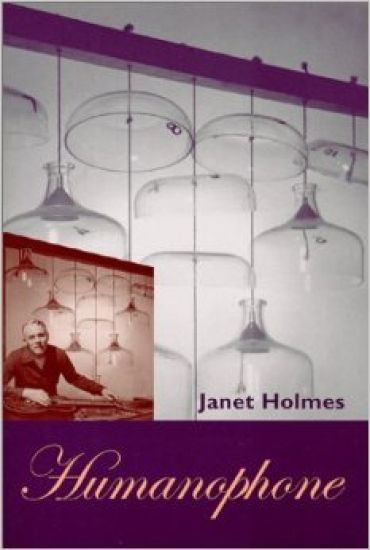
Humanophone

Humanophone

Janet Holmes

University of Notre Dame Press
2001
sidottu
The poetry in Humanophone, the third volume from award-winning poet Janet Holmes, celebrates composers and creators such as Harry Partch, Raymond Scott, Leon Theremin, and George Ives, who had to invent new instruments to capture the music heard in their "mind's ear." Taking its title from a George Ives invention—an instrument made from a group of humans, each of whom sings a single note, arrayed like a xylophone—Humanophone appears on its surface to be about music. But its real subject is the artist's creative dilemma—how to deliver a new idea, whether it be a song or a poem, through existing media. Holmes works language into a variety of forms both familiar—syllabics, couplets, villanelles, sonnets—and engagingly new. With everything from kumquats to abandoned wedding pictures, Clara Bow to Bill Robinson, Keats's belle dame to Dante's Francesca, feng shui to a recipe for octopus, Humanophone celebrates how the body shapes art from the world it is given. In Humanophone, Holmes not only chronicles events such as Harry Partch's transformation of glass chemical containers from the Berkeley Radiation Lab into the melodious and beautiful Cloud-Chamber Bowls, but also traces a playful path through the familiar, as a trombone's upwards glissando becomes "a backwards pratfall/in brass." Engaging a broad array of subjects, Holmes's poetry is as delightful as it is thoughtful, as simple as it is complex.
Humanophone

Humanophone

Janet Holmes

University of Notre Dame Press
2001
nidottu
The poetry in Humanophone, the third volume from award-winning poet Janet Holmes, celebrates composers and creators such as Harry Partch, Raymond Scott, Leon Theremin, and George Ives, who had to invent new instruments to capture the music heard in their "mind's ear." Taking its title from a George Ives invention—an instrument made from a group of humans, each of whom sings a single note, arrayed like a xylophone—Humanophone appears on its surface to be about music. But its real subject is the artist's creative dilemma—how to deliver a new idea, whether it be a song or a poem, through existing media. Holmes works language into a variety of forms both familiar—syllabics, couplets, villanelles, sonnets—and engagingly new. With everything from kumquats to abandoned wedding pictures, Clara Bow to Bill Robinson, Keats's belle dame to Dante's Francesca, feng shui to a recipe for octopus, Humanophone celebrates how the body shapes art from the world it is given. In Humanophone, Holmes not only chronicles events such as Harry Partch's transformation of glass chemical containers from the Berkeley Radiation Lab into the melodious and beautiful Cloud-Chamber Bowls, but also traces a playful path through the familiar, as a trombone's upwards glissando becomes "a backwards pratfall/in brass." Engaging a broad array of subjects, Holmes's poetry is as delightful as it is thoughtful, as simple as it is complex.
F2F

F2F

Janet Holmes

University of Notre Dame Press
2006
nidottu
f2f: Shorthand for "face-to-face," as in meeting someone in real life, flesh-to-flesh, as opposed to in the electronic world of cyberspace. Used in chat rooms and while instant messaging on the Internet. At the core of this challenging new collection from Janet Holmes is the conceit of the sense of sight and the complex role it plays in women's self-identities and relationships. Emily Dickinson is introduced as the iconic female writer who, unread in her time, is frequently misinterpreted and unheard. Holmes relates Dickinson's self-isolation to the writer's isolation from the reader and the intimacy of the act of reading. Echo, Eurydice, and Eros—other "E" figures, these mythological, their stories relying on seeing and being seen—are related by Holmes to twentieth-century counterparts manifesting as an anorexic, a flamboyant dresser, and a love god, respectively. Holmes intersperses her meditation with the language of online text-messaging, employing it as a vehicle for probing the dual limitations and liberties afforded on-line correspondents. Through her correspondents' postings, we chart their relationship evolving without benefit of ever meeting or exchanging photographs, the participants deeply affected by the absence of the sense of sight. By turns provocative and timid, lyrical and terse, the voices in f2f exhibit myriad human reactions to how seeing each other influences how we behave.