Kirjahaku
Etsi kirjoja tekijän nimen, kirjan nimen tai ISBN:n perusteella.
1000 tulosta hakusanalla Jean Rotrou



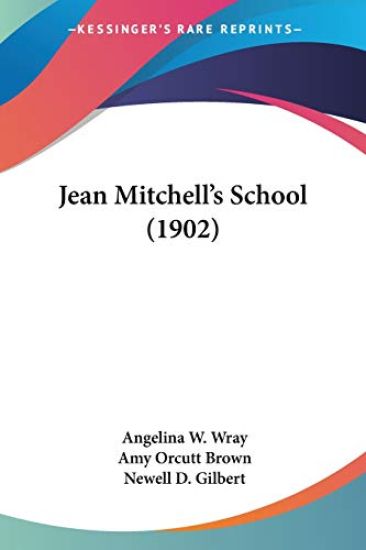
Jean Mitchell's School
Angelina W. Wray; Amy Orcutt (ILT) Brown; Newell D. (CON) Gilbert
Kessinger Pub
2008
pokkari


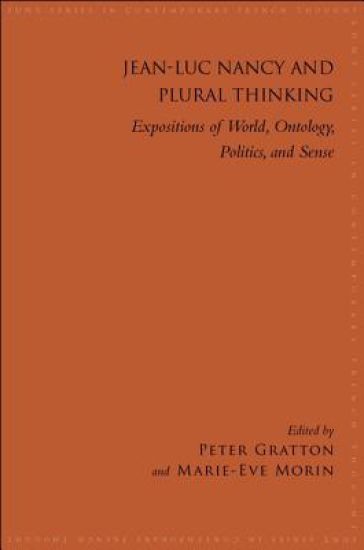
Jean-Luc Nancy and Plural Thinking
State University of New York Press
2012
pokkari
Wide-ranging essays on Jean-Luc Nancy's thought.Jean-Luc Nancy is one of the leading voices in European philosophy of the last thirty years, and he has influenced a range of fields, including theology, aesthetics, and political theory. This volume offers the widest and most up-to-date responses to his work, oriented by the themes of world, finitude, and sense, with attention also given to his recent project on the "deconstruction of Christianity." Focusing on Nancy's writings on globalization, Christianity, the plurality of art forms, his materialist ontology, as well as a range of contemporary issues, an international group of scholars provides not just inventive interpretations of Nancy's work but also essays taking on the most pressing issues of today. The collection brings to the fore the originality of his thinking and points to the future of continental philosophy. A previously unpublished interview with Nancy concludes the volume.
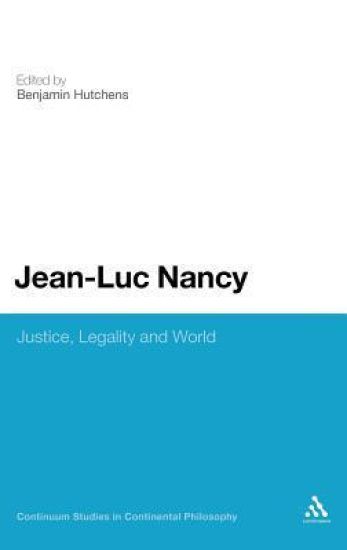
Jean-Luc Nancy
Continuum Publishing Corporation
2012
sidottu
Before now, Jean-Luc Nancy's contributions to legal and political theory have been largely overlooked and lacking the in-depth appraisal they deserve. In this unique collection, eighteen notable Nancy scholars contextualize Nancy's work in these areas within the broad corpus of his other concerns. At the same time, his work is situated within his total achievements with regard to justice and legality in the legal and political theoretical canon. By emphasizing the originality of his theories in a globalizing age, each distinctive chapter provides a new and valuable insight into Nancy's legal and political philosophy. Together with his work on sense, community and art, these cutting edge contributions examine Nancy's conceptions of justice, legality and world in conjunction with the interpretation and rationality of: The ontology of the event. The form of relationality. The effects of globalization. The importance of Christianity in contemporary legal and political theory. Including a brand new essay by Nancy himself, this collection marks an important and timely step in a rich area of study.
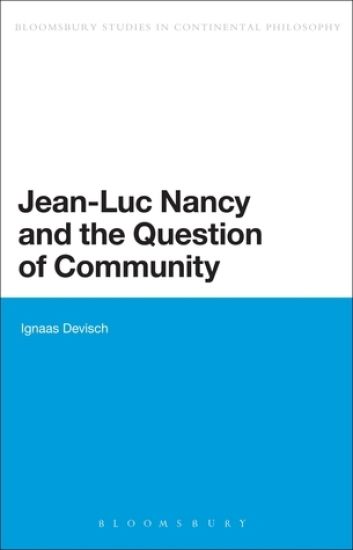
The question of community is central to our daily life: where do we belong to, what do we share with each other? The French philosopher Jean-Luc Nancy has made these questions one of the central topics of his oeuvre. Jean-Luc Nancy and the Question of Community is the first to elaborate extensively this question within Nancy. Ignaas Devisch sketches the philosophical debate on community today and puts the work of Nancy within its intellectual context, from Heidegger and Derrida, to Bataille and Blanchot. Devisch argues that Nancy’s work takes another look at community, at the social bond and at identity more generally than we are used to.
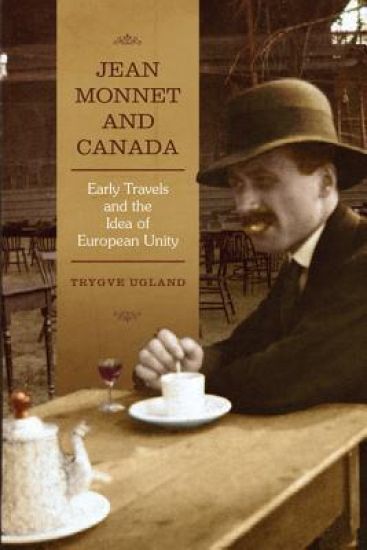
Jean Monnet (1888-1979) is often viewed as the chief architect of the European Coal and Steel Community, which over time evolved into today's European Union. Monnet spent his early years working as an agent for his father, a cognac producer. It was this experience that took him to Scandinavia, England, the United States, and most importantly Canada, where he was exposed to the country's unique form of federalism. Drawing on a wide variety of empirical sources, including unpublished documents, correspondence, and original historical data extracted from archives both in Canada and Europe, Trygve Ugland's Jean Monnet and Canada argues that the extensive period of time Monnet spent in Canada between 1907 and 1914 had a formative influence on the achievements of his later years, particularly on the institutional 'construction of Europe.'