Kirjojen hintavertailu. Mukana 11 342 296 kirjaa ja 12 kauppaa.

Kirjahaku

Etsi kirjoja tekijän nimen, kirjan nimen tai ISBN:n perusteella.

1000 tulosta hakusanalla Jeremy Dibble

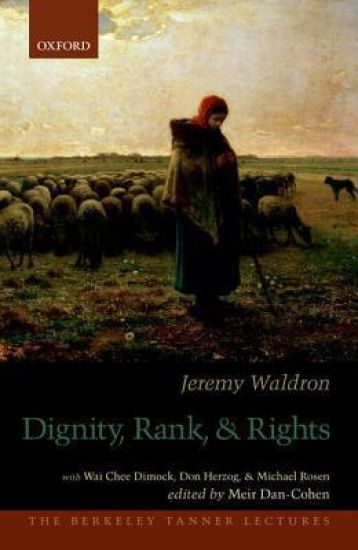
Dignity, Rank, and Rights

Dignity, Rank, and Rights

Jeremy Waldron

Oxford University Press Inc
2012
sidottu
Writers on human dignity roughly divide between those who stress the social origins of this concept and its role in marking rank and hierarchy, and those who follow Kant in grounding dignity in an abstract and idealized philosophical conception of human beings. In these lectures, Jeremy Waldron contrives to combine attractive features of both strands. In the first lecture, Waldron presents a conception of dignity that preserves its ancient association with rank and station, thus allowing him to tap rich historical resources while avoiding what many perceive as the excessive abstraction and dubious metaphysics of the Kantian strand. At the same time he argues for a conception of human dignity that amounts to a generalization of high status across all human beings, and so attains the appealing universality of the Kantian position. The second lecture focuses particularly on the importance of dignity - understood in this way - as a status defining persons' relation to law: their presentation as persons capable of self-applying the law, capable of presenting and arguing a point of view, and capable of responding to law's demands without brute coercion. Together the two lectures illuminate the relation between dignity conceived as the ground of rights and dignity conceived as the content of rights; they also illuminate important ideas about dignity as noble bearing and dignity as the subject of a right against degrading treatment; and they help us understand the sense in which dignity is better conceived as a status than as a kind of value.

Bad Blood

Bad Blood

Jeremy Whittle

Vintage
2009
pokkari
Even the biggest cycling fan can one day wake up to find that he has lost his faith Bad Blood is the story of Jeremy Whittle's journey from unquestioning fan to Tour de France insider and confirmed sceptic.
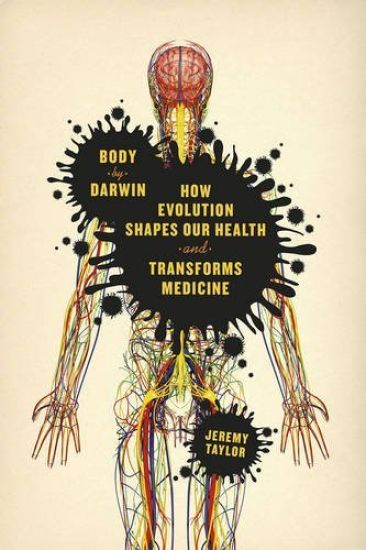
Body by Darwin

Body by Darwin

Jeremy Taylor

University of Chicago Press
2015
sidottu
We think of medical science and doctors as focused on treating conditions-whether it's a cough or an aching back. But the sicknesses and complaints that cause us to seek medical attention actually have deeper origins than the superficial germs and behaviors we regularly fault. In fact, as Jeremy Taylor shows in Body by Darwin, we can trace the roots of many medical conditions through our evolutionary history, revealing what has made us susceptible to certain illnesses and ailments over time and how we can use that knowledge to help us treat or prevent problems in the future. In Body by Darwin, Taylor examines the evolutionary origins of some of our most common and serious health issues. To begin, he looks at the hygiene hypothesis, which argues that our obsession with anti-bacterial cleanliness, particularly at a young age, may be making us more vulnerable to autoimmune and allergic diseases. He also discusses diseases of the eye, the medical consequences of bipedalism as they relate to all those aches and pains in our backs and knees, the rise of Alzheimer's disease, and how cancers become so malignant that they kill us despite the toxic chemotherapy we throw at them. Taylor explains why it helps to think about heart disease in relation to the demands of an ever-growing, dense, muscular pump that requires increasing amounts of nutrients, and he discusses how walking upright and giving birth to ever larger babies led to a problematic compromise in the design of the female spine and pelvis. Throughout, he not only explores the impact of evolution on human form and function, but he integrates science with stories from actual patients and doctors, closely examining the implications for our health. As Taylor shows, evolutionary medicine allows us think about the human body and its adaptations in a completely new and productive way. By exploring how our body's performance is shaped by its past, Body by Darwin draws powerful connections between our ancient human history and the future of potential medical advances that can harness this knowledge.
The Political Mapping of Cyberspace

The Political Mapping of Cyberspace

Jeremy W. Crampton

University of Chicago Press
2004
nidottu
As inherently spatial beings, our sense of space in cyberspace challenges all that is familiar in terms of our ability to define, organize, govern, and map social places. In The Political Mapping of Cyberspace, Jeremy Crampton shows that cyberspace is not the virtual reality we think it to be, but instead a rich geography of political practices and power relations. Using concepts and methods derived from the work of Michel Foucault, Crampton outlines a new mapping of cyberspace to help define the role of space in virtual worlds and to provide constructive ways in which humans can exist in another spatial dimension. He delineates the critical role maps play in constructing the medium as an object of knowledge and demonstrates that by processes of mapping we come to understand cyberspace. Maps, he argues, shape political thinking about cyberspace, and he deploys in-depth case studies of crime mapping, security maintenance, and geo-surveillance to show how we map ourselves onto cyberspace, inexorably, and indelibly. Offering a powerful reinterpretation of technology and contemporary life, this innovative book will be an essential touchstone for the study of cartography and cyberspace in the twenty-first century.
History, Historians, and Autobiography

History, Historians, and Autobiography

Jeremy D. Popkin

University of Chicago Press
2005
sidottu
Though history and autobiography both claim to tell true stories about the past, historians have traditionally rejected first-person accounts as subjective and therefore unreliable. What then, asks Jeremy D. Popkin in History, Historians, and Autobiography, are we to make of the ever-increasing number of professional historians who are publishing stories of their own lives? And how is this recent development changing the nature of history-writing, the historical profession, and the genre of autobiography? Drawing on the theoretical work of contemporary critics of autobiography, as well as the philosophy of Paul Ricoeur, Popkin reads the autobiographical classics of Edward Gibbons and Henry Adams and the memoirs of contemporary historians such as Emmanuel Le Roy Ladurie, Peter Gay, Jill Ker Conway, and many others. He reveals the contributions that historians' life stories make to our understanding of the human experience. Historians' autobiographies, he shows, reveal how scholars arrive at their vocations, the difficulties of writing about modern professional life, and the ways in which personal stories can add to our understanding of historical events such as war, political movements, and the traumas of the Holocaust. An engrossing overview of the way historians view themselves and their profession, this work will be of interest to readers concerned with the ways in which we understand the past, as well as anyone interested in the art of life-writing.
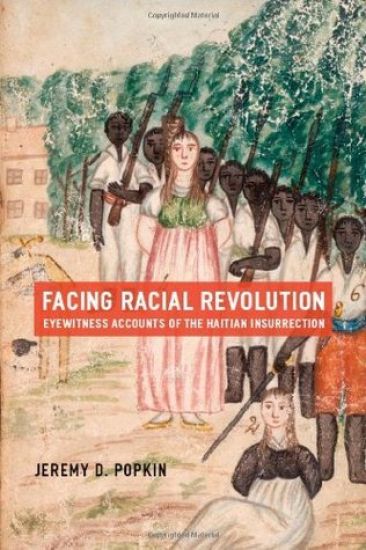
Facing Racial Revolution

Facing Racial Revolution

Jeremy D. Popkin

University of Chicago Press
2008
nidottu
The only truly successful slave uprising in the Atlantic world, the Haitian Revolution gave birth to the first independent black republic of the modern era. Inspired by the revolution that had recently roiled their French rulers, black slaves and people of mixed race alike rose up against their oppressors in a bloody insurrection that led to the burning of the colony's largest city, a bitter struggle against Napoleon's troops, and, in 1804, the founding of a free nation. Numerous firsthand narratives of these events survive, but their invaluable insights into the period have languished in obscurity - until now. In "Facing Racial Revolution", Jeremy D. Popkin unearths these documents and presents excerpts from more than a dozen accounts written by white colonists trying to come to grips with a world that had suddenly disintegrated. These dramatic writings give us our most direct portrayal of the actions of the revolutionaries, vividly depicting encounters with the uprising's leaders - Toussaint L'ouverture, Boukman, and Jean-Jacques Dessalines - as well as putting faces on many of the anonymous participants in this epochal moment. Popkin's expert commentary on each selection provides the necessary background about the authors and the incidents they describe, while also addressing the complex question of the witnesses' reliability and urging the reader to consider the implications of the narrators' perspectives. Along with the American and French revolutions, the birth of Haiti helped shape the modern world. The powerful, moving, and sometimes troubling testimonies collected in Facing Racial Revolution significantly expand our understanding of this momentous event.
The Challenge of Nietzsche

The Challenge of Nietzsche

Jeremy Fortier

University of Chicago Press
2020
sidottu
Friedrich Nietzsche is one of the most widely read authors in the world, from the time of his death to the present--as well as one of the most controversial. He has been celebrated as a theorist of individual creativity and self-care but also condemned as an advocate of antimodern politics and hierarchical communalism. Rather than treating these approaches as mutually exclusive, Jeremy Fortier contends that we ought instead to understand Nietzsche's complex legacy as the consequence of a self-conscious and artful tension woven into the fabric of his books. The Challenge of Nietzsche uses Nietzsche as a guide to Nietzsche, highlighting the fact that Nietzsche equipped his writings with retrospective self-commentaries and an autobiographical apparatus that clarify how he understood his development as an author, thinker, and human being. Fortier shows that Nietzsche used his writings to establish two major character types, the Free Spirit and Zarathustra, who represent two different approaches to the conduct and understanding of life: one that strives to be as independent and critical of the world as possible, and one that engages with, cares for, and aims to change the world. Nietzsche developed these characters at different moments of his life, in order to confront from contrasting perspectives such elemental experiences as the drive to independence, the feeling of love, and the assessment of one's overall health or well-being. Understanding the tension between the Free Spirit and Zarathustra takes readers to the heart of what Nietzsche identified as the tensions central to his life, and to all human life.
The Ethics of Oneness

The Ethics of Oneness

Jeremy David Engels

University of Chicago Press
2021
sidottu
We live in an era defined by a sense of separation, even in the midst of networked connectivity. As cultural climates sour and divisive political structures spread, we are left wondering about our ties to each other. Consequently, there is no better time than now to reconsider ideas of unity. In The Ethics of Oneness, Jeremy David Engels reads the Bhagavad Gita alongside the works of American thinkers Ralph Waldo Emerson and Walt Whitman. Drawing on this rich combination of traditions, Engels presents the notion that individuals are fundamentally interconnected in their shared divinity. In other words, everything is one. If the lessons of oneness are taken to heart, particularly as they were expressed and celebrated by Whitman, and the ethical challenges of oneness considered seriously, Engels thinks it is possible to counter the pervasive and problematic American ideals of hierarchy, exclusion, violence, and domination.
The Ethics of Oneness

The Ethics of Oneness

Jeremy David Engels

University of Chicago Press
2021
nidottu
We live in an era defined by a sense of separation, even in the midst of networked connectivity. As cultural climates sour and divisive political structures spread, we are left wondering about our ties to each other. Consequently, there is no better time than now to reconsider ideas of unity. In The Ethics of Oneness, Jeremy David Engels reads the Bhagavad Gita alongside the works of American thinkers Ralph Waldo Emerson and Walt Whitman. Drawing on this rich combination of traditions, Engels presents the notion that individuals are fundamentally interconnected in their shared divinity. In other words, everything is one. If the lessons of oneness are taken to heart, particularly as they were expressed and celebrated by Whitman, and the ethical challenges of oneness considered seriously, Engels thinks it is possible to counter the pervasive and problematic American ideals of hierarchy, exclusion, violence, and domination.
The Doctor Who Wasn't There

The Doctor Who Wasn't There

Jeremy A. Greene

THE UNIVERSITY OF CHICAGO PRESS
2022
sidottu
This gripping history shows how the electronic devices we use to access care influence the kind of care we receive.The Doctor Who Wasn’t There traces the long arc of enthusiasm for—and skepticism of—electronic media in health and medicine. Over the past century, a series of new technologies promised to democratize access to healthcare. From the humble telephone to the connected smartphone, from FM radio to wireless wearables, from cable television to the “electronic brains” of networked mainframe computers: each new platform has promised a radical reformation of the healthcare landscape. With equal attention to the history of technology, the history of medicine, and the politics and economies of American healthcare, physician and historian Jeremy A. Greene explores the role that electronic media play, for better and for worse, in the past, present, and future of our health. Today’s telehealth devices are far more sophisticated than the hook-and-ringer telephones of the 1920s, the radios that broadcasted health data in the 1940s, the closed-circuit televisions that enabled telemedicine in the 1950s, or the online systems that created electronic medical records in the 1960s. But the ethical, economic, and logistical concerns they raise are prefigured in the past, as are the gaps between what was promised and what was delivered. Each of these platforms also produced subtle transformations in health and healthcare that we have learned to forget, displaced by promises of ever newer forms of communication that took their place. Illuminating the social and technical contexts in which electronic medicine has been conceived and put into practice, Greene’s history shows the urgent stakes, then and now, for those who would seek in new media the means to build a more equitable future for American healthcare.
Statistics for Public Policy

Statistics for Public Policy

Jeremy G. Weber

THE UNIVERSITY OF CHICAGO PRESS
2024
sidottu
A long-overdue guide on how to use statistics to bring clarity, not confusion, to policy work. Statistics are an essential tool for making, evaluating, and improving public policy. Statistics for Public Policy is a crash course in wielding these unruly tools to bring maximum clarity to policy work. Former White House economist Jeremy G. Weber offers an accessible voice of experience for the challenges of this work, focusing on seven core practices: Thinking big-picture about the role of data in decisions Critically engaging with data by focusing on its origins, purpose, and generalizability Understanding the strengths and limits of the simple statistics that dominate most policy discussions Developing reasons for considering a number to be practically small or large Distinguishing correlation from causation and minor causes from major causes Communicating statistics so that they are seen, understood, and believed Maintaining credibility by being right (or at least respectably wrong) in every setting Statistics for Public Policy dispenses with the opacity and technical language that have long made this space impenetrable; instead, Weber offers an essential resource for all students and professionals working at the intersections of data and policy interventions. This book is all signal, no noise.
Our Grief Is Not a Cry for War

Our Grief Is Not a Cry for War

Jeremy Varon

THE UNIVERSITY OF CHICAGO PRESS
2025
sidottu
An original history of the popular movement against the War on Terror—the greatest case of “we told you so” in modern political history. Just after 9/11, President George W. Bush climbed the rubble where the World Trade Center had stood. Surrounded by shouts of anger, he said, “The people who knocked these buildings down will hear all of us soon!” With these words, Bush ushered in the War on Terror. Quickly, a global protest movement mobilized against it, reshaping the political, moral, and media landscape. Jeremy Varon’s Our Grief Is Not a Cry for War is the definitive history of that movement. Millions of Americans participated in thousands of acts of protest, from demonstrations to civil disobedience to peace encampments in Iraq. On February 15, 2003, up to 30 million people worldwide took to the streets in the largest protest in human history. But this enormous outcry was not enough to stop the US invasion of Iraq. Varon explores the limits to the movement’s power but also shows how it worked to make opposition to the Iraq War a part of public debate, hastening its end and limiting the broader War on Terror. In the book, you’ll meet the families of the 9/11 victims, Iraq War veterans, and Gold Star families who spoke out against war. Written with a lively and revelatory voice, Our Grief Is Not a Cry for War illuminates the passion of the peace movement, the mark it made, and the enduring legacies of the War on Terror.
Statistics for Public Policy

Statistics for Public Policy

Jeremy G. Weber

THE UNIVERSITY OF CHICAGO PRESS
2024
nidottu
A long-overdue guide on how to use statistics to bring clarity, not confusion, to policy work. Statistics are an essential tool for making, evaluating, and improving public policy. Statistics for Public Policy is a crash course in wielding these unruly tools to bring maximum clarity to policy work. Former White House economist Jeremy G. Weber offers an accessible voice of experience for the challenges of this work, focusing on seven core practices: Thinking big-picture about the role of data in decisions Critically engaging with data by focusing on its origins, purpose, and generalizability Understanding the strengths and limits of the simple statistics that dominate most policy discussions Developing reasons for considering a number to be practically small or large Distinguishing correlation from causation and minor causes from major causes Communicating statistics so that they are seen, understood, and believed Maintaining credibility by being right (or at least respectably wrong) in every setting Statistics for Public Policy dispenses with the opacity and technical language that have long made this space impenetrable; instead, Weber offers an essential resource for all students and professionals working at the intersections of data and policy interventions. This book is all signal, no noise.
A History of the Railroad in 100 Maps

A History of the Railroad in 100 Maps

Jeremy Black

University of Chicago Press
2024
sidottu
The first international history of railroads and railroad infrastructure told through stunningly reproduced maps. Since their origins in eighteenth-century England, railroads have spread across the globe, changing everything in their path, from where and how people grew and made things to where and how they lived and moved. Railroads rewrote not only world geography but also the history of maps and mapping. Today, the needs of train companies and their users continue to shape the maps we consume and consult. Featuring full-color maps primarily from the British Library's distinguished collection--many of them never before published--A History of the Railroad in 100 Maps is the first international history of railroads and railroad infrastructure told through maps. Jeremy Black includes examples from six continents, spanning a variety of uses from railroad planning and operations to guides for passengers, shippers, and tourists. Arranged chronologically, the maps are accompanied by explanatory text that sheds light on the political, military, and urban development histories associated with the spread of railroads. A final chapter considers railroad maps from games, books, and other cultural artifacts. For anyone interested in the history of railroads or maps, A History of the Railroad in 100 Maps will offer new and unexpected insights into their intertwined global history.
The Ecology of Ecologists

The Ecology of Ecologists

Jeremy Fox

THE UNIVERSITY OF CHICAGO PRESS
2025
nidottu
A celebration of ecology’s variety—as both subject and research endeavor—and a call for intradisciplinary understanding. Open any ecology textbook, and you will find a heterogeneous mix of material that puzzles many newcomers. How do levels of organization from individual organisms to ecosystems, abstract concepts like food webs and biodiversity, and applied topics, like climate change and conservation, all fit together? New ecological research can be equally puzzling. Ecology journals publish studies using different methods in different study systems to ask different questions and achieve different goals. Is this all really Ecology? Yes, ecologist Jeremy Fox says in this eye-opening book. Ecology contains multitudes, and that is its power. In an essential book for all ecologists, Fox builds on insights developed in his popular blog, Dynamic Ecology, to argue it is better for a scientific discipline to be messy than monolithic. Analyzing and accessibly explaining a broad range of scientific literature, Fox shows that ecology grew from disparate sources with profoundly different motivations, methods, and goals. We see the differences in those origins reflected in today’s research, in the pull between those who want to establish ecological laws akin to physical ones and those who see ecology’s value as a series of species- or system-specific case studies. Neither group, Fox argues, is doing ecology wrong. Instead, he says, the strength of this science—as in most ecological systems—is diversity. It is good when two ecologists look at similar problems differently. We now need the community to know enough about those different approaches to improve how they work together.
The Ecology of Ecologists

The Ecology of Ecologists

Jeremy Fox

THE UNIVERSITY OF CHICAGO PRESS
2025
sidottu
A celebration of ecology’s variety—as both subject and research endeavor—and a call for intradisciplinary understanding. Open any ecology textbook, and you will find a heterogeneous mix of material that puzzles many newcomers. How do levels of organization from individual organisms to ecosystems, abstract concepts like food webs and biodiversity, and applied topics, like climate change and conservation, all fit together? New ecological research can be equally puzzling. Ecology journals publish studies using different methods in different study systems to ask different questions and achieve different goals. Is this all really Ecology? Yes, ecologist Jeremy Fox says in this eye-opening book. Ecology contains multitudes, and that is its power. In an essential book for all ecologists, Fox builds on insights developed in his popular blog, Dynamic Ecology, to argue it is better for a scientific discipline to be messy than monolithic. Analyzing and accessibly explaining a broad range of scientific literature, Fox shows that ecology grew from disparate sources with profoundly different motivations, methods, and goals. We see the differences in those origins reflected in today’s research, in the pull between those who want to establish ecological laws akin to physical ones and those who see ecology’s value as a series of species- or system-specific case studies. Neither group, Fox argues, is doing ecology wrong. Instead, he says, the strength of this science—as in most ecological systems—is diversity. It is good when two ecologists look at similar problems differently. We now need the community to know enough about those different approaches to improve how they work together.
Worshipping a Crucified Man

Worshipping a Crucified Man

Jeremy Hudson

James Clarke Co Ltd
2021
sidottu
By the mid-second century Christian writers were engaging in debates with educated audiences from non-Jewish Graeco-Roman cultural backgrounds. A remarkable feature of some of these texts is how extensively they refer to the Jewish scriptures, even though those scriptures were unfamiliar to non-Jewish Graeco-Romans. In Worshipping a Crucified Man, Jeremy Hudson explores for the first time why this should have been so. As the basis for his argument, Hudson examines three works by Christian converts originally educated in Graeco-Roman traditions: Justin Martyr's First Apology, Tatian's Oratio and Theophilus of Antioch's Ad Autolycum. He considers their literary strategies, their use of quotations and allusions and how they present the Jewish scriptures, all against the background of the Graeco-Roman literary culture familiar to both authors and audiences. The scriptures are presented as a critically defining feature of Christianity, instrumental in shaping the way the new religion presented itself, as it strove to engage with, and challenge, the cultural traditions of the Graeco-Roman world. This book will engage scholars interested in the very earliest centuries of Christianity and in the central role the Jewish scriptures played in the new religion's self-presentation.
Worshipping a Crucified Man

Worshipping a Crucified Man

Jeremy Hudson

James Clarke Co Ltd
2021
nidottu
By the mid-second century Christian writers were engaging in debates with educated audiences from non-Jewish Graeco-Roman cultural backgrounds. A remarkable feature of some of these texts is how extensively they refer to the Jewish scriptures, even though those scriptures were unfamiliar to non-Jewish Graeco-Romans. In Worshipping a Crucified Man, Jeremy Hudson explores for the first time why this should have been so. As the basis for his argument, Hudson examines three works by Christian converts originally educated in Graeco-Roman traditions: Justin Martyr's First Apology, Tatian's Oratio and Theophilus of Antioch's Ad Autolycum. He considers their literary strategies, their use of quotations and allusions and how they present the Jewish scriptures, all against the background of the Graeco-Roman literary culture familiar to both authors and audiences. The scriptures are presented as a critically defining feature of Christianity, instrumental in shaping the way the new religion presented itself, as it strove to engage with, and challenge, the cultural traditions of the Graeco-Roman world. This book will engage scholars interested in the very earliest centuries of Christianity and in the central role the Jewish scriptures played in the new religion's self-presentation.
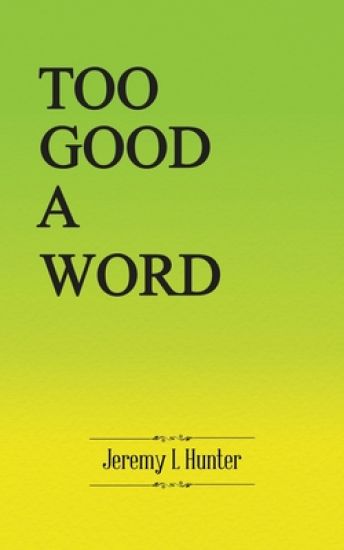
Too Good A Word

Too Good A Word

Jeremy L Hunter

Tellwell Talent
2020
pokkari
Too Good A Word follows journalist and would-be intellectual Jay Lawrence as he pursues his first love, Paige MacDowell, across Western Canada from Edmonton to Vancouver. Teaming up with bartender-and-comedian Dax Ludlow, Jay must overcome distance, indifference, and faulty notions of the very concept of Love to win Paige's heart.
Too Good A Word

Too Good A Word

Jeremy L Hunter

Tellwell Talent
2020
sidottu
Too Good A Word follows journalist and would-be intellectual Jay Lawrence as he pursues his first love, Paige MacDowell, across Western Canada from Edmonton to Vancouver. Teaming up with bartender-and-comedian Dax Ludlow, Jay must overcome distance, indifference, and faulty notions of the very concept of Love to win Paige's heart.