Kirjojen hintavertailu. Mukana 11 646 397 kirjaa ja 12 kauppaa.

Kirjahaku

Etsi kirjoja tekijän nimen, kirjan nimen tai ISBN:n perusteella.

1000 tulosta hakusanalla Jeremy Halstead

Torture, Terror, and Trade-Offs

Torture, Terror, and Trade-Offs

Jeremy Waldron

Oxford University Press
2010
sidottu
Jeremy Waldron has been a challenging and influential voice in the moral, political and legal debates surrounding the response to terrorism since 9/11. His contributions have spanned the major controversies of the War on Terror - including the morality and legality of torture, whether security can be 'balanced' with liberty, and the relationship between public safety and individual rights. He has also tackled underlying questions essential to understanding the practical debates - including what terrorism is, and what a right to security would entail. This volume collects all Waldron's work on these issues, including six published essays and two previously unpublished essays. It also includes a new introduction in which Waldron presents an overview of his contribution, and looks at the problems currently facing the Obama administration and the UK Government in dealing with the legacy of the Bush White House. The volume will be essential reading for all those engaged with contemporary politics, security law, and the continuing struggle for an ethical response to terrorism.
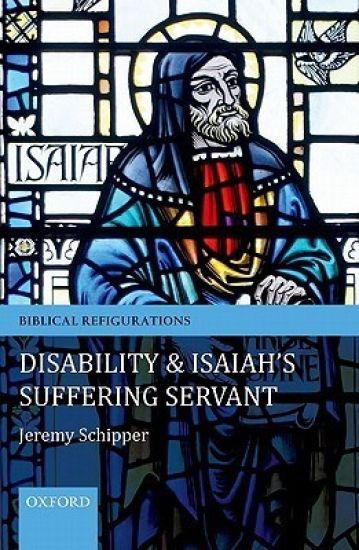
Disability and Isaiah's Suffering Servant

Disability and Isaiah's Suffering Servant

Jeremy Schipper

Oxford University Press
2011
sidottu
Although disability imagery is ubiquitous in the Hebrew Bible, characters with disabilities are not. The presence of the former does not guarantee the presence of the later. While interpreters explain away disabilities in specific characters, they celebrate the rhetorical contributions that disability imagery makes to the literary artistry of biblical prose and poetry, often as a trope to describe the suffering or struggles of a presumably nondisabled person or community. This situation contributes to the appearance (or illusion) of a Hebrew Bible that uses disability as a rich literary trope while disavowing the presence of figures or characters with disabilities. Isaiah 53 provides a wonderful example of this dynamic at work. The "Suffering Servant" figure in Isaiah 53 has captured the imagination of readers since very early in the history of biblical interpretation. Most interpreters understand the servant as an otherwise able bodied person who suffers. By contrast, Jeremy Schipper's study shows that Isaiah 53 describes the servant with language and imagery typically associated with disability in the Hebrew Bible and other ancient Near Eastern literature. Informed by recent work in disability studies from across the humanities, it traces both the disappearance of the servant's disability from the interpretative history of Isaiah 53 and the scholarly creation of the able bodied suffering servant.
Disability and Isaiah's Suffering Servant

Disability and Isaiah's Suffering Servant

Jeremy Schipper

Oxford University Press
2011
nidottu
Although disability imagery is ubiquitous in the Hebrew Bible, characters with disabilities are not. The presence of the former does not guarantee the presence of the later. While interpreters explain away disabilities in specific characters, they celebrate the rhetorical contributions that disability imagery makes to the literary artistry of biblical prose and poetry, often as a trope to describe the suffering or struggles of a presumably nondisabled person or community. This situation contributes to the appearance (or illusion) of a Hebrew Bible that uses disability as a rich literary trope while disavowing the presence of figures or characters with disabilities. Isaiah 53 provides a wonderful example of this dynamic at work. The "Suffering Servant" figure in Isaiah 53 has captured the imagination of readers since very early in the history of biblical interpretation. Most interpreters understand the servant as an otherwise able bodied person who suffers. By contrast, Jeremy Schipper's study shows that Isaiah 53 describes the servant with language and imagery typically associated with disability in the Hebrew Bible and other ancient Near Eastern literature. Informed by recent work in disability studies from across the humanities, it traces both the disappearance of the servant's disability from the interpretative history of Isaiah 53 and the scholarly creation of the able bodied suffering servant.
Oxford Handbook of Dialysis

Oxford Handbook of Dialysis

Jeremy Levy; Edwina Brown; Anastasia Lawrence

Oxford University Press
2016
muu
The Oxford Handbook of Dialysis is a comprehensive and practical guide to all aspects of dialysis, the management of patients with end stage kidney disease, and all its complications. The fourth edition has been completely updated, and covers all aspects of dialysis from haemodialysis techniques and haemodiafitration, to the medical, nursing and psychosocial aspects of managing patients with end stage kidney failure. Renal transplantation, plasma exchange, palliative care, and drug dosing are discussed, along with end of life care, and complications of chronic kdney disease. This handbook is packed with practical guidance and management, presented in a compact and easy to use format. The Oxford Handbook of Dialysis is aimed at all health care professionals dealing with dialysis patients from nephrologists to dieticians, as well as pharmacists, nurses, and surgeons. There are specific chapters on nursing patients on haemodialysis and peritoneal dialysis, and detailed nutrition and drug prescribing chapters. The fourth edition includes new sections on renal replacement therapies in acute kidney injury, home dialysis, new peritoneal dialysis fluids, new drugs including new epoietins and phosphate binders, updated sections on nocturnal dialysis, dialysis monitoring, encapsulating peritoneal sclerosis, and sleep disorders. Easy to read, practical, and focussed, this handbook should have a home in every renal unit, dialysis centre, renal ward, and be close to hand for every nephrologist, renal trainee, or renal nurse.
Torture, Terror, and Trade-Offs

Torture, Terror, and Trade-Offs

Jeremy Waldron

Oxford University Press
2012
nidottu
Jeremy Waldron has been a challenging and influential voice in the moral, political and legal debates surrounding the response to terrorism since 9/11. His contributions have spanned the major controversies of the War on Terror - including the morality and legality of torture, whether security can be 'balanced' with liberty, and the relationship between public safety and individual rights. He has also tackled underlying questions essential to understanding the practical debates - including what terrorism is, and what a right to security would entail. This volume collects all Waldron's work on these issues, including six published essays and two previously unpublished essays. It also includes a new introduction in which Waldron presents an overview of his contribution, and looks at the problems currently facing the Obama administration and the UK Government in dealing with the legacy of the Bush White House. The volume will be essential reading for all those engaged with contemporary politics, security law, and the continuing struggle for an ethical response to terrorism.
Corporate Social Responsibility

Corporate Social Responsibility

Jeremy Moon

Oxford University Press
2014
nidottu
Corporate social responsibility has been defined as 'the responsibility of enterprises for their impacts on society'. Is Corporate Social Responsibility (CSR) just window dressing or is it a contradiction in terms? In this Very Short Introduction, Jeremy Moon shows that CSR holds much more value than it first appears, and shows how it has come of age in recent years. Illustrating the sorts of CSR investments companies make, the ways in which they practice CSR, and the challenges this brings, Moon considers how the principles migrated from their US roots to become a global business phenomenon. Exploring the place of CSR in different economic, social, political, and managerial contexts, this short guide considers the many positives, but also challenges, that CSR can present for companies, societies, and governments worldwide. ABOUT THE SERIES: The Very Short Introductions series from Oxford University Press contains hundreds of titles in almost every subject area. These pocket-sized books are the perfect way to get ahead in a new subject quickly. Our expert authors combine facts, analysis, perspective, new ideas, and enthusiasm to make interesting and challenging topics highly readable.
Revolution and the Republic

Revolution and the Republic

Jeremy Jennings

Oxford University Press
2013
nidottu
Revolution and the Republic provides a new and wide-ranging interpretation of political thought in France from the eighteenth century to the present day. At its heart are the dramatic and violent events associated with the French Revolution of 1789 and the birth of the First Republic in 1792. For the next two centuries, writers in France struggled to make sense of these and subsequent events in French revolutionary history, producing a rich and perceptive analysis of the nature of republican government. But, as Revolution and the Republic shows, these important debates were not limited to the narrow confines of politics and to the writing of constitutions. Such was their significance that they occupied a central place in discussions about religion, science, philosophy, commerce, and the writing of history. They also shaped arguments about the character of France and the French nation as well as polemics about the role of intellectuals in French society. Moreover, they continue to be of importance in France today as the country faces the challenges posed by globalisation, multiculturalism, and the reform of the welfare state. Integrating the perspectives of intellectual history, political theory, social and cultural history, and political economy, Jeremy Jennings has written a study of political ideas that appeals to all those interested in the history of modern France and Europe more generally.
Paediatric Respiratory Medicine

Paediatric Respiratory Medicine

Jeremy Hull; Julian Forton; Anne Thomson

Oxford University Press
2015
nidottu
Paediatric Respiratory Medicine Second edition remains the first point of reference for those faced with treating acute or chronic respiratory problems. The handbook discusses the approach to clinical problems, specific conditions, supportive care and practical procedures, and includes vital appendices covering specific tests and statistics. Designed as a practical guide, it serves general and specialist paediatricians at both consultant and trainee level. The book is divided into five parts. Part I provides a practical approach to acute and non-acute clinical problems. Part II provides detailed information about common and more rare clinical conditions. Part III provides useful information on supportive care, including for example, use of non-invasive ventilation and the care of a child with a tracheotomy. Part IV gives details on how to perform several practical procedures, such as ciliary brush biopsy, flexible bronchoscopy, and inserting a chest drain. The appendices provide information on lung function testing and tables of age-corrected normal values for several respiratory parameters. Written by three consultants in paediatric respiratory medicine, their expertise in the subject provides all levels of paediatricians with practical guide on a subject that is increasingly relevant in paediatrics.
Knowledge in an Uncertain World

Knowledge in an Uncertain World

Jeremy Fantl; Matthew McGrath

Oxford University Press
2011
nidottu
Knowledge in an Uncertain World is an exploration of the relation between knowledge, reasons, and justification. According to the primary argument of the book, you can rely on what you know in action and belief, because what you know can be a reason you have and you can rely on the reasons you have. If knowledge doesn't allow for a chance of error, then this result is unsurprising. But if knowledge does allow for a chance of error - as seems required if we know much of anything at all - this result entails the denial of a received position in epistemology. Because any chance of error, if the stakes are high enough, can make a difference to what can be relied on, two subjects with the same evidence and generally the same strength of epistemic position for a proposition can differ with respect to whether they are in a position to know. In defending these points, Fantl and McGrath investigate the ramifications for debates about epistemological externalism and contextualism, the value and importance of knowledge, Wittgensteinian hinge propositions, Bayesianism, and the nature of belief. The book is essential reading for epistemologists, philosophers who work on reasons and rationality, philosophers of language and mind, and decision theorists.
New Heavens and a New Earth

New Heavens and a New Earth

Jeremy Brown

Oxford University Press Inc
2013
sidottu
Jeremy Brown offers the first major study of the Jewish reception of the Copernican revolution, examining four hundred years of Jewish writings on the Copernican model. Brown shows the ways in which Jews ignored, rejected, or accepted the Copernican model, and the theological and societal underpinnings of their choices. Throughout New Heavens and a New Earth are deft historical studies of such colorful figures as Joseph Delmedigo, the first Jewish Copernican and a student of Galileo's; Tuviah Cohen, who called Copernicus the "Son of Satan; " Zelig Slonimski, author of a famed collection of essays on Halley's Comet and other astronomical phenomena; and the modern neo-goecentrists who use Einstein's Theory of Relativity to argue that the Earth does not actually revolve around the sun. Brown also provides insightful comparisons of concurrent Jewish and Christian writings on Copernicus, demonstrating that the Jewish reception of Copernicus was largely dependent on local factors and response. The book concludes by noting the important lessons that may be learned from the history of the Jewish reception of Copernican thought and showing how religions make room for new scientific descriptions of reality while upholding most cherished beliefs.
Dignity, Rank, and Rights

Dignity, Rank, and Rights

Jeremy Waldron

Oxford University Press Inc
2012
sidottu
Writers on human dignity roughly divide between those who stress the social origins of this concept and its role in marking rank and hierarchy, and those who follow Kant in grounding dignity in an abstract and idealized philosophical conception of human beings. In these lectures, Jeremy Waldron contrives to combine attractive features of both strands. In the first lecture, Waldron presents a conception of dignity that preserves its ancient association with rank and station, thus allowing him to tap rich historical resources while avoiding what many perceive as the excessive abstraction and dubious metaphysics of the Kantian strand. At the same time he argues for a conception of human dignity that amounts to a generalization of high status across all human beings, and so attains the appealing universality of the Kantian position. The second lecture focuses particularly on the importance of dignity - understood in this way - as a status defining persons' relation to law: their presentation as persons capable of self-applying the law, capable of presenting and arguing a point of view, and capable of responding to law's demands without brute coercion. Together the two lectures illuminate the relation between dignity conceived as the ground of rights and dignity conceived as the content of rights; they also illuminate important ideas about dignity as noble bearing and dignity as the subject of a right against degrading treatment; and they help us understand the sense in which dignity is better conceived as a status than as a kind of value.
Bad Blood

Bad Blood

Jeremy Whittle

Vintage
2009
pokkari
Even the biggest cycling fan can one day wake up to find that he has lost his faith Bad Blood is the story of Jeremy Whittle's journey from unquestioning fan to Tour de France insider and confirmed sceptic.
Body by Darwin

Body by Darwin

Jeremy Taylor

University of Chicago Press
2015
sidottu
We think of medical science and doctors as focused on treating conditions-whether it's a cough or an aching back. But the sicknesses and complaints that cause us to seek medical attention actually have deeper origins than the superficial germs and behaviors we regularly fault. In fact, as Jeremy Taylor shows in Body by Darwin, we can trace the roots of many medical conditions through our evolutionary history, revealing what has made us susceptible to certain illnesses and ailments over time and how we can use that knowledge to help us treat or prevent problems in the future. In Body by Darwin, Taylor examines the evolutionary origins of some of our most common and serious health issues. To begin, he looks at the hygiene hypothesis, which argues that our obsession with anti-bacterial cleanliness, particularly at a young age, may be making us more vulnerable to autoimmune and allergic diseases. He also discusses diseases of the eye, the medical consequences of bipedalism as they relate to all those aches and pains in our backs and knees, the rise of Alzheimer's disease, and how cancers become so malignant that they kill us despite the toxic chemotherapy we throw at them. Taylor explains why it helps to think about heart disease in relation to the demands of an ever-growing, dense, muscular pump that requires increasing amounts of nutrients, and he discusses how walking upright and giving birth to ever larger babies led to a problematic compromise in the design of the female spine and pelvis. Throughout, he not only explores the impact of evolution on human form and function, but he integrates science with stories from actual patients and doctors, closely examining the implications for our health. As Taylor shows, evolutionary medicine allows us think about the human body and its adaptations in a completely new and productive way. By exploring how our body's performance is shaped by its past, Body by Darwin draws powerful connections between our ancient human history and the future of potential medical advances that can harness this knowledge.
The Political Mapping of Cyberspace

The Political Mapping of Cyberspace

Jeremy W. Crampton

University of Chicago Press
2004
nidottu
As inherently spatial beings, our sense of space in cyberspace challenges all that is familiar in terms of our ability to define, organize, govern, and map social places. In The Political Mapping of Cyberspace, Jeremy Crampton shows that cyberspace is not the virtual reality we think it to be, but instead a rich geography of political practices and power relations. Using concepts and methods derived from the work of Michel Foucault, Crampton outlines a new mapping of cyberspace to help define the role of space in virtual worlds and to provide constructive ways in which humans can exist in another spatial dimension. He delineates the critical role maps play in constructing the medium as an object of knowledge and demonstrates that by processes of mapping we come to understand cyberspace. Maps, he argues, shape political thinking about cyberspace, and he deploys in-depth case studies of crime mapping, security maintenance, and geo-surveillance to show how we map ourselves onto cyberspace, inexorably, and indelibly. Offering a powerful reinterpretation of technology and contemporary life, this innovative book will be an essential touchstone for the study of cartography and cyberspace in the twenty-first century.
History, Historians, and Autobiography

History, Historians, and Autobiography

Jeremy D. Popkin

University of Chicago Press
2005
sidottu
Though history and autobiography both claim to tell true stories about the past, historians have traditionally rejected first-person accounts as subjective and therefore unreliable. What then, asks Jeremy D. Popkin in History, Historians, and Autobiography, are we to make of the ever-increasing number of professional historians who are publishing stories of their own lives? And how is this recent development changing the nature of history-writing, the historical profession, and the genre of autobiography? Drawing on the theoretical work of contemporary critics of autobiography, as well as the philosophy of Paul Ricoeur, Popkin reads the autobiographical classics of Edward Gibbons and Henry Adams and the memoirs of contemporary historians such as Emmanuel Le Roy Ladurie, Peter Gay, Jill Ker Conway, and many others. He reveals the contributions that historians' life stories make to our understanding of the human experience. Historians' autobiographies, he shows, reveal how scholars arrive at their vocations, the difficulties of writing about modern professional life, and the ways in which personal stories can add to our understanding of historical events such as war, political movements, and the traumas of the Holocaust. An engrossing overview of the way historians view themselves and their profession, this work will be of interest to readers concerned with the ways in which we understand the past, as well as anyone interested in the art of life-writing.
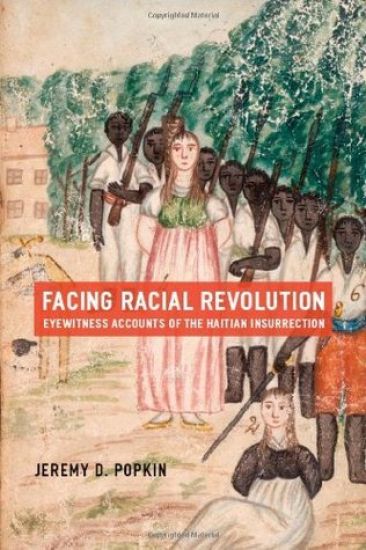
Facing Racial Revolution

Facing Racial Revolution

Jeremy D. Popkin

University of Chicago Press
2008
nidottu
The only truly successful slave uprising in the Atlantic world, the Haitian Revolution gave birth to the first independent black republic of the modern era. Inspired by the revolution that had recently roiled their French rulers, black slaves and people of mixed race alike rose up against their oppressors in a bloody insurrection that led to the burning of the colony's largest city, a bitter struggle against Napoleon's troops, and, in 1804, the founding of a free nation. Numerous firsthand narratives of these events survive, but their invaluable insights into the period have languished in obscurity - until now. In "Facing Racial Revolution", Jeremy D. Popkin unearths these documents and presents excerpts from more than a dozen accounts written by white colonists trying to come to grips with a world that had suddenly disintegrated. These dramatic writings give us our most direct portrayal of the actions of the revolutionaries, vividly depicting encounters with the uprising's leaders - Toussaint L'ouverture, Boukman, and Jean-Jacques Dessalines - as well as putting faces on many of the anonymous participants in this epochal moment. Popkin's expert commentary on each selection provides the necessary background about the authors and the incidents they describe, while also addressing the complex question of the witnesses' reliability and urging the reader to consider the implications of the narrators' perspectives. Along with the American and French revolutions, the birth of Haiti helped shape the modern world. The powerful, moving, and sometimes troubling testimonies collected in Facing Racial Revolution significantly expand our understanding of this momentous event.
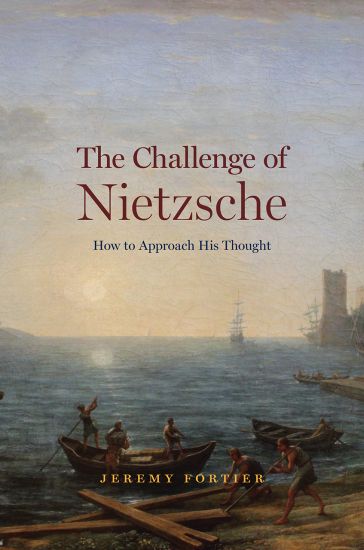
The Challenge of Nietzsche

The Challenge of Nietzsche

Jeremy Fortier

University of Chicago Press
2020
sidottu
Friedrich Nietzsche is one of the most widely read authors in the world, from the time of his death to the present--as well as one of the most controversial. He has been celebrated as a theorist of individual creativity and self-care but also condemned as an advocate of antimodern politics and hierarchical communalism. Rather than treating these approaches as mutually exclusive, Jeremy Fortier contends that we ought instead to understand Nietzsche's complex legacy as the consequence of a self-conscious and artful tension woven into the fabric of his books. The Challenge of Nietzsche uses Nietzsche as a guide to Nietzsche, highlighting the fact that Nietzsche equipped his writings with retrospective self-commentaries and an autobiographical apparatus that clarify how he understood his development as an author, thinker, and human being. Fortier shows that Nietzsche used his writings to establish two major character types, the Free Spirit and Zarathustra, who represent two different approaches to the conduct and understanding of life: one that strives to be as independent and critical of the world as possible, and one that engages with, cares for, and aims to change the world. Nietzsche developed these characters at different moments of his life, in order to confront from contrasting perspectives such elemental experiences as the drive to independence, the feeling of love, and the assessment of one's overall health or well-being. Understanding the tension between the Free Spirit and Zarathustra takes readers to the heart of what Nietzsche identified as the tensions central to his life, and to all human life.
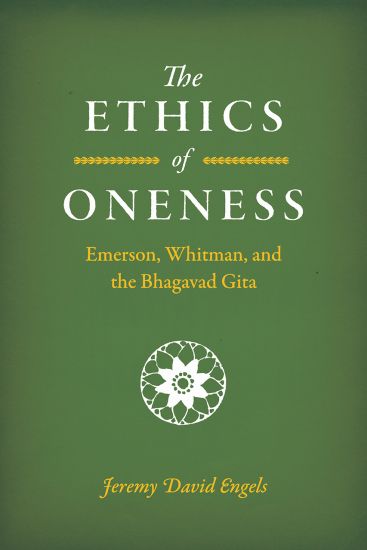
The Ethics of Oneness

The Ethics of Oneness

Jeremy David Engels

University of Chicago Press
2021
sidottu
We live in an era defined by a sense of separation, even in the midst of networked connectivity. As cultural climates sour and divisive political structures spread, we are left wondering about our ties to each other. Consequently, there is no better time than now to reconsider ideas of unity. In The Ethics of Oneness, Jeremy David Engels reads the Bhagavad Gita alongside the works of American thinkers Ralph Waldo Emerson and Walt Whitman. Drawing on this rich combination of traditions, Engels presents the notion that individuals are fundamentally interconnected in their shared divinity. In other words, everything is one. If the lessons of oneness are taken to heart, particularly as they were expressed and celebrated by Whitman, and the ethical challenges of oneness considered seriously, Engels thinks it is possible to counter the pervasive and problematic American ideals of hierarchy, exclusion, violence, and domination.
The Ethics of Oneness

The Ethics of Oneness

Jeremy David Engels

University of Chicago Press
2021
nidottu
We live in an era defined by a sense of separation, even in the midst of networked connectivity. As cultural climates sour and divisive political structures spread, we are left wondering about our ties to each other. Consequently, there is no better time than now to reconsider ideas of unity. In The Ethics of Oneness, Jeremy David Engels reads the Bhagavad Gita alongside the works of American thinkers Ralph Waldo Emerson and Walt Whitman. Drawing on this rich combination of traditions, Engels presents the notion that individuals are fundamentally interconnected in their shared divinity. In other words, everything is one. If the lessons of oneness are taken to heart, particularly as they were expressed and celebrated by Whitman, and the ethical challenges of oneness considered seriously, Engels thinks it is possible to counter the pervasive and problematic American ideals of hierarchy, exclusion, violence, and domination.
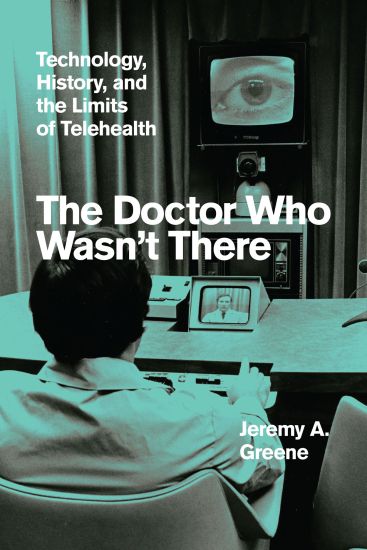
The Doctor Who Wasn't There

The Doctor Who Wasn't There

Jeremy A. Greene

THE UNIVERSITY OF CHICAGO PRESS
2022
sidottu
This gripping history shows how the electronic devices we use to access care influence the kind of care we receive.The Doctor Who Wasn’t There traces the long arc of enthusiasm for—and skepticism of—electronic media in health and medicine. Over the past century, a series of new technologies promised to democratize access to healthcare. From the humble telephone to the connected smartphone, from FM radio to wireless wearables, from cable television to the “electronic brains” of networked mainframe computers: each new platform has promised a radical reformation of the healthcare landscape. With equal attention to the history of technology, the history of medicine, and the politics and economies of American healthcare, physician and historian Jeremy A. Greene explores the role that electronic media play, for better and for worse, in the past, present, and future of our health. Today’s telehealth devices are far more sophisticated than the hook-and-ringer telephones of the 1920s, the radios that broadcasted health data in the 1940s, the closed-circuit televisions that enabled telemedicine in the 1950s, or the online systems that created electronic medical records in the 1960s. But the ethical, economic, and logistical concerns they raise are prefigured in the past, as are the gaps between what was promised and what was delivered. Each of these platforms also produced subtle transformations in health and healthcare that we have learned to forget, displaced by promises of ever newer forms of communication that took their place. Illuminating the social and technical contexts in which electronic medicine has been conceived and put into practice, Greene’s history shows the urgent stakes, then and now, for those who would seek in new media the means to build a more equitable future for American healthcare.