Kirjojen hintavertailu. Mukana 11 244 527 kirjaa ja 12 kauppaa.

Kirjahaku

Etsi kirjoja tekijän nimen, kirjan nimen tai ISBN:n perusteella.

1000 tulosta hakusanalla John Cheever

John Brown and the Era of Literary Confrontation
Radical abolitionist and freedom-fighter John Brown inspired literary America to confrontation during his short but dramatic career as a public figure in antebellum America. Emerging from obscurity during the violent struggle to determine how Kansas would enter the Union in 1856, John Brown captured the imagination of the most prominent Eastern literary figures following his dramatic, though failed raid on Harper’s Ferry. Impressed by Brown’s forthright defense of his attempt to initiate the end of slavery, Whittier, Whitman, Melville, Longfellow, and Howells responded to the abolitionist with poetic tributes suggesting that Brown was a liberating hero, while Emerson and Thoreau celebrated his effort to inspire the nation to a new moral awareness of the common humanity of all men. Responses, however, were not uniform, as these and other figures debated the merits and meanings of Brown’s actions. This exceptional book sheds new light on how John Brown inspired America’s most significant intellects to take a public stand against the inertia of moral compromise and social degeneracy, bringing the nation to the brink of civil war.
John Dos Passos
This set comprises 40 volumes covering 19th and 20th century European and American authors. These volumes will be available as a complete set, mini boxed sets (by theme) or as individual volumes. This second set complements the first 68 volume set of Critical Heritage published by Routledge in October 1995.
John Locke

John Locke

Geraint Parry

Routledge
2013
nidottu
From earliest times Locke's writings have been the subject of controversy. An intellectual caught up in the politics of late 17th century England, his writings on politics reveal a man attempting to combine an analysis of the underlying principles of society with a deep commitment to a specific political stance and party. This study, first published in 1978 explains why Locke's vision of political life has continued to fascinate political thinkers of many different persuasions.
John Lydus and the Roman Past

John Lydus and the Roman Past

Michael Maas

Routledge
2013
nidottu
John Lydus and the Roman Past offers a new interpretation of the emergence of Byzantine society as viewed through the eyes of John Lydus, a sixth-century scholar and civil servant. Maas show that control of classical inheritance was politically contested in the reign of Justinian. He demonstrates how the past could be used to convey legitimacy and social definition at a time of profound change.
John Stuart Mill and Freedom of Expression
The arguments advanced in the second chapter of On Liberty (1859) have become the touchstone for practically every discussion of freedom of speech, yet the broader development of John Stuart Mill's ideas concerning intellectual liberty has generally been neglected. This work attempts to fill that lacuna by looking beyond On Liberty, in order to understand the evolution of Mill's ideas concerning freedom of thought and discussion.
John Clare

John Clare

Routledge
2013
nidottu
The Critical Heritage gathers together a large body of critical sources on major figures in literature. Each volume presents contemporary responses to a writer's work, enabling students and researchers to read for themselves, for example, comments on early performances of Shakespeare's plays, or reactions to the first publication of Jane Austen's novels. The carefully selected sources range from landmark essays in the history of criticism to journalism and contemporary opinion, and little published documentary material such as letters and diaries. Significant pieces of criticism from later periods are also included, in order to demonstrate the fluctuations in an author's reputation. Each volume contains an introduction to the writer's published works, a selected bibliography, and an index of works, authors and subjects.
John Ruskin

John Ruskin

Routledge
2013
nidottu
The Critical Heritage gathers together a large body of critical sources on major figures in literature. Each volume presents contemporary responses to a writer's work, enabling students and researchers to read for themselves, for example, comments on early performances of Shakespeare's plays, or reactions to the first publication of Jane Austen's novels. The carefully selected sources range from landmark essays in the history of criticism to journalism and contemporary opinion, and little published documentary material such as letters and diaries. Significant pieces of criticism from later periods are also included, in order to demonstrate the fluctuations in an author's reputation. Each volume contains an introduction to the writer's published works, a selected bibliography, and an index of works, authors and subjects. The Collected Critical Heritage set will be available as a set of 68 volumes and the series will also be available in mini sets selected by period (in slipcase boxes) and as individual volumes.
John Dryden

John Dryden

Routledge
2013
nidottu
The Critical Heritage gathers together a large body of critical sources on major figures in literature. Each volume presents contemporary responses to a writer's work, enabling students and researchers to read for themselves, for example, comments on early performances of Shakespeare's plays, or reactions to the first publication of Jane Austen's novels. The carefully selected sources range from landmark essays in the history of criticism to journalism and contemporary opinion, and little published documentary material such as letters and diaries. Significant pieces of criticism from later periods are also included, in order to demonstrate the fluctuations in an author's reputation. Each volume contains an introduction to the writer's published works, a selected bibliography, and an index of works, authors and subjects. The Collected Critical Heritage set will be available as a set of 68 volumes and the series will also be available in mini sets selected by period (in slipcase boxes) and as individual volumes.
John F. Kennedy

John F. Kennedy

Jason K. Duncan

Routledge
2014
sidottu
Half a century after his assassination, John F. Kennedy continues to evoke widespread fascination, looming large in America’s historical memory. Popular portrayals often show Kennedy as a mythic, heroic figure, but these depictions can obscure the details of the president’s actual achievements and challenges. Despite the short length of his time in office, during his presidency, Kennedy dealt with many of the issues that would come to define the 1960s, including the burgeoning Cold War and the growing Civil Rights movement.In John F. Kennedy: The Spirit of Cold War Liberalism, Jason K. Duncan explains Kennedy’s significance as a political figure of the 20th century in U.S. and world history. Duncan contextualizes Kennedy’s political career through his personal life and addresses the legacy the president left behind. In a concise narrative supplemented by primary documents, including presidential speeches and critical reviews from the left and right, Duncan builds a biography that elucidates the impact of this iconic president and the history of the 1960s.
John F. Kennedy

John F. Kennedy

Jason K. Duncan

Routledge
2013
nidottu
Half a century after his assassination, John F. Kennedy continues to evoke widespread fascination, looming large in America’s historical memory. Popular portrayals often show Kennedy as a mythic, heroic figure, but these depictions can obscure the details of the president’s actual achievements and challenges. Despite the short length of his time in office, during his presidency, Kennedy dealt with many of the issues that would come to define the 1960s, including the burgeoning Cold War and the growing Civil Rights movement.In John F. Kennedy: The Spirit of Cold War Liberalism, Jason K. Duncan explains Kennedy’s significance as a political figure of the 20th century in U.S. and world history. Duncan contextualizes Kennedy’s political career through his personal life and addresses the legacy the president left behind. In a concise narrative supplemented by primary documents, including presidential speeches and critical reviews from the left and right, Duncan builds a biography that elucidates the impact of this iconic president and the history of the 1960s.
John Cassian and the Reading of Egyptian Monastic Culture
This book examines the method of meditative reading encouraged by John Cassian (c. 360-435) in his ascetic writings, the bulk of which are fictive dialogues that purportedly record the instruction he had received from Egyptial Christian monks. This instruction was at its core an interactive experience, depending upon both the discernment of the master and diligent application of instruction by the student. Driver examines Cassian's understanding of the act of reading and suggests the implications of this for Cassian's monastic teaching and it interprets Cassian's method of reading in light of contemporary discussions of reading and the self.
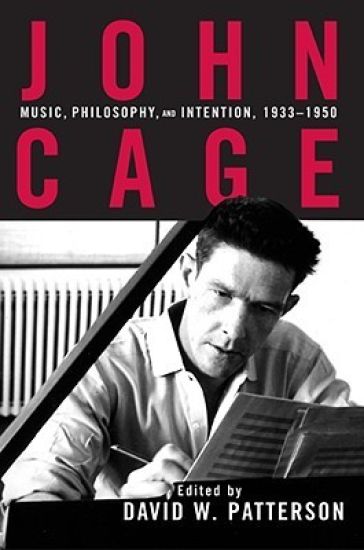
John Cage

John Cage

Routledge
2008
nidottu
John Cage: Music, Philosophy, and Intention, 1933--1950 explores the early part of John Cage’s life and career, concentrating on the "pre-chance" period from roughly 1933 to 1950. These essays consider influences on Cage’s work, his early percussion pieces, his evolving aesthetic, and his movement toward an ideology that would later shape his own work, arguing that a reevaluation of this early period is crucial to understanding his later work. It includes contributions from an international group of music and art scholars.
John Brown and the Era of Literary Confrontation
Radical abolitionist and freedom-fighter John Brown inspired literary America to confrontation during his short but dramatic career as a public figure in antebellum America. Emerging from obscurity during the violent struggle to determine how Kansas would enter the Union in 1856, John Brown captured the imagination of the most prominent Eastern literary figures following his dramatic, though failed raid on Harper’s Ferry. Impressed by Brown’s forthright defense of his attempt to initiate the end of slavery, Whittier, Whitman, Melville, Longfellow, and Howells responded to the abolitionist with poetic tributes suggesting that Brown was a liberating hero, while Emerson and Thoreau celebrated his effort to inspire the nation to a new moral awareness of the common humanity of all men. Responses, however, were not uniform, as these and other figures debated the merits and meanings of Brown’s actions. This exceptional book sheds new light on how John Brown inspired America’s most significant intellects to take a public stand against the inertia of moral compromise and social degeneracy, bringing the nation to the brink of civil war.
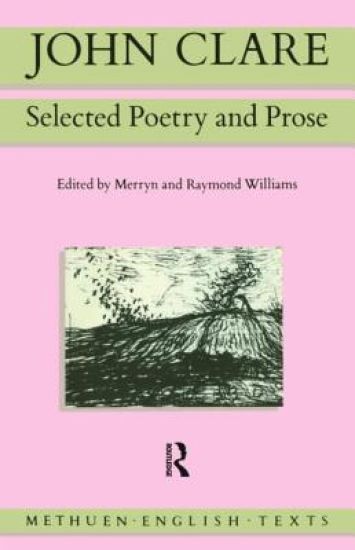
John Clare

John Clare

John Clare

Routledge
1986
nidottu
This book presents Clare's poetry exactly as he wrote it, and includes selections from his `mad' poems as well as his earlier descriptions of birds, animals and village life.
Dr John Lee's Hormone Balance Made Simple

Dr John Lee's Hormone Balance Made Simple

John R. Lee; Virginia Hopkins

Life and Style
2006
pokkari
A comprehensive guide for women on how to balance hormones safely and naturally addresses the specific needs of PMS, menopause, and other hormone irregularities, in a reference that provides dosage guidelines, a symptom-tracking calendar, and a discussion of common causes. Original.
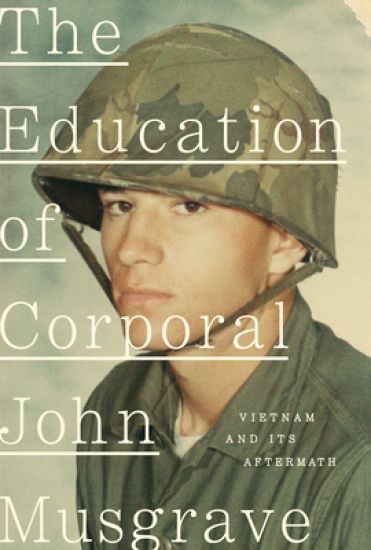
The Education of Corporal John Musgrave: Vietnam and Its Aftermath
A Marine's searing and intimate story--"A passionate, fascinating, and deeply humane memoir of both war and of the hard work of citizenship and healing in war's aftermath. A superb addition to our understanding of the Vietnam War, and of its lessons" (Phil Klay, author of Redeployment). John Musgrave had a small-town midwestern childhood that embodied the idealized postwar America. Service, patriotism, faith, and civic pride were the values that guided his family and community, and like nearly all the boys he knew, Musgrave grew up looking forward to the day when he could enlist to serve his country as his father had done. There was no question in Musgrave's mind: He was going to join the legendary Marine Corps as soon as he was eligible. In February of 1966, at age seventeen, during his senior year in high school, and with the Vietnam War already raging, he walked down to the local recruiting station, signed up, and set off for three years that would permanently reshape his life. In this electrifying memoir, he renders his wartime experience with a powerful intimacy and immediacy: from the rude awakening of boot camp, to daily life in the Vietnam jungle, to a chest injury that very nearly killed him. Musgrave also vividly describes the difficulty of returning home to a society rife with antiwar sentiment, his own survivor's guilt, and the slow realization that he and his fellow veterans had been betrayed by the government they served. And he recounts how, ultimately, he found peace among his fellow veterans working to end the war. Musgrave writes honestly about his struggle to balance his deep love for the Marine Corps against his responsibility as a citizen to protect the very troops asked to protect America at all costs. Fiercely perceptive and candid, The Education of Corporal John Musgrave is one of the most powerful memoirs to emerge from the war.
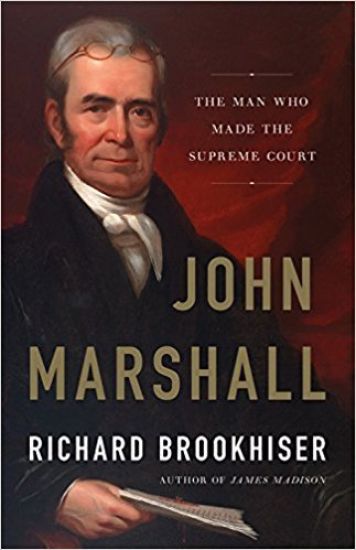
John Marshall

John Marshall

Richard Brookhiser

Basic Books
2018
sidottu
In 1801, a 45-year-old Revolutionary War veteran and politician, slovenly, genial, brilliant, and persuasive, became the fourth chief justice of the United States, a post he would hold for a record thirty-four years. Before John Marshall joined the Court, the judicial branch was viewed as the poor sister of the federal government, lacking in dignity and clout. After his passing, the Supreme Court of the United States would never be ignored again. John Marshall is award-winning and bestselling author Richard Brookhiser's definitive biography of America's longest-serving Chief Justice.Marshall (1755-1835) was born in Northern Virginia and served as a captain during the Revolutionary War and then as a delegate to the Virginia state convention. He was a friend and admirer of George Washington, and a cousin and enemy of Thomas Jefferson. His appointment to the Supreme Court came almost by chance-Adams saw him as the last viable option, after previous appointees declined the nomination. Yet he took to the court immediately, turning his sharp mind toward strengthening America's fragile legal order.Americans had inherited from their colonial past a deep distrust of judges as creatures of arbitrary royal power; in reaction, newly independent states made them pawns of legislative whim. The result was legal caprice, sometimes amounting to chaos. Marshall wanted a strong federal judiciary, led by the Supreme Court, to define laws, protect rights, and balance the power of the legislative and executive branches. However, America's legal system, he believed, was threatened by specific individuals-namely Thomas Jefferson and the early Republican Party-who were intent on undermining the Constitution and respect for law in order to empower themselves.As a Federalist and a follower of Washington and Hamilton, he also wanted a strong national government, favorable to business. In his three decades on the court, Marshall accomplished just that. As Brookhiser vividly relates, in a string of often-colorful cases involving businessmen, educators, inventors, scoundrels, Native Americans, and slaves, Marshall clipped the power of the states vis-à-vis the federal government, established the Supreme Court's power to correct or rebuke Congress or the president, and bolstered commerce and contracts. John Marshall's modus operandi was charm and wit, frequently uniting his fellow justices around unanimous decisions in even the most controversial cases. For better and for worse, he made the Supreme Court a central part of American life.John Marshall is the definitive biography of America's greatest judge and most important early Chief Justice.