

Kirjahaku
Etsi kirjoja tekijän nimen, kirjan nimen tai ISBN:n perusteella.
1000 tulosta hakusanalla John H Harding

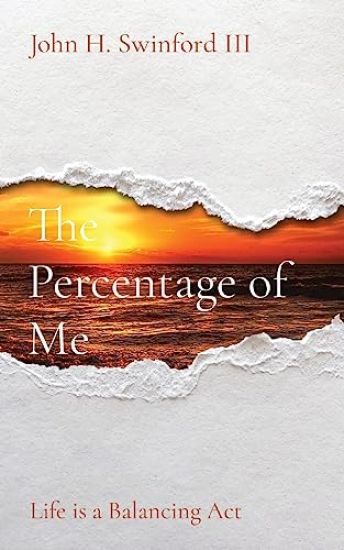
In the beginning, the balance of life is simple; our world is much smaller and less complicated. As you grow older, you will be challenged with the balancing of all things important to you, each trying to occupy a percentage of your time. In the initial stages of life, it might be our parents, siblings, or other relatives. As you age, you will discover you have more to balance: friends, school, and career. Eventually you will start dating. Will you allow your partner to occupy a sizable percentage of your time? Dating can lead to marriage and a whole new extended family wanting more of your time. You may even become a parent; this is going to require a high percentage of your time. As your children grow, they will require less from you, and this can lead to empty nest syndrome; not knowing what to do with your newly gained time. As you continue to age, your percentages are easier to manage. You learn that your time is more valuable the older you get, and you treasure every moment. As you journey through each chapter of life, think where do you invest your percentages? Is this the best investment of your time? How are you dividing your percentages? You must ask yourself, am I getting the best out of life with my investment of time? Do you miss out on things because your percentages are focused and utilized elsewhere? Are you living to work, or are you working to live? There is a need for balance in our lives, to ensure that we are getting the best return on invested for our percentages of time. Ultimately, I hope your journey through this book awakens you to the value of your time.

Scientist world-wide believe, that limiting global warming beyond 1.5 degrees Celsius ( C) compared to pre-industrial levels is a critical target outlined in the Paris Agreement, as exceeding this threshold would have severe and potentially irreversible impacts on the planet. Yet policies currently in place point to a 2.8 C temperature rise by the end of the century.The science is clear; our climate is heating rapidly. The average global temperatures have increased by approximately 1.1 degrees Celsius since 1880s, particularly in the late 19th century. The concentration of atmospheric CO2 is at its highest level ever. The Intergovernmental Panel on Climate Change (IPCC) steadily points out that human activities have warmed the atmosphere, ocean, and land, producing widespread and rapid changes in the atmosphere, ocean, cryosphere, and biosphere. Due to these changes in climate, the number of weather, climate and water-related disasters has increased by a factor of five over the past 50 years. In the United States alone, this has contributed to over 2 million deaths and $3.64 trillion in losses.3The warming is not uniform across all regions and seasons, but the overall trend indicates a significant and sustained increase. It is important to note that year-to-year fluctuations and regional variations can occur, but the long-term trend clearly shows an upward trajectory in global temperatures.The consequences of this warming trend are diverse and include more frequent and severe heatwaves, changes in precipitation patterns, rising sea levels, loss of polar ice, shifts in ecosystems and species distribution, and other climate-related impacts. Monitoring and understanding these temperature changes are crucial for developing effective strategies to mitigate and adapt to the impacts of global warming. Scientists, organizations, and governments worldwide continue to study and analyze temperature data to inform policies and actions aimed at addressing climate change and reducing greenhouse gas emissions.While there may be individuals who argue that the planet does not need saving, it is important to consider the overwhelming scientific consensus and evidence that supports the urgent need for environmental conservation and sustainable practices. Despite the existence of disinformation, the scientific consensus maintains that global warming is real, primarily caused by human activities, and poses significant risks to the planet and its inhabitants. The goal of this book is to help individuals develop critical thinking skills that are essential to discern reliable information from misinformation, ultimately increasing awareness and Global Citizenship. I hope to arm future generations with critical thinking capabilities, and knowledge for protecting our planet, while eliminating urban legends and meths. This is a book based off my research and opinions.

BRONCO PILOTS A Tale of Determination & Drive from Grace to Hell and Back A biographical narrative, 'Bronco Pilots', covers true stories in the period 1959 to 1981, with flashbacks of growing up in Oklahoma, intimate relationships in flight school in Florida, and while serving a career in the United States Marine Corps. Stories from the Oklahoma bible belt through eventual retirement from the Marine Corps and finding sobriety, serenity, and Grace, round out a tale of determination and drive. 'Bronco Pilots' follows the adventures of a marine pilot who went through hell and back, while enduring the realities of life. Telling it all in seesaw stories of courage, struggle, companionship, pain, survival, failure, and success, this book inspires us to push forward no matter what comes our way. A compelling read, Pierson's stories take us on an intense personal journey with a young man, who eventually won the battle against alcoholism and depression. John bares it all as he shares the exhilarating nitty-gritty details of his life as an adventurous man, a dedicated marine, husband, father, and friend.

BRONCO PILOTS A Tale of Determination & Drive through Hell and Back A biographical narrative, 'Bronco Pilots', covers the period 1959 to 1981, with flashbacks of growing up in Oklahoma, in college; in flight school in Florida, and while serving a career in the United States Marine Corps. Stories from the Oklahoma bible belt through eventual retirement from the Marine Corps and finding sobriety, serenity, and Grace, round out a tale of determination and drive. 'Bronco Pilots' follows the adventures of a marine pilot who went through hell and back, while enduring the realities of life. Telling it all in seesaw stories of courage, struggle, companionship, pain, survival, failure, and success, this book inspires us to push forward no matter what comes our way. A compelling read, Pierson's stories take us on an intense personal journey with a young man, who eventually won the battle against alcoholism and depression. John bares it all as he shares the exhilarating nitty-gritty details of his life as a marine, husband, father, and friend.

The debate over whether minorities should be treated as special or equal revolves around the concept of achieving equality and addressing historical and ongoing disparities and inequalities. Here are some key points to consider in this debate: Equal Treatment: Treating everyone equally means providing the same opportunities, rights, and protections to all individuals, regardless of their racial or ethnic background. Advocates for equal treatment argue that everyone should be judged based on their merits and individual qualities, rather than their membership in a particular group. They argue that policies should be color-blind and focus on creating a level playing field for all.Recognition of Historical Disadvantages: Advocates for treating minorities as special often argue that historical and systemic disadvantages faced by certain groups necessitate specific attention and policies to address these disparities. They believe that equality cannot be achieved without acknowledging and rectifying the structural barriers that have hindered the progress of marginalized communities. Affirmative action policies, for example, aim to provide opportunities to historically disadvantaged groups.Equity and Fairness: Proponents of treating minorities as special argue that true equality requires taking into account the differing needs and circumstances of individuals and groups. They advocate for proactive measures to ensure fairness and provide additional support or resources to level the playing field and address systemic disadvantages faced by minorities. They argue that true equality is not just about treating everyone the same, but about addressing existing disparities and promoting equal outcomes.Unintended Consequences: Critics of treating minorities as special express concerns about potential unintended consequences. They argue that preferential treatment based on race or ethnicity can lead to reverse discrimination, perpetuate stereotypes, or undermine merit-based systems. They advocate for a "color-blind" approach that focuses on individual qualities and achievements, rather than group identity.Finding a balance between treating minorities as special and ensuring equal treatment is a complex and ongoing process. Many societies strive to create inclusive environments that recognize historical injustices, address disparities, and promote equal opportunities for all individuals. The aim is to achieve a society where everyone can thrive, regardless of their racial or ethnic background, while upholding principles of fairness, justice, and individual merit.
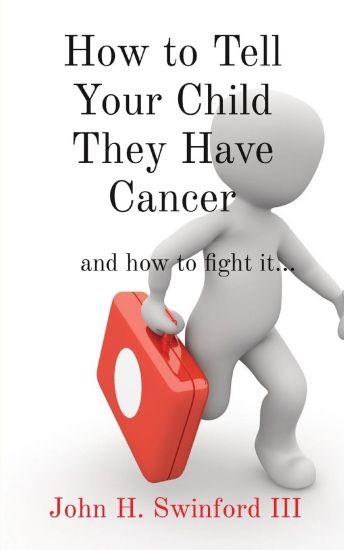

That dreaded word, "Cancer." Your, or someone close to you, medical diagnosis has confirmed it is indeed cancer. Now what?Understanding cancer treatment is essential for individuals who have been diagnosed with cancer and their caregivers. Cancer treatment can vary based on factors such as the type and stage of cancer, the individual's overall health, and treatment goals.Life during cancer treatment can be a significant adjustment, impacting various aspects of your daily routine, emotions, and overall well-being. This book will provide some insight on what you might expect your life to be like during cancer treatment.Treatment is on its way, now it is important to understand that the side effects vary from person to person, and not everyone experiences all of them. The healthcare team is there to help manage side effects and provide guidance tailored to the patient's specific situation. Open communication and a proactive approach to self-care can help one cope with chemotherapy side effects more effectively.Discovering that you are now in remission from cancer is often a moment of relief and celebration. Remission means that there is no evidence of active cancer in the body, although it's important to note that the term can have different interpretations based on the type of cancer and medical context. The reaction to the announcement of remission varies greatly from person to person, and the support they need will as well. Life after cancer is a significant transition that brings a mix of emotions, adjustments, and new perspectives. While it's a time of celebration and relief, it also comes with challenges and changes. Surviving cancer, the possibilities for what one can become are vast and varied. Your experience with cancer can shape your outlook on life, your goals, and your aspirations.Remember that the fight against cancer is unique, and there's no one-size-fits-all experience. While challenges may arise, many individuals find strength and resilience within themselves and their support networks to navigate through this phase of life. Once the fight is won, remember that life after cancer is a unique journey, and there is no perfect formula to the experience. Each experience is valid, and it's important to give the vector time and space to adjust. The champion has already demonstrated incredible strength by overcoming cancer. Cancer survivors can achieve anything. The power to achieve and pursue individual goals lies within you. Challenges like surviving cancer can indeed be transformative experiences that demonstrate an individual's strength, resilience, and determination. While life may present obstacles, the ability to overcome them is a testament to one's inner potential.

From the Heart: One Hundred and One Palpitations
John H. Harris Jr
Independently Published
2019
nidottu
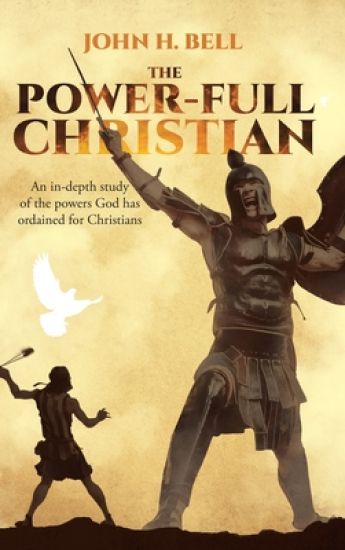
It is the belief of some that operating in spiritual power in the church is an option that the Christian can take or leave. That all Christians should operate in spiritual power is repeatedly taught in the Bible. The fulfillment of the great commission of Jesus Christ to "go ye into all the world, and preach the gospel to every creature" (Mark 16:15) can only be done by a church that moves in the power of the Holy Spirit.This book is dedicated to elucidating and magnifying the powers that God has given the Christian to operate in. In the past, some of these powers have not been given the attention and respect they deserve. A power viewed as a duty or obligation will not be fully embraced and used. A spiritual power that is viewed as a weapon will be used to bring about victory in the Christian's life. Spiritual powers used by the church will hasten the fulfillment of the great commission and thus hasten the return of the Lord Jesus Christ.The power Christian is one who basks in Holy Spirit fire. The full Christian is one who is being continuously filled and led by the Holy Spirit. May all of Christendom flow in the powers that God has ordained, and may every child of God be in reality a power-full Christian.








That Demon Gold Which Is Destroying The United States (1896)
John H. Tingman
KESSINGER PUBLISHING, LLC
2009
pokkari