Kirjojen hintavertailu. Mukana 11 342 296 kirjaa ja 12 kauppaa.

Kirjahaku

Etsi kirjoja tekijän nimen, kirjan nimen tai ISBN:n perusteella.

1000 tulosta hakusanalla John Kitchen

John Milton's Paradise Lost
John Milton's epic poem Paradise Lost (1667) is a literary landmark. His reworking of Biblical tales of the loss of Eden constitutes not only a gripping literary work, but a significant musing on fundamental human concerns ranging from freedom and fate to conscience and consciousness.Designed for students new to Milton's complex, lengthy work, this sourcebook:* outlines the often unfamiliar contexts of seventeenth-century England which are so crucial to Paradise Lost* completes the contextual study with a chronology and reprinted documents from the period* examines and reprints a broad range of responses to the poem, from early reactions to recent criticism* reprints the most frequently studied passages of the poem, along with extensive commentary and annotation of unfamiliar or significant terms used in Milton's work* provides cross-references between the textual, contextual and critical sections of the sourcebook, to show how all the materials can be called upon in an individual reader's encounter with the text* suggests further reading for those facing the huge array of critical work on the poem.With an emphasis on enjoying as well as understanding what can be a somewhat daunting work, this sourcebook will be a welcome resource for anyone new to Paradise Lost.
John Milton's Paradise Lost
John Milton's epic poem Paradise Lost (1667) is a literary landmark. His reworking of Biblical tales of the loss of Eden constitutes not only a gripping literary work, but a significant musing on fundamental human concerns ranging from freedom and fate to conscience and consciousness.Designed for students new to Milton's complex, lengthy work, this sourcebook:* outlines the often unfamiliar contexts of seventeenth-century England which are so crucial to Paradise Lost* completes the contextual study with a chronology and reprinted documents from the period* examines and reprints a broad range of responses to the poem, from early reactions to recent criticism* reprints the most frequently studied passages of the poem, along with extensive commentary and annotation of unfamiliar or significant terms used in Milton's work* provides cross-references between the textual, contextual and critical sections of the sourcebook, to show how all the materials can be called upon in an individual reader's encounter with the text* suggests further reading for those facing the huge array of critical work on the poem.With an emphasis on enjoying as well as understanding what can be a somewhat daunting work, this sourcebook will be a welcome resource for anyone new to Paradise Lost.
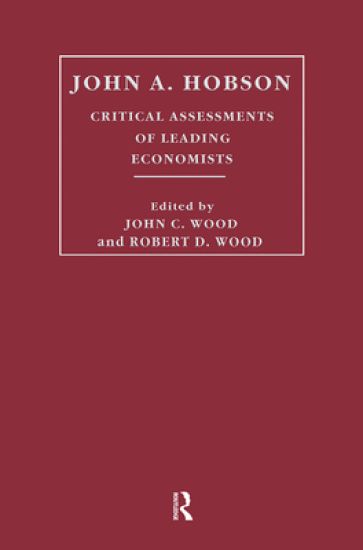
John A. Hobson
John Atkinson Hobson was a controversial figure in the history of economic thought. His first book (The Physiology of Industry ) lost him two university lecturing posts, which Hobson later describes as due to 'an Economics Professor who had read my book and considered it as equivalent to an attempt to prove the flatness of the earth'. Hobson received a similar reception from the rest of his peers. As an advocate of an apparently fallacious theory of over-saving, a critic of the orthodox theory of distribution, and a proponent of a theory of imperialism which was later taken up by Lenin, Hobson was generally condemned as a heretic by the rest of the economic establishment. His fortunes changed, rather belatedly, in 1936, when Keynes paid tribute to Hobson's work in The General Theory as anticipating his own theory that society can, under some circumstances, save too large a proportion of its income - thrift then being a vice, not a virtue. Hobson's influence was international and the impact of his writings was widespread. This collection will provide scholars with an invaluable resource in their ongoing evaluation of Hobson's contribution to economic, social and political thought.
John Elliot Cairnes
This six-volume set contains virtually all of the published work of Cairnes; it brings together, for the first time, all of his major works and almost all his uncollected articles, pamphlets and published letters. It is an essential resource for those studying the man himself, the tradition of Classical economy, and Irish intellectual history in the nineteenth century.
The Writings of John Greenwood 1587-1590, together with the joint writings of Henry Barrow and John Greenwood 1587-1590
Henry Barrow and John Greenwood are the fathers of Elizabethan Separatism. Unlike Robert Browne, they refused to compromise their beliefs or conform to Anglicanism and as a consequence they died in 1593 - as martyrs for their steadfast adherence to the principles of English Congregationalism. Volumes three and four include c. 40 items derived from manuscripts, surreptitiously printed books and very rare pamphlets and documents which allow evaluation of the teachings of the Separatists, in relation to the activities of the Elizabethan hierarchy, to the Puritans, to the Pilgrims in the Netherlands and the New World and to the Independents and Congregationalists. (16 of the pieces are by Barrow, 6 by Greenwood and 5 by both men, in addition to 13 related Barrowist items in the Appendix).
John P. Kotter
John P. Kotter (b. 1947), a leading authority on business leadership and change, is the subject of this new collection from Routledge’s acclaimed Critical Evaluations in Business and Management series. It brings together in two volumes the best critical evaluations of his work. The collection is supplemented with the editors’ expert introduction which places the gathered scholarship in its historical and intellectual context.
John Stuart Mill

John Stuart Mill

R J Halliday; R. J. Halliday

Routledge
2003
sidottu
First published in 1976, this volume offers a significant new interpretation of Mill's political thought, Mill's ambivalent attitude to democracy is carefully examined. The implications for modern democracy of Mill's views on consensus and leadership, bureaucracy and participation, equality and liberty emerge from a deep understanding of Mill's place in 19th century ideas.
John Locke

John Locke

Geraint Parry

Routledge
2003
sidottu
From earliest times Locke's writings have been the subject of controversy. An intellectual caught up in the politics of late 17th century England, his writings on politics reveal a man attempting to combine an analysis of the underlying principles of society with a deep commitment to a specific political stance and party. This study, first published in 1978 explains why Locke's vision of political life has continued to fascinate political thinkers of many different persuasions.
John Locke
Today, John Locke is recognized as one of the most important and formative philosophical influences on the modern world. His imprint is still felt in political and legal thought, in educational theory, moral theory and in the theory of knowledge.Locke’s key works, Two Treatises of Government, and the monumental An Essay Concerning Human Understanding, provoked lively debate when they were first published in 1690 and remain standard texts in undergraduate philosophy courses throughout the English-speaking world and beyond. It is not surprising therefore that Locke scholarship is a burgeoning force in the history of philosophy and that his ideas and arguments are repeatedly alluded to in current philosophical debate. Indeed, since the publication of the first series of Locke: Critical Assessments in 1991, Locke research has proceeded apace, and it is now fitting that a second Critical Assessments series be published. Of particular importance in recent work on Locke has been research into the colonial contexts of his political writings; a more nuanced and historically grounded approach to Locke’s writings on natural philosophy; and a theological turn in Locke scholarship that has centred on the content and reception of his The Reasonableness of Christianity. Each of these new trends is represented in this second series, as are recent contributions to long-standing debates concerning Lockean interpretation and influence.
John Stuart Mill

John Stuart Mill

R J Halliday; R. J. Halliday

Routledge
2007
nidottu
First published in 1976, this volume offers a significant new interpretation of Mill's political thought, Mill's ambivalent attitude to democracy is carefully examined. The implications for modern democracy of Mill's views on consensus and leadership, bureaucracy and participation, equality and liberty emerge from a deep understanding of Mill's place in 19th century ideas.
John Calvin

John Calvin

Michael Mullett

Routledge
2011
sidottu
John Calvin (1509-1564) is one of the most important figures in religious history. Sitting on the cusp of the medieval and early modern world, he was centre stage during the Reformation. In this new biography, Michael Mullett introduces us to this most important figure, tying his life together with that of Martin Luther, but also valuing his individual contribution and influence.From what Calvin himself described as ‘humble beginnings’, he became one of the most influential theologians of the Protestant Reformation. The influence of his teachings and the development of Christian theology into what was to become known as Calvinism, swept across Europe, reinforcing the Reformation’s radical break from the Catholic Church. John Calvin was ‘a mighty and formidable man, able to achieve the vast amount he did because of his unbending conviction of his rightness’.Michael Mullett explores the significant influences on Calvin and his work, and the relationships that he formed along his reforming path. Looking not only at the impact of Calvin throughout the early modern period and the importance of his work to contemporaries, Michael Mullett also assesses the impact that Calvin’s works have had in shaping the modern world, and the relevance that they still have today.
John Calvin

John Calvin

Michael Mullett

Routledge
2011
nidottu
John Calvin (1509-1564) is one of the most important figures in religious history. Sitting on the cusp of the medieval and early modern world, he was centre stage during the Reformation. In this new biography, Michael Mullett introduces us to this most important figure, tying his life together with that of Martin Luther, but also valuing his individual contribution and influence.From what Calvin himself described as ‘humble beginnings’, he became one of the most influential theologians of the Protestant Reformation. The influence of his teachings and the development of Christian theology into what was to become known as Calvinism, swept across Europe, reinforcing the Reformation’s radical break from the Catholic Church. John Calvin was ‘a mighty and formidable man, able to achieve the vast amount he did because of his unbending conviction of his rightness’.Michael Mullett explores the significant influences on Calvin and his work, and the relationships that he formed along his reforming path. Looking not only at the impact of Calvin throughout the early modern period and the importance of his work to contemporaries, Michael Mullett also assesses the impact that Calvin’s works have had in shaping the modern world, and the relevance that they still have today.
John F. Kennedy

John F. Kennedy

Peter Ling

Routledge
2013
sidottu
A lively, concise and cutting-edge biography of one of the towering figures of 20th-century history. Of all the US presidents of the post-Second World War period, John F. Kennedy is the most clearly idolized. There is a well-documented gulf between the public’s largely positive appraisal of this glamorous historical figure and professional historians’ skeptical and mixed evaluation of a president who had only a foreshortened single term in which to make his mark. What made JFK the man he was? How does he fit into the politics of his time? What were his policy goals, how did they shift, and how far did he manage to advance them? What was the Kennedy style of governance? Why was he killed and how can we explain the unprecedented outpouring of grief that his death elicited? How has his memory evolved since 1963?Acclaimed biographer Peter J. Ling explores all these important questions, sifting and synthesizing the prodigious mass of Kennedy scholarship to provide readers with a fresh and strongly contextualized portrait of the man and his presidency.John F. Kennedy will be essential reading for students of modern American history and anyone else seeking to understand the political and private life of America’s best known president.
John F. Kennedy

John F. Kennedy

Peter Ling

Routledge
2013
nidottu
A lively, concise and cutting-edge biography of one of the towering figures of 20th-century history. Of all the US presidents of the post-Second World War period, John F. Kennedy is the most clearly idolized. There is a well-documented gulf between the public’s largely positive appraisal of this glamorous historical figure and professional historians’ skeptical and mixed evaluation of a president who had only a foreshortened single term in which to make his mark. What made JFK the man he was? How does he fit into the politics of his time? What were his policy goals, how did they shift, and how far did he manage to advance them? What was the Kennedy style of governance? Why was he killed and how can we explain the unprecedented outpouring of grief that his death elicited? How has his memory evolved since 1963?Acclaimed biographer Peter J. Ling explores all these important questions, sifting and synthesizing the prodigious mass of Kennedy scholarship to provide readers with a fresh and strongly contextualized portrait of the man and his presidency.John F. Kennedy will be essential reading for students of modern American history and anyone else seeking to understand the political and private life of America’s best known president.
John Stuart Mill - Thought and Influence
More than two hundred years after his birth, and 150 years after the publication of his most famous essay On Liberty, John Stuart Mill remains one of the towering intellectual figures of the Western tradition. This book combines an up-to-date assessment of the philosophical legacy of Mill’s arguments, his complex version of liberalism and his account of the relationship between character and ethical and political commitment. Bringing together key international and interdisciplinary scholars, including Martha Nussbaum and Peter Singer, this book combines the latest insights of Mill scholarship with a long-term appraisal of the ways in which Mill’s work has been received and interpreted from the time of his death in 1873 to today.The book offers compelling insights into Mill’s posthumous fate and reputation; his youthful political and intellectual activism; his views on the formation of character; the development of his thought on logic; his differences from his father and Bentham; his astonishingly prescient, environmentally sensitive and ‘green’ thought; his relation to virtue ethics; his conception of higher pleasures and its relation to his understanding of justice; his feminist thought and its place in contemporary debates and feminist discourses; his defence of free speech and its fundamental significance for his liberalism; and his continued contemporary relevance on a number of major issues. This book will be of interest to students and scholars of Politics, Political Theory, Philosophy, History, English, Psychology, and also Cultural Studies, Empire studies, nationalism and ethnicity studies.
John Dewey reconsidered (International Library of the Philosophy of Education Volume 19)
John Dewey was one of the most influential American philosophers of his time and also one of the most prolific, with about forty books and 700 articles to his credit. When this book was originally published in 1977 Dewey's work, with the exception of his important contributions to the philosophy of education, had suffered an unwarranted scholarly neglect and remained little known outside the USA. This present volume helped redress this balance.
John Maynard Keynes

John Maynard Keynes

Vincent Barnett

Routledge
2012
sidottu
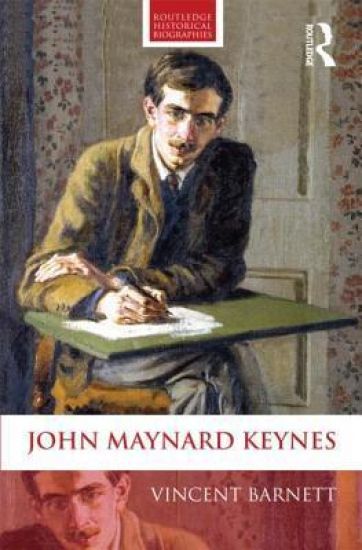
John Maynard Keynes is arguably the most important and influential economist of the twentieth century, and stands alongside Adam Smith and Karl Marx as one of the most famous economic thinkers of all time. Keynes’s radical reassessment of the accepted principles of economics led to new ways of thinking about how to deal with financial crises and economic depressions, and encouraged governments to increase levels of state investment to create economic growth.This historical biography shows how Keynes was more than an academic theorist and how his policy proposals had a significant impact on the economic and financial architecture of many Western countries from the 1920s onward, and on the post-war international financial system. It also tells the story of his colourful private life - Keynes was an active member of the Bloomsbury group of artists and intellectuals, he entertained various ‘secret’ male lovers in his youth, he married a famous Russian ballerina in 1925 and he was also an astute collector of fine art and antiquarian books. Vincent Barnett emphasizes the relationship between the personal and professional by presenting the book chapters in pairs, examining first the central features of Keynes’s life, personal development and policy ideas over the period in question, and then the theoretical content of his major writings from the same period.Barnett argues controversially that allowing psychology a much greater role within economics was a main but often-neglected feature of The General Theory of Employment, Interest and Money, and that Keynes’s policy writings were more concerned with the Britain’s national interest than is sometimes recognised. The result is a concise new biography that is both intellectually rigorous and easily accessible to students and anyone else seeking to understand the life and work of England‘s foremost economist.
John Maynard Keynes

John Maynard Keynes

Vincent Barnett

Routledge
2012
nidottu
John Maynard Keynes is arguably the most important and influential economist of the twentieth century, and stands alongside Adam Smith and Karl Marx as one of the most famous economic thinkers of all time. Keynes’s radical reassessment of the accepted principles of economics led to new ways of thinking about how to deal with financial crises and economic depressions, and encouraged governments to increase levels of state investment to create economic growth.This historical biography shows how Keynes was more than an academic theorist and how his policy proposals had a significant impact on the economic and financial architecture of many Western countries from the 1920s onward, and on the post-war international financial system. It also tells the story of his colourful private life - Keynes was an active member of the Bloomsbury group of artists and intellectuals, he entertained various ‘secret’ male lovers in his youth, he married a famous Russian ballerina in 1925 and he was also an astute collector of fine art and antiquarian books. Vincent Barnett emphasizes the relationship between the personal and professional by presenting the book chapters in pairs, examining first the central features of Keynes’s life, personal development and policy ideas over the period in question, and then the theoretical content of his major writings from the same period.Barnett argues controversially that allowing psychology a much greater role within economics was a main but often-neglected feature of The General Theory of Employment, Interest and Money, and that Keynes’s policy writings were more concerned with the Britain’s national interest than is sometimes recognised. The result is a concise new biography that is both intellectually rigorous and easily accessible to students and anyone else seeking to understand the life and work of England‘s foremost economist.