Kirjojen hintavertailu. Mukana 11 342 296 kirjaa ja 12 kauppaa.

Kirjahaku

Etsi kirjoja tekijän nimen, kirjan nimen tai ISBN:n perusteella.

1000 tulosta hakusanalla John Perry

John Locke and the Problem of Depravity

John Locke and the Problem of Depravity

W. M. Spellman

Clarendon Press
1988
sidottu
The religious thought of the philosopher John Locke (1632-1704) is examined in this book, which focuses in particular on his view of original sin and its consequences for education in the early Enlightenment. The author argues that Locke has been wrongly accused of denying original sin, ignoring the atonement, and preaching moralism, and that in fact he was much closer to traditional Protestant teaching on human sinfulness than is generally recognized. While education might serve as an effective counterweight to man's innate propensity to overturn God's laws, he recognised that it could never reduce the importance of the central drama: Christ's work of salvation.
John Locke: Some Thoughts Concerning Education
Some Thoughts concerning Education, originally published in 1693, is one of John Locke's major works, the culmination of a decade's writings on the subject. It mainly concerns moral education and its role in creating a responsible adult, and the importance of virtue as a transmitter of culture. But Locke ranges also over such practical topics as the effectiveness of physical punishment, table manners, eating habits, varieties of crying, treatment of servants, and cruelty to animals. He discusses subject-learning, the teaching of foreign languages, and the order of studying different disciplines. Published when Locke was already famous for his doctrines about knowledge, the person, and civil society, this was the most comprehensive and detailed work of its time on education.
Studying John

Studying John

John Ashton

Clarendon Press
1994
sidottu
Is historical criticism of the New Testament dead? In this telling collection of eight new studies on John's Gospel, John Ashton argues that this is very far from the case. Challenging the assumptions of methodologies which ignore the historical context in which the Gospel was composed, the author offers a spirited defence of historical criticism and provides practical demonstration of the many new insights which it has still to yield. The first two chapters treat in greater depth two key themes (the Prologue of John and the Jews) which appeared in the author's Understanding the Fourth Gospel (Clarendon Paperbacks, 1993). A third chapter is intended to supplement and correct this larger work. The rest of the book explores further facets of the Gospel, and at the same time exposes some of the serious theoretical weaknesses in much recent writing on the Gospel.
John Henry Newman: Fifteen Sermons Preached Before the University of Oxford
Newman himself called the Oxford University Sermons, first published in 1843, `the best, not the most perfect, book I have done'. He added, `I mean there is more to develop in it'. Indeed, the book is a precursor of all his major later works, including especially the Essay on the Development of Christian Doctrine and the Grammar of Assent. Dealing with the relationship of faith and reason, the fifteen sermons represent Newman's resolution of the conflict between heart and head that so troubled believers, non-believers, and agnostics of the nineteenth century, Their controversial nature also makes them one of the primary documents of the Oxford Movement. This new edition provides an introduction to the sermons, a definitive text with textual variants, extensive annotation, and appendices containing previously unpublished material.
John of Scythopolis and the Dionysian Corpus

John of Scythopolis and the Dionysian Corpus

Paul Rorem; John C. Lamoreaux

Clarendon Press
1998
sidottu
John, the sixth-century orthodox bishop of Scythopolis in Palestine, was the first of many authors to comment upon the highly influentional Pseudo-Dionysian writings (such as The Mystical Theology). Here translated and interpreted, John's Prologue and Scholia (marginalia) have only recently been separable from later comments. They present his complex theological and philosophical observations on the Dionysian texts. The book begins with the general outlines of the appearance and reception of the Dionysian corpus in the sixth century, followed by an overview of the career and works of John of Scythopolis. Written around AD 540, John's own comments in the Prologue provide the outline for introducing the concerns dominating his Scholia: biblical, classical, and patristic sources; liturgical terminology and context; orthodox and heretical doctrines of the Trinity, Christology, creation, and eschatology; Dionysian authenticity; Neoplatonism and John's unacknowledged quotations from Plotinus. Most of the Scholia and all of the Prologue are translated and annotated in order to present the first of many layers of Dionysian interpretation.
Studying John

Studying John

John Ashton

Clarendon Press
1998
nidottu
Is historical criticism of the New Testament dead? In this telling collection of eight new essays on John's Gospel, John Ashton argues that this is very far from the case. Challenging the assumptions of methodologies which ignore the historical context in which the Gospel was composed, the author offers a spirited defence of historical criticism and provides practical demonstration of the many new insights which it has still to yield. The first two chapters treat in greater depth two key themes, the Prologue of John and the Jews, which appeared in the author's Understanding the Fourth Gospel (Clarendon Paperbacks, 1993). A third chapter is intended to supplement and correct this larger work. The rest of the book explores some of the serious theoretical weaknesses in much recent writing on the Gospel and makes some alternative proposals.
English Works of John Fisher, Bishop of Rochester

English Works of John Fisher, Bishop of Rochester

John Fisher

Oxford University Press
2002
sidottu
Bishop John Fisher was a scholar and theologian of European reputation, famous as a preacher and author of the first sermon-sequence to be printed in English. He was beheaded for his opposition to Henry VIII's divorce from Catherine of Aragon and pursued after his death by the enmity of the king, who surpressed his books and sought to blacken his name. The figure of John Fisher links the age of late medieval piety with the growth of Christian humanism and the new learning, which, as a friend of Erasmus, he introduced as chancellor of Cambridge University. His English writings are distinctive for their structured elegance and clarity. This new edition contains sermons written during the last fifteen years of Fisher's life, including a previously unpublished eyewitness account of the Field of Cloth of Gold celebrations, and devotional works composed while he was a prisoner in the Tower of London.
John Locke and America

John Locke and America

Barbara Arneil

Clarendon Press
1996
sidottu
This book considers the context of the colonial policies of Britain, Locke's contribution to them, and the importance of these ideas in his theory of property. It also reconsiders the debate about John Locke's influence in America, challenging a number of other interpretations. The author breaks new ground in her interpretation of Locke's writings about the Indians and English colonization of America--a subject largely overlooked in the past. The book argues that Locke's theory of property must be understood in connection with the philosopher's political concerns, as part of his endeavour to justify the colonialist policies of Lord Shaftesbury's cabinet, with which he was personally associated. The author maintains that traditional scholarship has failed to do justice to Locke by ignoring the implications of contemporary British imperial policy for the interpretation of his political thought. The book offers a new insight into Locke's theory of property, suggesting a solution to the problem of why Locke himself assigned such importance to property in the state of nature being based on labour while at the same time asserting that property in civil society is based on convention.
John Law

John Law

Antoin E. Murphy

Clarendon Press
1997
sidottu
John Law (1671-1729) left a remarkable legacy of economic concepts from a time when economic conceptualization was very much at an embryonic stage. Yet he is best known--and generally dismissed--today as a rake, duellist, and gambler. This intellectual biography offers a new approach to Law, one that shows him to have been a significant economic theorist with a vision that he attempted to implement as policy in early-eighteenth-century Europe. Law's style, marked by a clarity and use of modern terminology, stands out starkly against the turgid prose of many of his contemporaries. His vision of a monetary and financial system was certainly one of a later age, for Law believed in an economy of banknotes and credit where specie had no role to play. Ultimately Law failed as a policy-maker, in part because of the entrenchment of the financiers and their aristocratic backers and in part because of theoretical flaws in his vision. His struggle for power took place against the background of Europe's first major stock boom and collapse. The collapse of the Mississippi System, which he had conceived, and the South Sea Bubble led to a lasting impression of Law as a failure. It is this impression that Antoin Murphy seeks to dispel.
John Maynard Keynes and International Relations

John Maynard Keynes and International Relations

Donald Markwell

Oxford University Press
2006
sidottu
Sixty years after his death, the life and thought of the economist, John Maynard Keynes, continues to be a subject of the greatest interest to scholars. Yet one of the most significant areas of Keynes' thinking has been strangely overlooked - international relations, a subject that was always of central importance to him. The purpose of this book is to explore comprehensively, for the first time, the evolution of Keynes' thinking on international relations , and to show how this is linked to the changing of his opinions on economic matters, in a way which deepens our understanding of both.
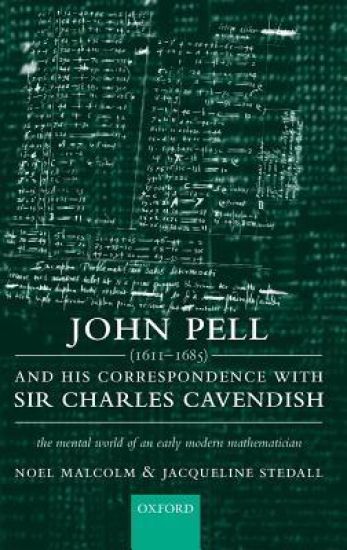
John Pell (1611-1685) and His Correspondence with Sir Charles Cavendish

John Pell (1611-1685) and His Correspondence with Sir Charles Cavendish

Noel Malcolm; Jacqueline Stedall

Oxford University Press
2004
sidottu
The mathematician John Pell was a member of that golden generation of scientists Boyle, Wren, Hooke, and others which came together in the early Royal Society. Although he left a huge body of manuscript materials, he has remained an extraordinarily neglected figure, whose papers have never been properly explored. This book, the first ever full-length study of Pell, presents an in-depth account of his life and mathematical thinking, based on a detailed study of his manuscripts. It not only restores to his proper place in history a figure who was one of the leading mathematicians of his day; it also brings to life a strange, appealing, but awkward character, whose failure to publish his discoveries was caused by powerful scruples. In addition, this book shows that the range of Pell's interests extended far beyond mathematics. He was a key member of the circle of the 'intelligencer' Samuel Hartlib; he prepared translations of works by Descartes and Comenius; in the 1650s he served as Cromwell's envoy to Switzerland; and in the last part of his life he was an active member of the Royal Society, interested in the whole range of its activities. The study of Pell's life and thought thus illuminates many different aspects of 17th-century intellectual life. The book is in three parts. The first is a detailed biography of Pell; the second is an extended essay on his mathematical work; the third is a richly annotated edition of his correspondence with Sir Charles Cavendish. This correspondence, which has often been cited by scholars but has never been published in full, is concerned not only with mathematics but also with optics, philosophy, and many other subjects; conducted mainly while Pell was in the Netherlands and Cavendish was also on the Continent, it is an unusually fascinating example of the correspondence that flourished in the 17th-century 'Republic of letters'. This book will be an essential resource not only for historians of mathematics, science, and philosophy, but also for intellectual and cultural historians of early modern Europe.
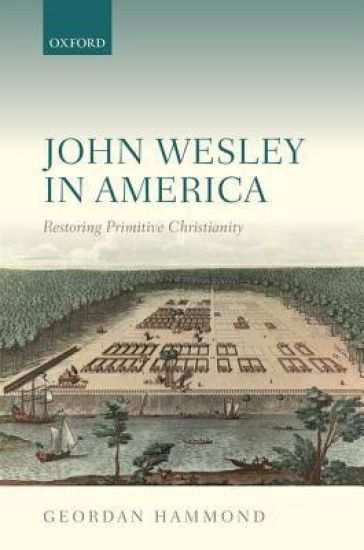
John Wesley in America

John Wesley in America

Geordan Hammond

Oxford University Press
2014
sidottu
Why did John Wesley leave the halls of academia at Oxford to become a Church of England missionary in the newly established colony of Georgia? Was his ministry in America a success or failure? These questions-which have engaged numerous biographers of Wesley-have often been approached from the vantage point of later developments in Methodism. Geordan Hammond presents the first book-length study of Wesley's experience in America, providing an innovative contribution to debates about the significance of a formative period of Wesley's life. John Wesley in America addresses Wesley's Georgia mission in fresh perspective by interpreting it in its immediate context. In order to re-evaluate this period of Wesley's life, Hammond carefully considers Wesley's writings and those of his contemporaries. The Georgia mission, for Wesley, was a laboratory for implementing his views of primitive Christianity. The ideal of restoring the doctrine, discipline, and practice of the early church in the pristine Georgia wilderness was the prime motivating factor in Wesley's decision to embark for Georgia and in his clerical practice in the colony. Understanding the centrality of primitive Christianity to Wesley's thinking and pastoral methods is essential to comprehending his experience in America. Wesley's conception of primitive Christianity was rooted in his embrace of patristic scholarship at Oxford. The most direct influence, however, was the High Church ecclesiology of the Usager Nonjurors who inspired him with their commitment to the restoration of the primitive church.
John Calvin as Sixteenth-Century Prophet

John Calvin as Sixteenth-Century Prophet

Jon Balserak

Oxford University Press
2014
sidottu
John Calvin as Sixteenth-Century Prophet examines Calvin's sense of vocation. Jon Balserak argues that Calvin believed himself to be a prophet "placed over nations and kingdoms to tear down and destroy, to build and to plant" (Jer 1: 10). With this authority, Calvin pursued an expansionist agenda which blended the religious, political, and social towards making France, upon which he turned his attentions especially after 1555, Protestant. Beginning with an analysis of the two trajectories of thought existing within Christian discourse on prophecy from the patristic to the Early Modern era, this study goes on to locate Calvin within a non-mystical, non-apocalyptic prophetic tradition that focused on scriptural interpretation. Balserak demonstrates how Calvin developed a plan to win France for the gospel; a plan which included the possibility of armed conflict. To pursue his designs, Calvin trained "prophets" who were sent into France to labor intensely to undermine the king's authority on the grounds that he supported idolatry, convince the French Reformed congregations that they were already in a war with him, and prepare them for a possible military uprising. An additional part of this plan saw Calvin search for a French noble willing to support the evangelical religion, even if it meant initiating a coup. Calvin began ruminating over these ideas in the 1550s or possibly earlier. In this analysis, the war which commenced in 1562 represents the culmination of Calvin's years of preparation.
John Locke: Drafts for the Essay Concerning Human Understanding
This volume provides the first complete edition of the third and final surviving draft of John Locke's Essay Concerning Human Understanding, dating from 1685, four years before the publication of the Essay itself (December 1689). There is a General Introduction that gives a detailed account of the content and circumstances of composition of this draft, and a Textual Introduction that provides a full description of the manuscript and its history.
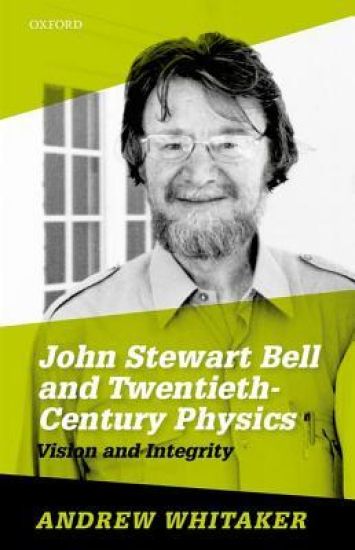
John Stewart Bell and Twentieth-Century Physics

John Stewart Bell and Twentieth-Century Physics

Andrew Whitaker

Oxford University Press
2016
sidottu
John Stewart Bell (1928-1990) was one of the most important figures in twentieth-century physics, famous for his work on the fundamental aspects of the century's most important theory, quantum mechanics. While the debate over quantum theory between the supremely famous physicists, Albert Einstein and Niels Bohr, appeared to have become sterile in the 1930s, Bell was able to revive it and to make crucial advances - Bell's Theorem or Bell's Inequalities. He was able to demonstrate a contradiction between quantum theory and essential elements of pre-quantum theory - locality and causality. The book gives a non-mathematical account of Bell's relatively impoverished upbringing in Belfast and his education. It describes his major contributions to quantum theory, but also his important work in the physics of accelerators, and nuclear and elementary particle physics.
John Stuart Mill

John Stuart Mill

Gregory Claeys

Oxford University Press
2022
nidottu
Very Short Introductions: Brilliant, Sharp, Inspiring John Stuart Mill (1806-73) is widely regarded as the leading liberal philosopher, economist, and political theorist of nineteenth century Britain. In his lifetime he was best known for his System of Logic (1843) and the Principles of Political Economy (1848). Today Mill is chiefly identified with On Liberty (1859), perhaps the definitive text of modern liberal statement of its subject, and probably the single most important work of modern political thought. Mill was also the first major male feminist thinker of the period (author of The Subjection of Women, 1869), and the first, as an MP, to introduce a bill for female enfranchisement before Parliament. This Very Short Introduction offers a brief survey of the life and key ideas of this most influential Victorian British writer. Moving chronologically, Gregory Claeys outlines the philosophical background out of which Mill developed, chiefly through the ideas of Jeremy Bentham and James Mill. He demonstrates how Mill's personal life, especially his 'mental crisis' of 1827, and his relationship with Harriet Taylor, were integral to his intellectual development. Throughout Claeys considers Mill's key works set within the context of his lesser writings and correspondence, and discusses the more controversial aspects of his thought concerning religion, secularism, and birth control. ABOUT THE SERIES: The Very Short Introductions series from Oxford University Press contains hundreds of titles in almost every subject area. These pocket-sized books are the perfect way to get ahead in a new subject quickly. Our expert authors combine facts, analysis, perspective, new ideas, and enthusiasm to make interesting and challenging topics highly readable.
John Stuart Mill

John Stuart Mill

Timothy Larsen

Oxford University Press
2018
sidottu
John Stuart Mill observed in his Autobiography that he was a rare case in nineteenth-century Britain because he had not lost his religion but never had any. He was a freethinker from beginning to end. What is not often realized, however, is that Mill's life was nevertheless impinged upon by religion at every turn. This is true both of the close relationships that shaped him and of his own, internal thoughts. Mill was a religious sceptic, but not the kind of person which that term usually conjures up. The unexpected presence and prominence of spirituality is not only there in Mill's late, startling essay, 'Theism', in which he makes the case for hope in God and in Christ. It is everywhere--in his immediate family, his best friends, and his vision for the future. It is even there in such a seemingly unlikely place as his Logic, which repeatedly addresses religious themes. John Stuart Mill: A Secular Life is a biography which follows one of Britain's most well-respected intellectuals through all of the key moments in his life from falling in love to sitting in Parliament and beyond. It also explores his classic works including, On Liberty, Principles of Political Economy, Utilitarianism, and The Subjection of Women. In this well-researched study which offers original findings and insights, Timothy Larsen presents the Mill you never knew. The Mill that even some of his closest disciples never knew. This is John Stuart Mill, the Saint of Rationalism--a secular life and a spiritual life.
John Locke: Correspondence

John Locke: Correspondence

Oxford University Press
2023
sidottu
This is the twenty-first volume in the Clarendon Edition of the Works of John Locke. The series aims to provide authoritative critical editions of all the writings of one of the most important intellectuals in the early-modern Anglophone world. The present volume completes the Correspondence edited by the late E. S. de Beer, published between 1976 and 1989. It contains some 300 documents: newly discovered or augmented, or newly collected, letters by or to Locke, or between his close associates. New finds have emerged from archives worldwide; previously known letters are now improved from new manuscripts or supplemented by enclosures that had become detached from them; 'epistles dedicatory' in books by Locke or addressed to him are collected; third-party letters with direct bearing on Locke are included; as also Locke's agreements with publishers for the printing of his books. The volume covers Locke's manifold interests, from childrearing to medicine to cartography; from the exercise of patronage to the political economy of England's burgeoning empire; from the management of his Somerset tenants to relations with fellow philosopher Damaris Masham; from a trial for heresy to surveillance letters when Locke was suspect; from book collecting to calendrical reform. Locke's critics and vindicators are here, attacking and defending his published works. Considerable material has come to light bearing on Locke's encounters with Carolina and policies when a founding member of the Board of Trade and Plantations. The volume is supported by Mark Goldie's introduction and by an extensive explanatory editorial apparatus.