
Kirjahaku
Etsi kirjoja tekijän nimen, kirjan nimen tai ISBN:n perusteella.
1000 tulosta hakusanalla Joseph Corey

Sketches Of The Life, And Extracts From The Journals, And Other Writings Of Joseph Croswell (1809)
Joseph Croswell
KESSINGER PUBLISHING, LLC
2009
pokkari
Some Of The Thoughts Of Joseph Joubert (1867)
Joseph Joubert; George Henry Calvert
KESSINGER PUBLISHING, LLC
2009
nidottu

Speeches, Reviews, Reports, Etc. By Joseph Blunt (1843)
Joseph Blunt
KESSINGER PUBLISHING, LLC
2009
pokkari

The Bible Vindicated Against The Aspersions Of Joseph Barker (1854)
Joseph Frederick Berg
KESSINGER PUBLISHING, LLC
2009
pokkari

The Life And Adventures Of Joseph Emin, An Armenian (1792)
Joseph Emin
KESSINGER PUBLISHING, LLC
2009
pokkari

The Juvenile Poems Of Joseph S. Fletcher (1879)
Joseph Smith Fletcher
KESSINGER PUBLISHING, LLC
2010
pokkari
The Miscellaneous Writings, Literary, Critical, Juridical, And Political Of Joseph Story (1835)
Joseph Story
KESSINGER PUBLISHING, LLC
2010
pokkari

Twelve Messages From The Spirit John Quincy Adams, Through Joseph D. Stiles, Medium To Josiah Brigham (1859)
Joseph D. Stiles; Josiah Brigham
KESSINGER PUBLISHING, LLC
2010
pokkari
Joseph Averanii Interpretationum Juris V2, Part 2
Giuseppe Averani
KESSINGER PUBLISHING, LLC
2010
pokkari

Joseph Averanii Interpretationum Juris V2 Part 1
Giuseppe Averani
KESSINGER PUBLISHING, LLC
2010
pokkari
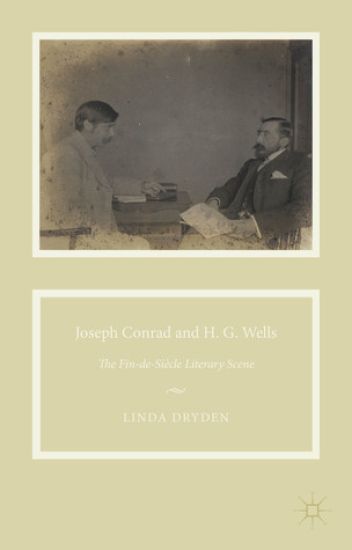
This book traces the literary friendship between Joseph Conrad and H. G. Wells from their early correspondence through to the differences that caused their estrangement, including their respective responses to the First World War. It thus gives an overview of the literary scene in the late Victorian and early Edwardian period.

This book looks at the inception, composition, and 1907 publication of The Secret Agent, one of Joseph Conrad’s most highly regarded political novels and a core text of literary modernism. David Mulry examines the development and revisions of the novel through the stages of the holograph manuscript, first as a short story, then as a serialized sensation fiction in Ridgway’s Militant Weekly for the American market, before it was extensively revised and published in novel form. Presciently anticipating the climate of modern terror, Conrad’s text responds to the failed Greenwich Bombing, the first anarchist atrocity to occur on English soil. This book charts its historical and cultural milieu via press and anarchist accounts of the bombing, to place Conrad foremost among the dynamite fiction of revolutionary anarchism and terrorism in the late nineteenth and early twentieth centuries.

Joseph Chamberlain
Palgrave Macmillan
2016
sidottu
Winston Churchill described Joseph Chamberlain as 'the man who made the weather' for twenty years in British politics between the 1880s and the 1900s. This volume contains contributions on every aspect of Chamberlain's career, including international and cultural perspectives hitherto ignored by his many biographers. It breaks his career into three aspects: his career as an international statesman, defender of British interests and champion of imperial federation; his role as a national leader, opposing Gladstone's crusade for Irish home rule by forming an alliance with the Conservatives, campaigning for social reform and finally advocating a protectionist economic policy to promote British business; and the aspect for which he is still celebrated in his adopted city, as the provider of sanitation, gas lighting, clean water and cultural achievement for Birmingham – a model of civic regeneration that still inspires modern politicians such as Michael Heseltine, Tristram Hunt and DavidWilletts.
In 1908, Joseph Conrad was criticised by a reviewer for being a man ‘without either country or language’: even his shipboard communities were the product of a ‘cosmopolitan’ vision. This book takes off from that criticism and begins by exploring the history and meanings of the term ‘cosmopolitan’. It then considers the multinational world of Conrad’s ships – and of the Merchant Marine more generally – to differentiate multinationalism from cosmopolitanism. Subsequent chapters then address nationalism, nation-formation and the concept of the nation through a reading of Nostromo; cosmopolitanism and internationalism in The Secret Agent; nationalism, internationalism and transnational activism in relation to Under Westen Eyes; and Conrad’s own transnational activism in his later essays. While drawing distinctions between cosmopolitanism, internationalism and transnationalism as the appropriate conceptual framings for Conrad’s works, this book traces Conrad’s own engagement with nationalism, cosmopolitanism, and transnational activism in relation to the political events of his time.
Concentrating on the explorer and naturalist Joseph Banks (1743-1820), this book explores the early history of collections at the British Museum. Taking Banks' extraordinary career as its basis, it examines the changes that took place during a period of transition that led to collecting on an increasingly global scale.