Kitab telekommunikasiya sistemləri və komp ter şəbəkələri zrə texnologiyalara həsr edilmişdi. Əsas diqqət komp ter şəbəkələrinin yaranma zərurətləri, kommunikasiya vasitələri və m xtəlif əlamətlərə g rə təsnif edilməsinə y nəlmişdir. Şəbəkə axitekturunun OSI və TCP/IP modelləri, hər bir səviyyənin funksiyaları şərh edilmişdir. Şəbəkələrdə nvanlaşma və marşrutlaşdırma məsələləri işıqlandırılmışdır. Ali məktəblərin İKT ixtisasları zrə təhsil alan bakalavr və magistlər nd r. M xtəlif təyinatlı informasiya və rabitə sistemlərinin istismarı sahəsində alışan m təxəssislər n də faydalı ola bilər.
This work has been selected by scholars as being culturally important and is part of the knowledge base of civilization as we know it.This work is in the public domain in the United States of America, and possibly other nations. Within the United States, you may freely copy and distribute this work, as no entity (individual or corporate) has a copyright on the body of the work.Scholars believe, and we concur, that this work is important enough to be preserved, reproduced, and made generally available to the public. To ensure a quality reading experience, this work has been proofread and republished using a format that seamlessly blends the original graphical elements with text in an easy-to-read typeface.We appreciate your support of the preservation process, and thank you for being an important part of keeping this knowledge alive and relevant.
The nanotech revolution waits for no man, woman or child. To revitalize science, technology, engineering, and mathematics (STEM) performance, the U.S. educational system requires a practical strategy to better educate students about nanoscale science and engineering research. This is particularly important in grades K 12, the effective gestation point for future ideas and information. Optimize your use of free resources from the National Science Foundation The first book of its kind, Nanoscience Education, Workforce Training, and K 12 Resources promotes nano-awareness in both the public and private sectors, presenting an overview of the current obstacles that must be overcome within the complex U.S. educational system before any reform is possible. It‘s a race against time and other countries and the fear is that U.S. students could lag behind for decades, with ineffective teaching and learning methods handicapping their ability to compete globally. Focusing on the application of new knowledge, this concise and highly readable book explores the transdisciplinary nature of nanoscience and its societal impact, also addressing workforce training and risk management. Illustrating the historical perspective of the complexity of K 12 education communities, it defines nanotechnology and evaluates pertinent global and national landscapes, presenting examples of successful change within them. This book is composed of four sections: Foundations addresses the national educational matrix, exploring the scientific and social implications associated with the delay in adopting nanoscience education in public schools Teaching Nanotechnology discusses the critical process of teaching K 12 students the skills to understand and evaluate emerging technologies they will encounter
The nanotech revolution waits for no man, woman…or child. To revitalize science, technology, engineering, and mathematics (STEM) performance, the U.S. educational system requires a practical strategy to better educate students about nanoscale science and engineering research. This is particularly important in grades K–12, the effective gestation point for future ideas and information. Optimize your use of free resources from the National Science Foundation The first book of its kind, Nanoscience Education, Workforce Training, and K–12 Resources promotes nano-awareness in both the public and private sectors, presenting an overview of the current obstacles that must be overcome within the complex U.S. educational system before any reform is possible. It’s a race against time—and other countries—and the fear is that U.S. students could lag behind for decades, with ineffective teaching and learning methods handicapping their ability to compete globally. Focusing on the application of new knowledge, this concise and highly readable book explores the transdisciplinary nature of nanoscience and its societal impact, also addressing workforce training and risk management. Illustrating the historical perspective of the complexity of K–12 education communities, it defines nanotechnology and evaluates pertinent global and national landscapes, presenting examples of successful change within them. This book is composed of four sections:Foundations—addresses the national educational matrix, exploring the scientific and social implications associated with the delay in adopting nanoscience education in public schoolsTeaching Nanotechnology—discusses the critical process of teaching K–12 students the skills to understand and evaluate emerging technologies they will encounterNanoscience Resources and Programs—provides a wide overview of the resources offered by funded outreach programs from universities with nanoscience centersFramework Applied—analyzes the structure of national government programs and skill level recommendations for nanoeducation from the National Nanotechnology InitiativesThis book offers plans of action and links to sustainable (largely free) development tools to help K–12 students acquire the skills to understand and evaluate emerging technologies. Promoting a holistic teaching approach that encompasses all aspects of science, the authors strive to help readers implement change so that decisions about resources and learning are no longer made "from the top down" by policymakers, but rather "from the bottom up" by teachers, parents, and students at the local level.Akhlesh Lakhtakia, one of the contributors to this volume, was recently featured on CNN in a discussion on solar energy.
Gilbert Keith Chesterton, KC*SG (29 May 1874 - 14 June 1936), better known as G. K. Chesterton, was an English writer, poet, philosopher, dramatist, journalist, orator, lay theologian, biographer, and literary and art critic. Chesterton is often referred to as the "prince of paradox". Time magazine has observed of his writing style: "Whenever possible Chesterton made his points with popular sayings, proverbs, allegories-first carefully turning them inside out." Chesterton is well known for his fictional priest-detective Father Brown, and for his reasoned apologetics. Even some of those who disagree with him have recognised the wide appeal of such works as Orthodoxy and The Everlasting Man.Chesterton, as a political thinker, cast aspersions on both Progressivism and Conservatism, saying, "The whole modern world has divided itself into Conservatives and Progressives. The business of Progressives is to go on making mistakes. The business of the Conservatives is to prevent the mistakes from being corrected."Chesterton routinely referred to himself as an "orthodox" Christian, and came to identify this position more and more with Catholicism, eventually converting to Catholicism from High Church Anglicanism. George Bernard Shaw, Chesterton's "friendly enemy" according to Time, said of him, "He was a man of colossal genius."Biographers have identified him as a successor to such Victorian authors as Matthew Arnold, Thomas Carlyle, Cardinal John Henry Newman, and John Ruskin.... Charles Frederick Gurney Masterman PC (24 October 1873 - 17 November 1927) was a radical Liberal Party politician, intellectual and man of letters, He worked closely with such Liberal leaders as David Lloyd George and Winston Churchill in designing social welfare projects, including the National Insurance Act of 1911. During the First World War, he played a central role in the main government propaganda agency....
Nonprofits and the social sectors are taking on an increasing share of the world's most vital work. Make sure your organization is ready for the challenge.If you read nothing else on nonprofits and the social sectors, read these 10 articles. We've combed through hundreds of Harvard Business Review articles and selected the most important ones to help you align your organization's mission and strategy, deliver immediate impact, and create lasting change.This book will inspire you to:Choose the right problem to solveUnderstand when the best practices of for-profits don't applyAssemble an engaged and goal-driven board of directorsMake the most of for-profit initiatives and corporate partnershipsDrive demand, scale up, and be ready to change courseLearn from the success stories of the world's most respected nonprofit leadersThis collection of articles includes "Lofty Missions, Down-to-Earth Plans," by V. Kasturi Rangan; "What Business Can Learn from Nonprofits," by Peter F. Drucker; "Life's Work: An Interview with Desmond Tutu"; "Are You Solving the Right Problem?" by Dwayne Spradlin; "Life's Work: An Interview with George Mitchell"; "Enterprising Nonprofits," by J. Gregory Dees; "Life's Work: An Interview with Wynton Marsalis"; "State Street's CEO on Creating Employment for At-Risk Youths," by Joseph Hooley; "Life's Work: An Interview with Salman Khan"; "Do Better at Doing Good," by V. Kasturi Rangan, Sohel Karim, and Sheryl K. Sandberg; "AEI's President on Measuring the Impact of Ideas," by Arthur C. Brooks; "Life's Work: An Interview with Michelle Bachelet"; "The New Work of the Nonprofit Board," by Barbara E. Taylor, Richard P. Chait, and Thomas P. Holland; "Life's Work: An Interview with Bill T. Jones"; "Reaching the World's Poorest Consumers," by Muhammad Yunus, Frederic Dalsace, David Menasce, and Benedicte Faivre-Tavignot; "Life's Work: An Interview with Muhammad Yunus"; and "Audacious Philanthropy: Lessons from 15 World-Changing Initiatives," by Susan Wolf Ditkoff and Abe Grindle.
Nonprofits and the social sectors are taking on an increasing share of the world's most vital work. Make sure your organization is ready for the challenge.If you read nothing else on nonprofits and the social sectors, read these 10 articles. We've combed through hundreds of Harvard Business Review articles and selected the most important ones to help you align your organization's mission and strategy, deliver immediate impact, and create lasting change.This book will inspire you to:Choose the right problem to solveUnderstand when the best practices of for-profits don't applyAssemble an engaged and goal-driven board of directorsMake the most of for-profit initiatives and corporate partnershipsDrive demand, scale up, and be ready to change courseLearn from the success stories of the world's most respected nonprofit leadersThis collection of articles includes "Lofty Missions, Down-to-Earth Plans," by V. Kasturi Rangan; "What Business Can Learn from Nonprofits," by Peter F. Drucker; "Life's Work: An Interview with Desmond Tutu"; "Are You Solving the Right Problem?" by Dwayne Spradlin; "Life's Work: An Interview with George Mitchell"; "Enterprising Nonprofits," by J. Gregory Dees; "Life's Work: An Interview with Wynton Marsalis"; "State Street's CEO on Creating Employment for At-Risk Youths," by Joseph Hooley; "Life's Work: An Interview with Salman Khan"; "Do Better at Doing Good," by V. Kasturi Rangan, Sohel Karim, and Sheryl K. Sandberg; "AEI's President on Measuring the Impact of Ideas," by Arthur C. Brooks; "Life's Work: An Interview with Michelle Bachelet"; "The New Work of the Nonprofit Board," by Barbara E. Taylor, Richard P. Chait, and Thomas P. Holland; "Life's Work: An Interview with Bill T. Jones"; "Reaching the World's Poorest Consumers," by Muhammad Yunus, Frederic Dalsace, David Menasce, and Benedicte Faivre-Tavignot; "Life's Work: An Interview with Muhammad Yunus"; and "Audacious Philanthropy: Lessons from 15 World-Changing Initiatives," by Susan Wolf Ditkoff and Abe Grindle.
Hur kan grammatikundervisning bidra till att barn blir självständiga och säkra språkbrukare? Hur kan läraren ledsaga sina elever att göra språkliga upptäckter? Och vilken språklig kompetens krävs av läraren? Kreativ grammatikundervisning försöker besvara dessa frågor.Språket är något annat än bara rätt och fel, ett svar i facit eller ett sorteringsintrument. Språket är något för alla, en personlig egendom som man kan känna glädje i att utforska och som hjälper den växande individen att förstå sig själv och omvärlden. Kreativ grammatikundervisning innebär att eleverna uppmuntras att undersöka språket – att pröva och skapa.Denna bok repeterar och fördjupar de grundläggande delarna av grammatiken, där läsaren kan se hur viktiga lärares grammatiska kunskaper är och vilka funktioner de fyller för barns språkutveckling. Med stor kreativitet får läsaren hjälp att knäcka den grammatiska koden; att först bygga upp kunskapen och sedan förstå hur allt hänger ihop. Genomgående finns en stark koppling till undervisning med många autentiska exempel och metodtips, samt även kopplingar till flerspråkighetsperspektiv.Kreativ grammatikundervisningär tänkt att ge lärarstudenter och yrkesverksamma lärare nödvändiga ämneskunskaper, och samtidigt visa hur man kan arbeta med grammatik på ett kreativt och inspirerande sätt – alltså grammatikdidaktik när den är som bäst.Bokens tredje upplaga är uppdaterad i enlighet med den senaste läroplanen, Lgr22.Jessica Eriksson är gymnasielärare och universitetslektor i svenska med didaktisk inriktning vid Karlstads universitet. Annelie K. Johansson är legitimerad grundskolelärare (åk 1–7), lärarutbildare med fokus på läs- och skrivutveckling och doktorand i pedagogiskt arbete vid Karlstads universitet. Camilla Grönvall Fransson är gymnasielärare, doktorand i nordiska språk och universitetsadjunkt vid Mälardalens universitet.
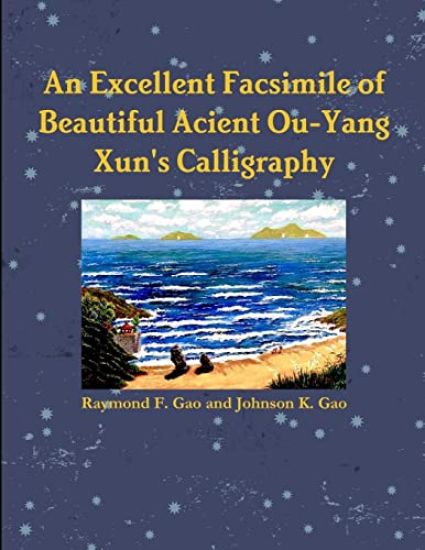
This is a good model for learning how to write Chinese characters beautifully. Both English and Chinese prefaces are used. So that both Chinese and Western people can understand the description. There are 76 pages of written model facsimiled from real hand writings in this book. The cover used Johnson K. Gao's color painting with two persons on the beach to pick up shells. That is a metaphor to readers that authors wanted to presant the beautiful shells they picked up from the "sea of calligraphy".
Many students of physical and applied science and of engineering find difficulty in copying with the mathematics necessary for the quantitative manipulation of the physical concepts they are atudying in their main course. This book is designed to help first and second year under-graduates at universities and polytechnics, as well as technical college students, to find their feet in the important mathematical methods they will need. Throughout the text the physical relevance of the mathematics is constantly stressed and, where it is helpful, use has been made of pictorial mathematics and qualitative verbal descriptions instead of over-compact mathematical symbolism. Topics are presented in three stages: a qualitative introduction, a more formal presentation and an explicit check or worked example. There are many exercises included in the text which are aimed at testing a student's understanding and building his confidence progressively throughout each piece of work.
This tutorial-style textbook develops the basic mathematical tools needed by first and second year undergraduates to solve problems in the physical sciences. Students gain hands-on experience through hundreds of worked examples, self-test questions and homework problems. Each chapter includes a summary of the main results, definitions and formulae. Over 270 worked examples show how to put the tools into practice. Around 170 self-test questions in the footnotes and 300 end-of-section exercises give students an instant check of their understanding. More than 450 end-of-chapter problems allow students to put what they have just learned into practice. Hints and outline answers to the odd-numbered problems are given at the end of each chapter. Complete solutions to these problems can be found in the accompanying Student Solutions Manual. Fully-worked solutions to all problems, password-protected for instructors, are available at www.cambridge.org/foundation.
This text is a collection of some 400 physics problems, with hints on their solutions, and answers, for final-year (advanced level) students in schools and first year undergraduates. The author has concentrated on presenting interesting (and to some extent unusual) problems.
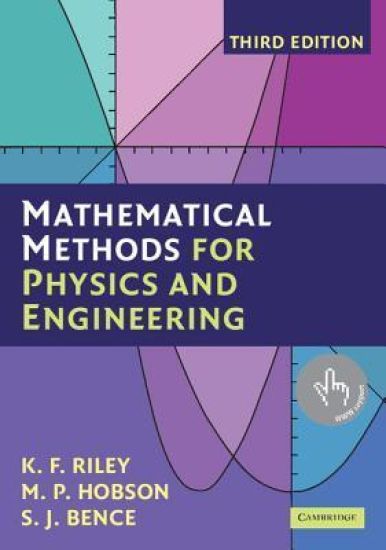
The third edition of this highly acclaimed undergraduate textbook is suitable for teaching all the mathematics for an undergraduate course in any of the physical sciences. As well as lucid descriptions of all the topics and many worked examples, it contains over 800 exercises. New stand-alone chapters give a systematic account of the 'special functions' of physical science, cover an extended range of practical applications of complex variables, and give an introduction to quantum operators. Further tabulations, of relevance in statistics and numerical integration, have been added. In this edition, half of the exercises are provided with hints and answers and, in a separate manual available to both students and their teachers, complete worked solutions. The remaining exercises have no hints, answers or worked solutions and can be used for unaided homework; full solutions are available to instructors on a password-protected web site, www.cambridge.org/9780521679718.
Mathematical Methods for Physics and Engineering, Third Edition is a highly acclaimed undergraduate textbook that teaches all the mathematics for an undergraduate course in any of the physical sciences. As well as lucid descriptions of all the topics and many worked examples, it contains over 800 exercises. New stand-alone chapters give a systematic account of the 'special functions' of physical science, cover an extended range of practical applications of complex variables, and give an introduction to quantum operators. This solutions manual accompanies the third edition of Mathematical Methods for Physics and Engineering. It contains complete worked solutions to over 400 exercises in the main textbook, the odd-numbered exercises, that are provided with hints and answers. The even-numbered exercises have no hints, answers or worked solutions and are intended for unaided homework problems; full solutions are available to instructors on a password-protected web site, www.cambridge.org/9780521679718.