Kirjojen hintavertailu. Mukana 12 016 292 kirjaa ja 12 kauppaa.

Kirjahaku

Etsi kirjoja tekijän nimen, kirjan nimen tai ISBN:n perusteella.

1000 tulosta hakusanalla Keith Alan Hamilton

Global Order and Global Disorder

Global Order and Global Disorder

Keith Suter

Praeger Publishers Inc
2003
sidottu
Is the world entering a period of breakdown or breakthrough? As Suter makes clear, globalization is reducing the role of national governments, but it is not yet clear what will follow the current world order. He explains the process of globalization and uses the technique of scenario planning to examine alternative forms of global order and disorder.The current world order is ending. The old order has been based on nation-states, or countries, with centralized national governments. As Keith Suter makes clear, the process of globalization, which is now the most important factor in world politics, is undermining that world order and leading to world disorder. Globalization is the process of the erosion of the nation-state as the basic unit of world politics, the declining power of national governments, and the reduced significance of national boundaries.Global change is running ahead of governments' abilities to manage it. Economics is only a part of that process. Suter also deals with other vital concerns: war, crime, environment, and health. Therefore, while Suter examines the growth and impact of transnational corporations, he also takes in many other matters that comprise globalization. The process of globalization is not reversible. Therefore, there has to be a search for a new order rather than vain efforts to patch up the system of the nation-states. Suter concludes by exploring alternatives to the current world order using the technique of scenario planning. A provocative analysis that will be of interest to scholars, students, researchers, and the general public concerned with international relations, law, and economic issues.
What the Bible Really Teaches

What the Bible Really Teaches

Keith Ward

SPCK Publishing
2004
nidottu
This prominent theologian adds his contribution to the authority of Scripture debate An impassioned contribution to the debate about the authority of scripture - how we read the Bible, and how, the author believes, a fundamentalist reading is unsustainable. This book will infuriate many and delight others, and will make a valuable contribution to the debate, which we plan to join with voices from many corners. The book works through a series of Bible passages often cited as 'proof texts', and explores how they can be read, and how they are used.
A Guide to Christianity

A Guide to Christianity

Keith Ward

SPCK Publishing
2007
nidottu
A systematic guide to the Christian faith, taking a broad sweep from the big bang through the Old Testament to the New and beyond into the history of the faith and modern theological thinking. The hard questions posed by the Church's history are not ducked and the challenges of the enlightenment and modern science are given full weight. The book explores contemporary strands of Christian thinking and relates them sensitively and intelligently to world faith and non-faith viewpoints. It is a book that many thinking Christians and those thinking about Christianity will find invaluable in its rigorous, open and intelligent approach invaluable.
SPCK Introduction to Bonhoeffer

SPCK Introduction to Bonhoeffer

Keith Clements

SPCK Publishing
2010
nidottu
Dietrich Bonhoeffer remains one of the twentieth century's most influential theologians and this is a short, accessible and engaging introduction to the man. Written by an internationally acclaimed Bonhoeffer scholar, the book considers the role Bonhoeffer played in resisting the Nazis and his attitude to the Jews and the Holocaust.
The Word of God

The Word of God

Keith Ward

SPCK Publishing
2010
pokkari
Keith Ward introduces this volume on the world's greatest ever bestseller by suggesting that the Bible is neither a book dictated by God, as some believe, nor just a set of out-dated taboos and politically slanted histories, as those at the opposite extreme maintain. Rather, it is a very mixed set of documents, by many different writers, from many different times, which records the struggle of many people in one particular religious tradition to respond to their discernments of a transcendent spiritual power. What makes the Bible distinctive among other religious books is that the dominant image of transcendence, of spirituality, that slowly develops in its pages is the image of a power that helps humans to seek a moral goal in history even when such a thing would seem impossible to achieve - were it not for the power of grace. The Bible is, in short, a spiritual text.
Your Money and Your Life

Your Money and Your Life

Keith Tondeur

SPCK Publishing
2010
nidottu
How we handle money and possessions is central to our spiritual health and our emotional well being. This book does not set out to provide all the answers but it aims to help us ask some of the important questions about what it means to be a faithful disciple of Jesus Christ around money and possessions. Nor is this a matter for just our personal discipleship. We need to be praying for our nation, especially for Christians who work as economists and bankers and politicians. We need to pray that what emerges from this turbulent period is a more gentle form of wealth creation, less aggressive, less driven by profit, more underpinned by spiritual, social and moral values.
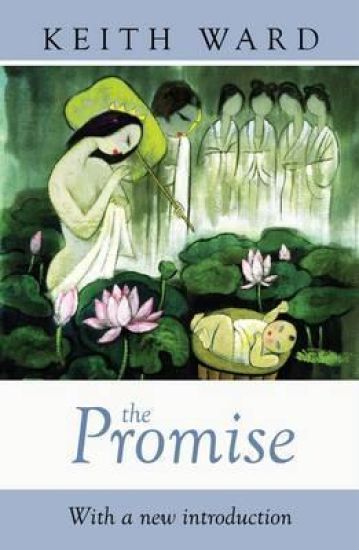
The Promise

The Promise

Keith Ward

SPCK Publishing
2010
nidottu
Keith Ward retells all the events of the first five books of the Bible in a way that attempts to bring out their spiritual meaning, to show their place in the total story, to explain references and terms which are often puzzling, and to incorporate insight from Jewish and Christian meditation.
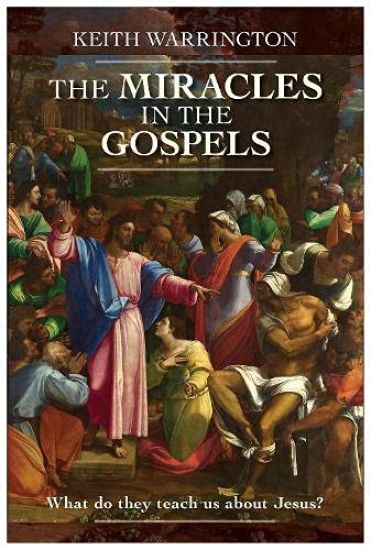
The Miracles in the Gospels

The Miracles in the Gospels

Keith Warrington

SPCK Publishing
2015
nidottu
In this magisterial study, Keith Warrington paints a rounded picture of Jesus as a miracle worker by exploring each of the miracles in the Gospels in their literary and historical setting. He demonstrate that, while the miracles are historically authentic, there are several reasons for their presence in the Gospels other than simply to identify Jesus as a miracle worker. They are also intended to function as vehicles of teaching: expressing aspects of the mission and person of Jesus, providing lessons for his would-be disciples and adding theological value for each Gospel’s original audience.
Finding Your Leadership Style

Finding Your Leadership Style

Keith Lamdin

SPCK Publishing
2012
nidottu
This book will be attractive to all ministers who are seeking to understand how leadership works and why it can be so difficult. It would be useful as a study book for lay ministers as well and for all who take up a leadership role in local churches.
Creating the Future of the Church

Creating the Future of the Church

Keith Elford

SPCK Publishing
2013
nidottu
What are the conditions that allow organizations and those within them to thrive? What happens when those conditions are applied to the Church? Deeply aware that more could be done to guarantee a successful future for the Church as an organization, Keith Elford explores the challenges it faces and urges us to take a more coherent approach to the way we think about and 'do' church. In recent years, research and practical learning have taken the Church a long way from the managerialism about which many people are understandably sceptical. Thus the aim of Creating the Future of the Church is to provide a practicable framework and process to allow readers to find their own answers to ensure the Church's organizational health and effectiveness.
What Do We Mean by 'God'?

What Do We Mean by 'God'?

Keith Ward

SPCK Publishing
2015
nidottu
Language about God is something like the language of poetry - The poetic use of language is not to increase your information about the world. We know facts about the world without having poetry. The use of words in poetry is to evoke in us a certain attitude or way of looking at things or feeling about things...If this is the use of religious language, what sort of view of the world is it trying to convey? I think we might say it is trying to convey that the world is an expression of a reality beyond it...' Keith Ward unpacks the meaning of the word 'God' and explains why we need to get rid of the crude and unhelpful assumptions that still abound. A book for all who are curious about how God, and God's actions, can be understood today. Intended for people looking for answers to life's biggest questions, this little book of guidance will appeal to anyone, whether believer or non-believer, looking for a quick and easy way into the topic.
Love Is His Meaning

Love Is His Meaning

Keith Ward

SPCK Publishing
2017
pokkari
Jesus' teaching has changed the world. Yet his sayings can often seem cryptic and hard to understand. In Love Is His Meaning, Keith Ward explores the various figures of speech and images that Jesus used, and finds they are all ways of expressing and evoking the self-giving love of God, manifested supremely in Jesus' life. They communicate spiritual truths, often not in a literal but in a poetic way. They encourage us to take our own moral decisions with sensitivity and care for others. They show that God's love will never abandon anyone, and that it extends to everyone in the world without exception. And they promise a fulfilment of our hopes for a just and peaceable world that surpasses anything we might describe or imagine. Putting aside literalist, authoritarian, legalistic, judgemental and divisive presentations of Jesus' teachings, the author shows that what remains is the gospel of a divine love - a love stronger than death, and the only power that can and will redeem our disordered world.
The Mystery of Christ

The Mystery of Christ

Keith Ward

SPCK Publishing
2018
nidottu
Though little can be known with certainty about the historical Jesus, the image of a heavenly figure – `Christ crucified and risen’ – was constructed out of his life and teachings. This vision of divine reality transcends traditional Hebrew poetic thought, retaining its ancient power in the context of our new understanding of a vast and evolving cosmos. In order to help us form a truly contemporary Christian spirituality, Keith Ward (writing in our own time and place rather than, for example, in the 4th century like St Augustine, the 14th like Julian of Norwich, the 16th like Ignatius of Loyola, or the 20th like Thomas Merton) offers a set of reflections on what he believes to be the unique and life-transforming revelation of God in the person of Jesus Christ. And as we explore the spiritual truths relating to this mystery as expressed in the Gospels, meditation leads naturally to prayer.
Ezekiel's Horse

Ezekiel's Horse

Keith Carter

University of Texas Press
2000
sidottu
Winner, Jury selection, American Institute of Graphic Arts, 2001 Communication Arts 2001 Design Annual, 2001 Featured title in Print A-Z, 2001Haunting in their mystery and beauty, Keith Carter's horses fill the frame like spirits in a dream-but without ever ceasing to be real horses. Whether he's photographing thoroughbreds preparing for the elaborate maneuvers of dressage or a farm nag grazing in a field, Carter meets horses on their terms, not his. Looking into their enigmatic eyes in these photographs, you wonder, "What are these creatures thinking?" until you realize that Keith Carter's horses never really give up their secrets.This volume collects some 75 duotone images of horses and riders, most of them never before published. Accompanying the pictures is a photographer's statement, in which Keith Carter describes the genesis of this project and muses on what it is about horses that draws him to them as photographic subjects. Distinguished art and photography critic John Wood places Carter's equine photos within the wider Western tradition of painting and photographing animals, while praising Carter's rare ability to portray animal subjects without producing kitsch. In his words, "Carter is probably photography's first truly great master of the animal photograph, and none of his other animal photographs are more powerful than his photographs of horses."
Fireflies

Fireflies

Keith Carter

University of Texas Press
2009
sidottu
In Fireflies, Keith Carter presents a magical gallery of photographs of children and the world they inhabit. The collection includes both new work and iconic images such as "Fireflies," "The Waltz," "Chicken Feathers," "Megan's New Shoes," and "Angel" selected from all of Carter's rare and out-of-print books. When making these images, Carter often asked the children, "do you have something you would like to be photographed with?" This creative collaboration between photographer and subject has produced images that conjure up stories, dreams, and imaginary worlds. Complementing the photographs is an essay in which Carter poetically traces the wellsprings of his interest in photographing children to his own childhood experiences in Beaumont, Texas. As he recalls days spent exploring in the woods and creeks, it becomes clear that his art flows from a deep reservoir of sights and sounds imprinted in early childhood. A lyrical meditation on the joys, wonders, and anxieties of childhood, Fireflies brings us back to the small truths that are often pushed aside or forgotten when we become adults.
From Uncertain to Blue

From Uncertain to Blue

Keith Carter

University of Texas Press
2011
sidottu
"In the beginning, there was no real plan, just a road trip that became a journey." In the years 1986 and 1987, Keith Carter and his wife, Patricia, visited one hundred small Texas towns with intriguing names like Diddy Waw Diddy, Elysian Fields, and Poetry. He says, "I tried to make my working method simple and practical: one town, one photograph. I would take several rolls of film but select only one image to represent that dot on my now-tattered map. The titles of the photographs are the actual names of the small towns. . . ." Carter created a body of work that evoked the essence of small-town life for many people, including renowned playwright and fellow Texan, Horton Foote. In 1988, Carter published his one town/one picture collection in From Uncertain to Blue, a landmark book that won acclaim both nationally and internationally for the artistry, timelessness, and universal appeal of its images-and established Carter as one of America's most promising fine art photographers.Now a quarter century after the book's publication, From Uncertain to Blue has been completely re-envisioned and includes a new essay in which Carter describes how the search for photographic subjects in small towns gradually evolved into his first significant work as an artist. He also offers additional insight into his creative process by including some of his original contact sheets. And Patricia Carter gives her own perspective on their journey in her amplified notes about many of the places they visited as they discovered the world of possibilities from Uncertain to Blue.
Landowners in Colonial Peru

Landowners in Colonial Peru

Keith A. Davies

University of Texas Press
1984
nidottu
In 1540 a small number of Spaniards founded the city of Arequipa in southwestern Peru. These colonists, later immigrants, and their descendants devoted considerable energy to exploiting the surrounding area. At first, like many other Spaniards in the Americas, they relied primarily on Indian producers; by the late 1500s they had acquired land and established small farms and estates. This, the first study to examine the agrarian history of a region in South America from the mid-sixteenth through late-seventeenth century, demonstrates that colonials exploited the countryside as capitalists. They ran their rural enterprises as efficiently as possible, expanded their sources of credit and labor, tapped widespread markets, and lobbied strenuously to influence the royal government. The reasons for such behavior have seldom been explored beyond the colonists’ evident need to sustain themselves and their dependents.Arequipa’s case suggests another fundamental cause of capitalist behavior in colonial South America: rural wealth was inextricably tied to the colonists’ desire to reinforce and improve their stature. Arequipa’s Spanish families of the upper and middle social levels consistently employed land and its proceeds to attract prominent spouses, to acquire prestigious political and military posts, and to enhance their standing by becoming benefactors of the Church. They rarely lost sight of the crucial role that wealth played in their lives. Thus, when the region’s economy flourished, as it did during the late 1500s, they expanded and improved their holdings. When it faltered at the beginning of the next century, they made every effort to retain properties, even fragmenting land to accommodate family members and new spouses. Unlike patterns sometimes suggested for Spanish America, many Arequipan colonial families possessed land and retained it over many generations. Neither the increasingly rich Church nor a few powerful persons managed to build up extensive estates.Landowners in Colonial Peru explains how and why rural property became so important. It emphasizes both the capitalist bent of Hispanics and the manner in which wealth served social aspirations. The approach makes clear that many of the economic and social characteristics so often attributed to eighteenth- and nineteenth-century Latin Americans were present from the early Colonial period.