
Kirjahaku
Etsi kirjoja tekijän nimen, kirjan nimen tai ISBN:n perusteella.
1000 tulosta hakusanalla Keith Harding


Lacan, Althusser, Derrida, Foucault - the currency of these names in the world of modern thought is widespread. But all too often in the English-speaking world their work and ideas are considered without reference to the context in which they were produced, and this is the gap that this new study sets out to fill. The major revaluation of what constituted the 'political', set in train by the 1968 events is a key theme here, and the work of the best-known French intellectual figures of the time both illuminates and is illuminated by it. But it is not just a new reading of already familiar figures that the reader will find in this work. Writers little-known in the English-speaking world, or hitherto not extensively treated in English, receive similar contextualising attention, so that the recent upsurge in sociology or the impact of a dissident Marxist such as Henri Lefebvre take their place alongside better-known figures in the first book-length English-language survey of one of the most exciting, and often bewildering, periods in European intellectual history.
Institutional Reform and Economic Development in the Chinese Countryside
Keith Griffin
Palgrave Macmillan
1984
nidottu
Nietzsche's work has greatly influenced twentieth-century ideas and culture, but four European writers may be regarded as particularly 'Nietzschean'. Keith May discusses parallels between Nietzsche and these four authors, emphasizing order of rank in Yeats; the qualities of Rilke's Angels as compared with those of the overman; Mann's explorations of the spiritual territory beyond good and evil, and Lawrence's treatment of will to power.

This new book looks at British Politics in the 1760's and 1770's during the American Revolution. Perry looks particularly at colonialism and the colonial administration, and at the general conduct of the war with America. He also surveys the development of radicalism in Britain subsequent to the war and looks at constitutional developments during this period in Britain and America.
The book takes as its theme the relationship between literature and the contemporary means of production and distribution collectively termed 'the media' - in particular, film and television. The intention of the book is to explore and evaluate the mutual opportunities and restrictions in this relationship. In the grammar of our culture there seems to be an accepted opinion that print is superior in terms of cultural production to film, radio or television, that to read a book is somehow a 'higher' cultural activity than seeing a play on television or seeing a film. By the same token, a novel is a 'superior' work of art to film or television. The longer perspective reveals that traditionally there always is a greater respect paid to the previous mode of literary production - poetry was superior to drama, poetic drama was superior to the novel, and film attained cult and classic status initially over television.

This book provides a clear method of study which encourages students to construct their own interpretation of any of Dicken's novels. It helps students to identify a novel's major thematic concerns and interests and to argue a case purely from the evidence of the text. But it also moves beyond a straighforwardly thematic analysis to consider how a novel is put together and how it works. This in turn provides students with a way of identifying the distinctiveness of Dickens's fiction and with a way of structuring an intelligent critical response to any of his novels.

The multiple impact of the May 1968 events in France is here reviewed and analysed, initially through a narrative account of the events themselves and then through a systematic survey of the various manners in which they have been interpreted and reproduced in France. This covers successively political, social/sociological, and cultural texts - first-hand accounts along with works by political activists and academic social scientists - before moving to a consideration of fictional works (novels and feature films) dealing with or set during the events.
Examining Scotland's position within the regal union of the 17th century, this book is an up-to-date narrative incorporating recent research, questioning the extent that Scottish political ideas were influenced by the new relationship with England, brought about by the union of the crowns in 1603. It asks what effect the union had on Scottish political elites and on the development of political institutions. While addressing these issues, the book follows the political narrative of this turbulent century, explaining Scottish affairs within a British context without losing sight of the very distinctive nature of Scottish politics. By the author of "Bloodfeud in Scotland 1573-1625".

Human Development and the International Development Strategy for the 1990s
Keith (EDT) Griffin; J. (EDT) Knight
Palgrave Macmillan
1990
pokkari
The present decade has brought a sharp deterioration in living conditions in many developing countries, especially in Africa and Latin America. Incomes per capita have declined and social expenditure has been cut, with setbacks in nutrition, school enrolment and health services as a result. The burden of economic adjustment tends to fall most heavily on the poor and on vulnerable groups, such as children. This is not only a tragedy in itself but also a waste of human resources and it has led to renewed attention to the role of human resources in the process of development. This is, of course, not a new issue. It has long been understood that the realization of the full potential of human beings is both a means and an end in itself and that the reduction of poverty should be a primary aim of development. But all too often development tends to bypass the poor unless steps are taken to ensure that they share its benefits; and in times of austerity their position tends to worsen further. Hence, the present search for ways to alleviate poverty, combat hunger and uphold educational and health standards, even in times of economic distress.This book, containing studies commissioned by the United Nations, focuses on the dynamic interaction between the economic and social variables in development. It presents and develops the case for greater attention to the human factor by identifying and assessing the fundamental role of education, health, work opportunities and social participation in economic and social progress.
Implementing a Human Development Strategy
Keith Griffin; Terry McKinley
Palgrave Macmillan
1994
nidottu
'Readers will find in these pages a very lucid, creative, and highly readable version of many of the ideas that have taken shape through the medium of the Human Development Reports during the last four years. Busy policy makers all over the world will find this an indispensable primer.' - Mahbub ul Haq, from the preface. This book introduces the basic concepts of human development and presents policy guidelines for implementing a human development strategy in developing countries. Human development is seen both as an end in itself and as a means to increase the capabilities of people. The role of the state, the market and of people's participation in such a strategy are described. Specific chapters discuss the structure of incentives, allocation of public sector resources, structural reforms, the relationship of human development to environmental issues and finance and administration.
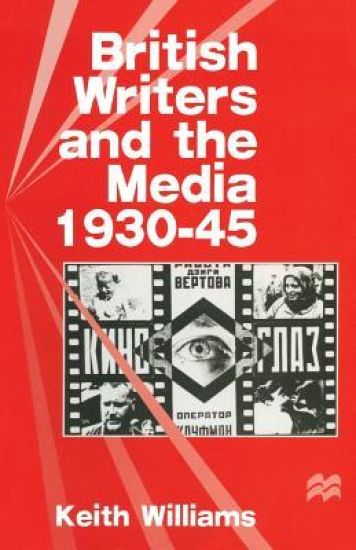
Richly informative about a host of writers from Auden to Priestley, and theoretically informed, this wide-ranging new study demonstrates that the 1930s, remembered usually for uncomplicated political engagement, can rather be seen as initiating the key elements of postmodernism, developing the individual's sense of `elsewhere' through new technology of representation and propaganda. Keith Williams analyses the relationship between the leftist writers of the decade and the mass-media, showing how newspapers, radio and film were treated in their writing and how they radically reshaped its forms, assumptions and imagery.

"Way ahead" readers consolidate and develop the reading skills acquired through the "Way ahead" course books. There are two readers at each level, and these are graded to ensure that children not only practice reading at an appropriate level of difficulty, but also gain confidence in approaching new texts. Linguistic structures have been tightly controlled to match the language of the course, and at the same time, known vocabulary is reinforced and extenderd. All the texts in the series contain additional activities for class or individual use.

"Way ahead" readers consolidate and develop the reading skills acquired through the "Way Ahead" course books. There are two readers at each level, and these are graded to ensure that children not only practice reading at an appropriate level of difficulty, but also gain confidence in approaching new texts. Linguistic structures have been tightly controlled to match the language of the course, and at the same time, known vocabulary is reinforced and extended. All the texts in the series contain additional activities for class or individual use.

This text is part of the "Way Ahead Readers" language scheme. There are two readers at each level, and these are carefully graded to ensure that children not only practice reading at an appropriate level of difficulty, but also gain confidence in approaching new texts. Linguistic structures have been tightly controlled to match the language in the course, and at the same time, known vocabulary is both reinforced and extended. All the texts contain additional activities for class or individual use.
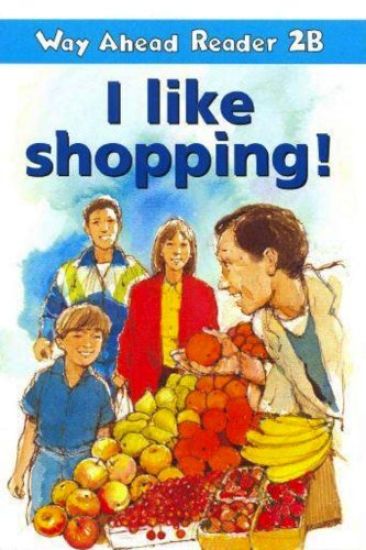
This text is part of the "Way Ahead Readers" language scheme. There are two readers at each level, and these are carefully graded to ensure that children not only practice reading at an appropriate level of difficulty, but also gain confidence in approaching new texts. Linguistic structures have been tightly controlled to match the language in the course, and at the same time, known vocabulary is both reinforced and extended. All the texts contain additional activities for class or individual use.
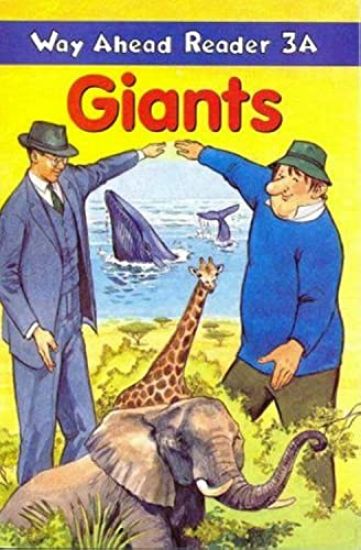
No other description available.

No other description available.
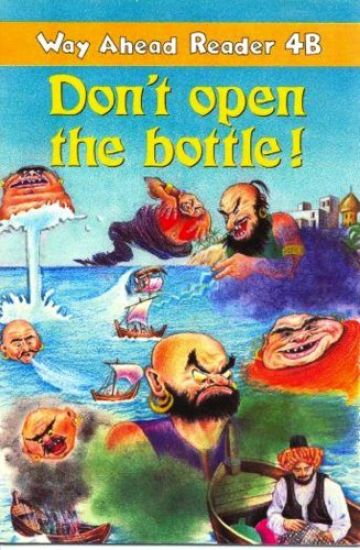
Each level of Way Ahead is accompanied by two story books. There are three plays (Readers 1C, 2C, 3C) and three information books (Readers 4C, 5C, 6C). There are also three poetry anthologies which can be used with Levels 4, 5 and 6.