Kirjojen hintavertailu. Mukana 11 244 527 kirjaa ja 12 kauppaa.

Kirjahaku

Etsi kirjoja tekijän nimen, kirjan nimen tai ISBN:n perusteella.

1000 tulosta hakusanalla Kelly Bulkeley

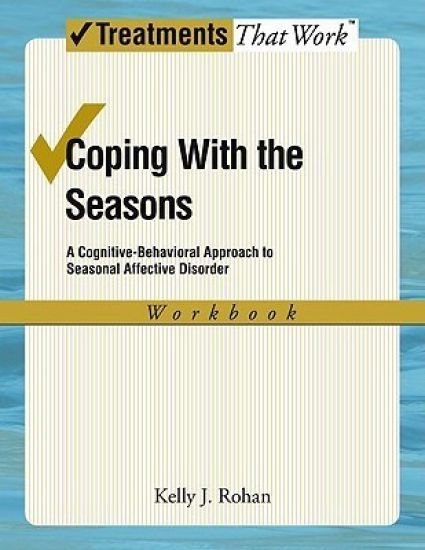
Coping with the Seasons: Workbook

Coping with the Seasons: Workbook

Kelly J. Rohan

Oxford University Press Inc
2008
nidottu
Seasonal Affective Disorder (SAD) is a form of major depression that recurs at the same time every year, in the late autumn-winter months. The causes of SAD are not entirely known, though it is believed that the change in the availability of sunlight is the trigger. Statistics show that SAD becomes increasingly common the farther people live north or south of the equator, and episodes tend to be longer and more severe at higher latitudes. The current standard treatment for SAD is light therapy, in which the client uses a very bright light box for up to 90 minutes a day. This treatment is plagued by high discontinuation and relapse rates. In addition, between 45% and 55% of sufferers, especially those with severe depressive symptoms, never benefit from light therapy at all. In the author's studies, CBT in addition to light therapy had a 60% success rate a year out from the treatment, compared to a 100% relapse rate for light therapy alone. This workbook presents an evidence-based group treatment for SAD. In 12 sessions over 6 weeks, participants learn the traditional CBT elements of behavioural activation and cognitive restructuring to improve coping with the winter season. Some cognitive restructuring focuses on challenging negative thoughts related to the winter season, weather conditions, and lack of light. A relapse-prevention component addresses early identification of negative anticipatory thoughts about winter and SAD-related behaviour changes, how to use the skills learned to cope with subsequent winter seasons, and the development of a personalized relapse-prevention plan. This corresponding workbook includes homework exercises, monitoring forms, and other useful components to supplement the work done in therapy.

Spirits of the Space Age

Spirits of the Space Age

Kelly E. Hayes

OXFORD UNIVERSITY PRESS INC
2024
sidottu
Since its inauguration in 1960, Brazil's capital city, Brasília, has become an internationally recognized center for eclectic forms of modern mysticism. Among the dozens of New Age, Spiritist, esoteric, and occult communities that have sprouted in the city and its environs, the most spectacular is the Valley of the Dawn (Vale do Amanhecer). Equal parts religious movement, enchanted city, utopian vision, and theatrical spectacle, the Valley of the Dawn is a unique psychic ecosystem. Community members consider themselves the spiritual descendants of an ancient race of extraterrestrials originally sent to galvanize humanity's cultural and spiritual evolution. Wearing dazzling garments that reference their past lives in different cultural eras, adherents perform daily ceremonies for karmic redemption and offer spiritual healing services free of charge to the public. The Valley of the Dawn was founded by a charismatic spirit medium called Aunt Neiva, a widowed mother of four who came to Brasília in 1957 to work in the construction of the new capital city. Over two decades, Aunt Neiva established a spiritual metropolis that today is home to over 25,000 people and the headquarters of a global religious movement with more than 800 affiliated temples worldwide. Spirits of the Space Age details the Valley's historical emergence, placing it within the context of mid-twentieth century Brazil, and explores its "imagined world" --the imaginative and collectively shared representations that foster a common sense of identity, meaning, and purpose among Valley members. Drawing on extensive ethnographic fieldwork, it offers a narrative portrait of a new religious movement as seen in and through the lives of Aunt Neiva, her most important collaborators, and contemporary adherents. By presenting a more complete picture of the Valley of the Dawn, this book counters the persistent media representations of the Valley as a cult. But it also illuminates how religious movements respond to their place and time even as they situate themselves in relationship to imagined otherworlds and times.
Spirits of the Space Age

Spirits of the Space Age

Kelly E. Hayes

OXFORD UNIVERSITY PRESS INC
2024
nidottu
Since its inauguration in 1960, Brazil's capital city, Brasília, has become an internationally recognized center for eclectic forms of modern mysticism. Among the dozens of New Age, Spiritist, esoteric, and occult communities that have sprouted in the city and its environs, the most spectacular is the Valley of the Dawn (Vale do Amanhecer). Equal parts religious movement, enchanted city, utopian vision, and theatrical spectacle, the Valley of the Dawn is a unique psychic ecosystem. Community members consider themselves the spiritual descendants of an ancient race of extraterrestrials originally sent to galvanize humanity's cultural and spiritual evolution. Wearing dazzling garments that reference their past lives in different cultural eras, adherents perform daily ceremonies for karmic redemption and offer spiritual healing services free of charge to the public. The Valley of the Dawn was founded by a charismatic spirit medium called Aunt Neiva, a widowed mother of four who came to Brasília in 1957 to work in the construction of the new capital city. Over two decades, Aunt Neiva established a spiritual metropolis that today is home to over 25,000 people and the headquarters of a global religious movement with more than 800 affiliated temples worldwide. Spirits of the Space Age details the Valley's historical emergence, placing it within the context of mid-twentieth century Brazil, and explores its "imagined world" --the imaginative and collectively shared representations that foster a common sense of identity, meaning, and purpose among Valley members. Drawing on extensive ethnographic fieldwork, it offers a narrative portrait of a new religious movement as seen in and through the lives of Aunt Neiva, her most important collaborators, and contemporary adherents. By presenting a more complete picture of the Valley of the Dawn, this book counters the persistent media representations of the Valley as a cult. But it also illuminates how religious movements respond to their place and time even as they situate themselves in relationship to imagined otherworlds and times.
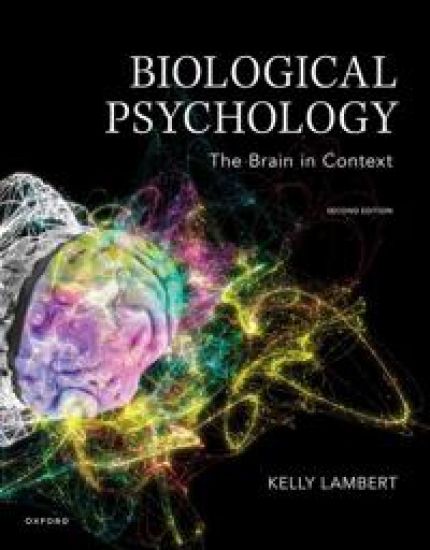
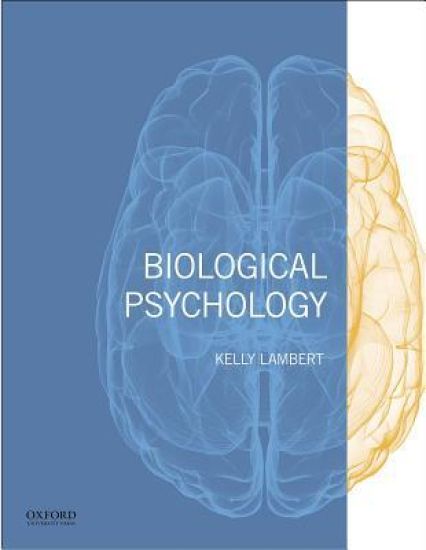
Biological Psychology

Biological Psychology

Kelly G. Lambert

OXFORD UNIVERSITY PRESS INC
2024
nidottu
Biological Psychology's approach to its material is centered around tenets of effective presentation, making it accessible to all students regardless of their level of scientific preparation. Biological Psychology draws readers into the content with chapter opening Brain Scene Investigations that pose a neuroscience mystery and end with a brief overview of the exciting material that awaits students. Real world clinical case studies reinforce concepts while highlighting the importance of context and current research. Context Matters boxes strengthen students' critical thinking skills by presenting detailed accounts of research studies and demonstrating the varying effects that relevant variables have on specific dependent variables. To further integrate research techniques and expose students to experimental design, Laboratory Explorations outline how different methods apply to various types of research questions. Through this mechanism of storytelling and contextual organization, Biological Psychology conveys the latest information about the brain's design and psychology that cater to a wide range of readers. An enhanced e-book with embedded videos and self-assessment further engages students in the content.
Breaking Out of the Box: Adventure-Based Field Instruction

Breaking Out of the Box: Adventure-Based Field Instruction

Kelly Ward; Robin Sakina Mama; Natalie Moore-Bembry

Oxford University Press
2025
nidottu
Moving from the classroom to the field is often a daunting transition for social work students. In this new edition of their celebrated text, Kelly Ward and Robin Sakina Mama are joined by Natalie Moore-Bembry. They address student fears and concerns with a straightforward, adventure-based instruction method. The book's exercises allow students to become comfortable using vital social work tools and theories outside of the classroom. Emphasis on individual decision-making within group settings fosters independence and confidence in addition to proficient group work and leadership skills. Previous editions of Breaking Out of the Box have been commended for their direct and honest approach to a wide array of concerns shared by social workers and students. The fifth edition returns to this mission with an increased focus on diversity through rituals and a new chapter on cultural competence, new coverage of AI's impact on communications, and a continued emphasis on ethics and human rights.
Religion and Memory in Tacitus' Annals

Religion and Memory in Tacitus' Annals

Kelly E. Shannon-Henderson

Oxford University Press
2019
sidottu
Throughout his narrative of Julio-Claudian Rome in the Annals, Tacitus includes numerous references to the gods, fate, fortune, astrology, omens, temples, priests, the emperor cult, and other religious material. Though scholars have long considered Tacitus' discussion of religion of minor importance, this volume demonstrates the significance of such references to an understanding of the work as a whole by analyzing them using cultural memory theory, which views religious ritual as a key component in any society's efforts to create a lived version of the past that helps define cultural identity in the present. Tacitus, who was not only an historian, but also a member of Rome's quindecimviral priesthood, shows a marked interest in even the most detailed rituals of Roman religious life, yet his portrayal of religious material also suggests that the system is under threat with the advent of the principate. Some traditional rituals are forgotten as the shape of the Roman state changes while, simultaneously, a new form of cultic commemoration develops as deceased emperors are deified and the living emperor and his family members are treated in increasingly worshipful ways by his subjects. This study traces the deployment of religious material throughout Tacitus' narrative in order to show how he views the development of this cultic "amnesia" over time, from the reign of the cryptic, autocratic, and oddly mystical Tiberius, through Claudius' failed attempts at reviving tradition, to the final sacrilegious disasters of the impious Nero. As the first book-length treatment of religion in the Annals, it reveals how these references are a key vehicle for his assessment of the principate as a system of government, the activities of individual emperors, and their impact on Roman society and cultural identity.
Spectroscopy and Radiative Transfer of Planetary Atmospheres

Spectroscopy and Radiative Transfer of Planetary Atmospheres

Kelly Chance; Randall V. Martin

Oxford University Press
2017
sidottu
Spectroscopy and radiative transfer are rapidly growing fields within atmospheric and planetary science with implications for weather, climate, biogeochemical cycles, air quality on Earth, as well as the physics and evolution of planetary atmospheres in our solar system and beyond. Remote sensing and modeling atmospheric composition of the Earth, of other planets in our solar system, or of planets orbiting other stars require detailed knowledge of how radiation and matter interact in planetary atmospheres. This includes knowledge of how stellar or thermal radiation propagates through atmospheres, how that propagation affects radiative forcing of climate, how atmospheric pollutants and greenhouse gases produce unique spectroscopic signatures, how the properties of atmospheres may be quantitatively measured, and how those measurements relate to physical properties. This book provides this fundamental knowledge to a depth that will leave a student with the background to become capable of performing quantitative research on atmospheres. The book is intended for graduate students or for advanced undergraduates. It spans across principles through applications, with sufficient background for students without prior experience in either spectroscopy or radiative transfer. Courses based on this book are intended to be accompanied by the development of increasing sophisticated atmospheric and spectroscopic modeling capability (ideally, the student develops a computer model for simulation of atmospheric spectra from microwave through ultraviolet).
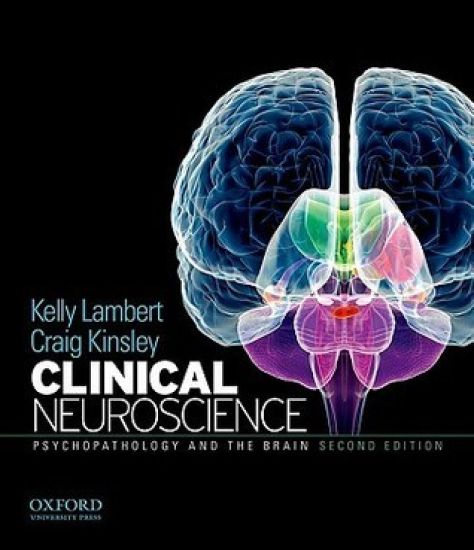
Clinical Neuroscience: Psychopathology and the Brain

Clinical Neuroscience: Psychopathology and the Brain

Kelly G. Lambert; Craig H. Kinsley

Oxford University Press
2010
sidottu
Clinical Neuroscience informs students of relevant neurobiological foundations of various mental illnesses. In this book, students will begin their journey with a tour of the brain's fundamental building blocks (neuroanatomy, neurochemistry, neurophysiology, neurodevelopment) before moving to mental health challenges and illnesses (Traumatic brain injury, Parkinson's Disease, Addiction, Schizophrenia, Obsessive-Compulsive Disorder, Depression). The final section of the book includes chapters addressing topics thought to be important for building resilience against the emergence of mental illness; these chapters cover the topics of adaptive coping strategies, hunger regulation, and the nexus between mental and immune functions. Throughout the text, the value of empirical evidence is emphasized so that meaningful progress can be made toward the identification of the most effective treatment strategies. By understanding multiple neurobiological perspectives such as neuroanatomical, behavioral, evolutionary, and neurochemical approaches currently existing in the field, students will be better prepared to conceptualize the relevant components of these mental health puzzles. Features such as opening chapter vignettes (Connections), case studies (A Case in Point) and feature boxes (Brain Matters) illuminate the course content for students as they learn about the value of translational research. Instructor's Manual/Test Bank (9780199737079) to help instructors prepare for their lectures and homework assignments, with learning objectives, class activities and demonstrations, exercises, additional readings, and more. The test bank includes more than 800 questions organized topically and graded according to difficulty, with source information provided to link questions back to their respective sections in the text. Companion Website to further assist the instructor, providing PowerPoint versions of the most informative images and tables in the text
Biological Psychology

Biological Psychology

Kelly G. Lambert

Oxford University Press Inc
2018
nidottu
Blending classic scholarship with exciting new developments in the discipline, Biological Psychology offers a fresh perspective on the brain's interaction with its environment. DISTINCTIVE FEATURES * A compelling storytelling approach makes the content accessible and exciting to students * Behavioral neuroscience mysteries in "Brain Scene Investigation" features engage students at the beginning of each chapter * "Laboratory Explorations" features integrate research techniques as a part of each chapter so that students can see how different methods apply to various types of research questions * "Context Matters" features present detailed accounts of research studies in order to demonstrate the varying effects that contextual variables have on specific dependent variables * Clinical applications provide real-life examples of the neurobiological processes and behaviors discussed in each chapter
Regulating Passion

Regulating Passion

Kelly A. Ryan

Oxford University Press Inc
2014
sidottu
Sexuality was a critical factor that influenced the ways individuals experienced, learned and contested their place in early Massachusetts history. Sexual regulation and derisive sexual characterizations were tools in maintaining the wealth, race, and gender based hierarchy. In the colonial era, a reputation for sexual virtue was most easily maintained by elites, who had the means to avoid sexual regulation. They enacted public and private sexual regulation through the patriarchal household, as well as government and religious institutions. Elites designed laws, judicial and religious practices, institutions, and sermons that betrayed their sense that some groups of persons were criminal, the cause of sexual vice, and in need of supervision, while others were chaste and above reproach in their sexual behavior. Women, African Americans, Indians, and the poor often resisted the efforts of elites and established their own code of sexual conduct that combatted ideas about what constituted sexual virtue and who the proper leaders in society were. After the American Revolution elites were forced to vacate direct sexual regulation, but they sustained a vision of themselves as leaders and superior to others. During the nineteenth century, sexual reputation grew in importance in sustaining hierarchy by solidifying the sexual identities of poor, wealthy, whites, and men and women of color. A new culture of sexual virtue emerged that was a project of the majority of individuals in society as they segregated themselves, read literature, reported aberrant behavior to JPs, and interceded with family and friends to promote sexual morality. The standards that dictated the cultural of sexual virtue included sentimentalism, the marital monopoly on sex, and adherence to patriarchal gendered codes of behavior. Sexual mores remained essential to the project of differentiating between the virtue of citizens and contesting power structures.
You Can't Put God in a Box

You Can't Put God in a Box

Kelly Besecke

Oxford University Press Inc
2013
sidottu
Kelly Besecke offers an examination of reflexive spirituality, a spirituality that draws equally on religions traditions and traditions of reason in the pursuit of transcendent meaning. People who practice reflexive spirituality prefer metaphor to literalism, spiritual experience to doctrinal belief, religious pluralism to religious exclusivism or inclusivism, and ongoing inquiry to ''final answers.'' Reflexive spirituality is aligned with liberal theologies in a variety of religious traditions and among the spiritual-but-not-religious. You Can't Put God in a Box draws on original qualitative data to describe how people practiced reflexive spirituality in an urban United Methodist church, an interfaith adult education center, and a variety of secular settings. The theoretical argument focuses on two kinds of rationality that are both part of the Enlightenment legacy. Technological rationality focuses our attention on finding the most efficient means to a particular end. Reflexive spiritualists reject forms of religiosity and secularity that rely on the biases of technological rationality--they see these as just so many versions of ''fundamentalism'' that are standing in the way of compelling spiritual meaning. Intellectual rationality, on the other hand, offers tools for analysis, interpretation, and synthesis of religious ideas. Reflexive spiritualists embrace intellectual rationality as a way of making religious traditions more meaningful for modern ears. Besecke provides a window into the progressive theological thinking of educated spiritual seekers and religious liberals. Grounded in participant observation, her book uses concrete examples of reflexive spirituality in practice to speak to the classical sociological problem of modern meaninglessness.
You Can't Put God in a Box

You Can't Put God in a Box

Kelly Besecke

Oxford University Press Inc
2013
nidottu
Kelly Besecke offers an examination of reflexive spirituality, a spirituality that draws equally on religions traditions and traditions of reason in the pursuit of transcendent meaning. People who practice reflexive spirituality prefer metaphor to literalism, spiritual experience to doctrinal belief, religious pluralism to religious exclusivism or inclusivism, and ongoing inquiry to ''final answers.'' Reflexive spirituality is aligned with liberal theologies in a variety of religious traditions and among the spiritual-but-not-religious. You Can't Put God in a Box draws on original qualitative data to describe how people practiced reflexive spirituality in an urban United Methodist church, an interfaith adult education center, and a variety of secular settings. The theoretical argument focuses on two kinds of rationality that are both part of the Enlightenment legacy. Technological rationality focuses our attention on finding the most efficient means to a particular end. Reflexive spiritualists reject forms of religiosity and secularity that rely on the biases of technological rationality--they see these as just so many versions of ''fundamentalism'' that are standing in the way of compelling spiritual meaning. Intellectual rationality, on the other hand, offers tools for analysis, interpretation, and synthesis of religious ideas. Reflexive spiritualists embrace intellectual rationality as a way of making religious traditions more meaningful for modern ears. Besecke provides a window into the progressive theological thinking of educated spiritual seekers and religious liberals. Grounded in participant observation, her book uses concrete examples of reflexive spirituality in practice to speak to the classical sociological problem of modern meaninglessness.
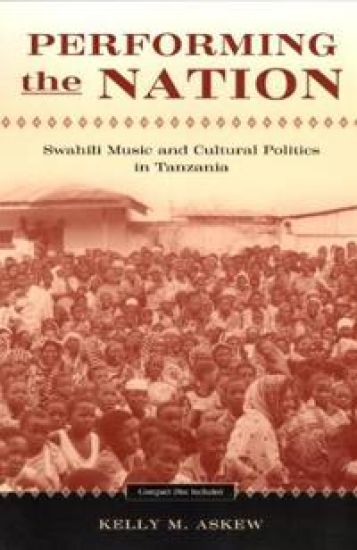
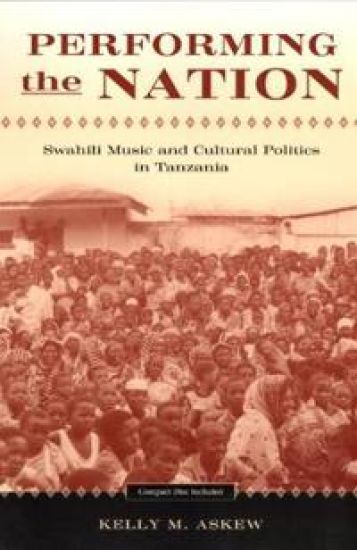
Performing the Nation

Performing the Nation

Kelly Askew

University of Chicago Press
2002
sidottu
Since its founding in 1964, the United Republic of Tanzania has used music, dance, and other cultural productions as ways of imagining and legitimizing the new nation. Focusing on the politics surrounding Swahili musical performance, Kelly Askew demonstrates the crucial role of popular culture in Tanzania's colonial and postcolonial history. As Askew shows, the genres of ngoma (traditional dance), dansi (urban jazz), and taarab (sung Swahili poetry) have played prominent parts in official articulations of "Tanzanian National Culture" over the years. Drawing on over a decade of research, including extensive experience as a taarab and dansi performer, Askew explores the intimate relations among musical practice, political ideology, and economic change. She reveals the processes and agents involved in the creation of Tanzania's national culture, from government elites to local musicians, poets, wedding participants, and traffic police. Throughout, Askew focuses on performance itself - musical and otherwise - as key to understanding both state formation and interpersonal power dynamics.
Performing the Nation

Performing the Nation

Kelly Askew

University of Chicago Press
2002
sidottu
Since its founding in 1964, the United Republic of Tanzania has used music, dance, and other cultural productions as ways of imagining and legitimizing the new nation. Focusing on the politics surrounding Swahili musical performance, Kelly Askew demonstrates the crucial role of popular culture in Tanzania's colonial and postcolonial history. As Askew shows, the genres of ngoma (traditional dance), dansi (urban jazz), and taarab (sung Swahili poetry) have played prominent parts in official articulations of "Tanzanian National Culture" over the years. Drawing on over a decade of research, including extensive experience as a taarab and dansi performer, Askew explores the intimate relations among musical practice, political ideology, and economic change. She reveals the processes and agents involved in the creation of Tanzania's national culture, from government elites to local musicians, poets, wedding participants, and traffic police. Throughout, Askew focuses on performance itself - musical and otherwise - as key to understanding both state formation and interpersonal power dynamics.
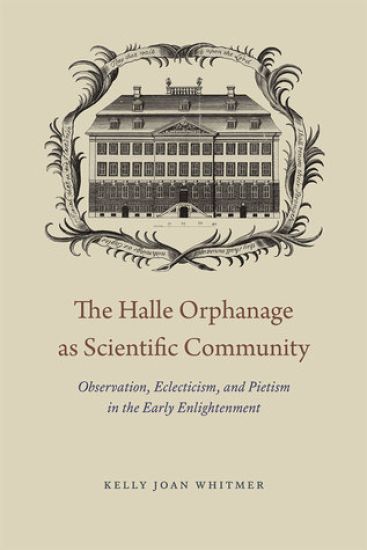
The Halle Orphanage as Scientific Community

The Halle Orphanage as Scientific Community

Kelly Joan Whitmer

University of Chicago Press
2015
sidottu
Founded around 1700 by a group of German Lutherans known as Pietists, the Halle Orphanage became the institutional headquarters of a universal seminar that still stands largely intact today. It was the base of an educational, charitable, and scientific community and consisted of an elite school for the sons of noblemen; schools for the sons of artisans, soldiers, and preachers; a hospital; an apothecary; a bookshop; a botanical garden; and a cabinet of curiosity containing architectural models, naturalia, and scientific instruments. Yet its reputation as a Pietist enclave has prevented the organization from being taken seriously as a scientific academy-event though, Kelly Joan Whitmer shows, this is precisely what it was. The Halle Orphanage as Scientific Community calls into question a tendency to view German Pietists as anti-science and anti-Enlightenment, arguing that these tendencies have drawn attention away from what was actually going on inside the orphanage. Whitmer shows how the orphanage's identity as a scientific community hinged on its promotion of philosophical eclecticism as a tool for assimilating perspectives and observations and working to perfect one's abilities to observe methodically. Because of the link between eclecticism and observation, Whitmer reveals, those teaching and training in Halle's Orphanage contributed to the transformation of scientific observation and its related activities in this period.
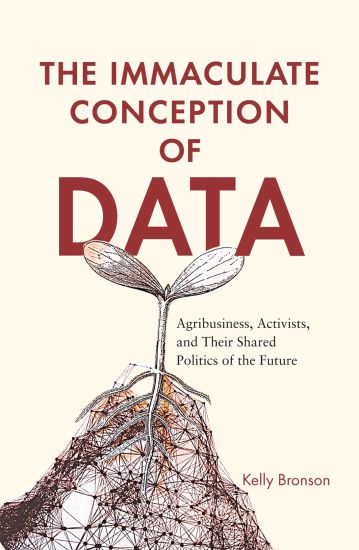
The Immaculate Conception of Data

The Immaculate Conception of Data

Kelly Bronson

MCGILL-QUEEN'S UNIVERSITY PRESS
2022
sidottu
Every new tractor now contains built-in sensors that collect data and stream it to cloud-based infrastructure. Seed and chemical companies are using these data, and these agribusinesses are a form of big tech alongside firms like Google and Facebook.The Immaculate Conception of Data peeks behind the secretive legal agreements surrounding agricultural big data to trace how it is used and with what consequences. Agribusinesses are among the oldest oligopoly corporations in the world, and their concentration gives them an advantage over other food system actors. Kelly Bronson explores what happens when big data get caught up in pre-existing arrangements of power. Her richly ethnographic account details the work of corporate scientists, farmers using the data, and activist “hackers” building open-source data platforms. Actors working in private and public contexts have divergent views on whom new technology is for, how it should be developed, and what kinds of agriculture it should support. Surprisingly, despite their differences, these groups share a way of speaking about data and its value for the future. Bronson calls this the immaculate conception of data, arguing that this phenomenon is a dangerous framework for imagining big data and what it might do for society.Drawing our attention to agriculture as an important new site for big tech criticism, The Immaculate Conception of Data uniquely bridges science and technology studies, critical data studies, and food studies, bringing to light salient issues related to data justice and a sustainable food system.
The Immaculate Conception of Data

The Immaculate Conception of Data

Kelly Bronson

MCGILL-QUEEN'S UNIVERSITY PRESS
2022
nidottu
Every new tractor now contains built-in sensors that collect data and stream it to cloud-based infrastructure. Seed and chemical companies are using these data, and these agribusinesses are a form of big tech alongside firms like Google and Facebook.The Immaculate Conception of Data peeks behind the secretive legal agreements surrounding agricultural big data to trace how it is used and with what consequences. Agribusinesses are among the oldest oligopoly corporations in the world, and their concentration gives them an advantage over other food system actors. Kelly Bronson explores what happens when big data get caught up in pre-existing arrangements of power. Her richly ethnographic account details the work of corporate scientists, farmers using the data, and activist “hackers” building open-source data platforms. Actors working in private and public contexts have divergent views on whom new technology is for, how it should be developed, and what kinds of agriculture it should support. Surprisingly, despite their differences, these groups share a way of speaking about data and its value for the future. Bronson calls this the immaculate conception of data, arguing that this phenomenon is a dangerous framework for imagining big data and what it might do for society.Drawing our attention to agriculture as an important new site for big tech criticism, The Immaculate Conception of Data uniquely bridges science and technology studies, critical data studies, and food studies, bringing to light salient issues related to data justice and a sustainable food system.
Just One Small Piece of Advice Daily Journal

Just One Small Piece of Advice Daily Journal

Kelly Marie Carson

Tellwell Talent
2018
pokkari
IF YOU KNOW WHAT YOU WANT AND FOCUS ON THOSE GOALS YOU CAN CREATE A MORE SATISFYING LIFE You may notice that what you focus on is what you may get, good or bad. So why not make a conscious effort to focus on four important aspects of your life to help enhance your future and increase the good in your life. Being grateful, taking care of your physical and mental health, finding a mentor, and appreciating what they can do for you, knowing what goals you want to achieve in career, relationship, and finance, are four areas you can consciously focus on daily that will increase the chances of seeing them to fruition. IF YOU FOCUS ON WHAT YOU DON'T WANT, YOU WILL SURELY GET IT Just One Small Piece of Advice Daily Journal is the first publication from the Just One Small Piece of Advice series of self help guides, created to help those wanting a more positive fulfilling life.