Kirjojen hintavertailu. Mukana 11 655 310 kirjaa ja 12 kauppaa.

Kirjahaku

Etsi kirjoja tekijän nimen, kirjan nimen tai ISBN:n perusteella.

1000 tulosta hakusanalla Kelsey Garrity-Riley

Alltid på en søndag

Alltid på en søndag

Edward Kelsey Moore

Cappelen Damm
2015
pokkari
Clarice, Barbara Jean og Odette har vært bestevenninner siden skoledagene på 1960-tallet i Indiana. Over is-te og pekanpai, gjennom førti år med ekteskap, barn, opp- og nedturer, holder trioen sammen. Kom og bli med dem når de deler saftige sladrehistorier, tårer og latter. Alt på samme tid, ved det samme bordet på Spis så mye du orker.Søndager med The Supremes er en bok til å bli i godt humør av, samtidig som den får deg til å gripe dagen.«Tar pusten fra deg.» Julia Glass, forfatter
The Canadian Elocutionist

The Canadian Elocutionist

Anna Kelsey Howard

ALPHA EDITION
2021
pokkari
The Canadian Elocutionist, has been considered important throughout the human history, and so that this work is never forgotten we have made efforts in its preservation by republishing this book in a modern format for present and future generations. This whole book has been reformatted, retyped and designed. These books are not made of scanned copies of their original work and hence the text is clear and readable.
The Negro Farmer

The Negro Farmer

Carl Kelsey

ALPHA EDITION
2022
pokkari
The Negro Farmer, has been considered an important book throughout the human history. So that this work is never forgotten we have made efforts in its preservation by republishing this book in a modern format for present and future generations. The whole book has been reformatted, retyped and designed. This book is not made of scanned copies and hence the text is clear and readable.
Silverspur; or, The Mountain Heroine: A Tale of the Arapaho Country  (Edition1)
The spirit of '76: Some recollections of the artist and the painting, a classical book, was published more than a century ago and has been considered important throughout the human history, and so that this work is never forgotten we at Alpha Editions have made efforts in its preservation by republishing this book in a modern format for present and future generations. This whole book has been reformatted, retyped and designed. These books are not made of scanned copies of their original work and hence the text is clear and readable.
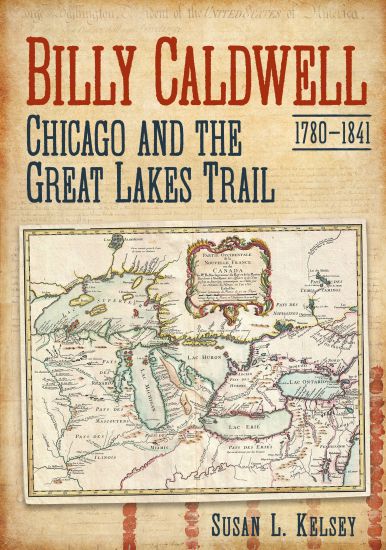
Billy Caldwell: Chicago and the Great Lakes Trail

Billy Caldwell: Chicago and the Great Lakes Trail

Susan Kelsey

America Through Time
2019
nidottu
Billy Caldwell, a M tis leader born in 1780, navigated early America, leading Chicago tribes and negotiating major land treaties. Billy Caldwell was a M tis born March 17, 1780, outside of Fort Niagara, New York (then Canada), to Rising Sun, Mohawk Nation, and William Caldwell, an Irish Captain in the British army. He was an influential leader during the dawn of America and one whose story transcends history as a man fighting for his family, a way of life, and ultimately, a home for his tribe. Caldwell found himself at the crossroads of a new America, caught between two worlds--a quickly descending minority world of Native Americans and the growing white settlers. He navigated the changing landscape by creating commerce in the Great Lakes region, following opportunities across the country and building a community for his family and friends. Situated in a unique position in 1833, Caldwell was named chief for the three Chicago tribes--Ottawa, Ojibwa, and the Potawatomi--and negotiated one of the largest land trades in American history. This treaty represented over five-million acres, allowing white settlers to occupy the Midwest and Lake Michigan area. The result was removal of thousands of Native Americans to "Indian Territory" west of the Missouri River. Since the early nineteenth century, Native Americans have worked to rebuild community, families, commerce, and equality in America.
Poetry and Music in Seventeenth-Century England

Poetry and Music in Seventeenth-Century England

McColley Diane Kelsey

Cambridge University Press
2007
pokkari
This study explores the relationship between the poetic language of Donne, Herbert, Milton and other British poets, and the choral music and part-songs of composers including Tallis, Byrd, Gibbons, Weelkes and Tomkins. The seventeenth century was the time in English literary history when music was most consciously linked to words, and when the mingling of Renaissance and 'new' philosophy opened new discovery routes for the interpretation of art. McColley offers close readings of poems and the musical settings of analogous texts, and discusses the philosophy, performance, and disputed political and ecclesiastical implications of polyphony. She also enters into the discourse about the nature of language, relating poets' use of language and composers' use of music to larger questions concerning the arts, politics and theology.
Poetry and Music in Seventeenth-Century England

Poetry and Music in Seventeenth-Century England

McColley Diane Kelsey

Cambridge University Press
1997
sidottu
This study explores the relationship between the poetic language of Donne, Herbert, Milton and other British poets, and the choral music and part-songs of composers including Tallis, Byrd, Gibbons, Weelkes and Tomkins. The seventeenth century was the time in English literary history when music was most consciously linked to words, and when the mingling of Renaissance and 'new' philosophy opened new discovery routes for the interpretation of art. McColley offers close readings of poems and the musical settings of analogous texts, and discusses the philosophy, performance, and disputed political and ecclesiastical implications of polyphony. She also enters into the discourse about the nature of language, relating poets' use of language and composers' use of music to larger questions concerning the arts, politics and theology.
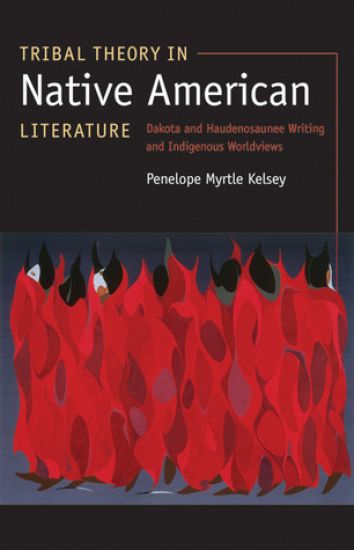
Tribal Theory in Native American Literature

Tribal Theory in Native American Literature

Penelope Myrtle Kelsey

University of Nebraska Press
2008
sidottu
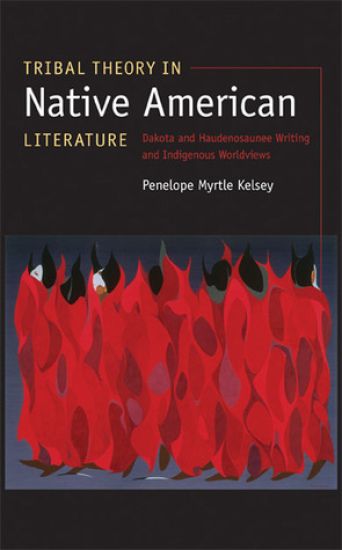
Scholars and readers continue to wrestle with how best to understand and appreciate the wealth of oral and written literatures created by the Native communities of North America. Are critical frameworks developed by non-Natives applicable across cultures, or do they reinforce colonialist power and perspectives? Is it appropriate and useful to downplay tribal differences and instead generalize about Native writing and storytelling as a whole? Focusing on Dakota writers and storytellers, Seneca critic Penelope Myrtle Kelsey offers a penetrating assessment of theory and interpretation in indigenous literary criticism in the twenty-first century. Tribal Theory in Native American Literature delineates a method for formulating a Native-centered theory or, more specifically, a use of tribal languages and their concomitant knowledges to derive a worldview or an equivalent to Western theory that is emic to indigenous worldviews. These theoretical frameworks can then be deployed to create insightful readings of Native American texts. Kelsey demonstrates this approach with a fresh look at early Dakota writers, including Marie McLaughlin, Charles Eastman, and Zitkala-Ša and later storytellers such as Elizabeth Cook-Lynn, Ella Deloria, and Philip Red Eagle. This book raises the provocative issue of how Native languages and knowledges were historically excluded from the study of Native American literature and how their encoding in early Native American texts destabilized colonial processes. Cogently argued and well researched, Tribal Theory in Native American Literature sets an agenda for indigenous literary criticism and invites scholars to confront the worlds behind the literatures that they analyze.
Tribal Theory in Native American Literature

Tribal Theory in Native American Literature

Penelope Myrtle Kelsey

University of Nebraska Press
2010
pokkari
Scholars and readers continue to wrestle with how best to understand and appreciate the wealth of oral and written literatures created by the Native communities of North America. Are critical frameworks developed by non-Natives applicable across cultures, or do they reinforce colonialist power and perspectives? Is it appropriate and useful to downplay tribal differences and instead generalize about Native writing and storytelling as a whole? Focusing on Dakota writers and storytellers, Seneca critic Penelope Myrtle Kelsey offers a penetrating assessment of theory and interpretation in indigenous literary criticism in the twenty-first century. Tribal Theory in Native American Literature delineates a method for formulating a Native-centered theory or, more specifically, a use of tribal languages and their concomitant knowledges to derive a worldview or an equivalent to Western theory that is emic to indigenous worldviews. These theoretical frameworks can then be deployed to create insightful readings of Native American texts. Kelsey demonstrates this approach with a fresh look at early Dakota writers, including Marie McLaughlin, Charles Eastman, and Zitkala-Ša and later storytellers such as Elizabeth Cook-Lynn, Ella Deloria, and Philip Red Eagle. This book raises the provocative issue of how Native languages and knowledges were historically excluded from the study of Native American literature and how their encoding in early Native American texts destabilized colonial processes. Cogently argued and well researched, Tribal Theory in Native American Literature sets an agenda for indigenous literary criticism and invites scholars to confront the worlds behind the literatures that they analyze.
Reading the Wampum

Reading the Wampum

Penelope Myrtle Kelsey

Syracuse University Press
2014
sidottu
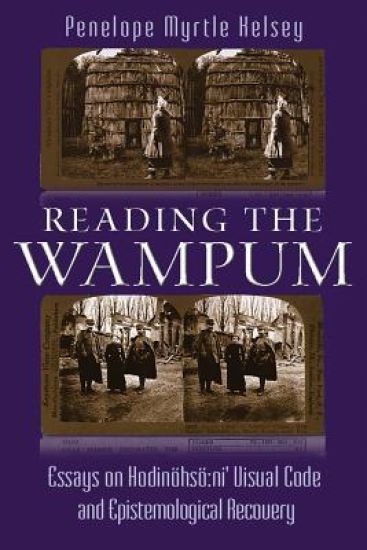
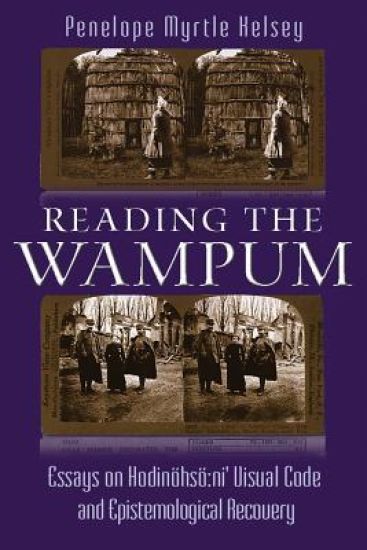
Since the fourteenth century, Eastern Woodlands tribes have used delicate purple and white shells called “wampum” to form intricately woven belts. These wampum belts depict significant moments in the lives of the people who make up the tribes, portraying everything from weddings to treaties. Wampum belts can be used as a form of currency, but they are primarily used as a means to record significant oral narratives for future generations. In Reading the Wampum, Kelsey provides the first academic consideration of the ways in which these sacred belts are reinterpreted into current Haudenosaunee tradition. While Kelsey explores the aesthetic appeal of the belts, she also provides insightful analysis of how readings of wampum belts can change our understanding of specific treaty rights and land exchanges. Kelsey shows how contemporary Iroquois intellectuals and artists adapt and reconsider these traditional belts in new and innovative ways. Reading the Wampum conveys the vitality and continuance of wampum traditions in Iroquois art, literature, and community, suggesting that wampum narratives pervade and reappear in new guises with each new generation.
Reading the Wampum

Reading the Wampum

Penelope Myrtle Kelsey

Syracuse University Press
2019
nidottu
Since the fourteenth century, Eastern Woodlands tribes have used delicate purple and white shells called "wampum" to form intricately woven belts. These wampum belts depict significant moments in the lives of the people who make up the tribes, portraying everything from weddings to treaties. Wampum belts can be used as a form of currency, but they are primarily used as a means to record significant oral narratives for future generations. In Reading the Wampum, Kelsey provides the first academic consideration of the ways in which these sacred belts are reinterpreted into current Haudenosaunee tradition. While Kelsey explores the aesthetic appeal of the belts, she also provides insightful analysis of how readings of wampum belts can change our understanding of specific treaty rights and land exchanges. Kelsey shows how contemporary Iroquois intellectuals and artists adapt and reconsider these traditional belts in new and innovative ways. Reading the Wampum conveys the vitality and continuance of wampum traditions in Iroquois art, literature, and community, suggesting that wampum narratives pervade and reappear in new guises with each new generation.
Grasping the Fading Light

Grasping the Fading Light

Julie Bloss Kelsey

Jacar Press
2023
pokkari
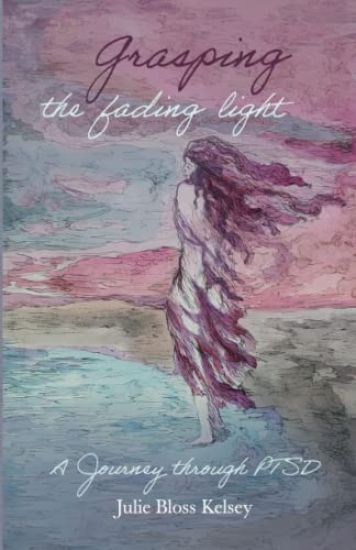
WINNER OF THE 2021 WOMEN'S INTERNATIONAL HAIKU CONTEST FROM SABLE BOOKS. "This manuscript has a global feel in spite of it being a personal experience. The poems are strong and forceful and at the same time gentle and honest. The interweaving of haiku and tanka effectively help in the arc of its narrative. Filled with a poignancy, the mood is one of resilience and bouncing back. One very important point to be noted is the healing that takes place as the pages unfold. In these times of trials and turmoil caused by Covid and war - the art of swinging back to sanity and normal life is deftly handled here. Definitely a winner " -- Final Judge Kala Ramesh Written by Julie Bloss Kelsey over a ten-year period, this book contains 65 short poems -- mainly haiku, senryu, kyoka, and tanka -- on the theme of post-traumatic stress disorder (PTSD) and recovery from childhood trauma. About the collection, she says, "I hope that this book will help those on similar journeys feel less alone."
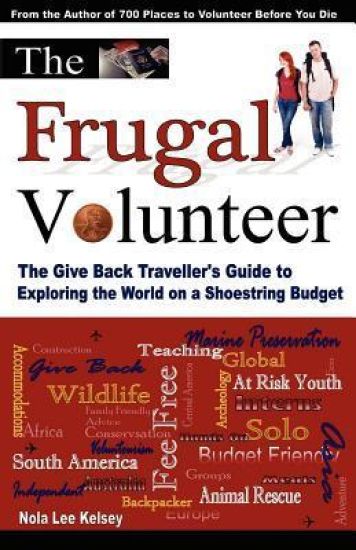
The Frugal Volunteer: The Give Back Traveller's Guide to Exploring the World on a Shoestring Budget
From the author of 700 Places to Volunteer Before You Die: A Traveler's Guide Do you ever ask yourself if you could be exploring the world? Is there a way? Traveling the globe, immersing into other cultures is not a privilege reserved solely for the rich. The Frugal Volunteer is designed to opening up a world of possibilities for all travelers with an adventurous spirit and giving heart. The Frugal Volunteer is not sprinkled with trite page-fill, but is jam-packed with nearly 500 pages of pure information and motivation for the budget conscious traveler Save countless hours of research finding & comparing budget-friendly programs Plan your journey by viewing hundreds of volunteer opportunities in one convenient place Plan your route with financially-savvy projects listed by region and country Get advice on getting the most from the experience and from your wallet Discover additional resources for affordable give back travel Chapters Include: Introduction: Short and Long-Term Budget Friendly Travel Defining Budget-Friendly Volunteering Before: Selecting a Volunteer Project During: Your Volunteer Assignment After: The Ambassador Effect Squeezing Every Penny from You Experience The Budget-Savvy Guide - Featuring 400 pages of detailed program descriptions of the world's more affordable volunteer opportunities Additional Resources for all your budget travel needs From fee-free to budget-savvy and all inclusive opportunities around the world, The Frugal Volunteer is the must have book for people who want more out of their travel Unearth the most affordable opportunities for give back travelers. Discover how you can serve around the globe without breaking the bank, all while immersing into new worlds and returning home with a new perspective on life.