Kirjojen hintavertailu. Mukana 11 699 587 kirjaa ja 12 kauppaa.

Kirjahaku

Etsi kirjoja tekijän nimen, kirjan nimen tai ISBN:n perusteella.

1000 tulosta hakusanalla Kevin Messerschmidt

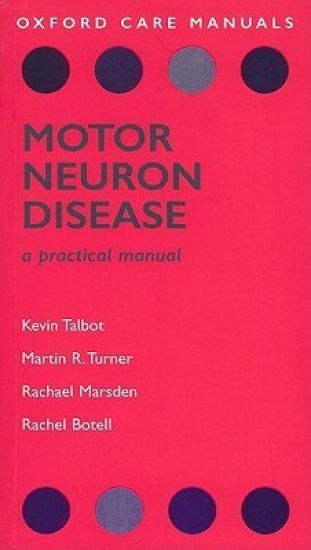
Motor Neuron Disease

Motor Neuron Disease

Kevin Talbot; Martin R. Turner; Rachael Marsden; Rachel Botell

Oxford University Press
2009
nidottu
There are around 5000 patients in the UK living with Motor Neuron Disease (amyotrophic lateral sclerosis), and many others shouldering the burden of their care. This fatal neurodegenerative disease leads to progressive muscle weakness and wasting, and there is currently no effective treatment. Managing these patients from their initial presentation, through confirmation of diagnosis and throughout their disease journey is challenging for all healthcare professionals. It requires a multi-disciplinary approach involving neurologists, general practitioners, palliative care physicians, specialist nurses, physiotherapists, occupational therapists and speech and language therapists. Each member of the team has different priorities to effectively manage the myriad of symptoms and other practical difficulties, both emotional and financial, that the MND patient may experience. This book is a comprehensive guide to the complexities of care for the patient with Motor Neurone Disease, written by experienced members of a large care centre. It has been specifically written and designed to provide comprehensive, easily accessible advice for all healthcare professionals involved in the care of patients with this challenging condition, including diagnostic, prognostic, physical, emotional, and practical challenges. The entire care pathway from presentation to diagnosis to symptom management and end of life issues is addressed in detail, but in a highly structured, easily accessible format, that allows the reader to find practical answers rapidly. This book is an invaluable resource for neurologists (including those in training), neurology wards and specialist nurses, physiotherapists, occupational therapists, speech and language therapists, respiratory and gastroenterology departments providing NIV or PEG support, palliative care teams and all healthcare professionals with an interest in MND patients.
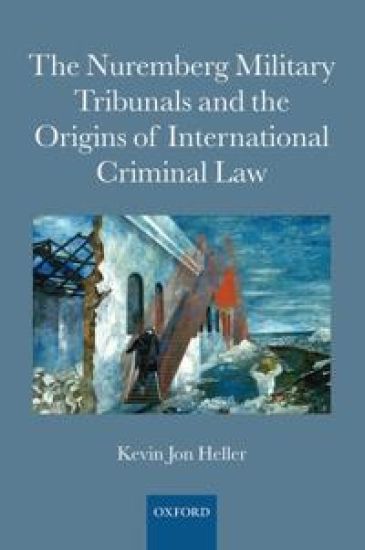
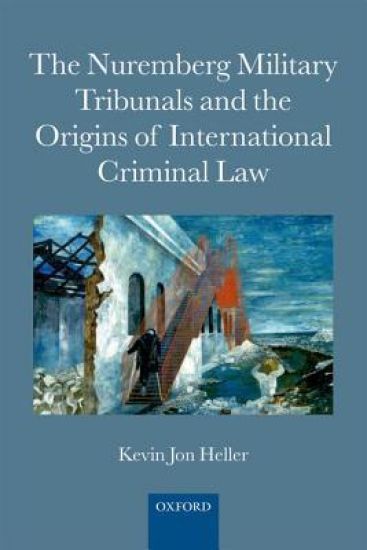
The Nuremberg Military Tribunals and the Origins of International Criminal Law
This book provides the first comprehensive legal analysis of the twelve war crimes trials held in the American zone of occupation between 1946 and 1949, collectively known as the Nuremberg Military Tribunals (NMTs). The judgments the NMTs produced have played a critical role in the development of international criminal law, particularly in terms of how courts currently understand war crimes, crimes against humanity, and the crime of aggression. The trials are also of tremendous historical importance, because they provide a far more comprehensive picture of Nazi atrocities than their more famous predecessor, the International Military Tribunal at Nuremberg (IMT). The IMT focused exclusively on the 'major war criminals'-the Goerings, the Hesses, the Speers. The NMTs, by contrast, prosecuted doctors, lawyers, judges, industrialists, bankers-the private citizens and lower-level functionaries whose willingness to take part in the destruction of millions of innocents manifested what Hannah Arendt famously called 'the banality of evil'. The book is divided into five sections. The first section traces the evolution of the twelve NMT trials. The second section discusses the law, procedure, and rules of evidence applied by the tribunals, with a focus on the important differences between Law No. 10 and the Nuremberg Charter. The third section, the heart of the book, provides a systematic analysis of the tribunals' jurisprudence. It covers Law No. 10's core crimes-crimes against peace, war crimes, and crimes against humanity-as well as the crimes of conspiracy and membership in a criminal organization. The fourth section then examines the modes of participation and defenses that the tribunals recognized. The final section deals with sentencing, the aftermath of the trials, and their historical legacy.
Competition Law and Regulation of Technology Markets

Competition Law and Regulation of Technology Markets

Kevin Coates

Oxford University Press
2011
sidottu
Competition Law and Regulation of Technology Markets takes a practical,integrated approach to EU and US competition law and regulation in the technology sector - including major trans-Atlantic cases such as Microsoft, Google/Doubleclick, and Intel, and important comparative issues such as refusal to supply (Microsoft, Trinko), margin squeeze (Deutsche Telekom, Telefonica, EU Guidance Paper, Linkline), communications regulation and data protection. The books unique perspective focuses on the information, communication and media markets that form the new economy. It provides a coherent analysis of these various markets by considering the regulatory context, and by addressing the issues, and ensuing legal problems, that are common to them. These include; high fixed costs, the importance of intellectual property and standards, the impact of interoperability, and the prevalence of network effects. This book is indispensable for competition lawyers in private practice or in-house at technology companies, and for practitioners specialised in these sectors. The book is also suitable for advanced degree courses in communications and technology law.
Sense and Nonsense

Sense and Nonsense

Kevin N. Laland; Gillian Brown

Oxford University Press
2011
nidottu
Evolutionary theory is one of the most wide-ranging and inspiring of scientific ideas. It offers a battery of methods that can be used to interpret human behaviour. But the legitimacy of this exercise is at the centre of a heated controversy that has raged for over a century. Many evolutionary biologists, anthropologists and psychologists are optimistic that evolutionary principles can be applied to human behaviour, and have offered evolutionary explanations for a wide range of human characteristics, such as homicide, religion and sex differences in behaviour. Others are sceptical of these interpretations. Moreover, researchers disagree as to the best ways to use evolution to explore humanity, and a number of schools have emerged. Sense and Nonsense provides an introduction to the ideas, methods and findings of five such schools, namely, sociobiology, human behavioural ecology, evolutionary psychology, cultural evolution, and gene-culture co-evolution. In this revised and updated edition of their successful monograph, Laland and Brown provide a balanced, rigorous analysis that scrutinizes both the evolutionary arguments and the allegations of the critics, carefully guiding the reader through the mire of confusing terminology, claim and counter-claim, and polemical statements. This readable and informative introductory book will be of use to undergraduate and postgraduate students (for example, in psychology, anthropology and zoology), to experts on one approach who would like to know more about the other perspectives, and to lay-persons interested in evolutionary explanations of human behaviour. Having completed this book, the reader should feel better placed to assess the legitimacy of claims made about human behaviour under the name of evolution, and to make judgements as to what is sense and what is nonsense.
Replacing Truth

Replacing Truth

Kevin Scharp

Oxford University Press
2013
sidottu
Kevin Scharp proposes an original theory of the nature and logic of truth on which truth is an inconsistent concept that should be replaced for certain theoretical purposes. Replacing Truth opens with an overview of work on the nature of truth (e.g., correspondence theories, deflationism), work on the liar and related paradoxes, and a comprehensive scheme for combining these two literatures into a unified study of the concept truth. Scharp argues that truth is best understood as an inconsistent concept, and proposes a detailed theory of inconsistent concepts that can be applied to the case of truth. Truth also happens to be a useful concept, but its inconsistency inhibits its utility; as such, it should be replaced with consistent concepts that can do truth's job without giving rise to paradoxes. To this end, Scharp offers a pair of replacements, which he dubs ascending truth and descending truth, along with an axiomatic theory of them and a new kind of possible-worlds semantics for this theory. As for the nature of truth, he goes on to develop Davidson's idea that it is best understood as the core of a measurement system for rational phenomena (e.g., belief, desire, and meaning). The book finishes with a semantic theory that treats truth predicates as assessment-sensitive (i.e., their extension is relative to a context of assessment), and a demonstration of how this theory solves the problems posed by the liar and other paradoxes.
The Right in France from the Third Republic to Vichy

The Right in France from the Third Republic to Vichy

Kevin Passmore

Oxford University Press
2012
sidottu
The Right in France from the Third Republic to Vichy provides a new history of parliamentary conservatism and the extreme right in France during the successive crises of the years from 1870 to 1945. In it, Kevin Passmore charts royalist opposition to the newly established Republic, the emergence of the nationalist extreme right in the 1890s, and the parallel development of republican conservatism. He moves on to the hitherto unstudied story of conservatism in during the Great War, and then to the Right's victory in the 1919 elections. Passmore charts the crisis of parliamentary conservatism in the interwar years, and explores the Right's response to the rise of Fascism and Communism. He concludes by placing the Vichy regime, which governed France under the German Occupation, in the context of the history of conservative politics. This history is related to the struggle of those who saw themselves as 'elites' to preserve their leadership in the 'age of the masses'. Passmore shows that conservatives of all stripes shared a common culture (notably including organicism and crowd theory), but that different factions used these ideas in different ways, for different purposes. Whereas previous studies have been primarily concerned to 'categorize' conservatives groups, for example as 'fascist',' liberal', or 'modern', this study examines the way in which competing groups used such terms in complex struggles amongst themselves and with the left. The study is based on considerable archival research, as well as on knowledge of the vast body of recently published research in English and French.
The Nuremberg Military Tribunals and the Origins of International Criminal Law
This book provides the first comprehensive legal analysis of the twelve war crimes trials held in the American zone of occupation between 1946 and 1949, collectively known as the Nuremberg Military Tribunals (NMTs). The judgments the NMTs produced have played a critical role in the development of international criminal law, particularly in terms of how courts currently understand war crimes, crimes against humanity, and the crime of aggression. The trials are also of tremendous historical importance, because they provide a far more comprehensive picture of Nazi atrocities than their more famous predecessor, the International Military Tribunal at Nuremberg (IMT). The IMT focused exclusively on the 'major war criminals'-the Goerings, the Hesses, the Speers. The NMTs, by contrast, prosecuted doctors, lawyers, judges, industrialists, bankers-the private citizens and lower-level functionaries whose willingness to take part in the destruction of millions of innocents manifested what Hannah Arendt famously called 'the banality of evil'. The book is divided into five sections. The first section traces the evolution of the twelve NMT trials. The second section discusses the law, procedure, and rules of evidence applied by the tribunals, with a focus on the important differences between Law No. 10 and the Nuremberg Charter. The third section, the heart of the book, provides a systematic analysis of the tribunals' jurisprudence. It covers Law No. 10's core crimes-crimes against peace, war crimes, and crimes against humanity-as well as the crimes of conspiracy and membership in a criminal organization. The fourth section then examines the modes of participation and defenses that the tribunals recognized. The final section deals with sentencing, the aftermath of the trials, and their historical legacy.
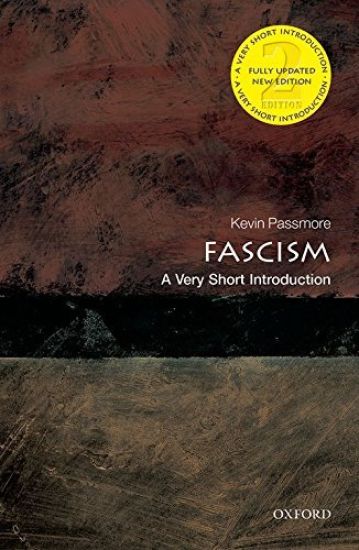
Fascism

Fascism

Kevin Passmore

Oxford University Press
2014
nidottu
What is fascism? Is it revolutionary? Or is it reactionary? Can it be both? Fascism is notoriously hard to define. How do we make sense of an ideology that appeals to streetfighters and intellectuals alike? That is overtly macho in style, yet attracts many women? That calls for a return to tradition while maintaining a fascination with technology? And that preaches violence in the name of an ordered society? In the new edition of this Very Short Introduction, Kevin Passmore brilliantly unravels the paradoxes of one of the most important phenomena in the modern world--tracing its origins in the intellectual, political, and social crises of the late nineteenth century, the rise of fascism following World War I, including fascist regimes in Italy and Germany, and the fortunes of 'failed' fascist movements in Eastern Europe, Spain, and the Americas. He also considers fascism in culture, the new interest in transnational research, and the progress of the far right since 2002. ABOUT THE SERIES: The Very Short Introductions series from Oxford University Press contains hundreds of titles in almost every subject area. These pocket-sized books are the perfect way to get ahead in a new subject quickly. Our expert authors combine facts, analysis, perspective, new ideas, and enthusiasm to make interesting and challenging topics highly readable.
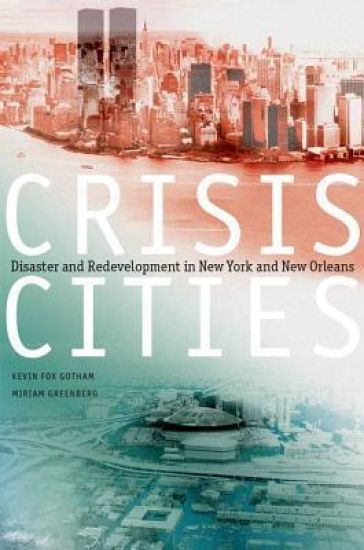
Crisis Cities

Crisis Cities

Kevin Fox Gotham; Miriam Greenberg

Oxford University Press Inc
2014
nidottu
Crisis Cities blends critical theoretical insight with a historically grounded comparative study to examine the form, trajectory, and contradictions of redevelopment efforts following the 9/11 and Hurricane Katrina disasters. Based on years of research in the two cities, Gotham and Greenberg contend that New York and New Orleans have emerged as paradigmatic crisis cities, representing a free-market approach to post-disaster redevelopment that is increasingly dominant for crisis-stricken cities around the world. This approach, which Gotham and Greenberg term crisis driven urbanization, emphasizes the privatization of disaster aid and resources, the devolution of disaster recovery responsibilities to the local state, and the use of generous tax incentives to bolster revitalization. Crisis driven urbanization also involves global branding campaigns and public media events to repair a city's image for business and tourism, as well as internally-focused political campaigns and events that associate post-crisis political leaders and public-private partnerships with this revitalized urban image. By focusing on past and present conditions in New York and New Orleans, Gotham and Greenberg show how crises expose long-neglected injustices, underlying power structures, and social inequalities. In doing so, they reveal the impact of specific policy reforms, public-private actions, and socio-legal regulatory strategies on the creation and reproduction of risk and vulnerability to disasters. Crisis Cities questions the widespread narrative of resilience and reveals the uneven and contradictory effects of redevelopment activities in the two cities.
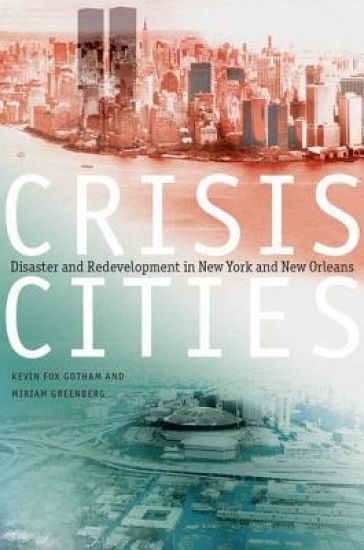
Crisis Cities

Crisis Cities

Kevin Fox Gotham; Miriam Greenberg

Oxford University Press Inc
2014
sidottu
Crisis Cities blends critical theoretical insight with a historically grounded comparative study to examine the form, trajectory, and contradictions of redevelopment efforts following the 9/11 and Hurricane Katrina disasters. Based on years of research in the two cities, Gotham and Greenberg contend that New York and New Orleans have emerged as paradigmatic crisis cities, representing a free-market approach to post-disaster redevelopment that is increasingly dominant for crisis-stricken cities around the world. This approach, which Gotham and Greenberg term crisis driven urbanization, emphasizes the privatization of disaster aid and resources, the devolution of disaster recovery responsibilities to the local state, and the use of generous tax incentives to bolster revitalization. Crisis driven urbanization also involves global branding campaigns and public media events to repair a city's image for business and tourism, as well as internally-focused political campaigns and events that associate post-crisis political leaders and public-private partnerships with this revitalized urban image. By focusing on past and present conditions in New York and New Orleans, Gotham and Greenberg show how crises expose long-neglected injustices, underlying power structures, and social inequalities. In doing so, they reveal the impact of specific policy reforms, public-private actions, and socio-legal regulatory strategies on the creation and reproduction of risk and vulnerability to disasters. Crisis Cities questions the widespread narrative of resilience and reveals the uneven and contradictory effects of redevelopment activities in the two cities.
Peaceable Kingdom Lost

Peaceable Kingdom Lost

Kevin Kenny

Oxford University Press Inc
2011
nidottu
William Penn established Pennsylvania in 1682 as a "holy experiment" in which Europeans and Indians could live together in harmony. In this book, historian Kevin Kenny explains how this Peaceable Kingdom--benevolent, Quaker, pacifist--gradually disintegrated in the eighteenth century, with disastrous consequences for Native Americans. Kenny recounts how rapacious frontier settlers, most of them of Ulster extraction, began to encroach on Indian land as squatters, while William Penn's sons cast off their father's Quaker heritage and turned instead to fraud, intimidation, and eventually violence during the French and Indian War. In 1763, a group of frontier settlers known as the Paxton Boys exterminated the last twenty Conestogas, descendants of Indians who had lived peacefully since the 1690s on land donated by William Penn near Lancaster. Invoking the principle of "right of conquest," the Paxton Boys claimed after the massacres that the Conestogas' land was rightfully theirs. They set out for Philadelphia, threatening to sack the city unless their grievances were met. A delegation led by Benjamin Franklin met them and what followed was a war of words, with Quakers doing battle against Anglican and Presbyterian champions of the Paxton Boys. The killers were never prosecuted and the Pennsylvania frontier descended into anarchy in the late 1760s, with Indians the principal victims. The new order heralded by the Conestoga massacres was consummated during the American Revolution with the destruction of the Iroquois confederacy. At the end of the Revolutionary War, the United States confiscated the lands of Britain's Indian allies, basing its claim on the principle of "right of conquest." Based on extensive research in eighteenth-century primary sources, this engaging history offers an eye-opening look at how colonists--at first, the backwoods Paxton Boys but later the U.S. government--expropriated Native American lands, ending forever the dream of colonists and Indians living together in peace.
Is a Little Pollution Good for You?

Is a Little Pollution Good for You?

Kevin C. Elliott

Oxford University Press Inc
2011
sidottu
Could low-level exposure to polluting chemicals be analogous to exercise-a beneficial source of stress that strengthens the body? Some scientists studying the phenomenon of hormesis (beneficial or stimulatory effects caused by low-dose exposure to toxic substances) claim that that this may be the case. Is A Little Pollution Good For You? critically examines the current evidence for hormesis. In the process, it highlights the range of methodological and interpretive judgments involved in environmental research: choices about what questions to ask and how to study them, decisions about how to categorize and describe new information, judgments about how to interpret and evaluate ambiguous evidence, and questions about how to formulate public policy in response to debated scientific findings. The book also uncovers the ways that interest groups with deep pockets attempt to influence these scientific judgments for their benefit. Several chapters suggest ways to counter these influences and incorporate a broader array of societal values in environmental research: (1) moving beyond conflict-of-interest policies to develop new ways of safeguarding academic research from potential biases; (2) creating deliberative forums in which multiple stakeholders can discuss the judgments involved in policy-relevant research; and (3) developing ethical guidelines that can assist scientific experts in disseminating debated and controversial phenomena to the public. Kevin C. Elliott illustrates these strategies in the hormesis case, as well as in two additional case studies involving contemporary environmental research: endocrine disruption and multiple chemical sensitivity. This book should be of interest to a wide variety of readers, including scientists, philosophers, policy makers, environmental ethicists and activists, research ethicists, industry leaders, and concerned citizens. "This is a timely, well-researched and compelling book .Elliott admirably combines insights and strategies from philosophy of science with those of applied ethics to carefully analyze contemporary science and science policy around pollutants and human health. There is a growing interest in the philosophy of science community in bringing the work of philosophers to bear on contemporary social issues. This book stands out as a model for how to do just that." - Sandra D. Mitchell, Philosophy, University of Pittsburgh Is A Little Pollution Good For You? is a wonderfully clear and insightful book dealing with the interplay between social values and economic and political interests in scientific research. He articulates an account of how societal values should and should not enter into science and illustrates his views with an extended discussion of research on hormesis-the hypothesis that chemicals that are toxic at high doses may be benign or even beneficial at low doses. The chemical industry has a strong financial interest in promoting scientific acceptance of hormesis, as this could convince regulatory agencies to loosen up restrictions on allowable exposures to pesticides and other chemicals. Elliott argues that because scientists have an obligation to minimize the harmful effects of their research, they must be mindful of the social context of their work and how it may be interpreted and applied by private companies or interest groups, to the potential detriment of public and environmental health. Elliott's book is a must read for researchers, scholars, and students who are interested in the relationship between science, industry, and society." - David B. Resnik, National Institute of Environmental Health Sciences, National Institutes of Health, author of Playing Politics With Science: Balancing Scientific Independence And Government
Functional Behavior Assessment

Functional Behavior Assessment

Kevin J. Filter; Michelle E. Alvarez

Oxford University Press Inc
2011
nidottu
Functional behavioral assessment (FBA) is an important element in developing effective behavior interventions in schools. By understanding how the environment predicts and maintains problem behavior, school social workers can change those environmental conditions and facilitate positive behavior. Although FBA is traditionally applied within the context of special education, it is relevant to supporting behavior of all students in a school. In this book, the authors explore how FBA can be applied in a three-tiered model of prevention and provide tools and case examples to facilitate application. This process is described as occurring within a team context wherein the school social worker serves as a facilitator and contributor with behavioral expertise. In Tier 1, FBA is applied to the behavior of all students in a school and leads to the development of school-wide behavior interventions that are intended to prevent students from developing more serious patterns of problem behavior. In Tier-2 FBAs, the behavior of at-risk students is assessed in an efficient manner to determine which available evidence-based interventions will be effective in improving their behavior. In Tier 3, FBAs involve extensive individual assessments of the conditions that maintain the problem behavior students with significant behavior problems. This book provides detailed information about conducting FBAs at each tier of prevention and reviews the process of developing interventions from the FBA information at each tier. As initiatives encouraging positive behavior support in schools proliferate, this book will help school social workers develop the skill set necessary to maintain their role as important contributors to student outcomes.
Specialty Competencies in Clinical Health Psychology

Specialty Competencies in Clinical Health Psychology

Kevin T. Larkin; Elizabeth A. Klonoff

Oxford University Press Inc
2014
nidottu
As professional psychology has transformed into the practice of psychology as a health profession, a substantial focus has been placed on defining the competencies required for practicing as health service providers. Not all health service providers, however, acquire the essential competencies needed for functioning in medical hospitals and health science center settings, the province of clinical health psychology. It is important to distinguish competencies for practicing as health service providers from competencies for the specialty practice of clinical health psychology. In Specialty Competencies in Clinical Health Psychology, Larkin and Klonoff provide a comprehensive overview of recent efforts to define specialty competencies for the practice of clinical health psychology. They have been at the table for every national conversation focusing on this topic and share this knowledge with those who desire to become clinical health psychologists and those who train and supervise them. Series in Specialty Competencies in Professional Psychology Series Editors Arthur M. Nezu and Christine Maguth Nezu As the field of psychology continues to grow and new specialty areas emerge and achieve recognition, it has become increasingly important to define the standards of professional specialty practice. Developed and conceived in response to this need for practical guidelines, this series presents methods, strategies, and techniques for conducting day-to-day practice in any given psychology specialty. The topical volumes address best practices across the functional and foundational competencies that characterize the various psychology specialties, including clinical psychology, cognitive and behavioral psychology, school psychology, geropsychology, forensic psychology, clinical neuropsychology, couples and family psychology, and more. Functional competencies include common practice activities like assessment and intervention, while foundational competencies represent core knowledge areas such as ethical and legal issues, cultural diversity, and professional identification. In addition to describing these competencies, each volume provides a definition, description, and development timeline of a particular specialty, including its essential and characteristic pattern of activities, as well as its distinctive and unique features. Written by recognized experts in their respective fields, volumes are comprehensive, up-to-date, and accessible. These volumes offer invaluable guidance to not only practicing mental health professionals, but those training for specialty practice as well.
Advanced Topics in Linear Algebra

Advanced Topics in Linear Algebra

Kevin O'Meara; John Clark; Charles Vinsonhaler

Oxford University Press Inc
2011
sidottu
Advanced Topics in Linear Algebra presents, in an engaging style, novel topics linked through the Weyr matrix canonical form, a largely unknown cousin of the Jordan canonical form discovered by Eduard Weyr in 1885. The book also develops much linear algebra unconnected to canonical forms, that has not previously appeared in book form. It presents common applications of Weyr form, including matrix commutativity problems, approximate simultaneous diagonalization, and algebraic geometry, with the latter two having topical connections to phylogenetic invariants in biomathematics and multivariate interpolation. The Weyr form clearly outperforms the Jordan form in many situations, particularly where two or more commuting matrices are involved, due to the block upper triangular form a Weyr matrix forces on any commuting matrix. In this book, the authors develop the Weyr form from scratch, and include an algorithm for computing it. The Weyr form is also derived ring-theoretically in an entirely different way to the classical derivation of the Jordan form. A fascinating duality exists between the two forms that allows one to flip back and forth and exploit the combined powers of each. The book weaves together ideas from various mathematical disciplines, demonstrating dramatically the variety and unity of mathematics. Though the book's main focus is linear algebra, it also draws upon ideas from commutative and noncommutative ring theory, module theory, field theory, topology, and algebraic geometry. Advanced Topics in Linear Algebra offers self-contained accounts of the non-trivial results used from outside linear algebra, and lots of worked examples, thereby making it accessible to graduate students. Indeed, the scope of the book makes it an appealing graduate text, either as a reference or for an appropriately designed one or two semester course. A number of the authors' previously unpublished results appear as well.
Golden Dreams

Golden Dreams

Kevin Starr

Oxford University Press Inc
2011
nidottu
A narrative tour de force that combines wide-ranging scholarship with captivating prose, Kevin Starr's acclaimed multi-volume Americans and the California Dream is an unparalleled work of cultural history. In this volume, Starr covers the crucial postwar period--1950 to 1963--when the California we know today first burst into prominence. Starr brilliantly illuminates the dominant economic, social, and cultural forces in California in these pivotal years. In a powerful blend of telling events, colorful personalities, and insightful analyses, Starr examines such issues as the overnight creation of the postwar California suburb, the rise of Los Angeles as Super City, the reluctant emergence of San Diego as one of the largest cities in the nation, and the decline of political centrism. He explores the Silent Generation and the emergent Boomer youth cult, the Beats and the Hollywood "Rat Pack," the pervasive influence of Zen Buddhism and other Asian traditions in art and design, the rise of the University of California and the emergence of California itself as a utopia of higher education, the cooling of West Coast jazz, freeway and water projects of heroic magnitude, outdoor life and the beginnings of the environmental movement. More broadly, he shows how California not only became the most populous state in the Union, but in fact evolved into a mega-state en route to becoming the global commonwealth it is today. Golden Dreams transcends its stated subject to offer a wealth of insight into the growth of the Sun Belt and the West and indeed the dramatic transformation of America itself in these pivotal years following the Second World War. Praise for Americans and the California Dream: "Monumental." --The Atlantic "Conceived in dazzling ambition and masterfully executed. It is, in sum, an achievement made even more remarkable by the fact that it is wonderfully readable." -- Los Angeles Times "An engaging, dazzling account of the emerging American Century." --San Francisco Chronicle
Diaspora

Diaspora

Kevin Kenny

Oxford University Press Inc
2013
nidottu
Diaspora is an important concept in history, sociology, religious studies, ethnic studies, political science, and literary criticism, among other disciplines. Meanwhile, journalists, politicians, and cultural authorities use the term with increasing frequency when describing contemporary global migration. But what does diaspora mean? Until recently, the term referred principally to the dispersal and exile of the Jews. However, over the course of the twentieth century, involuntary migrants from Armenia, Africa, and Ireland came to be seen as diasporic. Since the 1980s, diaspora has proliferated to a remarkable extent-to the point where it risks losing its coherence. If diaspora is merely a synonym for "migration" or "ethnic group," why use the word at all? Kevin Kenny's Very Short Introduction to diaspora examines the origins of diaspora as a concept, its changing meanings over time, its current popularity, and its strengths and limitations as an explanatory device. Mediating between the multiple definitions currently in use, the book proposes a flexible approach to diaspora that can provide insights into the motives for migration; the networks through which migrants travel; the political, economic, and cultural connections they form among themselves, with their homelands, and with fellow diasporans in other locations around the world; the idea of return to a homeland, sometimes literally but more often metaphorically; and recent developments concerning refugees and globalization. The argument ranges broadly across time and space, using examples drawn mainly from Jewish, African, Irish, and Asian history. Diaspora emerges not as a thing that can be measured but as a concept that helps people-migrants, scholars, and social commentators alike-to make sense of the experience of migration. ABOUT THE SERIES: The Very Short Introductions series from Oxford University Press contains hundreds of titles in almost every subject area. These pocket-sized books are the perfect way to get ahead in a new subject quickly. Our expert authors combine facts, analysis, perspective, new ideas, and enthusiasm to make interesting and challenging topics highly readable.
A Journey Through American Literature

A Journey Through American Literature

Kevin J. Hayes

Oxford University Press Inc
2012
nidottu
A vivid snapshot of America's kaleidoscopic literary tradition, A Journey Through American Literature illuminates the authors, works, and events that have shaped our cultural heritage. Kevin J. Hayes charts this history through a series of approachable thematic chapters--Narrative Voice and the Short Story, the Drama of the Everyday, the Great American Novel--that reveal the richness of our literature while providing a compelling set of footholds with which to engage it. Among the topics covered are the role of travel and the symbolism of geography, characters and the importance of voice and dialect, self-definition and the American dream, new beginnings, and the role of memory. Hayes not only discusses the main canonical genres like poetry, drama, and the novel, but also looks at travel writing, autobiography, and frame tales. Key writers like Mark Twain, Ralph Ellison, Emily Dickinson, and Harriet Jacobs are central players in the drama while dozens more create a backdrop that gives this history depth. The book also features over 20 illustrations, a bibliography, and a chronology listing the key events and work in America's literary history.
A Journey Through American Literature

A Journey Through American Literature

Kevin J. Hayes

Oxford University Press Inc
2012
sidottu
A vivid snapshot of America's kaleidoscopic literary tradition, A Journey Through American Literature illuminates the authors, works, and events that have shaped our cultural heritage. Kevin J. Hayes charts this history through a series of approachable thematic chapters--Narrative Voice and the Short Story, the Drama of the Everyday, the Great American Novel--that reveal the richness of our literature while providing a compelling set of footholds with which to engage it. Among the topics covered are the role of travel and the symbolism of geography, characters and the importance of voice and dialect, self-definition and the American dream, new beginnings, and the role of memory. Hayes not only discusses the main canonical genres like poetry, drama, and the novel, but also looks at travel writing, autobiography, and frame tales. Key writers like Mark Twain, Ralph Ellison, Emily Dickinson, and Harriet Jacobs are central players in the drama while dozens more create a backdrop that gives this history depth. The book also features over 20 illustrations, a bibliography, and a chronology listing the key events and work in America's literary history.
The Road to Monticello

The Road to Monticello

Kevin J. Hayes

Oxford University Press Inc
2012
nidottu
Thomas Jefferson was an avid book-collector, a voracious reader, and a gifted writer, a man who prided himself on his knowledge of classical and modern languages and whose marginal annotations include quotations from Euripides, Herodotus, and Milton. And yet there has never been a literary life of our most literary president. In The Road to Monticello, Kevin J. Hayes fills this important gap by offering a lively account of Jefferson's intellectual development, focusing on the books that exerted the most profound influence on his writing and thinking. Moving chronologically through Jefferson's life, Hayes reveals the full range and depth of Jefferson's literary passions, from the popular "small books" sold by traveling chapmen, such as The History of Fortunatas and The History of Tom Thumb that enthralled him as a child, to his lifelong love of Aesop's Fables and Robinson Crusoe, his engagement with Horace, Ovid, Virgil and other writers of classical antiquity, and his deep affinity with the melancholy verse of Ossian, the legendary third-century Gaelic warrior-poet. Drawing on Jefferson's letters, journals, and commonplace books, Hayes offers a wealth of new scholarship on the literary culture of colonial America, identifies previously unknown books held in Jefferson's libraries, reconstructs Jefferson's investigations of such different fields of knowledge as law, history, philosophy, and natural science and, most importantly, lays bare the ideas which informed the thinking of America's first great intellectual. "The world's leading expert on the book culture of early America, Kevin J. Hayes brings an unsurpassed knowledge and sensitivity to the story of Thomas Jefferson's life of the mind.... The Road to Monticello is intellectual biography in the grand manner." --Leo Lemay, Henry Francis du Pont Winterthur Professor, University of Delaware "In what will surely be the definitive work on the subject, Hayes presents a scrupulously researched examination of the reading habits and thinking of our third President, effectively a biography of Thomas Jefferson's intellect over the course of his life." --Library Journal