

Kirjahaku
Etsi kirjoja tekijän nimen, kirjan nimen tai ISBN:n perusteella.
1000 tulosta hakusanalla L. Daniel Hawk
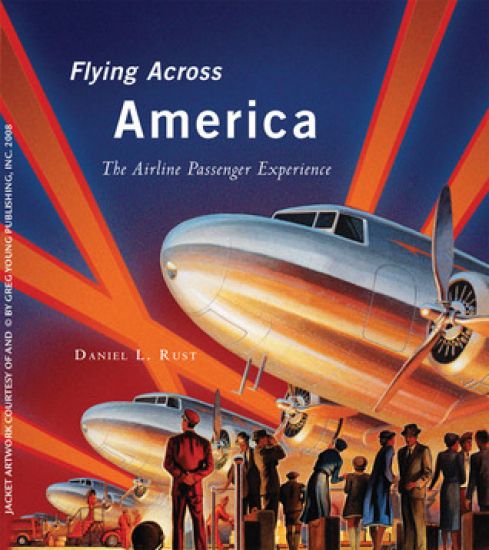
Americans who now endure the inconveniences of crowded airports, packed airplanes, and missed connections might not realize that flying was once an elegant, exhilarating adventure. In this colorful history, Daniel L. Rust traces the evolution of commercial air travel from the first transcontinental expeditions of the 1920s, through the luxurious airline environments of the 1960s, to the more hectic, fatiguing experiences of flying in the post-9/11 era.In the beginning, flying coast-to-coast was an exciting yet uncomfortable journey of nearly forty-eight hours that required numerous stops and overnight travel by train. With time and technical innovation, passengers became increasingly removed both physically and psychologically from the raw experience of flying. Faster planes, pressurized cabins, onboard amenities, and stronger safety precautions made flying more convenient and predictable - but also less evocative and sensational.Prior to the 1980s, Americans dressed for air travel in their formal best and enjoyed such luxurious onboard amenities as delicious meals and ample cabin space. What made air travel glamorous, however, also made it more expensive. With deregulation in 1978, cost reductions reduced flying to a more tedious and, after 9/11, more regimented experience.Rust's narrative brims with firsthand accounts from such celebrities as Will Rogers and from ordinary Americans. Enlivened by more than 100 illustrations, including vintage brochures, posters, and photographs, Flying Across America reminds today's airline passengers of what they have gained - and what they have lost - in the transcontinental flying experience.
During the Civil War, traditional history tells us, Afro-Christianity proved a strong force for slaves' perseverance and hope of deliverance. In Slavery, Civil War, and Salvation, however, Daniel Fountain raises the possibility that Afro-Christianity played a less significant role within the antebellum slave community than most scholars currently assert. Bolstering his argument with a quantitative survey of religious behavior and WPA slave narratives, Fountain presents a new timeline for the African American conversion experience.Both the survey and the narratives reveal that fewer than 40 percent of individuals who gave a datable conversion experience had become Christians prior to acquiring freedom. Fountain pairs the survey results with an in-depth examination of the obstacles within the slaves' religious landscape that made conversion more difficult if not altogether unlikely, including infrequent access to religious instruction, the inconsistent Christian message offered to slaves, and the slaves' evolving religious identity. Furthermore, he provides other possible explanations for beliefs that on the surface resembled Christianity but in fact adhered to traditional African religions. Fountain maintains that only after emancipation and the fulfillment of the predicted Christian deliverance did African Americans more consistently turn to Christianity. Freedom, Fountain contends, brought most former slaves into the Christian faith. Provocative and enlightening, Slavery, Civil War, and Salvation redefines the role of Christianity within the slave community.
The Challenge of Interracial Unionism
Letwin Daniel L.
The University of North Carolina Press
1998
nidottu
This study explores a tradition of interracial unionism that persisted in the coal fields of Alabama from the dawn of the New South through the turbulent era of World War I. Daniel Letwin focuses on the forces that prompted black and white miners to collaborate in the labor movement even as racial segregation divided them in nearly every other aspect of their lives. Letwin examines a series of labor campaigns--conducted under the banners of the Greenback-Labor party, the Knights of Labor, and, most extensively, the United Mine Workers--whose interracial character came into growing conflict with the southern racial order. This tension gives rise to the book's central question: to what extent could the unifying potential of class withstand the divisive pressure of race? Arguing that interracial unionism in the New South was much more complex and ambiguous than is generally recognized, Letwin offers a story of both promise and failure, as a movement crossing the color line alternately transcended and succumbed to the gathering hegemony of Jim Crow. |This study explores a tradition of interracial unionism that persisted in the coal fields of Alabama from the dawn of the New South through the turbulent era of World War I. Daniel Letwin focuses on the forces that prompted black and white miners to collaborate in the labor movement even as racial segregation divided them in nearly every other aspect of their lives. Letwin offers a story of both promise and failure, as a movement crossing the color line alternately transcended and succumbed to the gathering hegemony of Jim Crow.

When the Civil War finally came to North Florida, it did so with an intermittent fury that destroyed much of Jacksonville and scattered its residents. The city was taken four separate times by Federal forces but abandoned after each of the first three occupations. During the fourth occupation, it was used as a staging ground for the ill-fated Union invasion of the Florida interior, which ended in the bloody Battle of Olustee in February 1864. This late Confederate victory, along with the deadly use of underwater mines against the U.S. Navy along the St. Johns, nearly succeeded in ending the fourth Union occupation of Jacksonville. Writing in clear, engaging prose, Daniel Schafer sheds light on this oft-forgotten theatre of war and details the dynamic racial and cultural factors that led to Florida's engagement on behalf of the South. He investigates how fears about the black population increased and held sway over whites, seeking out the true motives behind both the state and federal initiatives that drove freed blacks from the cities back to the plantations even before the war's end. From the Missouri Compromise to Reconstruction, Thunder on the River offers the history of a city and a region precariously situated as a major center of commerce on the brink of frontier Florida. Historians and Civil War aficionados alike will not want to miss this important addition to the literature.

William Bartram And The Ghost Plantations Of British East Florida
Daniel L. Schafer
University Press of Florida
2010
sidottu
William Bartram denied their existence; history buried their stories.In his famous and influential book Travels, the naturalist William Bartram described the St. Johns riverfront in east Florida as an idyllic, untouched paradise. Bartram’s account was based on a journey he took down the river in 1774. Or was it?Historians have relied upon the integrity of the information in William Bartram's Travels for centuries, often concluding from it that the British (the colonial power from 1763 to 1783) had not engaged in large-scale land development in Florida. However, the well-documented truth is that the St. Johns riverfront was not in a state of unspoiled nature in 1774; it was instead the scene of drained wetlands and ambitious agricultural developments including numerous successful farms and plantations. Unsuccessful settlements could also be found, William Bartram's own foundered venture among them.Evidence for the existence of these settlements can still be found in archives in the United Kingdom and in the family papers of the descendants of British East Florida settlers and absentee landowners. So why did Bartram choose to erase them from history? Was his insistence on a pristine paradise in Travels based on an early expedition that he and his father, the botanist John Bartram, conducted in 1764–65? Was his distaste for development a result of bitterness and shame over his own failed settlement? Daniel Schafer explores all of these questions in this intriguing book, reconstructing the sights and colorful stories of the St. Johns riverfront that Bartram rejected in favor of an illusory wilderness. At last, the full story of William Bartram's famous journey and the histories of the plantations he "ghosted" are uncovered in this eminently readable, highly informative, and extremely entertaining volume.
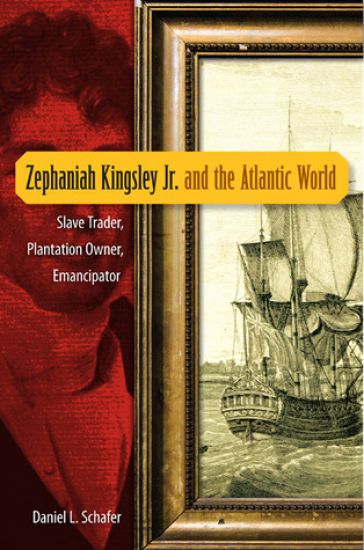
Zephaniah Kingsley Jr. and the Atlantic World
Daniel L. Schafer
University Press of Florida
2013
sidottu
A controversial figure for his views on manumission and his unorthodox marital arrangements, Zephaniah Kingsley Jr. (1765-1843) is mostly known today for his Fort George Island plantation in Duval County, Florida, now a National Park Service site, and for his 1828 pamphlet, A Treatise on the Patriarchal System of Society, that advocated just and humane treatment of slaves, liberal emancipation policies, and granting rights to free persons of color. Paradoxically, his fortune came from the purchase, sale, and labor of enslaved Africans.In this penetrating biography, Daniel Schafer vividly chronicles Kingsley’s evolving thoughts on race and slavery, exploring his business practices and his private life. Kingsley fathered children by several enslaved women, then freed and lived with them in a unique mixed-race family. One of the women--the only one he acknowledged as his "wife" though they were never formally married--was Anta Madgigine Ndiaye (Anna Kingsley), a member of the Senegalese royal family, who was captured in a slave raid and purchased by Kingsley in Havana, Cuba.A ship captain, Caribbean merchant, and Atlantic slave trader during the perilous years of international warfare following the French Revolution, Kingsley sought protection under neutral flags, changing allegiance from Britain to the United States, Denmark, and Spain. Later, when the American acquisition of Florida brought rigid race and slavery policies that endangered the freedom of Kingsley’s mixed-race family, he responded by moving his "wives" and children to a vast agricultural settlement in Haiti that he established for free persons of color.Kingsley’s assertion that color should not be a "badge of degradation" made him unusual in the early Republic. His unique life is revealed in this fascinating reminder of the deep connections between Europe, the Caribbean, and the young United States.
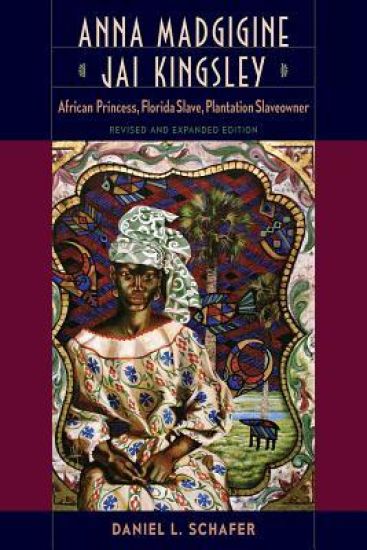
In this revised and expanded edition of Anna Kingsley’s remarkable life story, Daniel Schafer draws on new discoveries to prove true the longstanding rumors that Anna Madgigine Jai was originally a princess from the royal family of Jolof in Senegal. Captured from her homeland in 1806, she became first an American slave, later a slaveowner, and eventually a central figure in a free black community. Anna Kingsley’s story adds a dramatic chapter to the history of the South, the state of Florida, and the African diaspora.

When the Civil War finally came to North Florida, it did so with an intermittent fury that destroyed much of Jacksonville and scattered its residents. The city was taken four separate times by Federal forces but abandoned after each of the first three occupations. During the fourth occupation, it was used as a staging ground for the ill-fated Union invasion of the Florida interior, which ended in the bloody Battle of Olustee in February 1864. This late Confederate victory, along with the deadly use of underwater mines against the U.S. Navy along the St. Johns, nearly succeeded in ending the fourth Union occupation of Jacksonville. Writing in clear, engaging prose, Daniel Schafer sheds light on this oft-forgotten theatre of war and details the dynamic racial and cultural factors that led to Florida's engagement on behalf of the South. He investigates how fears about the black population increased and held sway over whites, seeking out the true motives behind both the state and federal initiatives that drove freed blacks from the cities back to the plantations even before the war's end.From the Missouri Compromise to Reconstruction, Thunder on the River offers the history of a city and a region precariously situated as a major center of commerce on the brink of frontier Florida. Historians and Civil War aficionados alike will not want to miss this important addition to the literature.

Zephaniah Kingsley Jr. and the Atlantic World
Daniel L. Schafer
University Press of Florida
2024
pokkari
A biography of a controversial patriarch of a mixed-race family A controversial figure for his views on manumission and his unorthodox marital arrangements, Zephaniah Kingsley Jr. (1765-1843) is mostly known today for his Fort George Island plantation in Duval County, Florida, now a National Park Service site, and for his 1828 pamphlet, A Treatise on the Patriarchal System of Society, that advocated just and humane treatment of enslaved persons, liberal emancipation policies, and granting rights to free persons of color. Paradoxically, his fortune came from the purchase, sale, and labor of enslaved Africans.In this penetrating biography, Daniel Schafer vividly chronicles Kingsley’s evolving thoughts on race and slavery, exploring his business practices and his private life. Kingsley fathered children by several enslaved women, then freed and lived with them in a unique mixed-race family. One of the women—the only one he acknowledged as his "wife" though they were never formally married—was Anta Madgigine Ndiaye (Anna Kingsley), a member of the Senegalese royal family, who was captured in a slave raid and purchased by Kingsley in Havana, Cuba.A ship captain, Caribbean merchant, and Atlantic slave trader during the perilous years of international warfare following the French Revolution, Kingsley sought protection under neutral flags, changing allegiance from Britain to the United States, Denmark, and Spain. Later, when the American acquisition of Florida brought rigid race and slavery policies that endangered the freedom of Kingsley’s mixed-race family, he responded by moving his "wives" and children to a vast agricultural settlement in Haiti that he established for free persons of color.Kingsley’s assertion that color should not be a "badge of degradation" made him unusual in the early Republic. His unique life is revealed in this fascinating reminder of the deep connections between Europe, the Caribbean, and the young United States.

Law And Regulation Of Common Carriers In The Communications Industry, Second Edition
Daniel L. Brenner
Westview Press Inc
1998
pokkari
This revised casebook-plus-commentary offers a basic introduction to the traditional regulation of telephone companies as well as the new lines of businesses they have entered. Drawing on historical and contemporary court decisions as well as on FCC and legislative materials, Brenner documents and evaluates the past 20 years of regulation of the telecommunications industry. In particular, he traces the major regulatory changes from the time of AT&T's single-firm dominance to the increasingly competitive marketplace of today.The law and literature necessary to understand the development and trends in telecommunications are voluminous and, up until now, have been difficult to locate in one place. This book presents the critical concepts and shifts in communications policy coherently and concisely. In this revised and expanded edition, Brenner provides excerpts and comments upon the key decisions in the field, ordering them in a readily accessible manner. He assumes no specialized background in technology, law, or economics. Brenner provides an ideal introduction to this increasingly important field for professionals as well as for scholars and students interested in communications and communications policy.

"""Iraq is rapidly descending into all-out civil war. Unfortunately, the United States probably will not be able to just walk away from the chaos. Even setting aside the humanitarian nightmare that will ensue, a full-scale civil war would likely consume more than Iraq: historically, such massive conflicts have often had highly deleterious effects on neighboring countries and other outside states. Spillover from an Iraq civil war could be disastrous."" Thus begins this sobering analysis of what the near future of Iraq could look like, and what America can do to reduce the threat of wider conflict. Preventing spillover of the Iraqi conflict into neighboring states must be a top priority. In explaining how that can be accomplished, Daniel Byman and Kenneth Pollack draw on their own considerable expertise as well as relevant precedents. The authors scrutinize several recent civil wars, including Lebanon, Chechnya, Afghanistan, Kosovo, and Bosnia. After synthesizing those experiences into lessons on how civil wars affect other nations, Byman and Pollack draw from them to produce recommendations for U.S. policy. Even while the Bush Administration attempts to prevent further deterioration of the situation in Iraq, it needs to be planning how to deal with a full-scale civil war if one develops."

Much has been written about the practice of one-ti-one spiritual directions, but much less about small group communities that offer in-depth mutual spiritual support and guidance to its members. But small groups are most likely the more usual setting for spiritual companionship and have strong biblical, theological and historical foundation in the Christian tradition. This book offers a detailed presentation of ten small group models, plus guidance in group leadership dynamics. It also presents material related to group retreat work, spiritual guidance with organizations and peer supervision/consultation model for supporting leaders of spiritual companionship groups and retreats. Church leaders, spiritual directors and educators are looking for the kinds of resources this book provides to assist them in understanding and leading groups and retreats.

A state-of-the-art reference, Metal Nanoparticles offers the latest research on the synthesis, characterization, and applications of nanoparticles. Following an introduction of structural, optical, electronic, and electrochemical properties of nanoparticles, the book elaborates on nanoclusters, hyper-Raleigh scattering, nanoarrays, and several applications including single electron devices, chemical sensors, biomolecule sensors, and DNA detection. The text emphasizes how size, shape, and surface chemistry affect particle performance throughout. Topics include synthesis and formation of nanoclusters, nanosphere lithography, modeling of nanoparticle optical properties, and biomolecule sensors.

This book presents a study of computer-aided machine design and explains the fundamental concepts of kinematics and machine element design in lay terms. It is useful for those concerned with developing new programs in computer-aided design, in both industry and education.

This book introduces the reader to each phase of the subject, step-by-step to enable one to use the various automated drafting devices, instruments and technique of application. It shows the way to produce acceptable drafting in the framework of high productivity.

This text, now in its third edition, presents all common methods of computer/automated graphical construction most helpful to the engineering student, draftsperson or designer, describing, in easy-to-understand terms, a wide range of hardware platforms that will run a single set of software options from the Autodesk Corporation.

Air Power as a Coercive Instrument
Daniel L. Byman; Matthew C. Waxman; Eric V. Larson
RAND
1999
pokkari
Coercion--the use of threatened force to induce an adversary to change its behavior--is a critical function of the U.S. military. U.S. forces have recently fought in the Balkans, the Persian Gulf, and the Horn of Africa to compel recalcitrant regimes and warlords to stop repression, abandon weapons programs, permit humanitarian relief, and otherwise modify their actions. Yet despite its overwhelming military might, the United States often fails to coerce successfully. This report examines the phenomenon of coercion and how air power can contribute to its success. Three factors increase the likelihood of successful coercion: (1) the coercer's ability to raise the costs it imposes while denying the adversary the chance to respond (escalation dominance); (2) an ability to block an adversary's military strategy for victory; and (3) an ability to magnify third-party threats, such as internal instability or the danger posed by another enemy. Domestic political concerns (such as casualty sensitivity) and coalition dynamics often constrain coercive operations and impair the achievement of these conditions. Air power can deliver potent and credible threats that foster the above factors while neutralizing adversary countercoercive moves. When the favorable factors are absent, however, air power--or any other military instrument--will probably fail to coerce. Policymakers' use of coercive air power under inauspicious conditions diminishes the chances of using it elsewhere when the prospects of success would be greater.
China's arms sales have become the focus of considerable attention and pose a moderate threat to U.S. interests.
This text explores the history of relations between Iraq and the US during the 1990s to derive lessons for future confrontations and for coercive diplomacy in general. It examines the nature of Iraq as an adversary, US objectives in the Gulf region, and the record of attempts to coerce Iraq.