Kirjojen hintavertailu. Mukana 12 290 406 kirjaa ja 12 kauppaa.

Kirjahaku

Etsi kirjoja tekijän nimen, kirjan nimen tai ISBN:n perusteella.

1000 tulosta hakusanalla Laurence Stapleton

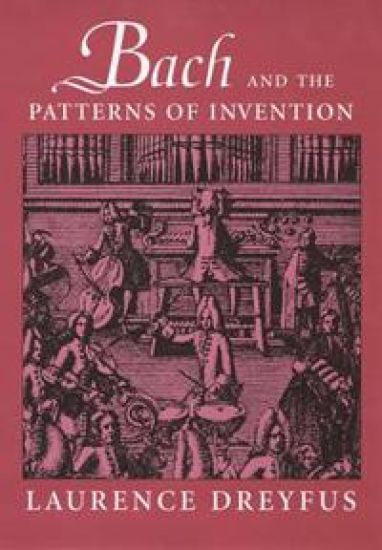
Bach and the Patterns of Invention

Bach and the Patterns of Invention

Laurence Dreyfus

Harvard University Press
2004
nidottu
In this major new interpretation of the music of J. S. Bach, we gain a striking picture of the composer as a unique critic of his age. By reading Bach’s music “against the grain” of contemporaries such as Vivaldi and Telemann, Laurence Dreyfus explains how Bach’s approach to musical invention in a variety of genres posed a fundamental challenge to Baroque aesthetics.“Invention”—the word Bach and his contemporaries used for the musical idea that is behind or that generates a composition—emerges as an invaluable key in Dreyfus’s analysis. Looking at important pieces in a range of genres, including concertos, sonatas, fugues, and vocal works, he focuses on the fascinating construction of the invention, the core musical subject, and then shows how Bach disposes, elaborates, and decorates it in structuring his composition. Bach and the Patterns of Invention brings us fresh understanding of Bach’s working methods, and how they differed from those of the other leading composers of his day. We also learn here about Bach’s unusual appropriations of French and Italian styles—and about the elevation of various genres far above their conventional status.Challenging the restrictive lenses commonly encountered in both historical musicology and theoretical analysis, Dreyfus provocatively suggests an approach to Bach that understands him as an eighteenth-century thinker and at the same time as a composer whose music continues to speak to us today.
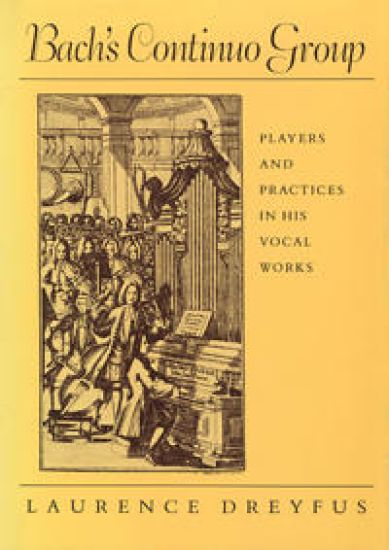
Bach’s Continuo Group

Bach’s Continuo Group

Laurence Dreyfus

Harvard University Press
1990
nidottu
When Bach’s cantatas, masses, passions, and chorales were originally performed under the composer’s direction, which instruments played the basso continuo, the line that establishes the harmonic framework? Bach’s Continuo Group answers this and other fundamental questions and probes the rationale behind Baroque performance conventions.
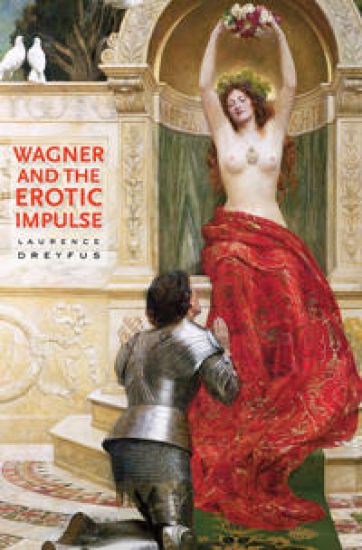
Wagner and the Erotic Impulse

Wagner and the Erotic Impulse

Laurence Dreyfus

Harvard University Press
2012
nidottu
Though his image is tarnished today by unrepentant anti-Semitism, Richard Wagner (1813–1883) was better known in the nineteenth century for his provocative musical eroticism. In this illuminating study of the composer and his works, Laurence Dreyfus shows how Wagner’s obsession with sexuality prefigured the composition of operas such as Tannhäuser, Die Walküre, Tristan und Isolde, and Parsifal. Daring to represent erotic stimulation, passionate ecstasy, and the torment of sexual desire, Wagner sparked intense reactions from figures like Baudelaire, Clara Schumann, Nietzsche, and Nordau, whose verbal tributes and censures disclose what was transmitted when music represented sex.Wagner himself saw the cultivation of an erotic high style as central to his art, especially after devising an anti-philosophical response to Schopenhauer’s “metaphysics of sexual love.” A reluctant eroticist, Wagner masked his personal compulsion to cross-dress in pink satin and drench himself in rose perfumes while simultaneously incorporating his silk fetish and love of floral scents into his librettos. His affection for dominant females and surprising regard for homosexual love likewise enable some striking portraits in his operas. In the end, Wagner’s achievement was to have fashioned an oeuvre which explored his sexual yearnings as much as it conveyed—as never before—how music could act on erotic impulse.
Constitutional Choices

Constitutional Choices

Laurence H. Tribe

Harvard University Press
1986
nidottu
Constitutional Choices illuminates the world of scholarship and advocacy uniquely combined by Laurence Tribe, one of the nation’s leading professors of constitutional law and most successful practitioners before the Supreme Court. In his new hook, Tribe boldly moves beyond the seemingly endless debate over which judicial approaches to enforcing the Constitution are “legitimate” and which are not. Arguing that all claims to legitimacy must remain suspect, Tribe focuses instead on the choices that must nonetheless be made in resolving actual constitutional controversies. To do so, he examines problems as diverse as interstate banking, gender discrimination, church subsidies, the constitutional amendment process, the war powers of the President, and First Amendment protection of American Nazis.Challenging the ruling premises underlying many of the Supreme Court’s positions on fundamental issues of government authority and individual rights, Tribe shows how the Court is increasingly coming to resemble a judicial Office of Management and Budget, straining constitutional discourse through a managerial sieve and defending its constitutional rulings by “balancing” what it counts as “costs” against what it deems “benefits.” Tribe explains how the Court’s “Calculus” systematically excludes basic concerns about the distribution of wealth and power and conceals fundamental choices about the American polity. Calling for a more candid confrontation of those choices and of the principles and perspectives they reflect, Tribe exposes what has gone wrong and suggests how the Court can begin to reclaim the historic role entrusted to it by the Constitution.
On Reading the Constitution

On Reading the Constitution

Laurence H. Tribe; Michael C. Dorf

Harvard University Press
1993
nidottu
Our Constitution speaks in general terms of “liberty” and “property,” of the “privileges and immunities” of citizens, and of the “equal protection of the laws”—open-ended phrases that seem to invite readers to reflect in them their own visions and agendas. Yet, recognizing that the Constitution cannot be merely what its interpreters wish it to be, this volume’s authors draw on literary and mathematical analogies to explore how the fundamental charter of American government should be construed today.