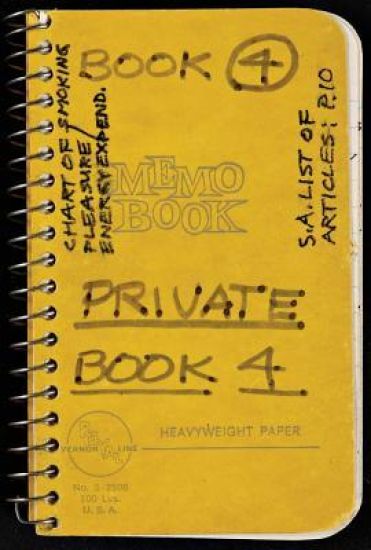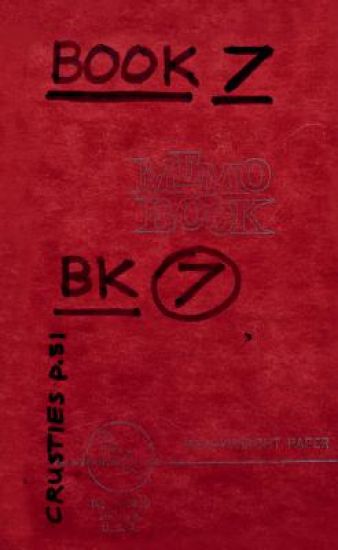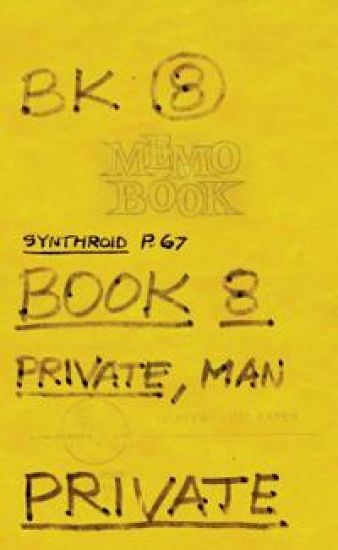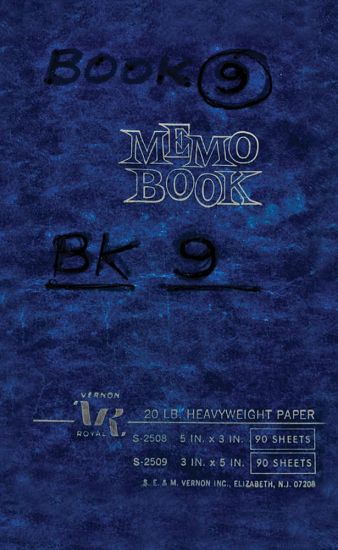
This is the fourth volume in Karma's 11-volume facsimile printing of Lee Lozano's Private Book project. It is primarily a calendar of Lozano's personal, artistic and chemical interactions in 1969–70. A prolific writer and documenter of both her art and her relationships, the public and private, the painter Lee Lozano (1930–99) kept a series of personal journals from 1968 to 1970 while living in New York's SoHo neighborhood. In 1972 she rigorously edited these books, thus completing the project.
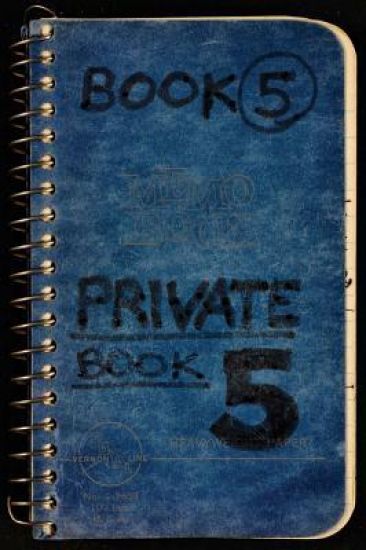
This is the fifth volume in Karma's 11-volume facsimile printing of Lee Lozano's Private Book project. Eleven of these private books survive, containing notes on Lozano's work, detailed interactions with artist friends and commentary on the alienations of gender politics, as well as philosophical queries into art's role in society and humorous asides from daily life.
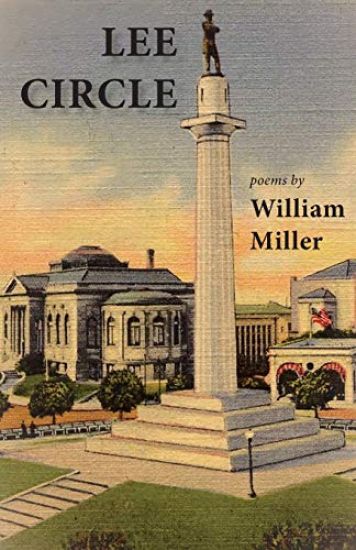
Deeply instilled remembrances of the Civil War and society's aftermath, along with general references to notions of loss and redemption form the thematic focus of the poems in Lee Circle. Poems include "Still Photograph: Lee's Funeral," "Lincoln's Second Inauguration," "Gettysburg Reunion, 1913," and "Katrina Baby." Lee Circle is a central traffic circle in New Orleans, Louisiana; from 1884 to 2017 it displayed a monument to Confederate General Robert E. Lee.
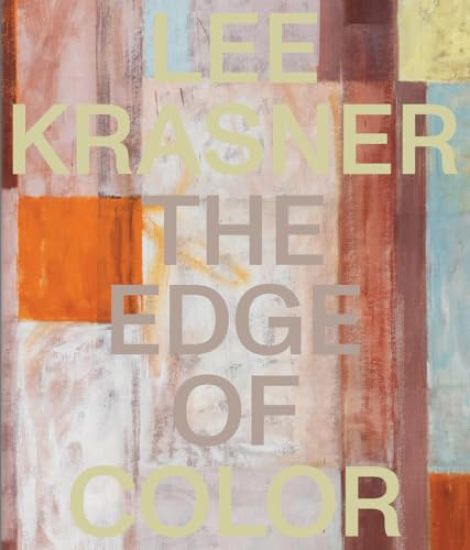
Two paintings from Krasner’s very first solo exhibition, reunited here after 70 years, provide a window into the artist’s rarely examined early geometric abstractions The early works of Abstract Expressionist pioneer Lee Krasner (1908–84), in her first solo exhibition in 1951, emphasized geometric relations. But during this same period, Krasner would often destroy or paint over her canvases to create new works. In a special and ambitious exhibition, Kasmin reunites the only two surviving paintings from her first solo show, displayed together for the first time in over 70 years. Replete with 18 color plates, related archival material and newly commissioned texts, The Edge of Color foregrounds a rarely examined chapter of Krasner’s five-decade career. Beyond the scope of an exhibition catalog, the book takes its reader behind Krasner’s paintings to provide never-before-published visual evidence regarding these early paintings. It positions these works, realized in the upstairs bedroom at the artist’s home in Springs, NY, in relation to Krasner’s contemporaries including Jackson Pollock and Piet Mondrian.
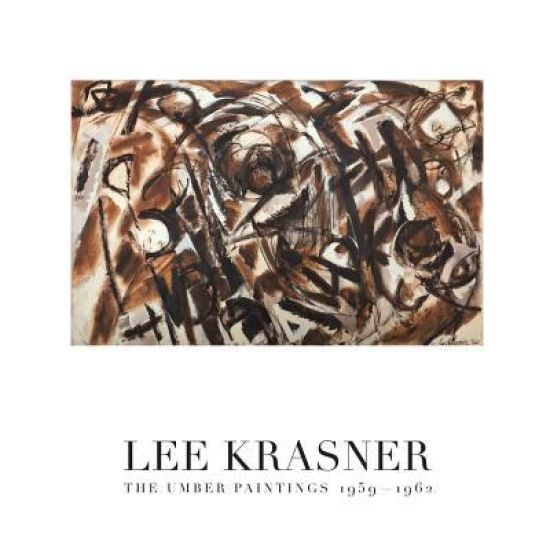
This book focuses on the iconic Umber Paintings of Lee Krasner (1908–84), which consist of only 24 paintings. Painted between 1959 and 1962, the Umber Paintings were realized during one of Krasner’s most ambitious periods of cproduction following the sudden and tragic loss of her husband, Jackson Pollock. During this time of newfound solitude, Krasner moved into Pollock’s studio at their home in the Springs, East Hampton, which enabled her to experiment on large canvases for the first time. In addition to the increase in scale, this period was also characterized by a further commitment to %allover% compositions. By the end of the 1950s, Krasner’s emotional turmoil confined her to work only at night under artificial light. The Umber Paintings convey a distinctive rawness and intensity that was unprecedented in her oeuvre until this point, and remain lauded as the artist’s most psychologically evocative works.
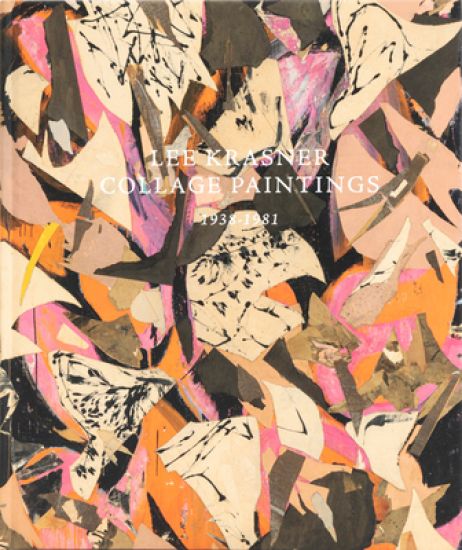
Painting, drawing and collage coexist in Krasner's dramatic compositionsThis fully illustrated catalog features several masterpieces from the 1955 debut of Lee Krasner's (1908-84) collage paintings at the Stable Gallery, as well as significant works from the artist's 2019-21 traveling European retrospective, and newly commissioned texts by author Siri Hustvedt and art historian Saskia Flower.
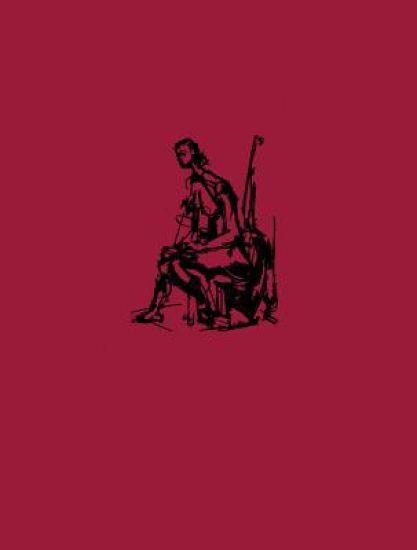
Charcoal Studies presents a series of figurative charcoals made by Lee Krasner (1908 84) from 1937 to 1940 under the tutelage of Hans Hofmann that would become seminal to the artist's career.In 1977, Krasner demonstrated the relevance of these charcoal works in a brilliant late series of collage paintings in which she repurposed a large number of her Hofmann School drawings. Fortunately, Krasner did not destroy all the drawings. Fifty of these are included in her 1995 catalogue raisonne; another portfolio with 20 more (including four previously unknown still lifes) has recently come to light.Charcoal Studies includes the never-before-published works as well as updated research and text to serve as a complete listing of all surviving Hofmann School charcoal sketches and as a definitive reference on this pivotal period within Krasner's oeuvre.
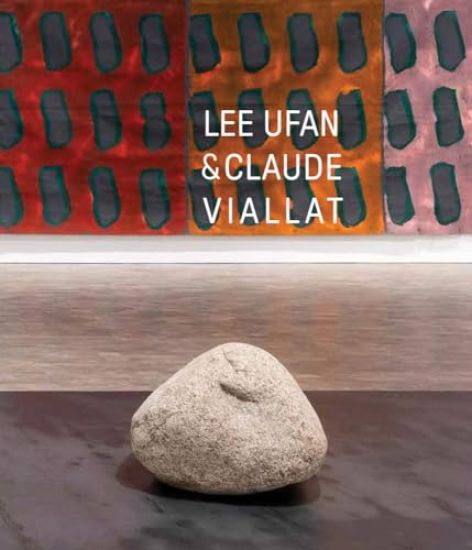
A window into the lifelong friendship and artistic dialogue between two leaders in painterly and sculptural abstraction Both born in 1936, Lee Ufan and Claude Viallat each played key roles in major movements: Mono-ha in Japan and Supports/Surfaces in France. This book documents their first joint exhibition in 2023 at Pace Gallery, London, with illustrations of their work and new texts by Lee, Viallat and curator Alfred Pacquement.
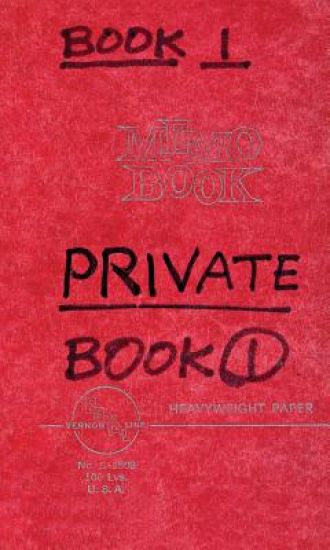
Before her self-imposed exile from the art world, Lee Lozano (1930 99) was a highly regarded painter who defined a generation of American artists infusing conceptualism with a new intensity. A prolific writer and documenter of both her art and her relationships, the public and private, Lozano kept a series of personal journals from 1968 to 1972 while living in New York's SoHo neighborhood.Eleven of these private books survive, containing notes on her work, detailed interactions with artist friends and commentary on the alienations of gender politics, as well as philosophical queries into art's role in society and humorous asides from daily life.In the decade before her infamous dropout piece culminating in a move to Dallas where she would remain until her death Lozano returned to these notebooks, editing the entries, sometimes blacking out entire pages. Private Book 1 is the first in the series of 11 pocket-sized books, which are printed as facsimiles.
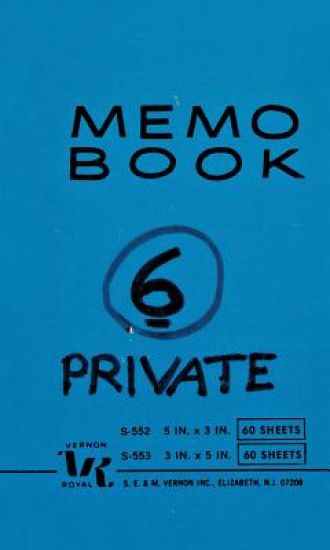
This is the sixth volume in Karma's 11-volume facsimile printing of Lee Lozano's Private Book (1930 99) project. Eleven of these private books survive, containing notes on Lozano's work, detailed interactions with artist friends and commentary on the alienations of gender politics, as well as philosophical queries into art's role in society and humorous asides from daily life. One excerpt reads: For my opening at the Whitney I would like to do a very special FANCY: want to give an invitation personally to the downtown people I know from being/living in this neighborhood for so long. In fact these are the only people I want at my opening. Just NEIGHBORHOOD people: from drugstores, food & laundry stores, stationary stores, etc. GET IT?"
This is the seventh volume in Karma's 11-volume facsimile printing of Lee Lozano's Private Book (1930 99) project. Eleven of these private books survive, containing notes on Lozano's work, detailed interactions with artist friends and commentary on the alienations of gender politics, as well as philosophical queries into art's role in society and humorous asides from daily life.Don't be RIVAL RABBITS," she writes here. "Give your ideas away. Help the world survive. SHARE AN IDEA JOINT."
"No work no obligations no guilt no desires, just my mind wandering lazily off its leash." –Lee Lozano Lee Lozano (1930–99) kept a series of journals from 1968 to 1970 while living in New York’s SoHo neighborhood. In 1973, Lozano rigorously edited her journals, which included records of her personal relationships and interactions during this period. This pocket-sized ringbound volume is the eighth in Karma’s 11-volume facsimile printing of Lozano’s project, containing Lozano’s entries from March to April 1970. Lozano’s published notebooks convey a perpetually active mind, and give a glimpse into her process and her stylistic evolution from cartoonish pop expressionism in her early drawings to language-based conceptualism.
Lozano's thoughts, notes and musings for 1970 The ninth in Karma’s 11-volume edition of Lee Lozano’s (1930–99) Private Book project, this volume spans April to September 1970, the summer that preceded Lozano’s solo exhibition at the Whitney, where she showed her Wave Paintings. (Following this major show, Lozano ceased to paint altogether and increasingly turned her attention to text-based works.) Among the thoughts, manifestos and personal contacts scribbled in these entries is a callout to Lucy Lippard, who described Lozano as “the major female figure” in conceptual art during the 1960s: “Slogans written on postcards to Lucy Lippard & my parents: Love Your Planet / Plan-It / Lose your ego for peace / Put YOUTH in the black & white house.”
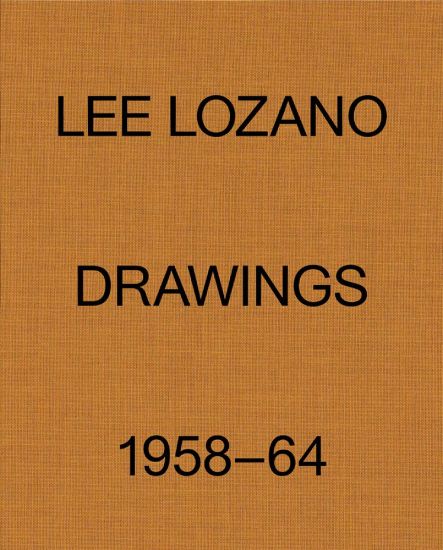
A handsome and hefty clothbound compendium of Lozano’s explorations of gender through drawing This 640-page volume comprises drawings from a critical six-year period in the development of American painter and conceptual artist Lee Lozano’s (1930-99) practice. Her daring, facetious sketches investigate issues of gender and the body through the erogenous anthropomorphization of tools. Lee Lozano: Drawings 1958-64 includes two newly commissioned essays by Helen Molesworth and Tamar Garb. “What I love about Lozano—besides the crazy, ham-fisted quality of her drawn line, pictures made with pencils that appear to have been held with a fist—is how her demonstration of the word 'connection' is not bound to any of the anodyne ways we currently use it,” writes Molesworth. “There’s nothing about 'listening' or 'building community' or 'empathy' in any of these drawings. For Lozano, connection is fraught and hairy. Connection is dangerous.”
Lee Guiding takes you on an adventure in Maine and its outdoors. First, Lee must find a way to guide veterans with PTSD. Next, he must find a way to help those veterans. Lee Guiding details Maine's pristine natural environment, takes the reader fishing, and brings about a Mainer's way of aiding those with PTSD.Dustin Graham Gilber was brought up in Turner, Maine. He loves fishing of all kinds and the other numerous outdoor activities in Maine. He decided to write his first book about healing from PTSD through Maine nature in the mid-winter. He struggled with PTSD, but not from United States military overseas action. His book details the real Maine nature he has lived in almost his whole life-and where he was lucky enough to reside when he needed to re-discover himself. Gilbert chose Veterans with PTSD because he highly appreciates their sacrifice to combat enemies of freedom loving, civil nations. Gilbert feels Maine has natural qualities that can heal psychologically wounded individuals. He also believes good-natured long time residents of Maine can help very many who have experienced trauma. While the characters are fictional, Gilbert encompassed many real-life residents into the fictional Mainers of his first completed book.
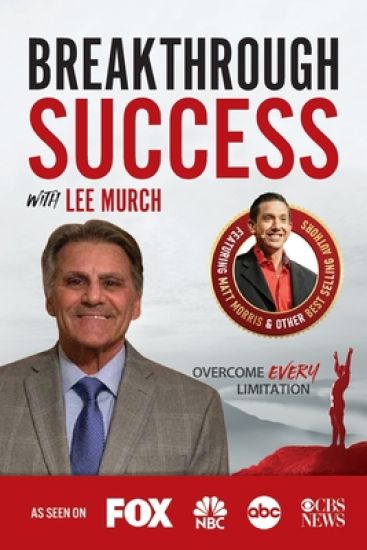
What is so great about a to-do list? In Limitless Success, Lee Murch reveals the power of to-do lists to achieve success. He believes that putting our thoughts into words can help us conceptualize what we need to do to get things done. Whether you're planning a vacation, looking for a career change, or organizing an event, a to-do list is there for you as a reminder of what you need to accomplish. Limitless Success with Lee Murch also features several other authors who share their journey to success.About the AuthorLee Murch is a successful sales executive, sales leader, success coach, and entrepreneur. In his career, Lee has launched several businesses that produced six-figure incomes. He has coached, trained, managed, and mentored hundreds of sales professionals, sales managers, and entrepreneurs. From his humble beginnings in Southern California, Lee's enormous potential, focused determination, and eagerness to assist others in their desire to succeed in their chosen field has produced a life that he only dreamt about as a young man. Lee has remained dedicated to his true calling of educating and inspiring others to achieve their true potential. Lee resides in Northern California with his wife and soulmate, Elizabeth. They are blessed with a daughter Rachel, son-in-law Brent, and their teenage son Eric.
*Includes pictures of Longstreet and other important Civil War generals, as well as maps of battles he fought in. *Discusses the controversies surrounding Longstreet's performance at Gettysburg *Analyzes Longstreet's legacy and the post-war debates among Longstreet and other Confederate generals. *Includes a Bibliography for further reading. One of the most important, and controversial, Confederate generals during the Civil War was Lieutenant General James Longstreet, the man Robert E. Lee called his "old war horse." Longstreet was Lee's principal subordinate for most of the war, ably managing a corps in the Army of Northern Virginia and being instrumental in Confederate victories at Second Bull Run, Fredericksburg, and Chickamauga. Longstreet was also effective at Antietam and the Battle of the Wilderness, where he was nearly killed by a shot through the neck. Had Longstreet died on the field in early May 1864, he would almost certainly be considered one of the South's biggest heroes. However, it was his performance at Gettysburg and arguments with other Southern generals after the Civil War that tarnished his image. After the South lost the war and Gettysburg came to be viewed as one of its biggest turning points, former Confederate generals looked to that battle to find scapegoats to blame for losing the war. Longstreet was charged with being slow to attack on the second day of the Battle of Gettysburg, allowing the Union to man Little Round Top. He also resisted Lee's order for Pickett's Charge the next day, making his criticisms clear both that day and after the war through his writings. The fact that he served in Republican administrations after the Civil War rubbed his former comrades the wrong way, and the Georgian Longstreet's criticism of Lee infuriated the Virginian Lost Cause advocates who idolized Lee. Near the end of his life, Longstreet authored From Manassas to Appomattox, a Civil War memoirs that looked to rebut his critics. Longstreet didn't avoid his critics, facing them head on by fending off criticisms of his record for the most part, usually including letters written by other officers to his defense. Longstreet also didn't pull punches, which he does at times quite poignantly on Lee's mishaps, most notably of course at Gettysburg. In other instances, he defends himself by criticizing others. When Fitz Lee notes that R.E. Lee called Longstreet the hardest man to move in the Army (a comment that can't be confirmed or refuted), he comes to his own defense in part by criticizing Stonewall Jackson during the Seven Days campaign. Hindsight is 20/20, and Longstreet's arguments in the conduct of certain campaigns certainly benefited from the passing of 30 years. At a number of places, Longstreet believes that if his suggestions were followed, the results could have destroyed Union armies or won the War. Nobody will ever be sure if he's right or wrong on these matters, though historians typically consider those kinds of statements bluster. Lee's Old Warhorse: The Life and Career of General James Longstreet looks at the life and career of one of the South's most important and controversial fighters, explaining his biggest accomplishments and discussing the biggest controversies. Along with pictures of Longstreet and other important people, places and events in his life, you will learn about Lee's Old War Horse like you never have before, in no time at all.
Lee Harvey Oswald was an American former Marine and Marxist who assassinated United States President John F. Kennedy on November 22, 1963. According to four federal government investigations and one municipal investigation, Oswald shot and killed Kennedy from a sniper's nest as the President traveled by motorcade through Dealey Plaza in the city of Dallas, Texas. Oswald was honorably discharged from the Marine Corps and defected to the Soviet Union in October 1959. He lived in the Belarusian city of Minsk until June 1962, at which time he returned to the United States with his Russian wife Marina and eventually settled in Dallas. About 45 minutes after Oswald fatally shot Kennedy, he shot and killed Dallas police officer J. D. Tippit on a local street. Oswald then slipped into a movie theatre, where he was arrested for Tippit's murder. Oswald was later charged with the murder of Kennedy. He denied shooting anybody, saying that he was a "patsy". Two days later, Oswald was in the process of being transferred from the city jail to the county jail when he was fatally shot by Dallas nightclub owner Jack Ruby in full view of television cameras broadcasting live. In September 1964, the Warren Commission released its findings and concluded that Oswald acted alone in assassinating Kennedy by firing three shots from the Texas School Book Depository. This conclusion was supported by previous investigations carried out by the FBI, the Secret Service, and the Dallas Police Department. Despite forensic, ballistic, and eyewitness evidence supporting the lone gunman theory, public opinion polls taken over the years have shown that most Americans believe that Oswald did not act alone, but conspired with others to kill the president. The assassination has spawned numerous conspiracy theories.