Louis XV et la Soci t du XVIII me Si cle by Capefigue. This book is a reproduction of the original book published in 1842 and may have some imperfections such as marks or hand-written notes.
Get to know the life and legacy of Louis Braille. Vivid photographs and easy-to-read text give early readers an engaging and age-appropriate look at his invention of braille and how it changed the blind community forever. Features include sidebars, a table of contents, two infographics, Making Connections questions, a glossary, and an index. QR Codes in the book give readers access to book-specific resources to further their learning. Aligned to Common Core Standards and correlated to state standards. DiscoverRoo is an imprint of Pop , a division of ABDO.
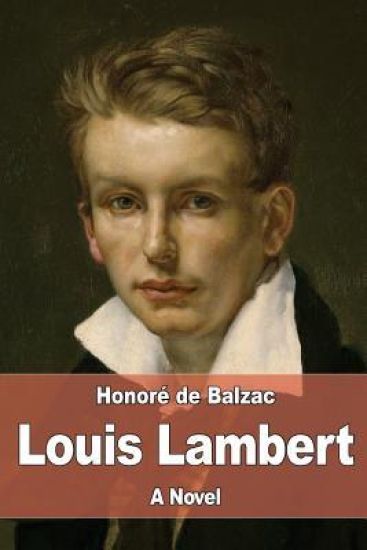
Louis Lambert un romanzo dello scrittore francese Honor de Balzac, pubblicato per la prima volta in volume nel 1832 fa parte degli "Studi filosofici" de La Commedia umana. Ambientato in una scuola religiosa a Vend me, esamina la vita e le teorie di un ragazzo di genio affascinato dal filosofo e mistico svedese del XVIII secolo Emanuel Swedenborg.
Elle commence crire dans le Journal de Saint-P tersbourg, puis, de retour en France, en 1872, elle prend le nom de plume d'Henry Gr ville, en r f rence au village de ses parents. Elle crit des romans sur la soci t russe et publie dans la Revue des Deux Mondes, le Figaro, la Nouvelle Revue, le Journal des d bats, le Temps...
Jonah by Louis Stone. Jonah, a hunchback larrikin, lives in a Sydney slum where he is the leader of the local "Push", a street gang. But his life changes when he becomes father to a son, and he strives to break away from his previous life.
Le roman, crit la premi re personne, d crit la rencontre du narrateur avec un jeune homme surdou , tudiant au coll ge des oratoriens de Vend me gr ce la protection de Madame de Sta l. Absorb par ses tudes personnelles, Louis reste l' cart des autres. Il est souvent l'objet de railleries et de brimades.
Though you may not know the man, you probably know his music. Arkansas-born Louis Jordan's songs like Baby, It's Cold Outside," "Caldonia" and "Ain't Nobody Here But Us Chickens" can still be heard today, decades since Jordan ruled the charts. In his five-decade career, Jordan influenced American popular music, film and more and inspired the likes of James Brown, B.B. King, Chuck Berry and Ray Charles. Known as the "King of the Jukeboxes," he and his combo played a hybrid of jazz, swing, blues and comedy music during the big band era that became the start of R&B. In a stunning narrative portrait of Louis Jordan, author Stephen Koch contextualizes the great, forgotten musician among his musical peers, those he influenced and the musical present."
" ...Le roi de Bavi re et sa vie tourment e n'ont pas cess de parler l'imagination des hommes. Ses ch teaux re oivent toujours des visiteurs. Louis II n'a pas eu tort d' lever des palais o se fixe la curiosit . Sinon, sa cousine, la tragique lisabeth d'Autriche, e t bien pu effacer son souvenir. Comme la sensibilit de l'Imp ratrice est plus douloureuse et plus profonde que la sienne Et quelle rivale pour notre artiste manqu Car la royale m lancolie de cette Wittelsbach eut le don de s'exprimer avec art et avec noblesse, tandis que les panchements de Louis II on en trouvera plusieurs mod les dans sa bizarre correspondance sentimentale sont de la bien mauvaise litt rature. Son bonheur voulut seulement que des noms illustres, des v nements historiques fussent m l s sa vie. Il a eu Wagner. Il a travers 1870 et la fin de la vieille Allemagne. C'est pourquoi toute une cour de romanciers et de po tes a pu broder une aur ole au N ron bavarois. Louis II a-t-il vu tr s clair dans les th ories wagn riennes ? S'y est-il m me int ress ? C'est bien douteux, mais peu importe..."
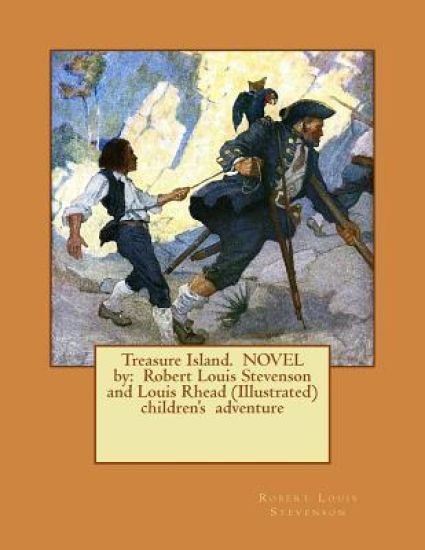
Treasure Island is an adventure novel by Scottish author Robert Louis Stevenson, narrating a tale of "buccaneers and buried gold". It was originally serialized in the children's magazine Young Folks between 1881 through 1882 under the title Treasure Island, or the mutiny of the Hispaniola, credited to the pseudonym "Captain George North". It was first published as a book on 14 November 1883 by Cassell & Co.
This novel begins with an overview of the main character's background. Louis Lambert, the only child of a tanner and his wife, is born in 1797 and begins reading at an early age. In 1811 he meets the real-life Swiss author Madame de Sta l (1766-1817), who - struck by his intellect - pays for him to enroll in the Coll ge de Vend me. There he meets the narrator, a classmate named "the Poet" who later identifies himself in the text as Balzac; they quickly become friends. Shunned by the other students and berated by teachers for not paying attention, the boys bond through discussions of philosophy and mysticism. After completing an essay entitled Trait de la Volont ("Treatise on the Will"), Lambert is horrified when a teacher confiscates it, calls it "rubbish", and - the narrator speculates - sells it to a local grocer. Soon afterwards, a serious illness forces the narrator to leave the school. In 1815, Lambert graduates at the age of eighteen and lives for three years in Paris. After returning to his uncle's home in Blois, he meets a woman named Pauline de Villenoix and falls passionately in love with her. On the day before their wedding, however, he suffers a mental breakdown and attempts to castrate himself. Declared "incurable" by doctors, Lambert is ordered into solitude and rest. Pauline takes him to her family's ch teau, where he lives in a near coma. The narrator, ignorant of these events, meets Lambert's uncle by chance, and is given a series of letters. Written by Lambert while in Paris and Blois, they continue his philosophical musings and describe his love for Pauline. The narrator visits his old friend at the Villenoix ch teau, where the decrepit Lambert says only: "The angels are white." Pauline shares a series of statements her lover had dictated, and Lambert dies on 25 September 1824 at the age of twenty-eight.
The tale bristles with breathless adventure, mistaken identities, detective investigations, romantic developments, and startling situations... It is a rousing story, told with a stimulating style, and culminating in love rewarded; but, before that happy end is reached, there are many thrilling revelations.
INTRODUCTIONHere's looking at Min. Louis Farrakhan in a variety of ways: Essays, articles, letters, and fictional satirical Plays. Farrakhan is still riding on his claim to fame by insulting and making mockery of Jewish people in Israel. It's not my aim to knock this apostle of hate off his pale-grey horse but to look at it critically and poke fun at it like a comedian donkey sometimes. The rider of the pale horse in revelations represented famine and pestilence (or poisoned food) and in my play All Praises Are Due, I offer some nutrition for Farrakhan to munch onFarrakhan is a wild and reckless orator, even in his mid-eighties he's still roaring or braying like the devil's jazz trumpets of an Ass/Donkey laugh. One of the symbols of the NOI is the trumpet they display high-atop corner of their propagandist newspaper The Final Call. And calling by analogy of Min. Farrakhan to the metaphor of the wild Donkey isn't out of bounds either. The Old Testament symbolized the Arab's ancestors to Ishmael would be wild and hostile towards his brothers (Gen 16:12). The Jewish community fed into Farrakhan's verbal hostility and rage by giving oxygen and air to his tongue of flames and got the heels of Louis's hoofs.Farrakhan still plays the 8-track tape of the 1930's of a Blackman by the name of Yacub creating the blond blue-eyed race of white devils. Well I have news for the hateful apostle that the son can't be more devilish then the monster father who created him. Then the chuckle gets even louder when he spouts a belief that a Space-craft (Mothership) will eventually come cruising down from the glorious clouds heaven and exterminate all these "Albino white people" and the unrighteous. His foreign policy is weird and terrible. His best friend in Africa was the late leader of Libya Gaddafi who was passing out Viagra pills to his loyalist who would rape his civilian protesters. Clearly Gaddafi went daffy on another incident when inmates in a dungeon prison cell objecting to guards leaving dead bodies to rot with them in their bunks. Gaddafi gave the word to the guards to slaughter all 2,000 plus prisoners. This is what broke the camel's back and started the revolution against him. Meanwhile Farrakhan characterized Gaddafi as an angel and God send to Libya. You can hear from the horse's mouth on his viral youtube rants and final call edicts .Following Farrakhan's leadership and advise would be like listening to the wisdom of a Mr. Ed. The best road to travel would be the tradition Civil Rights movement; and at the same avoiding the traps of being a mule to advance everybody's struggle but ours. We can't put a muzzle, bit and a bridle on the "beloved" apostle of hate. However, we can saddle this wild bucking Stallion with comedy, satire and critical analysis until the wheels fall off and the glue factory comes to pick up the remains (Hee Haw). Take it light and take it serious. This isn't no horse-shit but at times you will get a horse-laugh. When the Jews were upset with Apostle Paul they debunk him as stray donkey-ditto here.
Vernon Lee was the pseudonym of the British writer Violet Paget (14 October 1856 - 13 February 1935). She is remembered today primarily for her supernatural fiction and her work on aesthetics. An early follower of Walter Pater, she wrote over a dozen volumes of essays on art, music, and travel.Violet Paget was born in France on 14 October 1856, at Ch teau St Leonard, Boulogne, to British expatriate parents, Henry Ferguson Paget and Matilda Lee-Hamilton (n e Abadam). Violet Paget was the half-sister of Eugene Jacob Lee-Hamilton (1845-1907) by her mother's first marriage, and from whose surname she adapted her own pseudonym. Although she primarily wrote for an English readership and made many visits to London, she spent the majority of her life on the continent, particularly in Italy Her longest residence was just outside Florence in the Palmerino villa from 1889 until her death at San Gervasio, with a brief interruption during World War I. Her library was left to the British Institute of Florence and can still be inspected by visitors. In Florence she knit lasting friendships with the painter Telemaco Signorini and the learned Mario Praz, and she encouraged his love of learning and English literature. An engaged feminist, she always dressed la gar onne. During the First World War, Lee adopted strong pacifist views, and was a member of the anti-militarist organisation, the Union of Democratic Control. She was also a lesbian, and had long-term passionate friendships with three women, Mary Robinson, Kit Anstruther-Thomson, and British author Amy Levy.She played the harpsichord and her appreciation of music animates her first major work, Studies of the Eighteenth Century in Italy (1880). In her preface to the second edition of 1907, she recalled her excitement as a girl when she came across a bundle of 18th-century music. She was so nervous that it wouldn't live up to her expectations that she escaped to the garden and listened rapturously through an open window as her mother worked out the music on the piano. Along with Pater and John Addington Symonds, she was considered an authority on the Italian Renaissance, and wrote two works that dealt with it explicitly, Euphorion (1884) and Renaissance Fancies and Studies (1895)Her short fiction explored the themes of haunting and possession. The most famous were collected in Hauntings (1890) and her story "Prince Alberic and the Snake Lady" (1895) was first printed in the notorious The Yellow Book. She was instrumental in the introduction of the German concept of 'Einf hlung', or 'empathy' into the study of aesthetics in the English-speaking world