
Kirjahaku
Etsi kirjoja tekijän nimen, kirjan nimen tai ISBN:n perusteella.
1000 tulosta hakusanalla Marcel Drouets
The process of modernization has not lured the Muslims away from the remembrance of a glorious heritage. Wherever the movement of Westernization has been too brutal, it has run into a religious challenge. Islam thus reappeared as one of the grand moral and political forces of the world. This book has not been drafted only out of sympathy for the Muslims but also on account of historical evidence: Islamic civilization was the first to outline clear and mandatory provisions for protecting the destiny of man and society, and for creating order in the ties between peoples.


Tablettes du Princeton Theological Seminary – Époque d`Ur III
Marcel Sigrist
University of Pennsylvania Museum
1990
sidottu
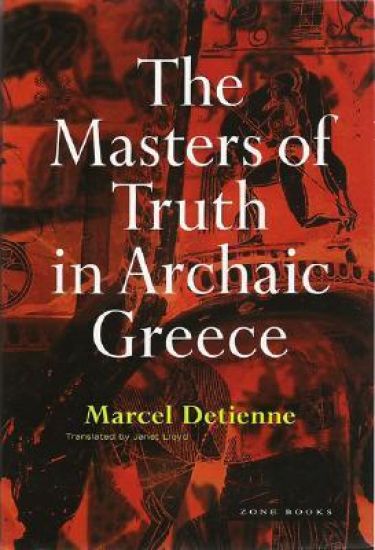
The acclaimed French classicist Marcel Detienne's first book traces the odyssey of "truth," aletheia, from mytho-religious concept to philosophical thought in archaic Greece. Detienne begins by examining how truth in Greek literature first emerges as an enigma. He then looks at the movement from a religious to a secular thinking about truth in the speech of the sophists and orators. His study culminates with an original interpretation of Parmenides' poem on Being.



The Secrets of Eliminating Stress Forever, Your Journey from Slavery to Freedom
Marcel Limbasan
Future Horizions International
2003
nidottu
Quoting new breakthroughs in stress research, this new work takes readers into an unbelievable journey by showing what stress really is, where it comes from, and how people can eliminate it from their lives.
Tablets from the Princeton Theological Seminary
Marcel Sigrist
University of Pennsylvania Museum Publications
2005
sidottu
Occasional Publications of the Samuel Noah Kramer Fund, 18
Does consciousness inevitably arise in any sufficiently complex brain? Although widely accepted, this view inherited from Darwin's theory of evolution is supported by surprisingly little evidence. Offering an alternate view of the history of the human mind, Julian Jaynes's ideas challenge our preconceptions of not only the origin of the modern mind, but the origin of gods and religion, the nature of mental illness, and the future potential of consciousness. The tremendous explanatory power of Jaynes's ideas force us to reevaluate much of what we thought we knew about human history. Gods, Voices, and the Bicameral Mind both explains Julian Jaynes's theory and explores a wide range of related topics such as the ancient Dark Age, the nature of dreams and the birth of Greek tragedy, poetic inspiration, the significance of hearing voices in both the ancient and modern world, the development of consciousness in children, vestiges of bicameralism and the transition to consciousness in early Tibet, the relationship of consciousness and metaphorical language, and how Jaynes's ideas compare to those of other thinkers.
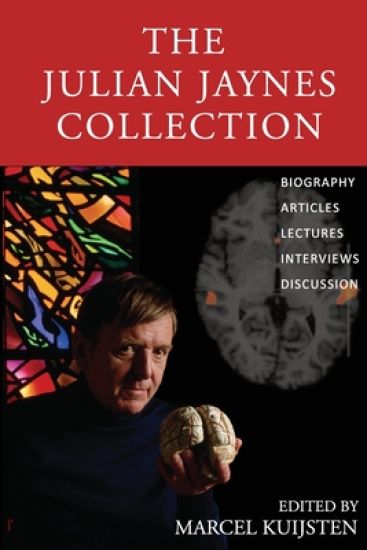
Princeton University psychologist Julian Jaynes's revolutionary theory on the origin of consciousness or the "modern mind" remains as relevant and thought-provoking as when it was first proposed. Supported by recent discoveries in neuroscience, Jaynes's ideas force us to rethink conventional views of human history and psychology, and have profound implications for many aspects of modern life. Included in this volume are rare and never before seen articles, lectures, interviews, and in-depth discussions that both clear up misconceptions as well as extend Jaynes's theory into new areas such as the nature of the self, dreams, emotions, art, music, therapy, and the consequences and future of consciousness. **Expanded to include a new, previously unpublished wide-ranging 30-page interview with Julian Jaynes.**
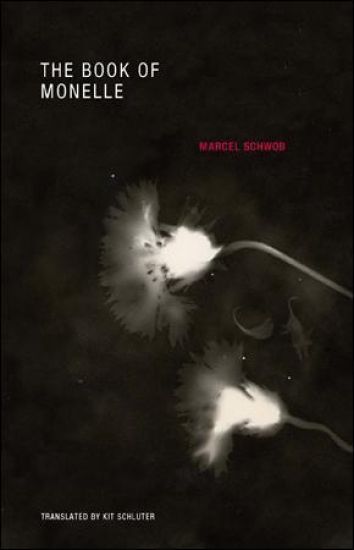
The unofficial bible of the French Symbolist movement, admired by Mallarmé, Jarry and Gide, in a new translation When Marcel Schwob published The Book of Monelle in French in 1894, it immediately became the unofficial bible of the French Symbolist movement, admired by such contemporaries as Stéphane Mallarmé, Alfred Jarry and André Gide. A carefully woven assemblage of legends, aphorisms, fairy tales and nihilistic philosophy, it remains a deeply enigmatic and haunting work more than a century later, a gathering of literary and personal ruins written in a style that evokes both the Brothers Grimm and Friedrich Nietzsche. The Book of Monelle was the result of Schwob’s intense emotional suffering over the loss of his love, a “girl of the streets” named Louise, whom he had befriended in 1891 and who succumbed to tuberculosis two years later. Transforming her into the innocent prophet of destruction, Monelle, Schwob tells the stories of her various sisters: girls succumbing to disillusionment, caught between the misleading world of childlike fantasy and the bitter world of reality. This new translation reintroduces a true fin-de-siècle masterpiece into English. A secret influence on generations of writers, from Guillaume Apollinaire and Jorge Luis Borges to Roberto Bolaño, Marcel Schwob (1867–1905) was as versed in the street slang of medieval thieves as he was in the poetry of Walt Whitman (whom he translated into French). Paul Valéry and Alfred Jarry both dedicated their first books to him, and he was the uncle of Surrealist photographer Claude Cahun.

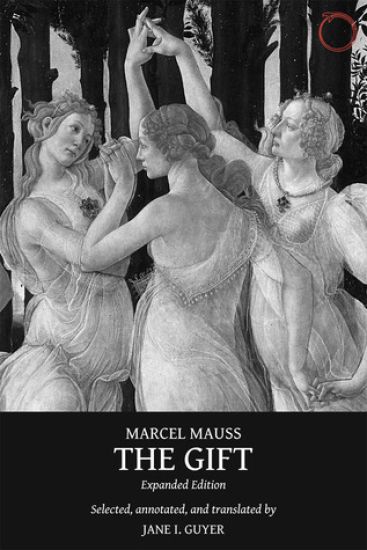
Scan down a list of essential works in any introduction to anthropology course and you are likely to see to see Marcel Mauss's masterpiece, Essay on the Gift. With this new translation, this crucial essay is returned to its original context, published alongside the profound works that framed its first publication in the 1923-24 issue of L'Annee Sociologique. With a critical foreword by Maurice Godelier, this is certain to become the standard English version of this important anthropological work. Included alongside the "Essay on the Gift" are Mauss's memorial accounts of the work of colleagues lost during World War I, as well as his scholarly reviews of influential contemporaries such as Franz Boas, James George Frazer, Bronislaw Malinowski, Alfred Radcliffe-Brown, and others. Read in the context of these additional pieces, the "Essay on the Gift" is revealed as a complementary whole, a gesture of both personal and political generosity: his honor for his fallen colleagues; his aspiration for modern society's recuperation of the gift as a mode of repair; and his own careful, yet critical, reading of his intellectual milieu. The result sets the scene for a whole new generation of readers to study this essay alongside pieces that exhibit the erudition, political commitment, and generous collegial exchange that first nourished it into life.