

Kirjahaku
Etsi kirjoja tekijän nimen, kirjan nimen tai ISBN:n perusteella.
1000 tulosta hakusanalla Marcel Henaff
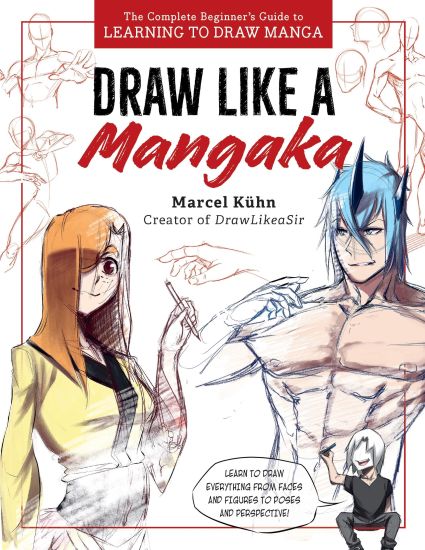
Go from beginner to mangaka (“comic artist” in Japanese) with this comprehensive yet fun and accessible guide to drawing manga. In Draw Like a Mangaka, the creative force behind the wildly popular Draw like a Sir YouTube channel, Marcel Kühn, compiles the secrets he has honed over a decade of manga drawing, demystifying manga illustration for artists of all skill levels. Learn about the essential tools and materials, foundational drawing techniques, and the secrets of crafting expressive faces, well-proportioned bodies, and intricate hairstyles. With every page, “Sir,” the author’s manga avatar, injects humor and warmth into the learning process, offering insightful tips and encouragement that resonate with both beginners and seasoned artists. Whether you’re sketching with pencil and paper or exploring digital drawing platforms, the guide provides step-by-step instructions that cater to various preferences. The book’s approachable and engaging narrative transforms these complex concepts into achievable milestones. In this fun, easy-to-follow guide, you’ll find: Guidance for both traditional and digital drawing, catering to your artistic preferences. In-depth tutorials on crafting captivating faces, features, and expressions that convey emotion and depth. Detailed insights into understanding bodies, proportions, and anatomy, enhancing the realism of your characters. Step-by-step instructions for rendering hair and clothing, adding texture and personality to your creations. Guidance on dynamic poses and perspective, infusing your manga illustrations with movement and energy. From essential tools to dynamic poses, this book equips you with the skills you need to bring your characters to life. Draw Like a Mangaka is the perfect resource for anyone who loves manga and aspires to draw like a manga artist.
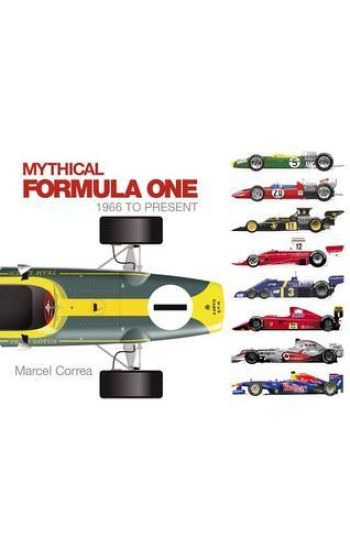
Computer generated profiles of the most famous and legendary Formula 1 single-seaters from 1966, the year when a new engine capacity regulation was approved. This coincided with the most important features we can still see in the cars of today, including wings, sponsors, slick tires, and carbon-fiber chassis. All of them are illustrated in this book, depicting milestones such as the Lotuses 49, 72, 79, Renault RS01, winners like the Ferraris "T" series, McLaren MP4 from 1988, Shumacher's Ferrari, original ideas like the Tyrrell P34 and other curiosities. Despite being focused on the cars, the book also examines the designers, team-managers and drivers.
Accessible to wide range of readers from student to lay people, this authoritative reference provides a complete listing of media concepts, figures, and techniques with illustrations and historical commentaries. Written by distinguished scholar and author Marcel Danesi, and with an Introduction by Arthur Asa Berger, a leading figure in the world of media and communications, the dictionary also includes terms related to psychology, linguistics, aesthetics, computer science, semiotics, culture theory, anthropology, and more that have relevance in media studies. Each entry includes a definition in simple, clear language; an illustration where applicable; and, historical commentary (who coined a term for example, why, who uses it, etc.). A bibliography, a directory of online resources, and a time-line of media genres add to the dictionary's usefulness and appeal.
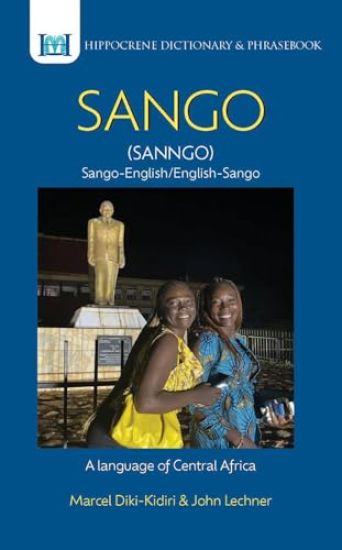
Sango-English/ English-Sango Dictionary & Phrasebook
Marcel Diki-Kidiri; John Lechner
HIPPOCRENE BOOKS INC.,U.S.
2025
pokkari
Sango, also known as Sanngo and Sängö, is an official language of the Central African Republic (CAR). It is also spoken in Chad, the Democratic Republic of the Congo, the Republic of Congo and Cameroon and considered a lingua franca of the region. Spoken by nearly 6 million people in the CAR, there are also an estimated additional 1.6 million speakers of Sango worldwide. Although French is still used in most official communication and education in CAR, Sango is spoken by 98% of the population and is the primary language of socialization and oral communication through the country.This unique two-part resource uses the official Sango Latin alphabet and orthography. It provides travelers to Central Africa with tools for daily interactions. The bilingual dictionary has a concise vocabulary for everyday use, and the phrasebook allows instant communication on a variety of topics. Ideal for businesspeople, travelers, students, and aid workers, this guide includes: 4,000 dictionary entriesEssential phrases on subjects such as healthcare, time, dates, transportation, money, communication services and much moreAn introduction to the basics of Sango grammar (including a short guide to alphabet and pronunciation)
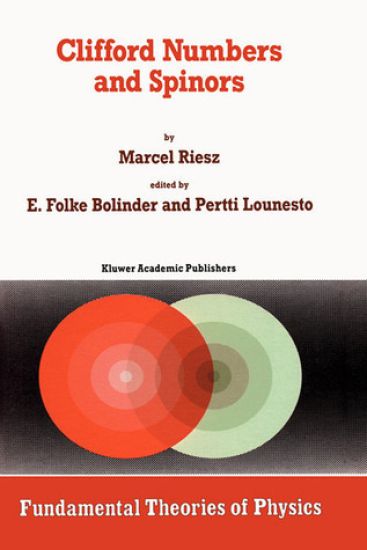
Marcellliesz's lectures delivered on October 1957 -January 1958 at the Uni versity of Maryland, College Park, have been previously published only infor mally as a manuscript entitled CLIFFORD NUMBERS AND SPINORS (Chap ters I - IV). As the title says, the lecture notes consist of four Chapters I, II, III and IV. However, in the preface of the lecture notes lliesz refers to Chapters V and VI which he could not finish. Chapter VI is mentioned on pages 1, 3, 16, 38 and 156, which makes it plausible that lliesz was well aware of what he was going to include in the final missing chapters. The present book makes lliesz's classic lecture notes generally available to a wider audience and tries somewhat to fill in one of the last missing chapters. This book also tries to evaluate lliesz's influence on the present research on Clifford algebras and draws special attention to lliesz's contributions in this field - often misunderstood.

III . 2 Preparation of synthetic membranes 72 III . 3 Phase inversion membranes 75 III. 3. 1 Preparation by evaporation 76 III . 3. 2 Precipitation. from the vapour phase 76 III . 3. 3 Precipitation by controlled evaporation 76 Thermal precipitation 76 III . 3. 4 III . 3. 5 Immersion precipitation 77 Preparation techniques for immersion precipitation 77 III . 4 Flat membranes 77 III . 4. 1 78 III . 4. 2 Tubular membranes 81 III . 5 Preparation techniques for composite membranes 82 III. 5. 1 Interfacial polymerisation Dip-coating 83 III . 5. 2 III . 5. 3 Plasma polymerisation 86 III . 5. 4 Modification of homogeneous dense membranes 87 III . 6 Phase separation in polymer systems 89 III . 6. 1 Introduction 89 III . 6. 1. 1 Thermodynamics 89 III . 6. 2 Demixing processes 99 III . 6. 2. 1 Binary mixtures 99 III . 6. 2. 2 Ternary systems 102 III . 6. 3 Crystallisation 104 III . 6. 4 Gelation 106 III . 6. 5 Vitrification 108 III . 6. 6 Thermal precipitation 109 III . 6. 7 Immersion precipitation 110 III . 6. 8 Diffusional aspects 114 III . 6. 9 Mechanism of membrane formation 117 III. 7 Influence of various parameters on membrane morphology 123 III. 7. 1 Choice of solvent-nonsolvent system 123 III . 7. 2 Choice of the polymer 129 III . 7. 3 Polymer concentration 130 III . 7. 4 Composition of the coagulation bath 132 III . 7. 5 Composition of the casting solution 133 III . 7.

III . 2 Preparation of synthetic membranes 72 III . 3 Phase inversion membranes 75 III. 3. 1 Preparation by evaporation 76 III . 3. 2 Precipitation. from the vapour phase 76 III . 3. 3 Precipitation by controlled evaporation 76 Thermal precipitation 76 III . 3. 4 III . 3. 5 Immersion precipitation 77 Preparation techniques for immersion precipitation 77 III . 4 Flat membranes 77 III . 4. 1 78 III . 4. 2 Tubular membranes 81 III . 5 Preparation techniques for composite membranes 82 III. 5. 1 Interfacial polymerisation Dip-coating 83 III . 5. 2 III . 5. 3 Plasma polymerisation 86 III . 5. 4 Modification of homogeneous dense membranes 87 III . 6 Phase separation in polymer systems 89 III . 6. 1 Introduction 89 III . 6. 1. 1 Thermodynamics 89 III . 6. 2 Demixing processes 99 III . 6. 2. 1 Binary mixtures 99 III . 6. 2. 2 Ternary systems 102 III . 6. 3 Crystallisation 104 III . 6. 4 Gelation 106 III . 6. 5 Vitrification 108 III . 6. 6 Thermal precipitation 109 III . 6. 7 Immersion precipitation 110 III . 6. 8 Diffusional aspects 114 III . 6. 9 Mechanism of membrane formation 117 III. 7 Influence of various parameters on membrane morphology 123 III. 7. 1 Choice of solvent-nonsolvent system 123 III . 7. 2 Choice of the polymer 129 III . 7. 3 Polymer concentration 130 III . 7. 4 Composition of the coagulation bath 132 III . 7. 5 Composition of the casting solution 133 III . 7.
Son of a mortal king and an immortal Muse, Orpheus possessed a gift for music unmatched among humans; with his lyre he could turn the course of rivers, drown the fatal song of the Sirens, and charm the denizens of the underworld. The allure of his music speaks through the myths and stories of the Greeks and Romans, who tell of his mysterious compositions, with lyrics that only the initiated could understand after undergoing secret rites. Where readers of subsequent centuries have been content to understand these mysteries as the stuff of obfuscation or mere folderol, Marcel Detienne finds in the writing of Orpheus a key to the thinking of the ancient Greeks. A profound understanding of ancient Greek myth in its cultural contexts allows Detienne to recover a cultural system from fragments and ephemera-to reproduce, with sensitivity to variation and nuance, the full richness of the mythological repertoire flowing from the writing of Orpheus. His investigation moves from the Orphic writings to broader mysteries: how Greek gods became myths, how myths informed later religious thinking, and how myths have come into play in polemics between competing religions. An eloquent answer to some of the most vexing questions about the myth of Orpheus and its far-reaching ramifications through time and culture, Detienne's work ultimately offers a major rethinking of Greek mythology.
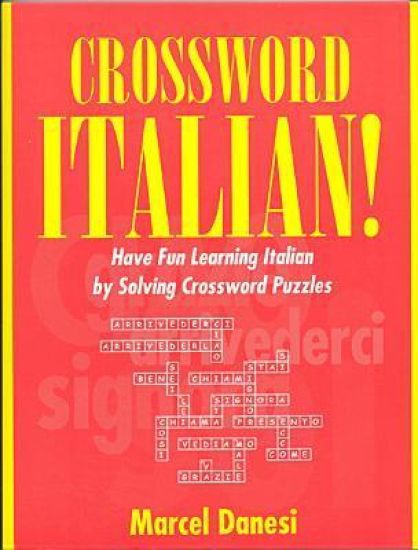
Designed to teach the basic elements of the Italian language, this book is a breakthrough in the field of language studies. Its easy, stimulating, and enjoyable approach to learning Italian will benefit beginners and more advanced speakers alike. An opening chapter on Italian spelling and pronunciation is followed by thirty lessons, each one introducing a conversational theme centred around a crossword puzzle. The lessons present new words and expressions, sample conversations, and language notes, each one building on the last and presenting puzzles that are progressively more challenging. A number of chapters designed as reviews include word-search puzzles and anagrams. Answers are at the back, along with verb conjugation charts and language glossaries. An ideal learning tool for anyone who has little time for serious study but can always find a minute to do a crossword puzzle, this book will also provide an excellent course supplement at both high-school and university levels.
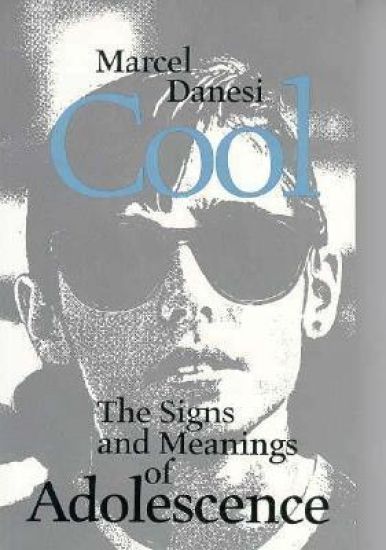
The image of restless, apathetic, mopish, awkward teenagers who listen to loud, screeching music when they are not on the phone, and who insist on dressing, wearing their hair, and behaving exactly like the friends they cannot seem to live without, has become a fixture of the modern social landscape. The emergence of certain behaviours (facial expressions, linguistic styles, dress codes, musical preferences, etc.) on the developmental timetable of children is a sign that they have entered a transitional period. The dramatic changes in physical appearance that occur during adolescence, and the emotional changes that accompany them, are traumatic. Teenagers naturally become inordinately concerned about their appearance and behaviour, and they believe that everyone is constantly observing them. This is why they talk all the time about how others act, behave, and appear. Language, dress, musical tastes, and other symbolic systems become the concrete means for identifying with peers. Teenagerhood is a socially constructed time-frame that channels the physiological and emotional changes that occur at puberty into patterns of symbolic behavior. These patterns are then reinforced by the media. This book represents both a synthesis of Marcel Danesi's research on the semiotics of modern adolescence, and his own interpretation of the significance and implications of our teenage culture. It constitutes a semiotic portrait of the teenager and of the factors that have led to the construction of the teenage persona and culture. Danesi makes a distinction between adolescence as psychobiological period of human growth and development and teenagerhood as a socially induced mindset that accompanies it. He focuses on the central behavioral trait of teenagerhood -- coolness; he defines it and discusses its emergence at or around puberty, and draws up an 'anatomy' of the behaviors associated with it. He discusses the language of teenagers, which he calls 'pubilect,' and concludes with observations on the etiology, evolution, and future course of teenagerhood. Cool is intended not only for semioticians, as a documentation of a specific form of social semiosis, but also for parents and educators, and for teenagers themselves.

The excessive worship of adolescence and its social empowerment by adult institutions is the deeply rooted cause of a serious cultural malaise. So argues semiotician Marcel Danesi in Forever Young, an unforgiving and controversial look at modern culture's incessant drive to create a 'teen-aging' of adult life. Written for the general reader and based on five year's worth of interviews with over 200 adolescents and their parents, Danesi begins by asserting that one of the early causes of this crystallization of adolescence as an age category can be traced back to theories of psychology at the turn of the twentieth century. Since then, the psychological view of adolescence as a stressful period of adjustment has become a self-fulfilling prophecy. This, in tandem with the devaluation of the family by the media and society at large, has led to a maturity gap - a fissure in family dynamics that is eagerly and ably exploited by the mass media. Unlike many academic digressions into the malaise of modern culture, Forever Young provides concrete answers on how the 'forever young syndrome' can be addressed. One solution is to dispel the myth that experts and professionals are the people best equipped to give advice on raising children. The second is to recognize the value of family, in all its different combinations, as the primary institution of child-rearing. The third is to challenge the pervasive notion that teen culture is a sophisticated endeavour - that, for example, pop music can claim to have produced some of the best musical art in the world, surpassing Mozart or Bach. By laying bare the misguided tenets that have brought about, and continue to promote, a 'forever young' mentality, Marcel Danesi demonstrates that the 'teen-aging' of culture has come about because it is, simply put, good for business. Teen tastes have achieved cultural supremacy because the western economic system requires a conformist and easily manipulated market, and has thus joined forces with the media-entertainment oligarchy to promote a deterministic 'forever young' market.
The excessive worship of adolescence and its social empowerment by adult institutions is the deeply rooted cause of a serious cultural malaise. So argues semiotician Marcel Danesi in Forever Young, an unforgiving and controversial look at modern culture's incessant drive to create a 'teen-aging' of adult life. Written for the general reader and based on five year's worth of interviews with over 200 adolescents and their parents, Danesi begins by asserting that one of the early causes of this crystallization of adolescence as an age category can be traced back to theories of psychology at the turn of the twentieth century. Since then, the psychological view of adolescence as a stressful period of adjustment has become a self-fulfilling prophecy. This, in tandem with the devaluation of the family by the media and society at large, has led to a maturity gap - a fissure in family dynamics that is eagerly and ably exploited by the mass media. Unlike many academic digressions into the malaise of modern culture, Forever Young provides concrete answers on how the 'forever young syndrome' can be addressed. One solution is to dispel the myth that experts and professionals are the people best equipped to give advice on raising children. The second is to recognize the value of family, in all its different combinations, as the primary institution of child-rearing. The third is to challenge the pervasive notion that teen culture is a sophisticated endeavour - that, for example, pop music can claim to have produced some of the best musical art in the world, surpassing Mozart or Bach. By laying bare the misguided tenets that have brought about, and continue to promote, a 'forever young' mentality, Marcel Danesi demonstrates that the 'teen-aging' of culture has come about because it is, simply put, good for business. Teen tastes have achieved cultural supremacy because the western economic system requires a conformist and easily manipulated market, and has thus joined forces with the media-entertainment oligarchy to promote a deterministic 'forever young' market.

Drugs are part of every society, consumed for ritual or religious purposes, for pleasure, to enhance athletic performance, or as a means to relieve pain. Throughout the twentieth century, however, an arbitrary and shifting distinction was made between legal drugs that were prescribed and administered by the medical profession, and illegal drugs that were subject to state control and suppression. Illegal in Canada since 1923, marijuana is the most controversial of illegal drugs. Because it lacks the same addictive and harmful qualities of other illegal substances, such as heroin and cocaine, marijuana's negative social impact is questionable. In the 1960s interest groups – including university student associations, certain physicians, and others – began demanding changes to the Narcotics Control Act, which governed the legal status of drugs, to decriminalize or legalize the possession of marijuana. In Not This Time, Marcel Martel explores recreational use of marijuana in the 1960s and its emergence as a topic of social debate. He demonstrates how the media, interest groups, state institutions, bureaucrats and politicians influenced the development and implementation of public policy on drugs. Martel illustrates how two loose coalitions both made up of interest groups, addiction research organizations and bureaucrats – one supporting the existing drug legislation, and the other favoring liberalization of the Narcotics Control Act – dominated the debate over the legalization of marijuana, and how those favoring liberalized drug laws, while influential, had difficulty presenting a unified front and problems justifying their cause while the health benefits of marijuana use were still in question. Exploring both sides of the debate, Martel presents the invigorating history of a question that continues to reverberate in the minds of Canadians.
In E-Crit, Marcel O'Gorman takes an ambitious and provocative look at how university scholarship, pedagogy, and curricula might be transformed to suit a digital culture. Arguing that universities were founded on the logic of print culture, O'Gorman sets out to reinvent the academic apparatus, constructing a hybrid methodology that draws on avant-garde art, deconstructive theory, cognitive science, and the work of painter and poet William Blake.O'Gorman explores the ways in which digital media might help to restore the critical, intellectual purpose of higher education, which has been repressed by the technocratic structures that dominate the modern university. He argues that the revolutionary, socio-critical impetus that spurred deconstructive theory and transformed the humanities was lost in the initial attempts to digitize the literary canon and demonstrate the convergence of critical theory and hypertext. Humanities disciplines, he argues, must reposition themselves through the invention of humanities-based interdisciplinary programs capable of adapting to the post-print vicissitudes of a digital culture. E-Crit is thus essential reading for anyone concerned with the practice - and future - of the humanities in higher education.

As stubborn, as surprising, as artful as life in its refusal to conform to a particular literary genre, Marcel Benabou's book is at once a memoir and a novel, a confession and a reflection on the prerogatives and imperatives of writing one's story. At its center, forever alluring and elusive, is the beautiful and ethereal Tamara, the exact incarnation of our narrator's most enduring fantasy - a femme fatale for the lover of form.Who precisely our narrator is, is less certain: The young Manuel, who leaves his home in Morocco to study in Paris, only to encounter the enticing Tamara? Or the mature Manuel, looking back not only at Tamara but also at the younger man's reading of his experience through the pages of the literature of sentimental apprenticeship, from Stendhal's "The Red and the Black" through Flaubert's "Sentimental Education"?A heady, genre-defying high-wire act by a writer who delights in such undertakings and whose efforts consistently delight readers worldwide, "To Write on Tamara?" captures with graceful authority and assurance the now thrilling, now vexing complexities of living and writing life's stories, especially stories of love. Marcel Benabou lives in Paris and pursues his positions as professor of ancient history at the University of Paris and as the permanent provisional secretary of Oulipo. He is the author of "Dump This Book While You Still Can!" and "Why I Have Not Written Any of My Books", both published by the University of Nebraska Press. Steven Rendall, a professor emeritus of Romance languages at the University of Oregon, is the author of "Distinguo: Reading Montaigne Differently" and has translated numerous books.

The State, the Nation, and the Jews is a study of Germany's late nineteenth-century antisemitism dispute and of the liberal tradition that engendered it. The Berlin Antisemitism Dispute began in 1879 when a leading German liberal, Heinrich von Treitschke, wrote an article supporting anti-Jewish activities that seemed at the time to gel into an antisemitic "movement." Treitschke's comments immediately provoked a debate within the German intellectual community. Responses from supporters and critics alike argued the relevance, meaning, and origins of this "new" antisemitism. Ultimately the Dispute was as much about Germans and how they could best consolidate their recently formed national state as about Jews and those who hated them. Treitschke's liberal antisemitism threw into sharp relief the antinomies inherent in the modern constellation of state, culture, and society.In a newly united Germany the Dispute forced the intellectual community to question the parameters of national identity. Born within the liberal tradition that, at the time, mostly championed Jewish emancipation, the Dispute's core question was how state, nation, race, ethnicity, and religion should relate to one another. From a close analysis of the crucial contributions to the debate, Marcel Stoetzler crafts a compelling critique of liberalism and liberal notions of national identity. The specifics of the Dispute raise uncomfortable questions about the role of race, religion, and ethnicity within modern liberalism. The Dispute provides an avenue for understanding the development of antisemitism within liberal society and, ultimately, is an indictment of liberalism itself.

Marcel Bénabou is quick to acknowledge that his own difficulty in writing has plenty of company. Words stick and syntax is stubborn, meaning slips and synonyms cluster. A blank page taunts and a full one accuses. Bénabou knows the heroic joy of depriving critics of victims, the kindness of sparing publishers decisions, and the public charity of leaving more room in bookstore displays. Why I Have Not Written Any of My Books (Pourquoi je n'ai écrit aucun de mes livres) provides both a respectful litany of writers' fears and a dismissal of the alibis offered to excuse them.

In one of the most thought-provoking and wry books by one of the most intriguing contemporary writers in French literature, readers become party to the dilemma of "challenging" literature in a singularly involving and amusing fashion. Opening a book that has mysteriously appeared amid the clutter of his desk, the narrator finds himself exhorted not to read further, to throw the book away! Instead (but of course) he tries different strategies for approaching the book, none of which work. The narrator's tempestuous, increasingly obsessive relationship with the book he is determined to read, interwoven with the story of a real (but no less enigmatic) love affair, is, in its own challenging way, a charmed and charming, deeply provocative meditation upon reading and writing, and their inevitable discontents. Dump This Book offers a new angle on the work of this original writer and an ironic perspective on the power of reading to produce meaning.
As stubborn, as surprising, as artful as life in its refusal to conform to a particular literary genre, Marcel Bénabou's book is at once a memoir and a novel, a confession and a reflection on the prerogatives and imperatives of writing one's story. At its center, forever alluring and elusive, is the beautiful and ethereal Tamara, the exact incarnation of our narrator's most enduring fantasy—a femme fatale for the lover of form. Who precisely our narrator is, is less certain: The young Manuel, who leaves his home in Morocco to study in Paris, only to encounter the enticing Tamara? Or the mature Manuel, looking back not only at Tamara but also at the younger man's reading of his experience through the pages of the literature of sentimental apprenticeship, from Stendhal's The Red and the Black through Flaubert's Sentimental Education? A heady, genre-defying high-wire act by a writer who delights in such undertakings and whose efforts consistently delight readers worldwide, To Write on Tamara? captures with graceful authority and assurance the now thrilling, now vexing complexities of living and writing life's stories, especially stories of love.